Loading...
This comparison has not been analyzed yet.
One-time AI generation (~1 minute). Scores and timeline are already available below.
Ardashir I vs Vespasian
Ardashir I leads by 7.3 pts · 2 figures compared
…

Ardashir I
Emperor · Ancient
75.6Total
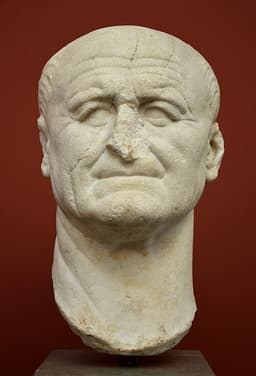
Vespasian
Emperor · Ancient
68.3Total
Basic Information
Born
180
9
Died
242
79
Era
Ancient
Ancient
Nationality
Sassanid Empire
Roman Empire
Occupation
Emperor
Emperor
Civilization
Middle Eastern
Western
Score Comparison
Military (10%)
65.0
82.0
Political (20%)
78.0
72.0
Influence (20%)
82.0
68.0
Legacy (20%)
72.0
55.0
Leadership (15%)
78.0
79.8
Strategy (15%)
72.0
65.4
TOTAL
75.6
68.3
Ardashir I — Complete Timeline
224 AD
Battle of HormozdganWar
Ardashir I defeated the Parthian king Artabanus IV at the Battle of Hormozdgan. This victory ended Parthian rule and allowed Ardashir to establish the Sassanid Empire, which would dominate Persia for four centuries.
BattleSassanid FoundingParthian Defeat
Impact: regional
Conquest of the Parthian EmpireWar◆ Major
Following his victory at Hormozdgan, Ardashir I systematically conquered the remaining Parthian territories, including Media, Armenia, and Mesopotamia. He established a centralized administration and a Zoroastrian state church.
ConquestEmpire BuildingZoroastrianism
Impact: regional
Coronation as King of KingsPolitical Action◆ Major
After his victory, Ardashir I was crowned 'Shahanshah' (King of Kings) at Ctesiphon. He claimed descent from the Achaemenid dynasty, legitimizing his rule and reviving Persian imperial traditions.
CoronationImperial TitleLegitimacy
Impact: regionalconstructive
Vespasian — Complete Timeline
69 AD
Accession as EmperorPolitical Action
Vespasian was proclaimed emperor by his troops in Egypt and later recognized by the Senate after the death of Vitellius. He founded the Flavian dynasty, ending the Year of the Four Emperors.
SuccessionFlavian DynastyCivil War
Impact: global
70 AD
Siege of Jerusalem and Destruction of the TempleWar
Vespasian's son Titus captured Jerusalem after a siege, destroying the Second Temple. The victory ended the First Jewish-Roman War and established the Flavian reputation.
Jewish WarSiegeTemple Destruction
Impact: regionaldestructive
Financial Reforms and Tax on UrineReform◆ Major
Vespasian restored the empire's finances by increasing taxes, including a tax on urine collected from public latrines for use in fulling cloth. He also revalued the currency and reduced spending.
TaxationFinanceReform
Impact: nationalconstructive
72 AD
Construction of the Colosseum BeginsCultural◆ Major
Vespasian began construction of the Flavian Amphitheatre (Colosseum) on the site of Nero's Domus Aurea. The project used spoils from the Jewish War and provided public entertainment.
ArchitecturePublic WorksEntertainment
Impact: globalconstructive
79 AD
Death and DeificationOther◆ Major
Vespasian died of natural causes at age 69, the first Roman emperor to die in office since Vespasian. He was deified by the Senate, and his sons Titus and Domitian succeeded him.
DeathDeificationSuccession
Impact: national
This comparison has not been analyzed yet.
One-time AI generation (~1 minute). Scores and timeline are already available below.
Rankings
🥇
Ardashir ILeader
Mil: 65.0Pol: 78.0Inf: 82.0
75.6
🥈
Vespasian
Mil: 82.0Pol: 72.0Inf: 68.0
68.3
+7.3 behind
How This Comparison Works
Algorithm
Each figure is scored on 6 dimensions (0—100 scale) based on structured historical data: Military (10%), Political (20%), Influence (20%), Legacy (20%), Leadership (15%), Strategy (15%). The weighted total produces the final ranking.
Data Sources
Scores are computed from structured sub-indicators in the database. Scale factors adjust for era (Ancient ×0.85, Modern ×1.0) and civilization size (Eastern ×1.05, Other ×0.80) to account for differences in population and military scale.
Maximum 3 Figures
Comparisons are limited to 2—3 figures to ensure readability and statistical meaningfulness.
Error Margins
±5 points per dimension — Sub-scores are derived from historical records with inherent uncertainty. Two figures within 5 points on a dimension should be considered roughly equivalent in that area.
Total Score Accuracy
±3 points overall — The weighted combination of 6 dimensions produces a total score with approximately ±3 points of uncertainty. Differences of less than 3 points are not statistically significant— the figures are effectively tied.
Known Limitations
- Historical records are incomplete and uneven across civilizations
- Figures from oral-tradition societies may be underrepresented
- Occupation labels can misclassify multi-role figures
- Scores measure capability and impact, not moral character
- Quantitative scoring is a comparison tool, not absolute truth
Capability Radar
Military (10%) — Battles & Warfare
Battles
85
75
Win Rate
90
80
Expansion
85
60
Political (20%) — Governance & Reform
Reform
90
75
Diplomacy
75
80
Economy
80
85
Influence (20%) — Cultural & Global Reach
Cultural
80
75
Global
80
70
Legacy (20%) — Historical Impact
Historical
85
80
Longevity
85
75
Leadership (15%) — Power & Stability
Tenure
80
70
Stability
85
80
Strategy (15%) — Tactics & Innovation
Strategy
85
75
Tactics
80
70
Reform
90
65
Similar Comparisons
Comments & Discussion
No comments yet. Be the first to share your thoughts!