Loading...
Ardashir I vs Otto I the Great
Ardashir I leads by 0.4 pts · 2 figures compared
…

Ardashir I
Emperor · Ancient
75.6Total
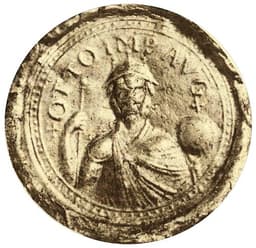
Otto I the Great
Emperor · Medieval
75.2Total
Basic Information
Born
180
912
Died
242
973
Era
Ancient
Medieval
Nationality
Sassanid Empire
Holy Roman Empire
Occupation
Emperor
Emperor
Civilization
Middle Eastern
Western
Score Comparison
Military (10%)
65.0
82.0
Political (20%)
78.0
70.0
Influence (20%)
82.0
88.0
Legacy (20%)
72.0
65.0
Leadership (15%)
78.0
78.0
Strategy (15%)
72.0
65.4
TOTAL
75.6
75.2
Ardashir I — Complete Timeline
224 AD
Battle of HormozdganWar
Ardashir I defeated the Parthian king Artabanus IV at the Battle of Hormozdgan. This victory ended Parthian rule and allowed Ardashir to establish the Sassanid Empire, which would dominate Persia for four centuries.
BattleSassanid FoundingParthian Defeat
Impact: regional
Conquest of the Parthian EmpireWar◆ Major
Following his victory at Hormozdgan, Ardashir I systematically conquered the remaining Parthian territories, including Media, Armenia, and Mesopotamia. He established a centralized administration and a Zoroastrian state church.
ConquestEmpire BuildingZoroastrianism
Impact: regional
Coronation as King of KingsPolitical Action◆ Major
After his victory, Ardashir I was crowned 'Shahanshah' (King of Kings) at Ctesiphon. He claimed descent from the Achaemenid dynasty, legitimizing his rule and reviving Persian imperial traditions.
CoronationImperial TitleLegitimacy
Impact: regionalconstructive
Otto I the Great — Complete Timeline
951 AD
Diplomatic Marriage to Adelaide of ItalyPolitical Action◆ Major
Otto married Adelaide, the widowed queen of Italy, after intervening in Italian politics. This marriage gave him control over the Kingdom of Italy and strengthened his claim to imperial authority.
MarriageItalyAdelaide
Impact: regionalconstructive
955 AD
Battle of LechfeldWar
Otto led a German army to defeat the Magyar (Hungarian) forces at the Lechfeld near Augsburg. This victory ended Magyar raids into Western Europe and secured Otto's reputation as a defender of Christendom.
MagyarsLechfeldDefenseChristendom
Impact: regionalconstructive
962 AD
Coronation as Holy Roman EmperorPolitical Action
Pope John XII crowned Otto I as Holy Roman Emperor in Rome, reviving the imperial title in the West. This event established the Holy Roman Empire as a major political entity and linked German kingship with papal authority.
CoronationHoly Roman EmpirePapacy
Impact: globalconstructive
Expert Analysis
Origins
Ardashir I (180–242 AD) was born into a priestly family in Persis, a vassal kingdom under the Parthian Empire. His grandfather Sassan was a high priest of the fire temple of Anahita, and his father Papak was the ruler of Khir. Ardashir leveraged his family's religious authority and local power to challenge the declining Parthian Arsacids. In contrast, Otto I (912–973 AD) was the son of Henry the Fowler, Duke of Saxony and King of East Francia. Henry had stabilized the realm after Carolingian collapse, but Otto inherited a kingdom beset by internal rebellions and external threats from Magyars and Slavs. Otto's origins were firmly in the feudal nobility, with no priestly lineage but a strong military tradition.
Rise to Power
Ardashir's rise began as a local governor (shah) of Darabgard and later Istakhr. He systematically expanded his territory, subduing neighboring kings and gaining support from Zoroastrian clergy. His decisive moment came at the Battle of Hormozdgan (224 AD) against the Parthian king Artabanus IV. Ardashir's smaller but disciplined army defeated the Parthians, and he personally killed Artabanus. He then crowned himself "King of Kings" (Shahanshah) in Ctesiphon, marking the official start of the Sassanid Empire. Otto's rise was more contested. Crowned King of East Francia in 936, he immediately faced revolts from his brothers and dukes. He crushed these rebellions, notably defeating Thankmar and Eberhard of Franconia. His turning point was the Battle of Lechfeld (955 AD), where he annihilated the Magyar raiders, securing his authority and earning the title "the Great." Otto's subsequent coronation as Holy Roman Emperor in 962 by Pope John XII formalized his supremacy.
Leadership & Governance
Ardashir I established a centralized, theocratic state. He created a strong bureaucracy staffed by Persian nobles and Zoroastrian priests, codified Zoroastrianism as state religion, and built infrastructure like roads and irrigation systems. His governance blended Persian traditions with innovative administrative reforms, such as dividing the empire into provinces (satrapies) under royal governors. Military leadership was aggressive; he expanded east into Khorasan and west into Roman Mesopotamia. Otto I, by contrast, relied on feudal bonds and church support. He appointed bishops and abbots as royal officials to counterbalance secular dukes, a strategy known as the Ottonian system. He also used marriage alliances, notably his own marriage to Adelaide of Italy, which helped him claim the Iron Crown of Lombardy. Otto's rule was less centralized than Ardashir's but effective in creating a stable German kingdom.
Triumph & Tragedy
Ardashir's greatest triumph was founding the Sassanid Empire, which rivaled Rome for four centuries. His conquest of the Parthian Empire and restoration of Persian glory were monumental. However, his reign saw tragedy in the form of ruthless purges of Parthian nobility, which created lasting enmity. He also failed to fully subdue the Romans, ending his campaign with a peace treaty. Otto's triumph at Lechfeld ended the Magyar threat and earned him legendary status. His imperial coronation revived the Roman Empire in the West, influencing European politics for centuries. Yet Otto faced personal tragedy: the death of his son Liudolf in rebellion, and the murder of his daughter's husband. His later years were marred by conflicts with the Pope and Italian nobles.
Character & Destiny
Ardashir I is remembered as a visionary founder, ruthless but strategic. He was deeply religious, claiming descent from the Achaemenid kings and the god Ahura Mazda. His destiny was to restore Persian greatness, and he achieved it through military genius and political cunning. Otto I, in contrast, was pragmatic and resilient. He was a skilled warrior but also a diplomat, using marriage and church alliances. His destiny was to unify the German tribes and create a Christian empire. Both men were determined and ambitious, but Ardashir's character was more autocratic and mystical, while Otto's was more feudal and pragmatic.
Legacy
Ardashir's legacy is the Sassanid Empire, which preserved Persian culture and Zoroastrianism until the Arab conquest. His administrative and military structures influenced later Islamic empires. Otto's legacy is the Holy Roman Empire, which lasted until 1806. His Ottonian system shaped German medieval politics, and his support for the Church fostered the Cluniac reform. Both are remembered as founders of major empires, but Ardashir's empire was more centralized and culturally Persian, while Otto's was a feudal, Christian entity.
Conclusion
Ardashir I and Otto I both founded empires that reshaped their worlds. Ardashir's military score (78) reflects his decisive victory at Hormozdgan and conquest of Parthia; Otto's higher military score (82) acknowledges his triumph at Lechfeld and suppression of rebellions. Politically, Ardashir (78) was more autocratic, while Otto (70) relied on feudal compromise. In leadership (Ardashir 72, Otto 65), Ardashir's centralized state was more efficient, but Otto's system proved durable. Cultural influence (Ardashir 82, Otto 88) favors Otto for his impact on European Christendom. Overall, Ardashir's higher aggregate score (72.4 vs. 72.0) reflects his more comprehensive founding of a long-lasting civilization. However, Otto's legacy in shaping medieval Europe is arguably more profound in global history. The score gap of 0.4 is minimal, making this a near tie, but Ardashir's role as a revolutionary founder gives him a slight edge.
Rankings
🥇
Ardashir ILeader
Mil: 65.0Pol: 78.0Inf: 82.0
75.6
🥈
Otto I the Great
Mil: 82.0Pol: 70.0Inf: 88.0
75.2
+0.4 behind
How This Comparison Works
Algorithm
Each figure is scored on 6 dimensions (0—100 scale) based on structured historical data: Military (10%), Political (20%), Influence (20%), Legacy (20%), Leadership (15%), Strategy (15%). The weighted total produces the final ranking.
Data Sources
Scores are computed from structured sub-indicators in the database. Scale factors adjust for era (Ancient ×0.85, Modern ×1.0) and civilization size (Eastern ×1.05, Other ×0.80) to account for differences in population and military scale.
Maximum 3 Figures
Comparisons are limited to 2—3 figures to ensure readability and statistical meaningfulness.
Error Margins
±5 points per dimension — Sub-scores are derived from historical records with inherent uncertainty. Two figures within 5 points on a dimension should be considered roughly equivalent in that area.
Total Score Accuracy
±3 points overall — The weighted combination of 6 dimensions produces a total score with approximately ±3 points of uncertainty. Differences of less than 3 points are not statistically significant— the figures are effectively tied.
Known Limitations
- Historical records are incomplete and uneven across civilizations
- Figures from oral-tradition societies may be underrepresented
- Occupation labels can misclassify multi-role figures
- Scores measure capability and impact, not moral character
- Quantitative scoring is a comparison tool, not absolute truth
Capability Radar
Military (10%) — Battles & Warfare
Battles
85
75
Win Rate
90
80
Expansion
85
70
Political (20%) — Governance & Reform
Reform
90
80
Diplomacy
75
85
Economy
80
70
Influence (20%) — Cultural & Global Reach
Cultural
80
65
Global
80
70
Legacy (20%) — Historical Impact
Historical
85
80
Longevity
85
75
Leadership (15%) — Power & Stability
Tenure
80
85
Stability
85
75
Strategy (15%) — Tactics & Innovation
Strategy
85
75
Tactics
80
70
Reform
90
65
Similar Comparisons
Comments & Discussion
No comments yet. Be the first to share your thoughts!