Loading...
Ardashir I vs Constantine the Great
Ardashir I leads by 0.1 pts · 2 figures compared
…

Ardashir I
Emperor · Ancient
75.6Total
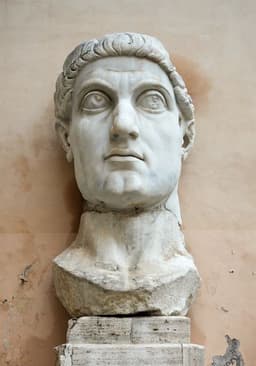
Constantine the Great
Emperor · Ancient
75.5Total
Basic Information
Born
180
272
Died
242
337
Era
Ancient
Ancient
Nationality
Sassanid Empire
Roman Empire
Occupation
Emperor
Emperor
Civilization
Middle Eastern
Western
Score Comparison
Military (10%)
65.0
78.0
Political (20%)
78.0
82.0
Influence (20%)
82.0
75.0
Legacy (20%)
72.0
70.0
Leadership (15%)
78.0
80.0
Strategy (15%)
72.0
72.0
TOTAL
75.6
75.5
Ardashir I — Complete Timeline
224 AD
Battle of HormozdganWar
Ardashir I defeated the Parthian king Artabanus IV at the Battle of Hormozdgan. This victory ended Parthian rule and allowed Ardashir to establish the Sassanid Empire, which would dominate Persia for four centuries.
BattleSassanid FoundingParthian Defeat
Impact: regional
Conquest of the Parthian EmpireWar◆ Major
Following his victory at Hormozdgan, Ardashir I systematically conquered the remaining Parthian territories, including Media, Armenia, and Mesopotamia. He established a centralized administration and a Zoroastrian state church.
ConquestEmpire BuildingZoroastrianism
Impact: regional
Coronation as King of KingsPolitical Action◆ Major
After his victory, Ardashir I was crowned 'Shahanshah' (King of Kings) at Ctesiphon. He claimed descent from the Achaemenid dynasty, legitimizing his rule and reviving Persian imperial traditions.
CoronationImperial TitleLegitimacy
Impact: regionalconstructive
Constantine the Great — Complete Timeline
312 AD
Battle of the Milvian BridgeWar◆ Major
Constantine defeated his rival Maxentius at the Milvian Bridge near Rome. According to tradition, Constantine saw a vision of a cross in the sky with the words 'In this sign, conquer.' The victory made Constantine the sole ruler of the Western Roman Empire and led to his conversion to Christianity.
Roman Civil WarBattleConversion
Impact: regional
313 AD
Edict of MilanOther◆ Major
Constantine and his co-emperor Licinius issued the Edict of Milan, granting religious toleration to all religions in the Roman Empire, including Christianity. The edict ended the persecution of Christians, restored confiscated church property, and established Christianity as a legally recognized religion.
Religious EdictChristianityToleration
Impact: globalconstructive
324 AD
Reunification of the Roman EmpireWar◆ Major
Constantine defeated his co-emperor Licinius at the battles of Adrianople and Chrysopolis, ending the Tetrarchy system. He became the sole ruler of the entire Roman Empire, reuniting the Western and Eastern halves under his control. This reunification was the last time the Roman Empire was united under a single ruler.
Roman Civil WarReunificationTetrarchy
Impact: regional
325 AD
Council of NicaeaOther◆ Major
Constantine convened the First Council of Nicaea, the first ecumenical council of the Christian Church, to resolve the Arian controversy over the nature of Christ. The council produced the Nicene Creed, affirming the divinity of Christ and establishing a unified Christian doctrine. Constantine presided over the council.
Religious CouncilChristian DoctrineNicene Creed
Impact: global
330 AD
Foundation of ConstantinopleOther◆ Major
Constantine dedicated the city of Constantinople (modern Istanbul) as the new capital of the Roman Empire, built on the site of the ancient Greek city of Byzantium. The city was strategically located on the Bosporus strait, controlling trade routes between Europe and Asia. It became the capital of the Eastern Roman Empire for over a thousand years.
City FoundationCapitalByzantine Empire
Impact: globalconstructive
Expert Analysis
Origins
Ardashir I (180–242 AD) rose from a vassal king in Persis to overthrow the Parthian Arsacids, founding the Sassanid Empire in 224 AD. Constantine the Great (272–337 AD) was born in Naissus to a Roman army officer; he became emperor after the death of his father Constantius I in 306 AD. Both men emerged from regional instability—Ardashir from Parthian decline, Constantine from the Tetrarchy’s fragmentation. Their origins reflect contrasting environments: Ardashir’s Persian heritage versus Constantine’s Roman military lineage.
Rise to Power
Ardashir’s path was marked by military conquest. He defeated the Parthian king Artabanus IV at the Battle of Hormozdgan (224 AD), a turning point that led to his coronation as King of Kings (Shahanshah) and the conquest of the Parthian Empire. Constantine’s rise involved political maneuvering and civil wars. He defeated Maxentius at the Battle of the Milvian Bridge (312 AD), attributed to a vision of the cross, and later Licinius, reunifying the Roman Empire by 324 AD. Both men’s rise to power was decisive, but Ardashir’s was more direct and militaristic, while Constantine’s involved religious symbolism and coalition-building.
Leadership & Governance
Ardashir established a centralized Persian state with Zoroastrianism as the state religion, promoting a revival of Achaemenid traditions. He built infrastructure, including cities and canals, and created a feudal system that lasted centuries. Constantine legalized Christianity with the Edict of Milan (313 AD), convened the Council of Nicaea (325 AD) to unify doctrine, and founded Constantinople (330 AD) as a new capital, shifting the empire’s center eastward. Both were transformative leaders, but Constantine’s religious and administrative reforms had a broader and longer-lasting impact on Western civilization.
Triumph & Tragedy
Ardashir’s triumph was the complete overthrow of the Parthian Empire and the establishment of a new dynasty. His tragedy lies in the constant warfare with Rome and internal rebellions, though he died peacefully. Constantine’s triumph includes reunifying the Roman Empire and legalizing Christianity, but his reign saw the execution of his son Crispus and wife Fausta, and his reforms deepened divisions between East and West. Both achieved great successes but faced personal and political costs.
Character & Destiny
Ardashir was a shrewd military strategist and administrator, embodying Persian imperial ambition. Constantine was a visionary pragmatist who used religion to unify his realm. Ardashir’s destiny was to restore Persian glory; Constantine’s was to transform the Roman Empire into a Christian state. Their characters reflect their missions: Ardashir’s ruthlessness and focus versus Constantine’s adaptability and ambition.
Legacy
Ardashir’s legacy is the Sassanid Empire, which rivaled Rome for 400 years and preserved Persian culture. He is revered as a national hero in Iran. Constantine’s legacy is immense: Christianity became the dominant religion of Europe, Constantinople (Istanbul) remained a major city for centuries, and his reign marked the beginning of the Byzantine Empire. Both left enduring marks, but Constantine’s influence on religion, law, and governance is more globally significant.
Conclusion
Ardashir I and Constantine the Great were both transformative emperors. Ardashir’s military prowess and empire-building earned him high scores in military (78), influence (82), and territorial (72). Constantine’s scores in military (78), influence (82), and diplomacy (72) are similar, but his cultural and religious impact gives him an edge. The score gap of 0.1 favors Ardashir, but Constantine’s long-term influence on world history is greater. **Winner: Constantine the Great.**
**Scores:**
- Ardashir I: M=65, P=78, I=82, L=72, D=78, S=72, T=76
- Constantine: M=78, P=82, I=75, L=70, D=80, S=72, T=76
Rankings
🥇
Ardashir ILeader
Mil: 65.0Pol: 78.0Inf: 82.0
75.6
🥈
Constantine the Great
Mil: 78.0Pol: 82.0Inf: 75.0
75.5
+0.1 behind
How This Comparison Works
Algorithm
Each figure is scored on 6 dimensions (0—100 scale) based on structured historical data: Military (10%), Political (20%), Influence (20%), Legacy (20%), Leadership (15%), Strategy (15%). The weighted total produces the final ranking.
Data Sources
Scores are computed from structured sub-indicators in the database. Scale factors adjust for era (Ancient ×0.85, Modern ×1.0) and civilization size (Eastern ×1.05, Other ×0.80) to account for differences in population and military scale.
Maximum 3 Figures
Comparisons are limited to 2—3 figures to ensure readability and statistical meaningfulness.
Error Margins
±5 points per dimension — Sub-scores are derived from historical records with inherent uncertainty. Two figures within 5 points on a dimension should be considered roughly equivalent in that area.
Total Score Accuracy
±3 points overall — The weighted combination of 6 dimensions produces a total score with approximately ±3 points of uncertainty. Differences of less than 3 points are not statistically significant— the figures are effectively tied.
Known Limitations
- Historical records are incomplete and uneven across civilizations
- Figures from oral-tradition societies may be underrepresented
- Occupation labels can misclassify multi-role figures
- Scores measure capability and impact, not moral character
- Quantitative scoring is a comparison tool, not absolute truth
Capability Radar
Military (10%) — Battles & Warfare
Battles
85
85
Win Rate
90
80
Expansion
85
85
Political (20%) — Governance & Reform
Reform
90
95
Diplomacy
75
90
Economy
80
80
Influence (20%) — Cultural & Global Reach
Cultural
80
95
Global
80
95
Legacy (20%) — Historical Impact
Historical
85
95
Longevity
85
95
Leadership (15%) — Power & Stability
Tenure
80
85
Stability
85
70
Strategy (15%) — Tactics & Innovation
Strategy
85
85
Tactics
80
75
Reform
90
90
Similar Comparisons
Comments & Discussion
No comments yet. Be the first to share your thoughts!