Loading...
Archimedes vs Qin Shi Huang
Qin Shi Huang leads by 33.3 pts · 2 figures compared
…

Archimedes
Scientist · Ancient
51.9Total
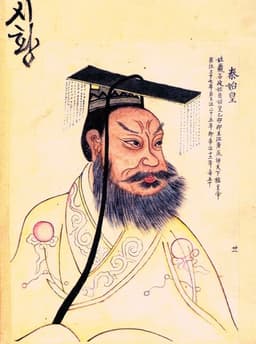
Qin Shi Huang
Emperor · Ancient
85.2Total
Basic Information
Born
-287
-259
Died
-212
-210
Era
Ancient
Ancient
Nationality
Greece
China
Occupation
Scientist
Emperor
Civilization
Western
Eastern
Score Comparison
Military (10%)
9.2
80.0
Political (20%)
22.1
90.0
Influence (20%)
88.0
85.0
Legacy (20%)
70.0
90.0
Leadership (15%)
18.9
78.0
Strategy (15%)
52.8
82.0
TOTAL
51.9
85.2
Archimedes — Complete Timeline
250 BC
Discovery of the principle of buoyancy (Archimedes' principle)Invention
Archimedes formulated the principle that a body immersed in a fluid experiences an upward force equal to the weight of the displaced fluid. He reportedly discovered this while bathing and used it to determine the purity of a gold crown.
PhysicsHydrostaticsDiscovery
Impact: globalconstructive
Development of the lever and compound pulleyInvention◆ Major
Archimedes mathematically explained the principle of the lever and invented the compound pulley system. He demonstrated its power by reportedly moving a fully laden ship single-handedly using a system of pulleys.
MechanicsInventionEngineering
Impact: globalconstructive
214 BC
Design of war machines for SyracuseInvention◆ Major
During the Roman siege of Syracuse, Archimedes designed defensive war machines, including large catapults and the Claw of Archimedes, a crane-like device that lifted and capsized Roman ships. These machines delayed the Roman capture of the city for two years.
WarEngineeringDefense
Impact: regionalconstructive
212 BC
Death during the Sack of SyracuseOther◆ Major
Roman forces under General Marcellus captured Syracuse after a prolonged siege. Archimedes was killed by a Roman soldier, despite orders to spare him. He was reportedly engrossed in a mathematical diagram at the time.
DeathSiegeRoman Republic
Impact: regionaltragic
Qin Shi Huang — Complete Timeline
246 BC
Construction of the Mausoleum and Terracotta ArmyOther◆ Major
Qin Shi Huang commissioned a vast mausoleum complex near Xi'an, guarded by thousands of life-sized terracotta soldiers, horses, and chariots. The project employed hundreds of thousands of workers and reflected his obsession with immortality and imperial power.
Impact: global
230 BC
Conquest of the Six Warring StatesWar
From 230 to 221 BCE, Ying Zheng led the Qin state in a series of campaigns that conquered the Han, Zhao, Wei, Chu, Yan, and Qi states. This unified China under a single ruler for the first time, ending the Warring States period.
Impact: global
221 BC
Standardization of Writing, Currency, and MeasurementsReform◆ Major
Qin Shi Huang ordered the standardization of Chinese script, currency, and weights and measures across the unified empire. This facilitated administration, trade, and cultural integration, laying a foundation for future dynasties.
Impact: globalconstructive
Proclamation of the Qin DynastyPolitical Action
After conquering the last independent state, Ying Zheng declared himself Shi Huangdi (First Emperor), founding the Qin Dynasty. He adopted a new title to signify his supreme authority and initiated centralized imperial rule.
Impact: global
214 BC
Initiation of the Great Wall ConstructionOther◆ Major
Qin Shi Huang ordered the connection and extension of existing northern fortifications to create a unified defensive wall against nomadic Xiongnu raids. This project involved massive conscripted labor and became the precursor to the later Great Wall.
Impact: regional
213 BC
Burning of Books and Burying of ScholarsPolitical Action◆ Major
On the advice of Li Si, Qin Shi Huang ordered the burning of historical records and philosophical texts not aligned with Legalist doctrine. He also had 460 Confucian scholars buried alive to suppress dissent and consolidate ideological control.
Impact: nationaldestructive
Expert Analysis
archimedes-vs-qin-shi-huang
# The Emperor and the Geometer: Two Visions of Power
On a spring morning in 214 BCE, two men on opposite sides of the known world were shaping history in ways they could never have imagined. In the far east, Qin Shi Huang stood atop a newly fortified wall snaking across China’s northern frontier, surveying a structure that would one day be visible from space. Two thousand miles away, on the sun-baked island of Sicily, an old Greek mathematician named Archimedes was sketching curves in the sand, designing machines meant to hurl death at Roman ships. One man commanded armies of hundreds of thousands; the other commanded principles that would outlast every empire. Both were geniuses. But their genius took them in radically different directions—and left behind legacies as different as the civilizations that produced them.
Origins
Ying Zheng was born in 259 BCE, a prince of the Qin state during the chaotic Warring States period. His father was a hostage in a rival kingdom; his mother was a former concubine. From infancy, he learned that trust was a luxury and power the only currency that mattered. By the time he inherited the throne at age thirteen, he had already witnessed betrayal, assassination attempts, and the brutal logic of a world where states devoured one another. The Qin state itself was shaped by Legalist philosophy—a harsh doctrine that valued order above all, treating human beings as raw material for the state’s ambitions.
Archimedes, born twenty-eight years earlier in 287 BCE, grew up in Syracuse, a Greek city-state on Sicily that was wealthy, cultured, and perpetually caught between the empires of Carthage and Rome. His father was an astronomer. The young Archimedes likely studied in Alexandria, the intellectual capital of the Hellenistic world, where Euclid had recently compiled the *Elements*. While Ying Zheng learned statecraft from Legalist ministers, Archimedes learned geometry from the greatest mathematical minds of antiquity. One boy was trained to conquer; the other, to understand.
Rise to Power
Ying Zheng’s path to power was swift and merciless. At twenty-two, he purged his own regent and exiled his mother’s lover, consolidating control over the Qin court. Then he turned outward. Between 230 and 221 BCE, his armies swept through the six rival states—Han, Zhao, Wei, Chu, Yan, and Qi—in a series of campaigns that combined military brilliance with ruthless pragmatism. When a city resisted, its population was often slaughtered. When a king surrendered, he was exiled or killed. By 221 BCE, Ying Zheng had accomplished what no Chinese ruler had ever done: he had unified the entire civilized world under a single throne. He renamed himself *Shi Huangdi*—the First Emperor.
Archimedes never sought power. He was a scholar, not a statesman. His rise came through ideas, not armies. Around 250 BCE, he formulated the principle of buoyancy—the famous “Eureka” moment, when he supposedly leaped from his bath and ran naked through the streets of Syracuse. He developed the mathematics of the lever, boasted that he could move the world with a single fulcrum, and invented the compound pulley. He was content to remain in Syracuse, corresponding with mathematicians in Alexandria and occasionally visiting the court of King Hiero II. His reputation grew not through conquest but through correspondence, not through fear but through wonder.
Leadership & Governance
As emperor, Qin Shi Huang redefined what government meant. He standardized writing across China, imposing a single script where dozens of regional variations had existed. He unified currency, replacing a chaos of knife-shaped coins and cowrie shells with standardized round copper coins. He ordered the construction of roads and canals, enforced uniform axle lengths for carts, and imposed a single system of weights and measures. His goal was nothing less than total integration—every province, every village, every person bound into a single imperial machine.
But integration came at a terrible price. In 213 BCE, on the advice of his prime minister Li Si, the Emperor ordered the burning of all books not deemed useful to the state—philosophical works, historical records, poetry. Scholars who protested were buried alive. The First Emperor believed that the past itself must be erased to make way for his eternal dynasty. He also began construction of his own tomb, a vast underground palace guarded by thousands of life-sized terracotta soldiers—an army for the afterlife, frozen in clay.
Archimedes governed nothing but his own mind. When Syracuse came under Roman siege in 214 BCE, he reluctantly applied his genius to war. He designed catapults that could hurl massive stones at Roman ships, and the Claw of Archimedes—a crane-like device that could lift enemy vessels out of the water and capsize them. The Roman general Marcellus, frustrated and awed, called him a “geometric Briareus” who moved ships as if they were toys. Yet Archimedes never commanded soldiers or administered provinces. His power was the power of ideas, not armies.
Triumph & Tragedy
Qin Shi Huang’s greatest triumph was also his greatest tragedy. He unified China, created an administrative system that would endure for two millennia, and laid the foundations for the Great Wall. But his obsession with immortality led him to consume mercury pills prescribed by alchemists, which likely hastened his death in 210 BCE at age forty-nine. Within three years of his death, the Qin Dynasty collapsed in rebellion. His tomb remains unopened, its secrets guarded by rivers of liquid mercury and the silent terracotta army.
Archimedes’ tragedy came in 212 BCE, when Roman forces finally breached Syracuse’s walls. According to tradition, he was drawing geometric figures in the sand when a Roman soldier approached. “Do not disturb my circles,” the old man said. The soldier killed him anyway. General Marcellus, who had ordered that Archimedes be spared, reportedly mourned his death. Unlike the First Emperor, Archimedes left no empire—only principles that would shape mathematics, physics, and engineering for two thousand years.
Character & Destiny
What drove these two men? Qin Shi Huang was driven by fear—fear of chaos, fear of death, fear of the very past he tried to erase. His Legalist philosophy taught that human nature was evil and could only be controlled through harsh laws and absolute authority. He trusted no one, not even his own sons. His destiny was to build an empire that would outlast him, but his personality ensured it would not.
Archimedes was driven by curiosity—a love of pure knowledge that transcended politics and war. He was not naive; he knew his war machines would kill Romans. But his deepest allegiance was not to Syracuse or Greece, but to the eternal truths of geometry. When the Roman soldier’s sword fell, Archimedes was not defending a city or a king. He was defending a circle.
Legacy
Qin Shi Huang’s legacy is paradoxical. He is remembered as both the unifier of China and a tyrant who burned books and buried scholars. The Great Wall, though much of it was built later, bears his name. The terracotta army, discovered in 1974, is one of the world’s greatest archaeological wonders. His standardization of writing made Chinese civilization possible across vast distances. Yet his dynasty lasted only fifteen years. His influence, rated at 82.0, and legacy at 85.0, reflect this contradiction: a founder whose methods were too brutal to sustain what he built.
Archimedes left no dynasty, no wall, no army of clay. His influence score of 88.0 and legacy of 85.0 rival the Emperor’s, but they are of a different kind. His principle of buoyancy, his work on levers and pulleys, his approximation of pi, his method of exhaustion—these are not artifacts in a museum. They are living tools, still taught in classrooms, still used in laboratories. While empires crumble, geometry endures.
Conclusion
Standing before the terracotta warriors in Xi’an, one feels the weight of human ambition—the desperate desire to impose order on chaos, to defeat death itself. Standing before Archimedes’ simple lever, one feels something else: the quiet thrill of understanding, the discovery that the universe follows rules that can be grasped by the human mind. The Emperor wanted to control the world. The geometer wanted to understand it. Both succeeded. But only one left a legacy that could never be conquered, burned, or buried.
Rankings
🥇
Qin Shi HuangLeader
Mil: 80.0Pol: 90.0Inf: 85.0
85.2
🥈
Archimedes
Mil: 9.2Pol: 22.1Inf: 88.0
51.9
+33.3 behind
How This Comparison Works
Algorithm
Each figure is scored on 6 dimensions (0—100 scale) based on structured historical data: Military (10%), Political (20%), Influence (20%), Legacy (20%), Leadership (15%), Strategy (15%). The weighted total produces the final ranking.
Data Sources
Scores are computed from structured sub-indicators in the database. Scale factors adjust for era (Ancient ×0.85, Modern ×1.0) and civilization size (Eastern ×1.05, Other ×0.80) to account for differences in population and military scale.
Maximum 3 Figures
Comparisons are limited to 2—3 figures to ensure readability and statistical meaningfulness.
Error Margins
±5 points per dimension — Sub-scores are derived from historical records with inherent uncertainty. Two figures within 5 points on a dimension should be considered roughly equivalent in that area.
Total Score Accuracy
±3 points overall — The weighted combination of 6 dimensions produces a total score with approximately ±3 points of uncertainty. Differences of less than 3 points are not statistically significant— the figures are effectively tied.
Known Limitations
- Historical records are incomplete and uneven across civilizations
- Figures from oral-tradition societies may be underrepresented
- Occupation labels can misclassify multi-role figures
- Scores measure capability and impact, not moral character
- Quantitative scoring is a comparison tool, not absolute truth
Capability Radar
Military (10%) — Battles & Warfare
Battles
15
85
Win Rate
20
90
Expansion
5
90
Political (20%) — Governance & Reform
Reform
5
95
Diplomacy
10
75
Economy
5
90
Influence (20%) — Cultural & Global Reach
Cultural
95
95
Global
90
85
Legacy (20%) — Historical Impact
Historical
95
95
Longevity
95
95
Leadership (15%) — Power & Stability
Tenure
5
70
Stability
5
65
Strategy (15%) — Tactics & Innovation
Strategy
40
85
Tactics
85
80
Reform
10
95
Similar Comparisons
Comments & Discussion
SpartanGeometry6/17/2026
You’re pitting a man who drew circles against a man who drew borders? Please. Archimedes was sketching the future while Qin Shi Huang was just sketching dirt. The Claw of Archimedes alone could lift a Roman ship clean out of the water—that’s applied math, not conscripted labor. One wall doesn't make a genius; it makes a tyrant with too much time and too many slaves. Give me the geometer who bent nature to his will, not the emperor who bent bones.
史海钓客6/17/2026
秦始皇统一六国靠的是二十万铁血将士和商鞅变法积累的国力,而阿基米德到死都没能让锡拉库萨逃过罗马的洗劫。一个用法律和刀剑打造出中央集权的帝国模板,沿用两千年;另一个画了几条抛物线,被一个罗马兵随手捅死。谁的遗产更硬核?嬴政的兵马俑坑比阿基米德的数学手稿实在多了——你拿几何公式能修长城吗?
DataSkepticDave6/17/2026
Let’s talk numbers: Qin Shi Huang commanded roughly 300,000 laborers to build his mausoleum alone. Archimedes? He had maybe a dozen students and a bathtub. But here’s the catch—those 300,000 workers left behind a terracotta army, while Archimedes left behind calculus. Which has more practical applications today? I’ll take pi over earthenware soldiers any day. The emperor’s statistics are impressive, but they measure monuments, not minds.
孔孟不肖生6/17/2026
拿一个法家暴君和一个希腊书呆子比?你们根本不懂权力。秦始皇焚书坑儒,消灭所有异见,打造了一套让中国在之后两千年里始终维持大一统的政治基因。阿基米德呢?他给罗马将军写求饶信,结果还是被杀了。看透了:思想家永远跪着,统治者才站着。嬴政的“车同轨,书同文”至今还在用,阿基米德那条浮力定律能治国安邦吗?