Loading...
Ada Lovelace vs Qin Shi Huang
Qin Shi Huang leads by 31.4 pts · 2 figures compared
…

Ada Lovelace
Scientist · Modern
53.8Total
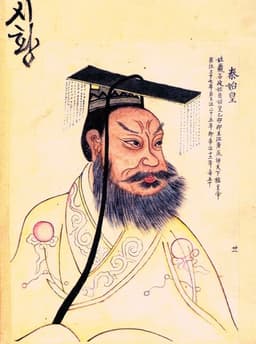
Qin Shi Huang
Emperor · Ancient
85.2Total
Basic Information
Born
1815
-259
Died
1852
-210
Era
Modern
Ancient
Nationality
United Kingdom
China
Occupation
Scientist
Emperor
Civilization
Western
Eastern
Score Comparison
Military (10%)
25.1
80.0
Political (20%)
71.6
90.0
Influence (20%)
48.6
85.0
Legacy (20%)
45.8
90.0
Leadership (15%)
78.0
78.0
Strategy (15%)
52.5
82.0
TOTAL
53.8
85.2
Ada Lovelace — Complete Timeline
1833 AD
Collaboration with Charles BabbageOther◆ Major
Ada Lovelace met Charles Babbage at a party and became fascinated with his Difference Engine. She later studied his Analytical Engine in depth, corresponding with him extensively. Her mathematical insight and ability to explain the machine's potential were crucial to its conceptual development.
CollaborationBabbageAnalytical Engine
Impact: globalconstructive
1834 AD
Ada's mathematical education and mentorship by Augustus De MorganCultural
Lovelace studied advanced mathematics under the tutelage of Augustus De Morgan, a prominent mathematician. She corresponded with him on topics including calculus and logic. This education provided the foundation for her later work on the Analytical Engine.
EducationMathematicsDe Morgan
Impact: nationalconstructive
1843 AD
Publication of the first computer algorithmInvention
Ada Lovelace published her translation of Luigi Menabrea's article on Charles Babbage's Analytical Engine, supplemented with her own extensive notes. In Note G, she described a method for calculating Bernoulli numbers using the engine, which is recognized as the first computer program.
First AlgorithmAnalytical EngineProgramming
Impact: globalconstructive
Recognition of the Analytical Engine's potential beyond calculationCultural◆ Major
In her notes, Lovelace argued that the Analytical Engine could manipulate symbols and create music or art if programmed appropriately. She envisioned a general-purpose machine capable of any task that could be described algorithmically, anticipating modern computing concepts.
General Purpose ComputingVisionSymbolic Manipulation
Impact: globalconstructive
1852 AD
Ada's death from uterine cancerOther
Ada Lovelace died at age 36 from uterine cancer, likely exacerbated by bloodletting treatments. She was buried next to her father, Lord Byron, in the Church of St. Mary Magdalene in Hucknall, Nottinghamshire. Her contributions were largely forgotten until the mid-20th century.
DeathCancerBurial
Impact: nationaltragic
Qin Shi Huang — Complete Timeline
246 BC
Construction of the Mausoleum and Terracotta ArmyOther◆ Major
Qin Shi Huang commissioned a vast mausoleum complex near Xi'an, guarded by thousands of life-sized terracotta soldiers, horses, and chariots. The project employed hundreds of thousands of workers and reflected his obsession with immortality and imperial power.
Impact: global
230 BC
Conquest of the Six Warring StatesWar
From 230 to 221 BCE, Ying Zheng led the Qin state in a series of campaigns that conquered the Han, Zhao, Wei, Chu, Yan, and Qi states. This unified China under a single ruler for the first time, ending the Warring States period.
Impact: global
221 BC
Standardization of Writing, Currency, and MeasurementsReform◆ Major
Qin Shi Huang ordered the standardization of Chinese script, currency, and weights and measures across the unified empire. This facilitated administration, trade, and cultural integration, laying a foundation for future dynasties.
Impact: globalconstructive
Proclamation of the Qin DynastyPolitical Action
After conquering the last independent state, Ying Zheng declared himself Shi Huangdi (First Emperor), founding the Qin Dynasty. He adopted a new title to signify his supreme authority and initiated centralized imperial rule.
Impact: global
214 BC
Initiation of the Great Wall ConstructionOther◆ Major
Qin Shi Huang ordered the connection and extension of existing northern fortifications to create a unified defensive wall against nomadic Xiongnu raids. This project involved massive conscripted labor and became the precursor to the later Great Wall.
Impact: regional
213 BC
Burning of Books and Burying of ScholarsPolitical Action◆ Major
On the advice of Li Si, Qin Shi Huang ordered the burning of historical records and philosophical texts not aligned with Legalist doctrine. He also had 460 Confucian scholars buried alive to suppress dissent and consolidate ideological control.
Impact: nationaldestructive
Expert Analysis
ada-lovelace-vs-qin-shi-huang
# The Emperor and the Enchantress: Two Visions of Power and Creation
In the winter of 221 BC, Ying Zheng stood before the assembled nobles of a newly conquered China and declared himself *Shi Huangdi*—the First Emperor. He had crushed six kingdoms, standardized the very script of his people, and begun work on a tomb guarded by thousands of life-sized clay warriors, each face unique. Two thousand years later and half a world away, in the autumn of 1843, a young English mathematician named Ada Lovelace published a set of notes that contained the first algorithm ever designed for a machine that did not yet exist—a machine that could, she wrote, compose music, weave patterns, and think in symbols, not just numbers. One man sought to freeze time in stone and iron; one woman glimpsed a future that would not arrive for another century. What drove them to such different visions of power, and why did their paths diverge so dramatically?
Origins
Qin Shi Huang was born into war. The son of a king and a concubine, Ying Zheng ascended the throne of the Qin state at age thirteen in 246 BC, surrounded by chaos. The Warring States period had torn China apart for centuries—seven kingdoms locked in endless conflict, each vying for supremacy. His childhood was a crucible of ambition and paranoia, where a single misstep meant death. He learned early that survival required absolute control.
Ada Lovelace was born into privilege and poetry. Her father was Lord Byron, the Romantic poet whose scandalous life and early death left her mother, Lady Anne Isabella Milbanke, determined to stamp out any trace of artistic "madness" in her daughter. So Ada was raised on mathematics and logic—a cold antidote to her father's fire. Yet she inherited something else: imagination. At seventeen, she was introduced to Charles Babbage at a party, and when she saw his Difference Engine—a brass-and-gear calculating machine—she did not see a mere adding device. She saw possibility.
Rise to Power
Ying Zheng's rise was forged in blood. From 230 to 221 BC, he led his armies in a relentless campaign of conquest, absorbing the Han, Zhao, Wei, Chu, Yan, and Qi states one by one. Each victory tightened his grip, and each defeat—rare as they were—only hardened his resolve. By 221 BC, at age thirty-eight, he ruled all of China. He did not inherit power; he seized it, province by province, and then reshaped the world in his image.
Ada Lovelace's rise was quieter, but no less revolutionary. In 1834, she began studying advanced mathematics under Augustus De Morgan, one of the era's great minds. She corresponded with Babbage, translating and annotating his work. In 1843, she published her translation of Luigi Menabrea's article on the Analytical Engine—but her own notes were three times longer than the original. In those notes, she described how the machine could be programmed to calculate Bernoulli numbers. It was the first computer algorithm. She was twenty-eight, and she had just invented a future no one else could see.
Leadership & Governance
Qin Shi Huang ruled with an iron fist and a vision of unity. He standardized writing, currency, and measurements across his empire—a feat of bureaucratic genius that held China together for millennia. He ordered the construction of a Great Wall to protect his northern borders, connecting and extending existing fortifications into a single defensive line. He also burned books and buried scholars alive, suppressing any philosophy that challenged Legalist doctrine. His governance was efficiency without mercy, order without freedom.
Ada Lovelace governed nothing and no one. She was a scientist, not a ruler. But her leadership was intellectual: she saw the Analytical Engine not as a calculator, but as a universal machine. "The Analytical Engine," she wrote, "weaves algebraic patterns just as the Jacquard loom weaves flowers and leaves." She understood that machines could manipulate symbols, not just numbers—that they could create music, art, and logic. It was a vision so ahead of its time that it would take a century for the world to catch up.
Triumph & Tragedy
Qin Shi Huang's greatest triumph was also his greatest tragedy. He unified China, but at a terrible cost. His mausoleum, guarded by the Terracotta Army, was a monument to his obsession with immortality—he sought elixirs of eternal life, and died at age forty-nine in 210 BC, possibly from mercury poisoning. Within three years of his death, the Qin Dynasty collapsed, consumed by rebellion and chaos. He had built an empire that could not survive without him.
Ada Lovelace's triumph was unrecognized in her lifetime. Her algorithm was never run; the Analytical Engine was never built. She died at age thirty-six in 1852, from uterine cancer, worsened by the bloodletting treatments of her doctors. She was buried beside her father, the poet she never knew. For a century, her work was forgotten. Then, in 1953, her notes were republished in a book called *Faster Than Thought*, and the world finally understood what she had done. She had written the first program for a computer that would not exist for another hundred years.
Character & Destiny
Qin Shi Huang was a man of absolute will, driven by fear of chaos and death. He centralized power because he trusted no one; he standardized everything because difference meant division. His personality shaped a dynasty of iron—and iron, as he discovered, can shatter. He believed he could command time itself, but time buried him.
Ada Lovelace was a woman of dual inheritance: the poet's imagination and the mathematician's precision. She saw patterns where others saw gears. Her destiny was not to build an empire, but to conceive an idea—and ideas, unlike empires, do not die. She understood that the true power of creation was not in controlling people, but in freeing thought.
Legacy
Qin Shi Huang's legacy is written in stone and soil. The Great Wall still stands, though much of what we see today was built later. The standardized script he ordered is the direct ancestor of modern Chinese writing. The bureaucratic structure he created—centralized, meritocratic, ruthless—became the template for imperial China for two thousand years. He is remembered as both founder and tyrant, builder and destroyer.
Ada Lovelace's legacy is written in code. Every time a computer runs a program, it follows the path she first imagined. She is honored as the first computer programmer, her name woven into the fabric of the digital age. The programming language Ada, developed by the U.S. Department of Defense, bears her name. She is remembered as a visionary who saw, in a room full of brass and gears, a world of endless possibility.
Conclusion
Two figures, separated by two millennia and an ocean of culture, yet bound by a common thread: both saw beyond their own time. Qin Shi Huang looked at a fractured China and imagined unity, then imposed it with fire and sword. Ada Lovelace looked at a calculating machine and imagined thought, then described it with ink and paper. One built a wall to keep the world out; the other built a bridge to let the future in. In the end, the emperor's empire crumbled, but the enchantress's idea endured—not because she was gentler, but because she understood that true creation is not about commanding the world, but about setting it free to imagine itself.
Rankings
🥇
Qin Shi HuangLeader
Mil: 80.0Pol: 90.0Inf: 85.0
85.2
🥈
Ada Lovelace
Mil: 25.1Pol: 71.6Inf: 48.6
53.8
+31.4 behind
How This Comparison Works
Algorithm
Each figure is scored on 6 dimensions (0—100 scale) based on structured historical data: Military (10%), Political (20%), Influence (20%), Legacy (20%), Leadership (15%), Strategy (15%). The weighted total produces the final ranking.
Data Sources
Scores are computed from structured sub-indicators in the database. Scale factors adjust for era (Ancient ×0.85, Modern ×1.0) and civilization size (Eastern ×1.05, Other ×0.80) to account for differences in population and military scale.
Maximum 3 Figures
Comparisons are limited to 2—3 figures to ensure readability and statistical meaningfulness.
Error Margins
±5 points per dimension — Sub-scores are derived from historical records with inherent uncertainty. Two figures within 5 points on a dimension should be considered roughly equivalent in that area.
Total Score Accuracy
±3 points overall — The weighted combination of 6 dimensions produces a total score with approximately ±3 points of uncertainty. Differences of less than 3 points are not statistically significant— the figures are effectively tied.
Known Limitations
- Historical records are incomplete and uneven across civilizations
- Figures from oral-tradition societies may be underrepresented
- Occupation labels can misclassify multi-role figures
- Scores measure capability and impact, not moral character
- Quantitative scoring is a comparison tool, not absolute truth
Capability Radar
Military (10%) — Battles & Warfare
Battles
0
85
Win Rate
0
90
Expansion
1
90
Political (20%) — Governance & Reform
Reform
92
95
Diplomacy
93
75
Economy
99
90
Influence (20%) — Cultural & Global Reach
Cultural
65
95
Global
65
85
Legacy (20%) — Historical Impact
Historical
70
95
Longevity
75
95
Leadership (15%) — Power & Stability
Tenure
90
70
Stability
100
65
Strategy (15%) — Tactics & Innovation
Strategy
3
85
Tactics
9
80
Reform
12
95
Similar Comparisons
Comments & Discussion
Tomb Raider6/17/2026
Qin Shi Huang was the ultimate data hoarder—standardized writing, weights, roads, even axle lengths. Ada Lovelace imagined a machine that could process *any* symbol. He tried to lock down every variable in his empire; she opened Pandora’s box of computation. One built a wall, the other a theoretical bridge to the future. I’d rather inherit Ada’s notebook than his terra-cotta army.
兵马俑黑客6/17/2026
说秦始皇是“第一工程师”的,醒醒吧!他焚书坑儒、活埋学者,用严刑峻法把思想钉死。而洛夫莱斯,一个女性在维多利亚时代就敢写算法,比差分机硬件早了上百年。一个用铁腕标准化文字,一个用智慧解放符号思考。谁对人类遗产贡献更大?我绝对投那被遗忘的数学家一票。
Lexicon Slayer6/17/2026
Classics scholar here: Qin’s script standardization (小篆) was radical—he erased centuries of regional variation to forge one written language still readable today. Ada’s algorithm was a ghost. No machine ran it, no code executed. She literally described *potential* computation. Apples vs. terracotta oranges. Qin actually transformed how millions communicated; Ada imagined a future few lived to see.
幻影诗人6/17/2026
艾达是浪漫主义之女,她的“诗句”不是韵文而是算法。拜伦那句“知识之树不是生命之树”竟被女儿逆写成计算机科学的根基。秦始皇追求的是永生——建长城、筑陵墓、寻仙药。一个想冻住时间,一个想预言未来。诗人后代 vs 暴君始祖,谁更懂“创造”?我赌写代码的女孩。
Null Pointer6/17/2026
Data skeptic: Lovelace’s “first algorithm” is wildly overhyped. Babbage’s machine never worked, her notes were mostly translation, and she died before any code could be tested. Qin Shi Huang built a unified empire *and* left intact records that shaped China for two millennia. Ada gets points for vision, but the Emperor’s legacy is empirical fact, not romantic conjecture.