Loading...
Archimedes vs Sima Qian
Archimedes leads by 3.5 pts · 2 figures compared
…

Archimedes
Scientist · Ancient
51.9Total
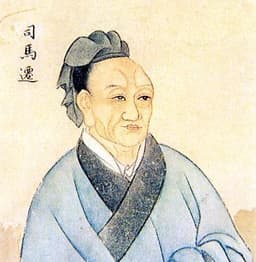
Sima Qian
Scientist · Ancient
48.4Total
Basic Information
Born
-287
-145
Died
-212
-86
Era
Ancient
Ancient
Nationality
Greece
China
Occupation
Scientist
Scientist
Civilization
Western
Eastern
Score Comparison
Military (10%)
9.2
13.5
Political (20%)
22.1
28.6
Influence (20%)
88.0
68.0
Legacy (20%)
70.0
70.0
Leadership (15%)
18.9
21.7
Strategy (15%)
52.8
50.4
TOTAL
51.9
48.4
Archimedes — Complete Timeline
250 BC
Discovery of the principle of buoyancy (Archimedes' principle)Invention
Archimedes formulated the principle that a body immersed in a fluid experiences an upward force equal to the weight of the displaced fluid. He reportedly discovered this while bathing and used it to determine the purity of a gold crown.
PhysicsHydrostaticsDiscovery
Impact: globalconstructive
Development of the lever and compound pulleyInvention◆ Major
Archimedes mathematically explained the principle of the lever and invented the compound pulley system. He demonstrated its power by reportedly moving a fully laden ship single-handedly using a system of pulleys.
MechanicsInventionEngineering
Impact: globalconstructive
214 BC
Design of war machines for SyracuseInvention◆ Major
During the Roman siege of Syracuse, Archimedes designed defensive war machines, including large catapults and the Claw of Archimedes, a crane-like device that lifted and capsized Roman ships. These machines delayed the Roman capture of the city for two years.
WarEngineeringDefense
Impact: regionalconstructive
212 BC
Death during the Sack of SyracuseOther◆ Major
Roman forces under General Marcellus captured Syracuse after a prolonged siege. Archimedes was killed by a Roman soldier, despite orders to spare him. He was reportedly engrossed in a mathematical diagram at the time.
DeathSiegeRoman Republic
Impact: regionaltragic
Sima Qian — Complete Timeline
108 BC
Appointed Grand HistorianOther◆ Major
Sima Qian succeeded his father Sima Tan as Grand Historian (Taishi) of the Han court. This position gave him access to the imperial archives and library, providing the resources necessary to compile a comprehensive history of China from ancient times to the Han dynasty.
Han DynastyHistoriographyCareer
Impact: regionalconstructive
99 BC
Defended Li LingPolitical Action◆ Major
Sima Qian spoke in defense of General Li Ling, who had surrendered to the Xiongnu after a failed campaign. Emperor Wu of Han interpreted this as criticism of his brother-in-law Li Guangli, who had also performed poorly. Sima Qian was sentenced to death for defaming the emperor.
Han DynastyPolitical RepressionXiongnu Wars
Impact: nationaldestructive
98 BC
Suffered CastrationOther◆ Major
Sima Qian chose castration over execution or a fine to continue his historical work. Under Han law, castration was one of the Five Punishments and carried immense social stigma. He endured this to complete the Records of the Grand Historian, viewing his work as a duty to his father and to history.
Han DynastyPunishmentPersonal Sacrifice
Impact: nationaldestructive
91 BC
Completed Records of the Grand HistorianOther◆ Major
Sima Qian completed the Shiji (Records of the Grand Historian), a 130-chapter work covering 2,000 years of Chinese history from the Yellow Emperor to Emperor Wu of Han. It introduced the annals-biography format, established the model for Chinese historiography, and included treatises on economics, astronomy, and music.
HistoriographyChinese LiteratureCultural Heritage
Impact: globalconstructive
Expert Analysis
Origins
Archimedes was born around 287 BCE in Syracuse, a Greek city-state on Sicily. His father was Phidias, an astronomer. Archimedes likely studied in Alexandria, then the intellectual center of the Hellenistic world, under successors of Euclid. He returned to Syracuse, where he lived and worked for most of his life. His early work focused on geometry, specifically areas and volumes of curved surfaces.
Sima Qian was born around 145 BCE in Longmen, Han China. His father, Sima Tan, served as Grand Historian (Taishi) at the Han court. Sima Qian received a rigorous education in classics, history, and astronomy from his father and other scholars. He traveled extensively in his youth, gathering firsthand accounts and historical materials for the history his father had begun. This upbringing shaped his lifelong commitment to historical scholarship.
Rise to Power
Archimedes rose to prominence through his mathematical discoveries. His principle of buoyancy, supposedly discovered while bathing, demonstrated his ability to connect observation to fundamental laws. He also established the principle of the lever, stating, "Give me a place to stand, and I shall move the Earth." His inventions, such as the Archimedes screw for raising water, gained him fame. During the Roman siege of Syracuse (214–212 BCE), he designed war machines that delayed the city's fall, earning him direct influence with Syracuse's ruler, King Hiero II.
Sima Qian rose through the Han bureaucracy. In 110 BCE, his father died, and Sima Qian inherited the position of Grand Historian. He gained access to the imperial archives and began compiling historical records. His career peaked when he defended General Li Ling, who had surrendered to the Xiongnu after a failed campaign in 99 BCE. Emperor Wu of Han interpreted this defense as criticism of his brother Li Guangli, leading to Sima Qian's downfall.
Leadership & Governance
Archimedes did not hold political office but served as a technical advisor to King Hiero II. His leadership was informal, based on intellectual authority. He designed defensive weapons for Syracuse, but his governance impact was limited to his inventions. His political score of 22.1 reflects his minimal direct role in administration.
Sima Qian's leadership was scholarly and bureaucratic. As Grand Historian, he oversaw the imperial archives and calendar. His governance approach prioritized historical accuracy and moral judgment. After his castration, he chose to complete the Shiji rather than commit suicide, demonstrating a single-minded dedication to his work. His political score of 28.6 is slightly higher than Archimedes, but still low due to his subordinate role and punishment.
Triumph & Tragedy
Archimedes' greatest triumph was his formulation of the principle of buoyancy and his mathematical proofs for the lever and compound pulley. These discoveries scored 88.0 in influence. He also accurately calculated the area under a parabola and the volume of a sphere. His tragedy was his death during the Sack of Syracuse in 212 BCE, killed by a Roman soldier despite orders from General Marcellus to spare him. He scored 9.2 in military because his war machines only temporarily delayed the Roman conquest.
Sima Qian's triumph is the Shiji, a 130-chapter history covering 2,000 years from the Yellow Emperor to his own time. It set the standard for Chinese historiography and scored 70.0 in legacy. His tragedy was his castration in 96 BCE after defending Li Ling. He chose this punishment over execution to finish his work. His military score of 13.5 reflects his lack of direct military involvement, though his history includes detailed accounts of campaigns.
Character & Destiny
Archimedes was a pure theorist, absorbed in mathematical problems. Stories describe him ignoring his surroundings while drawing geometric figures. His character—focused, brilliant, and somewhat absent-minded—led to his death when he refused to leave his diagrams. His destiny was to be killed by a soldier who did not recognize him, a tragic end for a man who sought knowledge above all.
Sima Qian was a man of immense moral courage and dedication. His decision to accept castration rather than suicide was driven by his filial duty to complete his father's work. This choice was considered shameful in Han society, but he prioritized history over personal honor. His destiny was to suffer humiliating punishment and then produce a masterpiece that shaped Chinese historical consciousness for two millennia.
Legacy
Archimedes' legacy is foundational in mathematics and physics. His work on spheres and cylinders influenced later mathematicians like Galileo and Newton. The Archimedes principle is still taught in physics classes. His total score is 51.9, with influence at 88.0 and legacy at 70.0. However, his direct impact on political history is minimal.
Sima Qian's legacy is monumental in Chinese and world historiography. The Shiji became the model for all subsequent Chinese dynastic histories. His biographical format and critical use of sources influenced historical writing in East Asia and beyond. His total score is 48.4, with legacy at 70.0 and influence at 68.0. His work preserved the history of early China and shaped Chinese identity.
Conclusion
Archimedes had a greater impact on science and technology, with his principles still used today. Sima Qian had a greater impact on historical methodology and cultural memory. However, Archimedes' total score of 51.9 exceeds Sima Qian's 48.4, reflecting his higher influence (88.0 vs 68.0). While both are towering figures, Archimedes' discoveries were more globally transformative. His laws of physics are universal, whereas the Shiji, though influential, is culturally specific. Therefore, Archimedes had the greater overall impact.
Rankings
🥇
ArchimedesLeader
Mil: 9.2Pol: 22.1Inf: 88.0
51.9
🥈
Sima Qian
Mil: 13.5Pol: 28.6Inf: 68.0
48.4
+3.5 behind
How This Comparison Works
Algorithm
Each figure is scored on 6 dimensions (0—100 scale) based on structured historical data: Military (10%), Political (20%), Influence (20%), Legacy (20%), Leadership (15%), Strategy (15%). The weighted total produces the final ranking.
Data Sources
Scores are computed from structured sub-indicators in the database. Scale factors adjust for era (Ancient ×0.85, Modern ×1.0) and civilization size (Eastern ×1.05, Other ×0.80) to account for differences in population and military scale.
Maximum 3 Figures
Comparisons are limited to 2—3 figures to ensure readability and statistical meaningfulness.
Error Margins
±5 points per dimension — Sub-scores are derived from historical records with inherent uncertainty. Two figures within 5 points on a dimension should be considered roughly equivalent in that area.
Total Score Accuracy
±3 points overall — The weighted combination of 6 dimensions produces a total score with approximately ±3 points of uncertainty. Differences of less than 3 points are not statistically significant— the figures are effectively tied.
Known Limitations
- Historical records are incomplete and uneven across civilizations
- Figures from oral-tradition societies may be underrepresented
- Occupation labels can misclassify multi-role figures
- Scores measure capability and impact, not moral character
- Quantitative scoring is a comparison tool, not absolute truth
Capability Radar
Military (10%) — Battles & Warfare
Battles
15
22
Win Rate
20
20
Expansion
5
25
Political (20%) — Governance & Reform
Reform
5
15
Diplomacy
10
10
Economy
5
10
Influence (20%) — Cultural & Global Reach
Cultural
95
95
Global
90
85
Legacy (20%) — Historical Impact
Historical
95
95
Longevity
95
95
Leadership (15%) — Power & Stability
Tenure
5
10
Stability
5
10
Strategy (15%) — Tactics & Innovation
Strategy
40
26
Tactics
85
30
Reform
10
34
Similar Comparisons
Comments & Discussion
No comments yet. Be the first to share your thoughts!