Loading...
Anwar Ibrahim vs Francois Mitterrand
Francois Mitterrand leads by 11.1 pts · 2 figures compared
…

Anwar Ibrahim
Politician · Modern
52.0Total
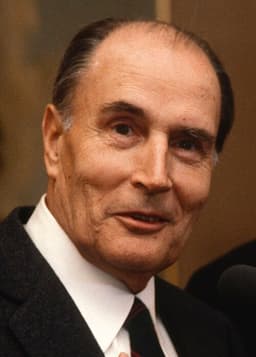
Francois Mitterrand
Politician · Modern
63.1Total
Basic Information
Born
1947
1916
Died
—
1996
Era
Modern
Modern
Nationality
Malaysia
France
Occupation
Politician
Politician
Civilization
Eastern
Western
Score Comparison
Military (10%)
10.9
36.6
Political (20%)
65.0
72.0
Influence (20%)
62.0
72.0
Legacy (20%)
52.0
58.0
Leadership (15%)
62.2
72.0
Strategy (15%)
33.7
53.5
TOTAL
52.0
63.1
Anwar Ibrahim — Complete Timeline
1998 AD
Sacked as Deputy Prime MinisterPolitical Action◆ Major
Anwar Ibrahim was sacked as Deputy Prime Minister and Finance Minister by Prime Minister Mahathir Mohamad on September 2, 1998. This dismissal triggered the Reformasi movement, a series of protests demanding political reform and an end to corruption.
Malaysian PoliticsReformasiPolitical Crisis
Impact: nationaldestructive
1999 AD
Arrested and Imprisoned for SodomyPolitical Action◆ Major
Anwar Ibrahim was arrested and charged with sodomy and corruption. He was convicted in 1999 and sentenced to prison, sparking international condemnation. The charges were widely seen as politically motivated, and Anwar became a symbol of opposition to the government.
Malaysian PoliticsHuman RightsPolitical Prisoner
Impact: nationaltragic
2004 AD
Released from Prison and Led Opposition CoalitionPolitical Action◆ Major
Anwar Ibrahim was released from prison on September 2, 2004, after the Federal Court overturned his sodomy conviction. He subsequently became the de facto leader of the opposition coalition, Pakatan Rakyat, and led it to significant electoral gains in 2008.
Malaysian PoliticsOppositionElectoral Gains
Impact: nationalconstructive
2022 AD
Appointed Prime Minister of MalaysiaPolitical Action
Anwar Ibrahim was appointed as the 10th Prime Minister of Malaysia on November 24, 2022, after the 15th general election resulted in a hung parliament. He formed a unity government coalition, ending decades of opposition and fulfilling his long political journey.
Malaysian PoliticsUnity GovernmentPolitical Milestone
Impact: nationalconstructive
Francois Mitterrand — Complete Timeline
1981 AD
Abolition of the Death PenaltyReform◆ Major
Mitterrand signed the law abolishing the death penalty in France, fulfilling a campaign promise. The law was championed by Justice Minister Robert Badinter and made France the last Western European country to abolish capital punishment.
Human RightsJudicial ReformAbolition
Impact: nationalprogressive
Election as President of FrancePolitical Action◆ Major
Mitterrand was elected President of France, defeating incumbent Val
ElectionSocialismFifth Republic
Impact: nationalconstructive
1992 AD
Maastricht Treaty RatificationPolitical Action◆ Major
Mitterrand pushed for the ratification of the Maastricht Treaty, which deepened European integration. The treaty was approved by a narrow French referendum, establishing the European Union and paving the way for the euro.
European UnionMaastrichtIntegration
Impact: globalconstructive
Expert Analysis
Origins
Anwar Ibrahim was born on August 10, 1947, in Cherok Tok Kun, Penang, Malaysia. His father was a politician and hospital assistant. Anwar was educated at the Malay College Kuala Kangsar and later at the University of Malaya, where he studied Malay Studies. He became involved in student activism, leading the Malaysian Muslim Youth Movement (ABIM). His early life was marked by a strong Islamic identity and opposition to the ruling coalition.
Francois Mitterrand was born on October 26, 1916, in Jarnac, France, into a conservative Catholic family. His father was a vinegar manufacturer. Mitterrand studied at the University of Paris, earning degrees in law and political science. During World War II, he was captured by Germany, escaped, and later worked for the Vichy regime before joining the French Resistance. This complex war record shaped his pragmatic and secretive nature.
Rise to Power
Anwar Ibrahim's rise began when he joined the United Malays National Organisation (UMNO) in 1982, after being co-opted by Prime Minister Mahathir Mohamad. He quickly ascended, becoming Minister of Culture, Youth, and Sports in 1983, and later Minister of Agriculture and Education. By 1993, he was Deputy Prime Minister and Finance Minister, positioning himself as Mahathir's successor. However, the Asian Financial Crisis in 1997 led to policy disagreements. On September 2, 1998, Mahathir sacked Anwar, triggering massive street protests. Anwar was then arrested on charges of sodomy and corruption, convicted in 1999, and imprisoned. He became a symbol of reformasi (reform), leading the opposition from prison. After his release in 2004, he gradually rebuilt his political career, leading the Pakatan Rakyat and later Pakatan Harapan coalitions. After decades of opposition, he finally became Prime Minister on November 24, 2022, following a hung parliament.
Francois Mitterrand rose through French politics during the Fourth Republic, holding ministerial positions in 11 governments. He opposed Charles de Gaulle's Fifth Republic and became a key figure in the Socialist Party. After two failed presidential bids in 1965 and 1974, he won the presidency on May 10, 1981, defeating incumbent Valéry Giscard d'Estaing. His victory marked the first socialist presidency of the Fifth Republic.
Leadership & Governance
Anwar Ibrahim's governance was shaped by his reformist agenda. As Prime Minister, he focused on institutional reforms, anti-corruption measures, and economic recovery. He promoted the concept of "Malaysia Madani" (civil Malaysia), emphasizing sustainability, care, and respect. However, his tenure has been constrained by a fragile coalition government and the legacy of ethnic politics. His political score of 65.0 reflects his ability to navigate Malaysia's complex political landscape but also his limited time in power.
Francois Mitterrand governed France for 14 years (1981-1995), the longest of any French president. His early years saw a socialist program of nationalizations and social reforms, but after economic difficulties, he pivoted to austerity in 1983. He championed European integration, pushing through the Maastricht Treaty in 1992. He also abolished the death penalty in 1981. His leadership score of 72.0 indicates his effectiveness in managing France's economy and foreign policy, though his later years were marred by corruption scandals and health issues.
Triumph & Tragedy
Anwar Ibrahim's greatest triumph was becoming Prime Minister after 24 years of political struggle, imprisonment, and opposition. His release from prison in 2004 and subsequent leadership of the opposition coalition were pivotal. However, his greatest tragedy was the 1998 sacking and imprisonment, which derailed his career and subjected him to personal humiliation. His legacy score of 52.0 reflects his unfinished reform agenda and mixed public perception.
Francois Mitterrand's triumphs include the abolition of the death penalty, which scored 72.0 in influence, and his role in European unification. He also oversaw the construction of the Louvre Pyramid and other cultural projects. His tragedies include his early collaboration with the Vichy regime, revealed later, and his secret second family. The 1992 Maastricht referendum passed narrowly, showing public division. His final years were shadowed by illness and the revelation of his wartime past.
Character & Destiny
Anwar Ibrahim is characterized by resilience and eloquence. His ability to survive political persecution and maintain influence despite imprisonment shows strategic patience. However, his decision to join UMNO in 1982 alienated some Islamist supporters. His destiny was shaped by his confrontation with Mahathir, a powerful authoritarian figure. His political score of 65.0 indicates his skill in coalition-building but also his failure to achieve a decisive mandate.
Francois Mitterrand was a master tactician, secretive and pragmatic. He was known as "The Sphinx" for his inscrutability. His wartime record revealed a willingness to adapt to circumstances. His character allowed him to unite the left and govern effectively, but his secrecy led to scandals that tarnished his legacy. His strategy score of 53.5 reflects his ability to maneuver but also his miscalculations, such as the 1983 austerity pivot.
Legacy
Anwar Ibrahim's legacy is as a symbol of democratic reform in Malaysia. He inspired a generation of activists and challenged the dominance of UMNO. However, his concrete achievements as PM are limited due to his short tenure. His influence score of 62.0 reflects his international standing as a reformist figure. In contrast, Francois Mitterrand's legacy is more tangible: he ended the death penalty, deepened European integration, and transformed French socialism. His legacy score of 58.0 acknowledges his mixed record but his lasting impact on French institutions.
Conclusion
Francois Mitterrand had a greater impact, with a total score of 63.1 compared to Anwar Ibrahim's 52.0. Mitterrand's 14-year presidency allowed him to implement enduring reforms, while Anwar's long struggle for power resulted in a brief and constrained premiership. Mitterrand's influence on European integration and French society is more profound. Anwar's legacy remains a work in progress, but Mitterrand's place in history is secure as a transformative French leader.
Rankings
🥇
Francois MitterrandLeader
Mil: 36.6Pol: 72.0Inf: 72.0
63.1
🥈
Anwar Ibrahim
Mil: 10.9Pol: 65.0Inf: 62.0
52.0
+11.1 behind
How This Comparison Works
Algorithm
Each figure is scored on 6 dimensions (0—100 scale) based on structured historical data: Military (10%), Political (20%), Influence (20%), Legacy (20%), Leadership (15%), Strategy (15%). The weighted total produces the final ranking.
Data Sources
Scores are computed from structured sub-indicators in the database. Scale factors adjust for era (Ancient ×0.85, Modern ×1.0) and civilization size (Eastern ×1.05, Other ×0.80) to account for differences in population and military scale.
Maximum 3 Figures
Comparisons are limited to 2—3 figures to ensure readability and statistical meaningfulness.
Error Margins
±5 points per dimension — Sub-scores are derived from historical records with inherent uncertainty. Two figures within 5 points on a dimension should be considered roughly equivalent in that area.
Total Score Accuracy
±3 points overall — The weighted combination of 6 dimensions produces a total score with approximately ±3 points of uncertainty. Differences of less than 3 points are not statistically significant— the figures are effectively tied.
Known Limitations
- Historical records are incomplete and uneven across civilizations
- Figures from oral-tradition societies may be underrepresented
- Occupation labels can misclassify multi-role figures
- Scores measure capability and impact, not moral character
- Quantitative scoring is a comparison tool, not absolute truth
Capability Radar
Military (10%) — Battles & Warfare
Battles
16
5
Win Rate
16
5
Expansion
23
5
Political (20%) — Governance & Reform
Reform
75
75
Diplomacy
70
80
Economy
60
70
Influence (20%) — Cultural & Global Reach
Cultural
55
60
Global
55
65
Legacy (20%) — Historical Impact
Historical
60
70
Longevity
50
55
Leadership (15%) — Power & Stability
Tenure
15
85
Stability
45
65
Strategy (15%) — Tactics & Innovation
Strategy
23
10
Tactics
27
5
Reform
29
15
Similar Comparisons
Comments & Discussion
No comments yet. Be the first to share your thoughts!