Loading...
Antonio Segni vs Francois Mitterrand
Francois Mitterrand leads by 10.5 pts · 2 figures compared
…

Antonio Segni
Politician · Modern
52.6Total
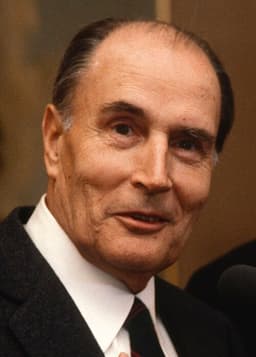
Francois Mitterrand
Politician · Modern
63.1Total
Basic Information
Born
1891
1916
Died
1972
1996
Era
Modern
Modern
Nationality
Italy
France
Occupation
Politician
Politician
Civilization
Western
Western
Score Comparison
Military (10%)
49.7
36.6
Political (20%)
68.0
72.0
Influence (20%)
51.8
72.0
Legacy (20%)
42.5
58.0
Leadership (15%)
64.0
72.0
Strategy (15%)
42.7
53.5
TOTAL
52.6
63.1
Antonio Segni — Complete Timeline
1946 AD
Minister of AgriculturePolitical Action
Segni served as Minister of Agriculture in the early post-war governments. He oversaw land reform policies aimed at redistributing large estates to peasants, particularly in southern Italy, which aimed to reduce rural poverty and social unrest.
Land ReformAgriculturePost-War Reconstruction
Impact: nationalconstructive
1955 AD
Prime Minister of ItalyPolitical Action◆ Major
Segni served as Prime Minister of Italy from 1955 to 1957, leading a Christian Democrat-led coalition. His government focused on economic development and European integration, including Italy's participation in the Treaty of Rome negotiations that established the European Economic Community.
Prime MinisterEuropean IntegrationEconomic Policy
Impact: nationalconstructive
1962 AD
Elected President of ItalyPolitical Action◆ Major
Segni was elected as the fourth President of Italy on May 6, 1962. His presidency was short and marked by his declining health, which ultimately led to his resignation in 1964, making him the first Italian president to resign from office.
PresidencyItalian RepublicResignation
Impact: national
1964 AD
Resigned as President due to ill healthPolitical Action◆ Major
Segni resigned from the presidency on December 6, 1964, citing serious health problems, including a stroke he suffered earlier that year. His resignation triggered a constitutional crisis and led to the election of Giuseppe Saragat as his successor.
ResignationHealth CrisisConstitutional Precedent
Impact: nationaltragic
Francois Mitterrand — Complete Timeline
1981 AD
Abolition of the Death PenaltyReform◆ Major
Mitterrand signed the law abolishing the death penalty in France, fulfilling a campaign promise. The law was championed by Justice Minister Robert Badinter and made France the last Western European country to abolish capital punishment.
Human RightsJudicial ReformAbolition
Impact: nationalprogressive
Election as President of FrancePolitical Action◆ Major
Mitterrand was elected President of France, defeating incumbent Val
ElectionSocialismFifth Republic
Impact: nationalconstructive
1992 AD
Maastricht Treaty RatificationPolitical Action◆ Major
Mitterrand pushed for the ratification of the Maastricht Treaty, which deepened European integration. The treaty was approved by a narrow French referendum, establishing the European Union and paving the way for the euro.
European UnionMaastrichtIntegration
Impact: globalconstructive
Expert Analysis
Origins
Antonio Segni was born on February 2, 1891, in Sassari, Sardinia, into a landowning family with strong Catholic traditions. He studied law at the University of Sassari and later became a professor of agricultural law. His early career was academic, but he entered politics after World War II, joining the Christian Democracy party. Segni's background in agricultural law shaped his focus on land reform.
François Mitterrand was born on October 26, 1916, in Jarnac, Charente, into a conservative Catholic family. He studied law and political science in Paris, and during World War II he was a prisoner of war, escaped, and later worked for the Vichy regime before joining the Resistance. His wartime experiences forged his political ambition and skill for maneuvering.
Rise to Power
Segni rose through the ranks of the Christian Democracy party, serving as Minister of Agriculture from 1946 to 1951, where he implemented land reforms that redistributed large estates to peasants. He became Prime Minister in 1955, leading a coalition government focused on economic development and European integration. His presidency in 1962 was the pinnacle, though short-lived.
Mitterrand's rise was more tumultuous. He held ministerial posts in the Fourth Republic (e.g., Minister of the Interior, Justice) but opposed de Gaulle's Fifth Republic. He founded the Socialist Party in 1971 and united the left. In 1981, he defeated Valéry Giscard d'Estaing to become the first socialist president of the Fifth Republic, with a platform of nationalizations and social reforms.
Leadership & Governance
Segni's leadership was characterized by cautious reform and consensus-building. As Prime Minister, he pursued economic growth and supported the Treaty of Rome (1957), which established the European Economic Community. His governance style was legalistic and reserved, reflecting his academic background. As president, his declining health limited his effectiveness.
Mitterrand governed with a blend of socialist ideology and pragmatic adaptation. His early years saw major reforms: nationalization of banks and industries, decentralization, and the abolition of the death penalty in 1981. However, after 1983, he shifted to austerity and European integration, exemplified by the Maastricht Treaty (1992). His leadership was marked by strategic ambiguity and a monarchical style.
Triumph & Tragedy
Segni's greatest success was the land reform program as Minister of Agriculture, which improved conditions for sharecroppers and small farmers. His tragedy was his presidency: elected in 1962, he suffered a stroke in 1964 and resigned, leaving little impact. His political score of 68.0 reflects competent governance but limited achievements.
Mitterrand's triumphs include abolishing the death penalty (political score 72.0), overseeing the Maastricht Treaty, and serving the longest presidential term (14 years). His tragedies include the 1985 Rainbow Warrior bombing scandal and his early socialist policies that led to economic crises, forcing a U-turn. His legacy score of 58.0 acknowledges enduring influence but also mixed results.
Character & Destiny
Segni was a reserved, principled man, dedicated to Catholic social teaching. His character shaped a fate of steady but unspectacular service; his health ultimately cut short his potential. Historians view him as a capable administrator rather than a visionary.
Mitterrand was a cunning, enigmatic figure, known for his patience and tactical skill. His character drove him to the presidency after multiple failed attempts. His destiny was to reshape France's left and European integration, but also to be remembered for scandals and authoritarian tendencies.
Legacy
Segni's legacy is modest: his land reforms aided rural Italy, and his support for European integration contributed to the EU's foundations. He is remembered as a transitional figure, scoring 42.5 in legacy. Italy's political system moved beyond his centrist Christian Democracy.
Mitterrand's legacy is substantial: he ended the death penalty, entrenched the Socialists in French politics, and advanced European unity. His presidency normalized the left's governance in France. Legacy score 58.0 reflects his lasting impact on French institutions and Europe.
Conclusion
François Mitterrand had significantly greater impact. His total score of 63.1 versus Segni's 52.6 highlights his superior political skill, influence, and legacy. While Segni contributed to Italy's post-war stability and land reform, Mitterrand transformed French society and European integration. The 10.5-point gap underscores Mitterrand's broader and more enduring influence. Segni remains a footnote; Mitterrand a pivotal figure.
Rankings
🥇
Francois MitterrandLeader
Mil: 36.6Pol: 72.0Inf: 72.0
63.1
🥈
Antonio Segni
Mil: 49.7Pol: 68.0Inf: 51.8
52.6
+10.5 behind
How This Comparison Works
Algorithm
Each figure is scored on 6 dimensions (0—100 scale) based on structured historical data: Military (10%), Political (20%), Influence (20%), Legacy (20%), Leadership (15%), Strategy (15%). The weighted total produces the final ranking.
Data Sources
Scores are computed from structured sub-indicators in the database. Scale factors adjust for era (Ancient ×0.85, Modern ×1.0) and civilization size (Eastern ×1.05, Other ×0.80) to account for differences in population and military scale.
Maximum 3 Figures
Comparisons are limited to 2—3 figures to ensure readability and statistical meaningfulness.
Error Margins
±5 points per dimension — Sub-scores are derived from historical records with inherent uncertainty. Two figures within 5 points on a dimension should be considered roughly equivalent in that area.
Total Score Accuracy
±3 points overall — The weighted combination of 6 dimensions produces a total score with approximately ±3 points of uncertainty. Differences of less than 3 points are not statistically significant— the figures are effectively tied.
Known Limitations
- Historical records are incomplete and uneven across civilizations
- Figures from oral-tradition societies may be underrepresented
- Occupation labels can misclassify multi-role figures
- Scores measure capability and impact, not moral character
- Quantitative scoring is a comparison tool, not absolute truth
Capability Radar
Military (10%) — Battles & Warfare
Battles
26
5
Win Rate
35
5
Expansion
35
5
Political (20%) — Governance & Reform
Reform
45
75
Diplomacy
50
80
Economy
40
70
Influence (20%) — Cultural & Global Reach
Cultural
20
60
Global
20
65
Legacy (20%) — Historical Impact
Historical
25
70
Longevity
20
55
Leadership (15%) — Power & Stability
Tenure
40
85
Stability
35
65
Strategy (15%) — Tactics & Innovation
Strategy
37
10
Tactics
42
5
Reform
44
15
Similar Comparisons
Comments & Discussion
No comments yet. Be the first to share your thoughts!