Loading...
Antonio Guzman Blanco vs Omar al-Bashir
Antonio Guzman Blanco leads by 11.2 pts · 2 figures compared
…

Antonio Guzman Blanco
General · Modern
55.8Total
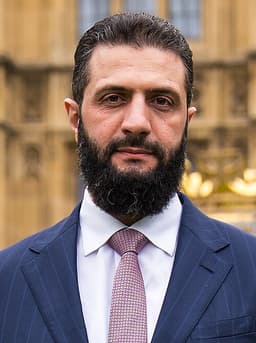
Omar al-Bashir
General · Modern
44.6Total
Basic Information
Born
1829
1944
Died
1899
—
Era
Modern
Modern
Nationality
Venezuela
Sudan
Occupation
General
General
Civilization
Western
Other
Score Comparison
Military (10%)
30.0
47.5
Political (20%)
72.0
27.9
Influence (20%)
56.7
51.8
Legacy (20%)
50.0
38.3
Leadership (15%)
62.0
64.0
Strategy (15%)
60.0
35.7
TOTAL
55.8
44.6
Antonio Guzman Blanco — Complete Timeline
1870 AD
Establishment of the Guzmán Blanco DictatorshipPolitical Action◆ Major
Guzmán Blanco seized power in Venezuela, beginning a period of authoritarian rule. He centralized the government, suppressed opposition, and initiated a program of modernization and infrastructure development.
DictatorshipModernizationVenezuela
Impact: national
1873 AD
Construction of the Caracas-Valencia RailwayReform◆ Major
Guzmán Blanco oversaw the construction of the Caracas-Valencia railway, a major infrastructure project. The railway improved transportation and trade between the capital and the interior, boosting economic development.
InfrastructureRailwayModernization
Impact: nationalconstructive
1874 AD
Abolition of Church PrivilegesReform◆ Major
Guzmán Blanco implemented anti-clerical reforms, including the abolition of church privileges and the seizure of church property. These measures reduced the power of the Catholic Church in Venezuela and promoted secularism.
Anti-ClericalismSecularismChurch-State Relations
Impact: nationalconstructive
1875 AD
Promotion of Education and CultureCultural◆ Major
Guzmán Blanco promoted education and culture, founding schools, libraries, and museums. He also supported the arts, commissioning public works and monuments that reflected his vision of a modern Venezuela.
EducationCulturePublic Works
Impact: nationalconstructive
1887 AD
Exile and Return to PowerPolitical Action◆ Major
After a period of exile in Europe, Guzm
ExileReturn to PowerAuthoritarianism
Impact: national
Omar al-Bashir — Complete Timeline
1989 AD
Second Sudanese Civil War escalationWar◆ Major
Al-Bashir intensified the war against the Sudan People's Liberation Army (SPLA) in southern Sudan. His government pursued a policy of Islamization and Arabization, leading to widespread human rights abuses, including mass displacement, famine, and the targeting of civilians.
Civil WarIslamizationHuman Rights
Impact: nationaldestructive
1989 Sudanese coup d'étatPolitical Action◆ Major
Omar al-Bashir, then a colonel, led a military coup that overthrew the democratically elected government of Prime Minister Sadiq al-Mahdi. Bashir established the Revolutionary Command Council for National Salvation (RCC) and suspended the constitution, beginning 30 years of authoritarian rule.
CoupMilitary RuleAuthoritarianism
Impact: nationaldestructive
2003 AD
Darfur genocideWar◆ Major
Al-Bashir's government responded to a rebellion in Darfur by arming Arab militias (Janjaweed) who committed mass killings, rape, and destruction of villages against non-Arab ethnic groups. The International Criminal Court (ICC) later charged Bashir with genocide, war crimes, and crimes against humanity.
GenocideWar CrimesICC
Impact: regionaldestructive
2005 AD
Comprehensive Peace AgreementPolitical Action◆ Major
Al-Bashir signed the Comprehensive Peace Agreement (CPA) with the SPLA, ending the Second Sudanese Civil War. The agreement granted southern Sudan autonomy for six years, followed by a referendum on independence, which ultimately led to South Sudan's secession in 2011.
Peace AgreementCivil War EndSouth Sudan
Impact: regionalconstructive
2009 AD
ICC arrest warrantPolitical Action◆ Major
The International Criminal Court issued an arrest warrant for al-Bashir on charges of war crimes and crimes against humanity in Darfur. He became the first sitting head of state to be indicted by the ICC. Sudan refused to cooperate, and Bashir remained in power until 2019.
ICCInternational JusticeDarfur
Impact: global
2019 AD
2019 Sudanese coup d'étatPolitical Action◆ Major
After months of mass protests against his rule, al-Bashir was overthrown by the Sudanese military on April 11, 2019. He was arrested and later convicted on corruption charges. His removal ended 30 years of authoritarian rule and led to a transitional government.
CoupRegime ChangeProtests
Impact: national
Expert Analysis
Origins
Antonio Guzman Blanco was born on February 28, 1829, in Caracas, Venezuela, into a politically influential family. His father, Antonio Leocadio Guzmán, was a prominent politician and journalist. Guzman Blanco studied law at the Central University of Venezuela but left to pursue a military career. He was exposed to European ideas during travels, which shaped his vision for modernization.
Omar al-Bashir was born on January 1, 1944, in Hosh Bannaga, Sudan, into a farming family. He attended military school and graduated from the Sudanese Military Academy in 1966. He served in the Egyptian army during the 1973 Yom Kippur War and later rose through the ranks of the Sudanese military. His early career was marked by loyalty to the regime of Gaafar Nimeiry.
Rise to Power
Guzman Blanco rose to power in 1870 after leading a revolution against the government of President José Ruperto Monagas. He became president in 1873 and consolidated power through a combination of military force and political maneuvering. He established a dictatorship that lasted, with interruptions, until 1887. His ability to centralize authority and suppress rivals was key to his rise.
Al-Bashir came to power on June 30, 1989, when he led a military coup that overthrew the democratically elected government of Prime Minister Sadiq al-Mahdi. As chairman of the Revolutionary Command Council, he dissolved parliament, banned political parties, and instituted Islamic law. His rise was fueled by dissatisfaction with civilian governance and the ongoing civil war in the south.
Leadership & Governance
Guzman Blanco's leadership was authoritarian but modernizing. He implemented infrastructure projects like the Caracas-Valencia railway (completed 1888), which improved trade and transportation. He abolished church privileges in 1874, seizing church property and reducing clerical influence. He promoted education, founding schools and the National Library. His governance focused on centralization and economic development, but he suppressed dissent and curtailed freedoms. His political score of 72.0 reflects his effective control, while military score of 30.0 indicates limited military focus.
Al-Bashir's leadership was characterized by Islamization and war. He intensified the Second Sudanese Civil War (1983-2005) against the Sudan People's Liberation Army (SPLA), pursuing a policy of Arabization and Islamic law. In Darfur, from 2003, his government armed the Janjaweed militias, leading to mass atrocities. He signed the Comprehensive Peace Agreement in 2005, ending the civil war but failing to prevent South Sudan's independence in 2011. His military score of 47.5 reflects his focus on warfare, but political score of 27.9 indicates poor governance and international isolation.
Triumph & Tragedy
Guzman Blanco's triumphs include modernizing Venezuela's infrastructure and secularizing the state. The Caracas-Valencia railway and other public works boosted the economy. However, his authoritarian rule and corruption tarnished his legacy. He was forced into exile in 1887 after facing opposition, and his later attempts to return failed. His legacy score of 50.0 shows mixed impact.
Al-Bashir's triumph was ending the Second Sudanese Civil War through the CPA, which brought temporary peace. However, his tragedy was the Darfur genocide, resulting in hundreds of thousands of deaths and millions displaced. The ICC arrest warrant in 2009 made him a global pariah. He was overthrown in 2019 and is now on trial for corruption and war crimes. His legacy score of 38.3 reflects his destructive rule.
Character & Destiny
Guzman Blanco was ambitious, cultured, and ruthless. He sought to modernize Venezuela according to European models but maintained power through repression. His personality shaped his destiny: his reforms brought progress but also sowed seeds of opposition, leading to his eventual exile. Historians view him as a complex figure who advanced Venezuela but at the cost of democratic institutions.
Al-Bashir was pragmatic and power-focused, willing to use extreme violence to maintain control. His Islamist ideology and militarism led to wars and genocide. His character isolated Sudan internationally and caused internal fragmentation. His destiny was to be deposed and indicted, a cautionary tale of authoritarian overreach.
Legacy
Guzman Blanco's legacy includes physical infrastructure and secular reforms that shaped modern Venezuela. However, his authoritarian style set a precedent for future dictators. He is remembered as a modernizer but also a tyrant. His influence score of 56.7 reflects his lasting impact on Venezuelan politics and society.
Al-Bashir's legacy is overwhelmingly negative: the Darfur genocide, South Sudan's secession, and economic collapse. He is remembered as a war criminal and dictator. His influence score of 51.8 is largely due to the scale of atrocities, but his leadership score of 64.0 reflects his ability to hold power for 30 years despite failures.
Conclusion
Antonio Guzman Blanco had a greater impact on his nation's development than Omar al-Bashir. With a total score of 55.8 vs. 44.6, Guzman Blanco's modernizing projects and secular reforms advanced Venezuela, while al-Bashir's rule led to destruction and division. Guzman Blanco's legacy, though flawed, includes tangible progress, whereas al-Bashir's is defined by genocide and state failure. Thus, Guzman Blanco's influence, though authoritarian, was more constructive.
Rankings
🥇
Antonio Guzman BlancoLeader
Mil: 30.0Pol: 72.0Inf: 56.7
55.8
🥈
Omar al-Bashir
Mil: 47.5Pol: 27.9Inf: 51.8
44.6
+11.2 behind
How This Comparison Works
Algorithm
Each figure is scored on 6 dimensions (0—100 scale) based on structured historical data: Military (10%), Political (20%), Influence (20%), Legacy (20%), Leadership (15%), Strategy (15%). The weighted total produces the final ranking.
Data Sources
Scores are computed from structured sub-indicators in the database. Scale factors adjust for era (Ancient ×0.85, Modern ×1.0) and civilization size (Eastern ×1.05, Other ×0.80) to account for differences in population and military scale.
Maximum 3 Figures
Comparisons are limited to 2—3 figures to ensure readability and statistical meaningfulness.
Error Margins
±5 points per dimension — Sub-scores are derived from historical records with inherent uncertainty. Two figures within 5 points on a dimension should be considered roughly equivalent in that area.
Total Score Accuracy
±3 points overall — The weighted combination of 6 dimensions produces a total score with approximately ±3 points of uncertainty. Differences of less than 3 points are not statistically significant— the figures are effectively tied.
Known Limitations
- Historical records are incomplete and uneven across civilizations
- Figures from oral-tradition societies may be underrepresented
- Occupation labels can misclassify multi-role figures
- Scores measure capability and impact, not moral character
- Quantitative scoring is a comparison tool, not absolute truth
Capability Radar
Military (10%) — Battles & Warfare
Battles
45
25
Win Rate
55
20
Expansion
20
15
Political (20%) — Governance & Reform
Reform
75
10
Diplomacy
65
15
Economy
70
10
Influence (20%) — Cultural & Global Reach
Cultural
50
10
Global
45
30
Legacy (20%) — Historical Impact
Historical
55
20
Longevity
40
10
Leadership (15%) — Power & Stability
Tenure
70
70
Stability
40
5
Strategy (15%) — Tactics & Innovation
Strategy
50
20
Tactics
40
15
Reform
30
10
Similar Comparisons
Comments & Discussion
No comments yet. Be the first to share your thoughts!