Loading...
Deo Van Long vs Omar al-Bashir
Omar al-Bashir leads by 2.7 pts · 2 figures compared
…

Deo Van Long
General · Modern
41.9Total
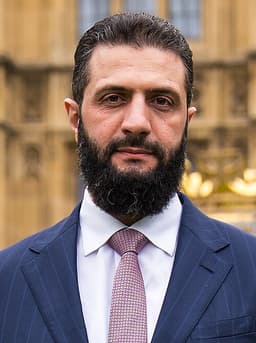
Omar al-Bashir
General · Modern
44.6Total
Basic Information
Born
1887
1944
Died
1975
—
Era
Modern
Modern
Nationality
Laos
Sudan
Occupation
General
General
Civilization
Eastern
Other
Score Comparison
Military (10%)
50.0
47.5
Political (20%)
29.3
27.9
Influence (20%)
52.5
51.8
Legacy (20%)
39.2
38.3
Leadership (15%)
43.8
64.0
Strategy (15%)
30.3
35.7
TOTAL
41.9
44.6
Deo Van Long — Complete Timeline
1910 AD
Appointed as Tai Dam Lord by FrenchPolitical Action◆ Major
Deo Van Long was appointed by the French colonial authorities as the hereditary lord of the Tai Dam people in the Sip Song Chau Tai region. This established his authority as a local ruler under French protection, aligning him with colonial interests.
French ColonialismTai DamLocal Ruler
Impact: regional
1946 AD
Led Tai Dam Forces in Support of FrenchWar◆ Major
During the First Indochina War, Deo Van Long mobilized Tai Dam troops to fight alongside the French against the Viet Minh. His forces participated in several campaigns in northern Laos and Vietnam, defending French control.
First Indochina WarFrench UnionViet Minh
Impact: regional
1954 AD
Fled to France After French DefeatPolitical Action◆ Major
Following the French defeat at Dien Bien Phu and the Geneva Accords, Deo Van Long fled to France. His alliance with the French made him a target for the Pathet Lao and Viet Minh, ending his rule in the Sip Song Chau Tai.
ExileFrench DefeatGeneva Accords
Impact: regionaltragic
Omar al-Bashir — Complete Timeline
1989 AD
Second Sudanese Civil War escalationWar◆ Major
Al-Bashir intensified the war against the Sudan People's Liberation Army (SPLA) in southern Sudan. His government pursued a policy of Islamization and Arabization, leading to widespread human rights abuses, including mass displacement, famine, and the targeting of civilians.
Civil WarIslamizationHuman Rights
Impact: nationaldestructive
1989 Sudanese coup d'étatPolitical Action◆ Major
Omar al-Bashir, then a colonel, led a military coup that overthrew the democratically elected government of Prime Minister Sadiq al-Mahdi. Bashir established the Revolutionary Command Council for National Salvation (RCC) and suspended the constitution, beginning 30 years of authoritarian rule.
CoupMilitary RuleAuthoritarianism
Impact: nationaldestructive
2003 AD
Darfur genocideWar◆ Major
Al-Bashir's government responded to a rebellion in Darfur by arming Arab militias (Janjaweed) who committed mass killings, rape, and destruction of villages against non-Arab ethnic groups. The International Criminal Court (ICC) later charged Bashir with genocide, war crimes, and crimes against humanity.
GenocideWar CrimesICC
Impact: regionaldestructive
2005 AD
Comprehensive Peace AgreementPolitical Action◆ Major
Al-Bashir signed the Comprehensive Peace Agreement (CPA) with the SPLA, ending the Second Sudanese Civil War. The agreement granted southern Sudan autonomy for six years, followed by a referendum on independence, which ultimately led to South Sudan's secession in 2011.
Peace AgreementCivil War EndSouth Sudan
Impact: regionalconstructive
2009 AD
ICC arrest warrantPolitical Action◆ Major
The International Criminal Court issued an arrest warrant for al-Bashir on charges of war crimes and crimes against humanity in Darfur. He became the first sitting head of state to be indicted by the ICC. Sudan refused to cooperate, and Bashir remained in power until 2019.
ICCInternational JusticeDarfur
Impact: global
2019 AD
2019 Sudanese coup d'étatPolitical Action◆ Major
After months of mass protests against his rule, al-Bashir was overthrown by the Sudanese military on April 11, 2019. He was arrested and later convicted on corruption charges. His removal ended 30 years of authoritarian rule and led to a transitional government.
CoupRegime ChangeProtests
Impact: national
Expert Analysis
Origins
Deo Van Long was born in the early 20th century into the hereditary ruling family of the Tai Dam people in the Sip Song Chau Tai region (now northwestern Vietnam). As a son of the ruling lord, he was groomed for leadership and received a French-influenced education. His family had a long history of cooperation with French colonial authorities, which shaped his worldview and future alliances. In contrast, Omar al-Bashir was born on January 1, 1944, in Hosh Bannaga, Sudan, to a peasant family. He attended the Sudanese Military Academy and graduated in 1967, later serving in the Egyptian army during the 1973 Yom Kippur War. His military career was influenced by Arab nationalism and Islamist movements, setting the stage for his later political ambitions.
Rise to Power
Deo Van Long's rise came through French appointment. In 1948, after his father's death, the French colonial authorities designated him as the hereditary lord ("Deo") of the Tai Dam, effectively making him the ruler of the Sip Song Chau Tai autonomous region. This position gave him control over local military and administrative affairs. He leveraged this authority to raise Tai Dam forces to support the French against the Viet Minh during the First Indochina War (1946-1954). Omar al-Bashir's rise was more abrupt and violent. On June 30, 1989, as a colonel in the Sudanese army, he led a bloodless military coup against the democratically elected government of Prime Minister Sadiq al-Mahdi. He established the Revolutionary Command Council for National Salvation, suspended the constitution, and banned political parties. His coup was supported by the National Islamic Front, an Islamist political movement led by Hassan al-Turabi, with whom he initially allied.
Leadership & Governance
Deo Van Long governed as a traditional lord under French suzerainty. He maintained order in his domain through a combination of customary authority and French military backing. His governance was limited to the Tai Dam region, and he focused on mobilizing troops and resources for the French war effort. He did not implement broad reforms or develop institutions beyond the existing feudal structure. Omar al-Bashir, by contrast, ruled a large nation for three decades. He centralized power, purged rivals, and implemented policies of Islamization, including the imposition of Sharia law. He also restructured the military and security apparatus to suppress dissent. His governance was marked by authoritarian control, but he also signed the Comprehensive Peace Agreement (CPA) in 2005, which ended the Second Sudanese Civil War and granted southern Sudan autonomy. However, his leadership during the Darfur conflict led to widespread atrocities.
Triumph & Tragedy
Deo Van Long's greatest success was maintaining Tai Dam autonomy under French protection and leading his forces in several engagements against the Viet Minh, earning French commendation. However, his greatest failure was his unwavering alliance with the French, which made him a target after their defeat. Following the French loss at Dien Bien Phu in 1954 and the Geneva Accords, he was forced to flee to France, leaving his people to face retribution from the victorious Viet Minh. His scores reflect this: Military 50.0, Political 29.3, Influence 52.5, Legacy 39.2, Leadership 43.8, Strategy 30.3, Total 41.9.
Omar al-Bashir's triumphs include ending the two-decade-long Second Sudanese Civil War through the CPA, which led to a referendum and the eventual independence of South Sudan in 2011. He also oversaw economic growth in the early 2000s due to oil revenues. However, his tragedies are severe: the Darfur genocide, where his government armed Janjaweed militias that killed an estimated 300,000 people and displaced millions. This led to the International Criminal Court (ICC) issuing an arrest warrant in 2009 for war crimes and crimes against humanity, making him the first sitting head of state to be indicted. His scores: Military 47.5, Political 27.9, Influence 51.8, Legacy 38.3, Leadership 64.0, Strategy 35.7, Total 44.6.
Character & Destiny
Deo Van Long was a traditionalist who valued loyalty to his colonial patrons over adaptability. His character was shaped by a sense of hereditary duty and dependence on French support. When the French withdrew, his power base collapsed, and he had no alternative plan. His destiny was sealed by the geopolitical shift that ended French Indochina. Omar al-Bashir was a pragmatic authoritarian who skillfully manipulated political alliances, first with Islamists and later with military factions. However, his ruthlessness and refusal to compromise on Darfur led to international isolation and prosecution. His character combined ambition with a willingness to use extreme violence to maintain power, which ultimately defined his legacy as a war criminal.
Legacy
Deo Van Long is remembered primarily in the context of Tai Dam history and the French colonial era. His legacy is local and minor; he is not widely known outside of Southeast Asian historical studies. The Tai Dam autonomy he represented ended with his exile. In contrast, Omar al-Bashir's legacy is global and deeply controversial. He is remembered as the president who oversaw the partition of Sudan and the Darfur genocide. The ICC indictment set a precedent for holding heads of state accountable for atrocities. However, his legacy is also tied to the survival of his regime for 30 years and the eventual popular uprising that ousted him in 2019. His total score of 44.6 slightly exceeds Deo Van Long's 41.9.
Conclusion
Omar al-Bashir had a greater impact on history than Deo Van Long, measured by the scale of his actions and their consequences. While Deo Van Long's influence was confined to a small region and a lost war, al-Bashir's policies shaped the fate of Sudan, led to the creation of South Sudan, and drew international legal action for genocide. His leadership score of 64.0 far exceeds Long's 43.8, reflecting his ability to hold power for decades. However, his negative legacy—war crimes, displacement of millions—also outweighs Long's relatively minor historical footprint. In the balance of impact, al-Bashir's total score of 44.6 versus Long's 41.9 numerically confirms this assessment.
Rankings
🥇
Omar al-BashirLeader
Mil: 47.5Pol: 27.9Inf: 51.8
44.6
🥈
Deo Van Long
Mil: 50.0Pol: 29.3Inf: 52.5
41.9
+2.7 behind
How This Comparison Works
Algorithm
Each figure is scored on 6 dimensions (0—100 scale) based on structured historical data: Military (10%), Political (20%), Influence (20%), Legacy (20%), Leadership (15%), Strategy (15%). The weighted total produces the final ranking.
Data Sources
Scores are computed from structured sub-indicators in the database. Scale factors adjust for era (Ancient ×0.85, Modern ×1.0) and civilization size (Eastern ×1.05, Other ×0.80) to account for differences in population and military scale.
Maximum 3 Figures
Comparisons are limited to 2—3 figures to ensure readability and statistical meaningfulness.
Error Margins
±5 points per dimension — Sub-scores are derived from historical records with inherent uncertainty. Two figures within 5 points on a dimension should be considered roughly equivalent in that area.
Total Score Accuracy
±3 points overall — The weighted combination of 6 dimensions produces a total score with approximately ±3 points of uncertainty. Differences of less than 3 points are not statistically significant— the figures are effectively tied.
Known Limitations
- Historical records are incomplete and uneven across civilizations
- Figures from oral-tradition societies may be underrepresented
- Occupation labels can misclassify multi-role figures
- Scores measure capability and impact, not moral character
- Quantitative scoring is a comparison tool, not absolute truth
Capability Radar
Military (10%) — Battles & Warfare
Battles
15
25
Win Rate
20
20
Expansion
10
15
Political (20%) — Governance & Reform
Reform
10
10
Diplomacy
20
15
Economy
10
10
Influence (20%) — Cultural & Global Reach
Cultural
20
10
Global
5
30
Legacy (20%) — Historical Impact
Historical
15
20
Longevity
10
10
Leadership (15%) — Power & Stability
Tenure
25
70
Stability
15
5
Strategy (15%) — Tactics & Innovation
Strategy
15
20
Tactics
20
15
Reform
5
10
Similar Comparisons
Comments & Discussion
No comments yet. Be the first to share your thoughts!