Loading...
This comparison has not been analyzed yet.
One-time AI generation (~1 minute). Scores and timeline are already available below.
Antonio Guterres vs Martin Vizcarra
Antonio Guterres leads by 0.2 pts · 2 figures compared
…

Antonio Guterres
Politician · Modern
52.3Total
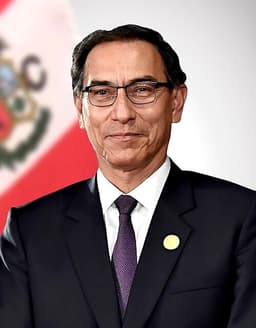
Martin Vizcarra
Politician · Modern
52.1Total
Basic Information
Born
1949
1963
Died
—
—
Era
Modern
Modern
Nationality
Portugal
Peru
Occupation
Politician
Politician
Civilization
Western
Western
Score Comparison
Military (10%)
10.1
50.0
Political (20%)
72.0
68.0
Influence (20%)
58.3
51.0
Legacy (20%)
50.0
40.8
Leadership (15%)
72.0
64.0
Strategy (15%)
26.5
43.7
TOTAL
52.3
52.1
Antonio Guterres — Complete Timeline
1995 AD
Prime Minister of PortugalPolitical Action◆ Major
Guterres became Prime Minister of Portugal on October 28, 1995, after his Socialist Party won the general election. He led a center-left government focused on economic growth and social welfare.
GovernmentSocialist
Impact: nationalconstructive
1998 AD
Expo 98 in LisbonCultural◆ Major
Guterres oversaw the successful hosting of Expo 98 in Lisbon, a world's fair themed around the oceans. The event revitalized the city's eastern waterfront and boosted Portugal's international image.
World ExpoUrban Development
Impact: nationalconstructive
2002 AD
Resignation as Prime MinisterPolitical Action◆ Major
Guterres resigned as Prime Minister on December 17, 2002, after his party suffered heavy losses in local elections. His government had faced economic slowdown and criticism over handling of the economy.
ResignationPolitical
Impact: national
2017 AD
United Nations Secretary-GeneralPolitical Action◆ Major
Guterres became the ninth UN Secretary-General on January 1, 2017, succeeding Ban Ki-moon. He prioritized climate action, conflict resolution, and reform of the UN system, including addressing the Rohingya crisis and Syrian civil war.
United NationsDiplomacy
Impact: globalconstructive
Martin Vizcarra — Complete Timeline
2018 AD
Succeeded Pedro Pablo Kuczynski as PresidentPolitical Action◆ Major
Martín Vizcarra, then First Vice President, succeeded to the presidency after the resignation of Pedro Pablo Kuczynski. His ascension was seen as a chance to restore public trust in government amid widespread corruption.
SuccessionPresidency
Impact: nationalconstructive
2019 AD
Dissolved Congress in 2019Political Action
President Vizcarra dissolved the Peruvian Congress after it refused to hold a vote of confidence on his anti-corruption reforms. This triggered a constitutional crisis, but Vizcarra called for new legislative elections, which were held in 2020.
Constitutional CrisisCongressReform
Impact: national
2020 AD
Impeached and removed from officePolitical Action
Vizcarra was impeached by the new Congress on charges of corruption and moral incapacity, and removed from office. His removal was highly controversial, with many seeing it as a political maneuver by the opposition, and it sparked widespread protests.
ImpeachmentRemovalProtest
Impact: nationaldestructive
This comparison has not been analyzed yet.
One-time AI generation (~1 minute). Scores and timeline are already available below.
Rankings
🥇
Antonio GuterresLeader
Mil: 10.1Pol: 72.0Inf: 58.3
52.3
🥈
Martin Vizcarra
Mil: 50.0Pol: 68.0Inf: 51.0
52.1
+0.2 behind
How This Comparison Works
Algorithm
Each figure is scored on 6 dimensions (0—100 scale) based on structured historical data: Military (10%), Political (20%), Influence (20%), Legacy (20%), Leadership (15%), Strategy (15%). The weighted total produces the final ranking.
Data Sources
Scores are computed from structured sub-indicators in the database. Scale factors adjust for era (Ancient ×0.85, Modern ×1.0) and civilization size (Eastern ×1.05, Other ×0.80) to account for differences in population and military scale.
Maximum 3 Figures
Comparisons are limited to 2—3 figures to ensure readability and statistical meaningfulness.
Error Margins
±5 points per dimension — Sub-scores are derived from historical records with inherent uncertainty. Two figures within 5 points on a dimension should be considered roughly equivalent in that area.
Total Score Accuracy
±3 points overall — The weighted combination of 6 dimensions produces a total score with approximately ±3 points of uncertainty. Differences of less than 3 points are not statistically significant— the figures are effectively tied.
Known Limitations
- Historical records are incomplete and uneven across civilizations
- Figures from oral-tradition societies may be underrepresented
- Occupation labels can misclassify multi-role figures
- Scores measure capability and impact, not moral character
- Quantitative scoring is a comparison tool, not absolute truth
Capability Radar
Military (10%) — Battles & Warfare
Battles
11
29
Win Rate
16
30
Expansion
19
33
Political (20%) — Governance & Reform
Reform
55
65
Diplomacy
85
50
Economy
50
40
Influence (20%) — Cultural & Global Reach
Cultural
40
20
Global
70
25
Legacy (20%) — Historical Impact
Historical
55
30
Longevity
45
15
Leadership (15%) — Power & Stability
Tenure
60
55
Stability
60
20
Strategy (15%) — Tactics & Innovation
Strategy
19
39
Tactics
23
41
Reform
25
46
Similar Comparisons
Comments & Discussion
No comments yet. Be the first to share your thoughts!