Loading...
Alan Garcia vs Martin Vizcarra
Martin Vizcarra leads by 5.7 pts · 2 figures compared
…

Alan Garcia
Politician · Modern
46.4Total
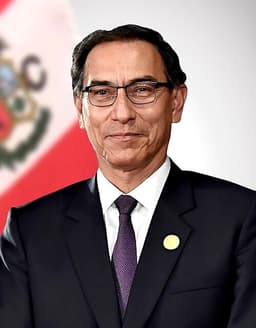
Martin Vizcarra
Politician · Modern
52.1Total
Basic Information
Born
1949
1963
Died
—
—
Era
Modern
Modern
Nationality
Peru
Peru
Occupation
Politician
Politician
Civilization
Western
Western
Score Comparison
Military (10%)
12.4
50.0
Political (20%)
46.6
68.0
Influence (20%)
51.0
51.0
Legacy (20%)
41.7
40.8
Leadership (15%)
74.0
64.0
Strategy (15%)
39.1
43.7
TOTAL
46.4
52.1
Alan Garcia — Complete Timeline
1985 AD
First Presidency and Hyperinflation (1985-1990)Political Action◆ Major
Alan García assumed the presidency of Peru at age 36. His administration implemented heterodox economic policies, including price controls and a refusal to pay foreign debt. This led to hyperinflation exceeding 7,000% annually, economic collapse, and the rise of the Shining Path insurgency.
Economic CrisisHyperinflationDebt Crisis
Impact: nationaldestructive
2006 AD
Second Presidency and Economic Growth (2006-2011)Political Action◆ Major
García won a second term, this time pursuing free-market policies. His administration oversaw a period of strong economic growth driven by high commodity prices and foreign investment. He signed a free trade agreement with the United States and expanded social programs, reducing poverty.
Economic GrowthFree TradePoverty Reduction
Impact: nationalconstructive
2019 AD
Corruption Scandals and Suicide (2019)Other◆ Major
García was implicated in the Odebrecht corruption scandal, accused of receiving bribes during his second term. Facing imminent arrest, he shot himself in his home in Lima. His death ended a major corruption investigation and highlighted the widespread impact of the Odebrecht case in Latin America.
CorruptionOdebrechtSuicide
Impact: regionaltragic
Martin Vizcarra — Complete Timeline
2018 AD
Succeeded Pedro Pablo Kuczynski as PresidentPolitical Action◆ Major
Martín Vizcarra, then First Vice President, succeeded to the presidency after the resignation of Pedro Pablo Kuczynski. His ascension was seen as a chance to restore public trust in government amid widespread corruption.
SuccessionPresidency
Impact: nationalconstructive
2019 AD
Dissolved Congress in 2019Political Action
President Vizcarra dissolved the Peruvian Congress after it refused to hold a vote of confidence on his anti-corruption reforms. This triggered a constitutional crisis, but Vizcarra called for new legislative elections, which were held in 2020.
Constitutional CrisisCongressReform
Impact: national
2020 AD
Impeached and removed from officePolitical Action
Vizcarra was impeached by the new Congress on charges of corruption and moral incapacity, and removed from office. His removal was highly controversial, with many seeing it as a political maneuver by the opposition, and it sparked widespread protests.
ImpeachmentRemovalProtest
Impact: nationaldestructive
Expert Analysis
Origins
**Alan García** was born on May 23, 1949, in Lima, Peru, into a middle-class family with political ties; his father was a prominent member of the American Popular Revolutionary Alliance (APRA). He studied law at the Pontifical Catholic University of Peru and later earned a doctorate in law from the University of Paris. His early involvement with APRA shaped his political ideology.
**Martín Vizcarra** was born on March 22, 1963, in Lima, but grew up in Moquegua. His father was a civil engineer and politician. Vizcarra studied civil engineering at the National University of Engineering and later earned a master's in business administration. He entered politics as a regional governor of Moquegua, gaining recognition for infrastructure projects.
Rise to Power
García rose quickly within APRA, becoming its leader in 1982. He won the presidency in 1985 at age 36, the youngest president in Peruvian history at the time. His victory was fueled by popular discontent with the previous government and promises of social justice.
Vizcarra became First Vice President under Pedro Pablo Kuczynski in 2016. After Kuczynski resigned amid a corruption scandal in March 2018, Vizcarra succeeded to the presidency. His rise was unexpected, and he positioned himself as an anti-corruption reformer.
Leadership & Governance
García's first term (1985-1990) was marked by heterodox economic policies: price controls, nationalization of banks, and refusal to pay foreign debt. This led to hyperinflation exceeding 7,000% annually, severe shortages, and economic collapse. His second term (2006-2011) was a reversal: he embraced free-market policies, signed free trade agreements, and oversaw an economic boom driven by commodity exports. GDP growth averaged 7.8% during his second term. However, corruption scandals, particularly the Odebrecht case, tainted his legacy.
Vizcarra's presidency (2018-2020) focused on anti-corruption reforms, including a referendum on political reform and a ban on reelection of lawmakers. He dissolved Congress in September 2019 after it blocked confidence votes, leading to new elections. His leadership score of 64.0 reflects his decisive action, but his political score of 68.0 indicates challenges in navigating Congress. He was impeached twice; the second impeachment succeeded in November 2020, removing him from office.
Triumph & Tragedy
García's triumph: his second presidency achieved strong economic growth and poverty reduction (poverty fell from 39% in 2006 to 28% in 2011). His tragedy: his first term's hyperinflation devastated the economy, and his involvement in Odebrecht corruption led to his suicide in 2019 rather than face arrest.
Vizcarra's triumph: dissolving Congress and pushing anti-corruption reforms earned him high approval ratings (over 60% at peak). His tragedy: his removal from office on controversial charges of moral incapacity, which many viewed as a political vendetta, and his inability to complete reforms.
Character & Destiny
García was charismatic, eloquent, and ambitious. His ideological shift from leftist to neoliberal demonstrated pragmatism but also opportunism. His refusal to accept corruption allegations and his suicide reflected a prideful and tragic end. Historical assessments note his intelligence but also his flawed judgment in economic matters.
Vizcarra was seen as honest and reformist but also aloof and politically inexperienced. His confrontational approach with Congress led to institutional crisis. His destiny was cut short by impeachment, leaving many reforms unfulfilled.
Legacy
García's legacy is mixed: his first term is a cautionary tale of economic mismanagement, while his second term is credited with economic growth. However, corruption allegations overshadow both. He scored 41.7 in legacy and 51.0 in influence.
Vizcarra's legacy is that of a reformer who challenged corruption but was undone by political instability. His dissolution of Congress set a precedent for executive-legislative conflict. He scored 40.8 in legacy and 51.0 in influence.
Conclusion
Despite García's higher leadership score (74.0 vs 64.0) and longer tenure, Vizcarra had a greater impact on Peruvian politics in a short time. His anti-corruption stance and institutional reforms challenged the status quo, whereas García's legacy is tainted by hyperinflation and corruption. Vizcarra's total score (52.1) edges García's (46.4), reflecting a more balanced profile. While García achieved economic growth in his second term, the costs of his first term and corruption allegations diminish his overall contribution. Vizcarra, despite his removal, set a standard for accountability that resonates more strongly in modern Peru.
Rankings
🥇
Martin VizcarraLeader
Mil: 50.0Pol: 68.0Inf: 51.0
52.1
🥈
Alan Garcia
Mil: 12.4Pol: 46.6Inf: 51.0
46.4
+5.7 behind
How This Comparison Works
Algorithm
Each figure is scored on 6 dimensions (0—100 scale) based on structured historical data: Military (10%), Political (20%), Influence (20%), Legacy (20%), Leadership (15%), Strategy (15%). The weighted total produces the final ranking.
Data Sources
Scores are computed from structured sub-indicators in the database. Scale factors adjust for era (Ancient ×0.85, Modern ×1.0) and civilization size (Eastern ×1.05, Other ×0.80) to account for differences in population and military scale.
Maximum 3 Figures
Comparisons are limited to 2—3 figures to ensure readability and statistical meaningfulness.
Error Margins
±5 points per dimension — Sub-scores are derived from historical records with inherent uncertainty. Two figures within 5 points on a dimension should be considered roughly equivalent in that area.
Total Score Accuracy
±3 points overall — The weighted combination of 6 dimensions produces a total score with approximately ±3 points of uncertainty. Differences of less than 3 points are not statistically significant— the figures are effectively tied.
Known Limitations
- Historical records are incomplete and uneven across civilizations
- Figures from oral-tradition societies may be underrepresented
- Occupation labels can misclassify multi-role figures
- Scores measure capability and impact, not moral character
- Quantitative scoring is a comparison tool, not absolute truth
Capability Radar
Military (10%) — Battles & Warfare
Battles
21
29
Win Rate
28
30
Expansion
27
33
Political (20%) — Governance & Reform
Reform
40
65
Diplomacy
45
50
Economy
30
40
Influence (20%) — Cultural & Global Reach
Cultural
25
20
Global
20
25
Legacy (20%) — Historical Impact
Historical
30
30
Longevity
20
15
Leadership (15%) — Power & Stability
Tenure
65
55
Stability
20
20
Strategy (15%) — Tactics & Innovation
Strategy
33
39
Tactics
32
41
Reform
40
46
Similar Comparisons
Comments & Discussion
No comments yet. Be the first to share your thoughts!