Loading...
Antipater vs Miltiades the Younger
Antipater leads by 10.1 pts · 2 figures compared
…

Antipater
General · Ancient
61.6Total
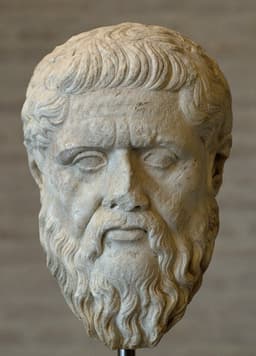
Miltiades the Younger
General · Ancient
51.5Total
Basic Information
Born
-397
-550
Died
-319
-489
Era
Ancient
Ancient
Nationality
Macedon
Athens
Occupation
General
General
Civilization
Western
Western
Score Comparison
Military (10%)
76.0
65.0
Political (20%)
61.3
35.0
Influence (20%)
56.4
61.0
Legacy (20%)
48.3
58.0
Leadership (15%)
80.0
30.0
Strategy (15%)
66.3
55.0
TOTAL
61.6
51.5
Antipater — Complete Timeline
336 BC
Regency for Alexander the Great (336-323 BC)Political Action◆ Major
Antipater was appointed regent of Macedon and Greece by Alexander the Great when Alexander left for his Asian campaign. He governed effectively, suppressing revolts in Thrace and Greece, and maintained stability in the Macedonian homeland for over a decade.
RegencyMacedonAlexander
Impact: regional
331 BC
Suppression of the Revolt of Agis III (331 BC)War◆ Major
Antipater led Macedonian forces to crush a Spartan-led revolt in Greece. He defeated King Agis III at the Battle of Megalopolis, ending the last serious challenge to Macedonian control in Greece during Alexander's reign.
RevoltSpartaMacedon
Impact: regional
323 BC
Lamian War (323-322 BC)War◆ Major
After Alexander's death, Antipater faced a coalition of Greek states led by Athens and Aetolia in the Lamian War. He was initially besieged in Lamia but later relieved by reinforcements. He defeated the Greeks at the Battle of Crannon in 322 BC, reimposing Macedonian hegemony.
Lamian WarGreek RevoltMacedon
Impact: regional
Division of the Empire at Babylon (323 BC)Political Action◆ Major
At the Partition of Babylon after Alexander's death, Antipater was confirmed as regent of Macedon and Greece, while other generals received satrapies. This agreement established the framework for the Wars of the Diadochi.
DiadochiPartitionSuccession
Impact: global
Miltiades the Younger — Complete Timeline
500 BC
Conquest of LemnosWar
Miltiades led an Athenian force to conquer the island of Lemnos, which was held by Pelasgians. He successfully captured the island and established an Athenian colony. This action expanded Athenian influence in the northern Aegean and secured a strategic base.
ConquestColonyAthens
Impact: regionalconstructive
490 BC
Battle of MarathonWar
Miltiades commanded the Athenian army against a larger Persian invasion force at Marathon. Using a double-envelopment tactic, the Athenians defeated the Persians, killing about 6,400 Persians while losing only 192 Athenians. This victory ended the first Persian invasion of Greece.
Persian WarsBattleAthens
Impact: globalconstructive
489 BC
Expedition to ParosWar◆ Major
After Marathon, Miltiades led an Athenian fleet to attack the island of Paros, allegedly to settle a personal grudge. The siege failed, and Miltiades was wounded. Upon returning to Athens, he was prosecuted for deceiving the people and fined 50 talents.
ExpeditionFailureTrial
Impact: regionaldestructive
Trial and Death in PrisonPolitical Action◆ Major
Miltiades was tried in the Athenian Assembly for his failed Parian expedition. Convicted of deceiving the people, he was fined 50 talents. Unable to pay, he was imprisoned, where he died from his wound. His son Cimon later paid the fine.
TrialDeathAthens
Impact: nationaltragic
Expert Analysis
Origins
Antipater was born around 397 BC in Macedonia, into a noble family loyal to the Argead dynasty. His father, Iollas, was a courtier, and Antipater grew up in the court of Philip II, gaining administrative and military experience. He was entrusted with the education of Alexander the Great and accompanied Philip on campaigns. Miltiades the Younger was born around 550 BC in Athens, into the aristocratic Philaid family. His uncle Miltiades the Elder founded a colony in the Thracian Chersonese, and Miltiades the Younger inherited rule there, becoming a tyrant under Persian suzerainty. He participated in the Scythian campaign of Darius I, but later fled to Athens to avoid Persian control.
Rise to Power
Antipater rose as Philip II's trusted general and diplomat. He negotiated the Peace of Philocrates with Athens in 346 BC. When Alexander became king, Antipater was appointed regent of Macedon and Greece in 334 BC, overseeing the home front while Alexander conquered Asia. He suppressed a rebellion by the Thracians and Illyrians, and in 331 BC crushed the Spartan-led revolt under Agis III at the Battle of Megalopolis, ending Greek resistance. Miltiades' rise came from his actions in the Chersonese, but his major leap occurred in 490 BC when he was elected one of the ten Athenian generals (strategoi) for the war with Persia. He advocated for meeting the Persians at Marathon and convinced the polemarch Callimachus to fight, leading to his command of the Athenian forces.
Leadership & Governance
Antipater governed Macedon with a firm hand, maintaining stability and loyalty to Alexander. He managed the treasury, raised reinforcements for Alexander, and kept Greek city-states in check, often through diplomacy and garrisons. He scored 80.0 in leadership, reflecting his ability to control a volatile region for over a decade. However, his governance was authoritarian, suppressing dissent and imposing oligarchies in defeated states. Miltiades, scoring 30.0 in leadership, was a more impulsive commander. He led by personal example at Marathon, but his governance of the Chersonese was tyrannical, and his later expedition to Paros (489 BC) showed poor judgment, as he attacked the island for personal vengeance, leading to failure and his downfall.
Triumph & Tragedy
Antipater's greatest triumph was his successful regency, holding the Macedonian empire together after Alexander's death. He defeated the Greek coalition in the Lamian War (323-322 BC), securing Macedonian dominance. His tragedy was his struggle to maintain unity among the Diadochi, as he was constantly challenged by rivals like Perdiccas. He died of natural causes in 319 BC, but his policies led to later fragmentation. Miltiades' triumph was his stunning victory at Marathon, where he used a double-envelopment tactic to defeat a larger Persian army, scoring 65.0 in military. His tragedy was his failed Parian expedition, where he suffered a leg injury and was later convicted by Athens, dying in prison from the wound and a fine he couldn't pay (scoring 35.0 political).
Character & Destiny
Antipater was cautious, calculating, and loyal to the Argead dynasty. He avoided personal ambition for power, preferring to serve as regent. His character ensured stability but also made him enemies among those seeking more power, such as Alexander's mother Olympias. He died in his bed, a rare fate for Alexander's successors. Miltiades was bold and ambitious, but also arrogant and vengeful. His success at Marathon made him overconfident, leading to the Parian disaster. His character led to a dramatic fall from grace, as the Athenian assembly turned on him, demonstrating the fickleness of democratic judgment.
Legacy
Antipater's legacy is mixed: he preserved Macedonia during a critical period, but his actions, like the exile of Demosthenes, contributed to Greek resentment. His scores: Influence 56.4, Legacy 48.3. He is remembered as a capable administrator but overshadowed by Alexander. Miltiades' legacy is more focused: he is celebrated as the hero of Marathon, a symbol of Greek resistance. His military tactics influenced later generals, and his victory gave Athens confidence for the Persian Wars. His scores: Influence 61.0, Legacy 58.0. However, his political failure limits his overall impact.
Conclusion
While Miltiades achieved a single, iconic victory that shaped Western civilization, Antipater's sustained governance and military successes (total score 61.6 vs 51.5) had a broader impact on the Hellenistic world. Antipater maintained the Macedonian empire during its most vulnerable period, enabling the spread of Greek culture. Miltiades' victory was crucial, but his failure to capitalize on it reduces his lasting effect. Therefore, Antipater had greater overall impact.
Rankings
🥇
AntipaterLeader
Mil: 76.0Pol: 61.3Inf: 56.4
61.6
🥈
Miltiades the Younger
Mil: 65.0Pol: 35.0Inf: 61.0
51.5
+10.1 behind
How This Comparison Works
Algorithm
Each figure is scored on 6 dimensions (0—100 scale) based on structured historical data: Military (10%), Political (20%), Influence (20%), Legacy (20%), Leadership (15%), Strategy (15%). The weighted total produces the final ranking.
Data Sources
Scores are computed from structured sub-indicators in the database. Scale factors adjust for era (Ancient ×0.85, Modern ×1.0) and civilization size (Eastern ×1.05, Other ×0.80) to account for differences in population and military scale.
Maximum 3 Figures
Comparisons are limited to 2—3 figures to ensure readability and statistical meaningfulness.
Error Margins
±5 points per dimension — Sub-scores are derived from historical records with inherent uncertainty. Two figures within 5 points on a dimension should be considered roughly equivalent in that area.
Total Score Accuracy
±3 points overall — The weighted combination of 6 dimensions produces a total score with approximately ±3 points of uncertainty. Differences of less than 3 points are not statistically significant— the figures are effectively tied.
Known Limitations
- Historical records are incomplete and uneven across civilizations
- Figures from oral-tradition societies may be underrepresented
- Occupation labels can misclassify multi-role figures
- Scores measure capability and impact, not moral character
- Quantitative scoring is a comparison tool, not absolute truth
Capability Radar
Military (10%) — Battles & Warfare
Battles
65
55
Win Rate
70
60
Expansion
55
30
Political (20%) — Governance & Reform
Reform
55
10
Diplomacy
75
35
Economy
60
15
Influence (20%) — Cultural & Global Reach
Cultural
40
55
Global
50
60
Legacy (20%) — Historical Impact
Historical
55
70
Longevity
45
65
Leadership (15%) — Power & Stability
Tenure
70
40
Stability
65
20
Strategy (15%) — Tactics & Innovation
Strategy
75
65
Tactics
60
75
Reform
50
20
Similar Comparisons
Comments & Discussion
No comments yet. Be the first to share your thoughts!