Loading...
Antigonus I Monophthalmus vs Constantine the Great
Constantine the Great leads by 12.1 pts · 2 figures compared
…

Antigonus I Monophthalmus
Emperor · Ancient
63.4Total
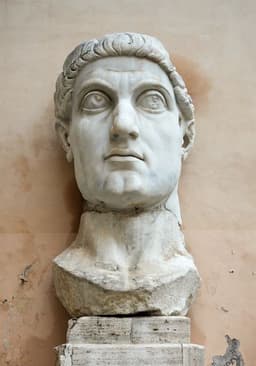
Constantine the Great
Emperor · Ancient
75.5Total
Basic Information
Born
-382
272
Died
-301
337
Era
Ancient
Ancient
Nationality
Macedon
Roman Empire
Occupation
Emperor
Emperor
Civilization
Western
Western
Score Comparison
Military (10%)
78.5
78.0
Political (20%)
55.8
82.0
Influence (20%)
62.0
75.0
Legacy (20%)
56.0
70.0
Leadership (15%)
68.0
80.0
Strategy (15%)
75.0
72.0
TOTAL
63.4
75.5
Antigonus I Monophthalmus — Complete Timeline
316 BC
Battle of GabieneWar◆ Major
Antigonus I defeated Eumenes, a former general of Alexander, at Gabiene in Persia. This victory eliminated a major rival and gave Antigonus control over the eastern satrapies, making him the most powerful of the Diadochi at that time.
DiadochiBattlePersia
Impact: regional
315 BC
Siege of TyreWar
Antigonus I besieged and captured the city of Tyre from Ptolemy I's forces. The siege demonstrated his military capabilities and expanded his control over Phoenicia and Syria, strengthening his position in the Diadochi conflicts.
DiadochiSiegePhoenicia
Impact: regional
306 BC
Proclamation as King of AsiaPolitical Action◆ Major
Antigonus I declared himself king of Asia, claiming authority over the entire former empire of Alexander. This act prompted other Diadochi to also assume royal titles, formalizing the breakup of Alexander's empire into separate Hellenistic kingdoms.
DiadochiKingshipHellenistic
Impact: regional
301 BC
Battle of IpsusWar
Antigonus I Monophthalmus commanded his army against the allied forces of Seleucus, Lysimachus, and Cassander at Ipsus. He was defeated and killed in battle, ending his ambition to reunite Alexander's empire. His death solidified the division of the empire among the other Diadochi.
DiadochiBattleAntigonid
Impact: regionaltragic
Constantine the Great — Complete Timeline
312 AD
Battle of the Milvian BridgeWar◆ Major
Constantine defeated his rival Maxentius at the Milvian Bridge near Rome. According to tradition, Constantine saw a vision of a cross in the sky with the words 'In this sign, conquer.' The victory made Constantine the sole ruler of the Western Roman Empire and led to his conversion to Christianity.
Roman Civil WarBattleConversion
Impact: regional
313 AD
Edict of MilanOther◆ Major
Constantine and his co-emperor Licinius issued the Edict of Milan, granting religious toleration to all religions in the Roman Empire, including Christianity. The edict ended the persecution of Christians, restored confiscated church property, and established Christianity as a legally recognized religion.
Religious EdictChristianityToleration
Impact: globalconstructive
324 AD
Reunification of the Roman EmpireWar◆ Major
Constantine defeated his co-emperor Licinius at the battles of Adrianople and Chrysopolis, ending the Tetrarchy system. He became the sole ruler of the entire Roman Empire, reuniting the Western and Eastern halves under his control. This reunification was the last time the Roman Empire was united under a single ruler.
Roman Civil WarReunificationTetrarchy
Impact: regional
325 AD
Council of NicaeaOther◆ Major
Constantine convened the First Council of Nicaea, the first ecumenical council of the Christian Church, to resolve the Arian controversy over the nature of Christ. The council produced the Nicene Creed, affirming the divinity of Christ and establishing a unified Christian doctrine. Constantine presided over the council.
Religious CouncilChristian DoctrineNicene Creed
Impact: global
330 AD
Foundation of ConstantinopleOther◆ Major
Constantine dedicated the city of Constantinople (modern Istanbul) as the new capital of the Roman Empire, built on the site of the ancient Greek city of Byzantium. The city was strategically located on the Bosporus strait, controlling trade routes between Europe and Asia. It became the capital of the Eastern Roman Empire for over a thousand years.
City FoundationCapitalByzantine Empire
Impact: globalconstructive
Expert Analysis
Origins
Antigonus I Monophthalmus (382–301 BCE) was born in Macedonia, likely to a noble family. He served under Philip II and later Alexander the Great, rising through the ranks due to his military competence. After Alexander's death in 323 BCE, he became the satrap of Phrygia, a key province in Asia Minor. His early career was marked by loyalty to the Argead dynasty, but the chaos of the Diadochi wars soon pushed him to pursue his own ambitions.
Constantine the Great (272–337 CE) was born in Naissus (modern Niš, Serbia) to Constantius Chlorus, a Roman emperor, and Helena. His father's position gave him a privileged upbringing, and he was educated in the imperial courts of Diocletian and Galerius. Constantine witnessed the Tetrarchy's instability and the persecution of Christians, experiences that shaped his later policies. His early military service in the East honed his strategic skills.
Rise to Power
Antigonus's rise began after Alexander's death, when he allied with Antipater against Perdiccas. In 320 BCE, he defeated Eumenes at the Battle of Orkynia, securing control over Asia Minor. His power peaked when he declared himself king of Asia in 306 BCE, a direct challenge to the other Diadochi. This prompted a coalition against him, leading to the Battle of Ipsus in 301 BCE, where he was defeated and killed. His son Demetrius continued the struggle but never regained his father's dominance.
Constantine's rise started with his proclamation as emperor by his father's troops in 306 CE. He spent the next years consolidating power in the West, defeating rivals like Maxentius at the Milvian Bridge in 312 CE. His alliance with Licinius ended the Tetrarchy, but tensions led to war. Constantine defeated Licinius in 324 CE, reuniting the Roman Empire under one ruler. His reign marked a shift from the Diocletianic system to a Christian-oriented monarchy.
Leadership & Governance
Antigonus ruled his territories with a focus on military expansion and centralization. He appointed loyal satraps and used his army to maintain control. His governance was pragmatic, but he lacked a long-term vision beyond conquest. He scored 55.8 in political skills, reflecting his inability to forge lasting alliances. His decision to declare himself king alienated other Diadochi, uniting them against him.
Constantine, in contrast, scored 82.0 in political acumen. He reformed the imperial administration, creating a separate civil and military hierarchy. He introduced the solidus, a gold coin that stabilized the economy. His Edict of Milan in 313 CE granted religious toleration, and he actively supported the Christian Church, convening the Council of Nicaea in 325 CE. His foundation of Constantinople in 330 CE created a new eastern capital, shifting the empire's center of gravity.
Triumph & Tragedy
Antigonus's greatest triumph was his victory at Gabiene in 316 BCE, where he defeated Eumenes and gained control over most of Asia. He also successfully besieged Tyre in 314 BCE. However, his tragedy was the Battle of Ipsus, where his overconfidence and inability to secure allies led to his death and the collapse of his empire. His legacy is that of a failed unifier.
Constantine's triumphs include the Milvian Bridge victory, the Edict of Milan, and the foundation of Constantinople. He unified the empire and established Christianity as a major force. However, his reign also saw the execution of his son Crispus and wife Fausta, tarnishing his personal legacy. The Donatist controversy and Arian disputes challenged his religious policies.
Character & Destiny
Antigonus was known for his ambition and military skill, but also for his arrogance. His moniker "Monophthalmus" (one-eyed) came from a battle injury. He trusted his son Demetrius but failed to delegate effectively. His character led him to overreach, uniting his enemies against him. Historical assessments note his strategic brilliance but political naivety.
Constantine was pragmatic and visionary, using religion to unify his empire. He was a skilled administrator and military commander, scoring 78.0 in military and 80.0 in leadership. His vision of a Christian empire shaped his destiny, but his ruthlessness toward rivals and family members reveals a complex personality. He was later venerated as a saint in the Eastern Orthodox Church.
Legacy
Antigonus's legacy is limited to his role in the Diadochi wars. He demonstrated the difficulty of reuniting Alexander's empire. His dynasty, the Antigonids, ruled Macedonia for a time, but his personal ambitions ended at Ipsus. He scored 56.0 in legacy, reflecting his minor lasting impact.
Constantine's legacy is immense. He changed the course of Western history by legalizing Christianity and founding Constantinople. The city became the capital of the Byzantine Empire for over a millennium. The Nicene Creed, established at his council, remains central to Christian doctrine. His reforms influenced medieval and modern governance. He scored 70.0 in legacy, underscoring his enduring influence.
Conclusion
Constantine the Great had a far greater impact than Antigonus I Monophthalmus. While Antigonus was a skilled general (78.5 military) who nearly reunited Alexander's empire, his political failures (55.8) and death at Ipsus limited his influence. Constantine's balanced scores (78.0 military, 82.0 political, 75.5 total) reflect his success in both conquest and governance. He transformed the Roman Empire and Christianity, shaping the medieval world. Antigonus remains a footnote in the Diadochi era; Constantine is a pivotal figure in world history.
Rankings
🥇
Constantine the GreatLeader
Mil: 78.0Pol: 82.0Inf: 75.0
75.5
🥈
Antigonus I Monophthalmus
Mil: 78.5Pol: 55.8Inf: 62.0
63.4
+12.1 behind
How This Comparison Works
Algorithm
Each figure is scored on 6 dimensions (0—100 scale) based on structured historical data: Military (10%), Political (20%), Influence (20%), Legacy (20%), Leadership (15%), Strategy (15%). The weighted total produces the final ranking.
Data Sources
Scores are computed from structured sub-indicators in the database. Scale factors adjust for era (Ancient ×0.85, Modern ×1.0) and civilization size (Eastern ×1.05, Other ×0.80) to account for differences in population and military scale.
Maximum 3 Figures
Comparisons are limited to 2—3 figures to ensure readability and statistical meaningfulness.
Error Margins
±5 points per dimension — Sub-scores are derived from historical records with inherent uncertainty. Two figures within 5 points on a dimension should be considered roughly equivalent in that area.
Total Score Accuracy
±3 points overall — The weighted combination of 6 dimensions produces a total score with approximately ±3 points of uncertainty. Differences of less than 3 points are not statistically significant— the figures are effectively tied.
Known Limitations
- Historical records are incomplete and uneven across civilizations
- Figures from oral-tradition societies may be underrepresented
- Occupation labels can misclassify multi-role figures
- Scores measure capability and impact, not moral character
- Quantitative scoring is a comparison tool, not absolute truth
Capability Radar
Military (10%) — Battles & Warfare
Battles
85
85
Win Rate
80
80
Expansion
90
85
Political (20%) — Governance & Reform
Reform
65
95
Diplomacy
72
90
Economy
60
80
Influence (20%) — Cultural & Global Reach
Cultural
60
95
Global
70
95
Legacy (20%) — Historical Impact
Historical
75
95
Longevity
65
95
Leadership (15%) — Power & Stability
Tenure
70
85
Stability
55
70
Strategy (15%) — Tactics & Innovation
Strategy
88
85
Tactics
82
75
Reform
75
90
Similar Comparisons
Comments & Discussion
No comments yet. Be the first to share your thoughts!