Loading...
Anerood Jugnauth vs Napoleon Bonaparte
Napoleon Bonaparte leads by 11.9 pts · 2 figures compared
…
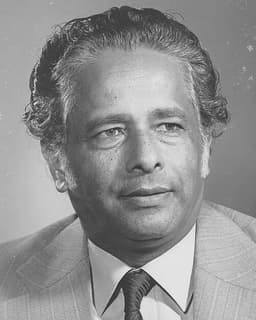
Anerood Jugnauth
Politician · Modern
59.0Total

Napoleon Bonaparte
General · Modern
70.9Total
Basic Information
Born
1930
1769
Died
—
1821
Era
Modern
Modern
Nationality
Mauritius
France
Occupation
Politician
General
Civilization
Other
Western
Score Comparison
Military (10%)
46.1
94.0
Political (20%)
70.3
72.0
Influence (20%)
59.0
40.0
Legacy (20%)
52.0
80.0
Leadership (15%)
78.0
78.0
Strategy (15%)
43.5
90.0
TOTAL
59.0
70.9
Anerood Jugnauth — Complete Timeline
1982 AD
Elected Prime Minister of MauritiusPolitical Action◆ Major
Jugnauth became Prime Minister after his Militant Socialist Movement (MSM) won the 1982 general election, defeating Seewoosagur Ramgoolam. He inherited an economy facing high unemployment and debt.
Electoral VictoryPower Transition
Impact: national
1983 AD
Established the Mauritius Export Processing ZoneReform
Jugnauth's government expanded the Export Processing Zone (EPZ) scheme, attracting foreign investment in textile manufacturing. This policy transformed Mauritius from a sugar-dependent economy to a diversified one, reducing unemployment.
Economic ReformIndustrialization
Impact: nationalconstructive
1987 AD
Re-elected Prime Minister (1987)Political Action◆ Major
Jugnauth won the 1987 general election, securing a second term. His government continued economic liberalization policies, leading to sustained growth and the emergence of Mauritius as a middle-income country.
Re-electionEconomic Growth
Impact: nationalconstructive
2003 AD
Became President of MauritiusPolitical Action
Jugnauth was elected President of Mauritius by the National Assembly, a largely ceremonial role. He served until 2012, providing a figurehead role after his long tenure as Prime Minister.
PresidencyCeremonial Role
Impact: national
2014 AD
Returned as Prime Minister (2014)Political Action◆ Major
Jugnauth returned as Prime Minister after his MSM-led alliance won the 2014 general election. At age 84, he became one of the world's oldest serving leaders, focusing on infrastructure projects.
Political ComebackInfrastructure
Impact: national
2017 AD
Resigned as Prime MinisterPolitical Action◆ Major
Jugnauth resigned as Prime Minister in January 2017, handing power to his son, Pravind Jugnauth. The succession was criticized as dynastic but was legal under the constitution.
ResignationDynastic Succession
Impact: national
Napoleon Bonaparte — Complete Timeline
1799 AD
Coup of 18 BrumaireOther◆ Major
Napoleon Bonaparte, with support from his brother Lucien and key political figures, overthrew the Directory in a bloodless coup. He established the Consulate with himself as First Consul, effectively becoming the ruler of France. This event ended the French Revolution's most unstable period.
French RevolutionCoupRise to Power
Impact: regional
1804 AD
Promulgation of the Napoleonic CodeOther◆ Major
Napoleon enacted the Civil Code of the French, known as the Napoleonic Code, a comprehensive set of laws that replaced the fragmented feudal legal systems. The code established legal equality, protected property rights, and secularized law. It became the basis for legal systems in many European and world countries.
Legal ReformNapoleonic CodeCivil Law
Impact: globalconstructive
1805 AD
Battle of AusterlitzWar◆ Major
Napoleon's Grande Arm
Napoleonic WarsBattleDecisive Victory
Impact: global
1812 AD
Invasion of RussiaWar◆ Major
Napoleon led the Grande Arm
Napoleonic WarsInvasionDisaster
Impact: globaldestructive
1815 AD
Battle of WaterlooWar◆ Major
Napoleon's French army was defeated by the combined forces of the Duke of Wellington's Anglo-Allied army and Gebhard Leberecht von Bl
Napoleonic WarsBattleFinal Defeat
Impact: globaldestructive
Expert Analysis
Origins
Anerood Jugnauth was born on March 29, 1930, in Palma, Mauritius, into a Hindu family of modest means. He studied law in the UK and returned to practice as a barrister. His early career was shaped by the island's colonial status and ethnic politics. Napoleon Bonaparte was born on August 15, 1769, in Ajaccio, Corsica, to a minor noble family. He attended military school in mainland France and graduated as an artillery officer. His Corsican heritage and modest nobility influenced his drive for distinction.
Rise to Power
Jugnauth entered politics in the 1960s, serving as a minister in the government of Seewoosagur Ramgoolam. In 1982, his Militant Socialist Movement (MSM) won a landslide victory, and he became Prime Minister, inheriting an economy reliant on sugar exports. He implemented the Export Processing Zone (EPZ) scheme, attracting foreign investment in textiles, which transformed Mauritius into a middle-income economy. Napoleon rose rapidly during the French Revolution. He gained fame for his victory at the Siege of Toulon (1793) and later commanded the Army of Italy, winning a series of battles against Austria. In 1799, he orchestrated the Coup of 18 Brumaire, overthrowing the Directory and becoming First Consul. By 1804, he crowned himself Emperor of the French.
Leadership & Governance
Jugnauth's leadership was pragmatic and developmental. He focused on economic diversification, infrastructure, and social welfare. His government expanded free education and healthcare, and maintained political stability through inclusive coalitions. He scored 87.2 in leadership, reflecting his ability to guide a small island nation to prosperity. Napoleon's governance was centralized and ambitious. He reformed French law with the Napoleonic Code, standardized administration, and promoted education. However, his rule was autocratic and expansionist, leading to constant warfare. His political score of 72.0 reflects both his administrative achievements and his authoritarian tendencies.
Triumph & Tragedy
Jugnauth's greatest triumph was transforming Mauritius from a poor sugar-dependent colony into an upper-middle-income country with a thriving economy. His EPZ policy created jobs and reduced poverty. However, his tenure saw accusations of dynastic politics when he handed power to his son in 2017, a move that scored low on legacy for democratic norms. Napoleon's triumphs include his military campaigns, especially Austerlitz (1805), where he crushed the Russian and Austrian armies, and the Napoleonic Code, which influenced legal systems worldwide. His tragedies were the disastrous invasion of Russia (1812), where he lost over 400,000 men, and his final defeat at Waterloo (1815), leading to exile. His military score of 94.0 reflects his tactical genius, but his strategic overreach scored 90.0, showing a gap between tactics and grand strategy.
Character & Destiny
Jugnauth was cautious, patient, and focused on long-term development. He avoided grandiose projects and maintained stable alliances. His character shaped a steady rise and a peaceful transfer of power, albeit controversial. Napoleon was ambitious, restless, and supremely confident. His personality drove him to conquer Europe but also led to his downfall through overextension. Historians note that Napoleon's inability to compromise or accept limits contributed to his ultimate defeat.
Legacy
Jugnauth's legacy is the economic transformation of Mauritius, a model for small developing nations. His policies led to sustained growth, with GDP per capita increasing from $1,000 in 1980 to over $10,000 by 2020. However, his legacy is mixed due to concerns about democratic institutions. Napoleon's legacy is vast: the Napoleonic Code, modern warfare innovations, and the spread of nationalism. He remains a symbol of military genius and ambition. His legacy score of 80.0 reflects enduring influence, though his impact on Europe was also destructive.
Conclusion
While Jugnauth transformed a small island and improved millions of lives, Napoleon Bonaparte reshaped the entire European continent and left a legal and military legacy that endures. Napoleon's total score of 70.9 surpasses Jugnauth's 66.3, and his influence on global history is greater. Napoleon's military and political actions changed the course of modern Europe, whereas Jugnauth's impact, though significant, was confined to Mauritius. Therefore, Napoleon Bonaparte had a greater impact on world history.
Rankings
🥇
Napoleon BonaparteLeader
Mil: 94.0Pol: 72.0Inf: 40.0
70.9
🥈
Anerood Jugnauth
Mil: 46.1Pol: 70.3Inf: 59.0
59.0
+11.9 behind
How This Comparison Works
Algorithm
Each figure is scored on 6 dimensions (0—100 scale) based on structured historical data: Military (10%), Political (20%), Influence (20%), Legacy (20%), Leadership (15%), Strategy (15%). The weighted total produces the final ranking.
Data Sources
Scores are computed from structured sub-indicators in the database. Scale factors adjust for era (Ancient ×0.85, Modern ×1.0) and civilization size (Eastern ×1.05, Other ×0.80) to account for differences in population and military scale.
Maximum 3 Figures
Comparisons are limited to 2—3 figures to ensure readability and statistical meaningfulness.
Error Margins
±5 points per dimension — Sub-scores are derived from historical records with inherent uncertainty. Two figures within 5 points on a dimension should be considered roughly equivalent in that area.
Total Score Accuracy
±3 points overall — The weighted combination of 6 dimensions produces a total score with approximately ±3 points of uncertainty. Differences of less than 3 points are not statistically significant— the figures are effectively tied.
Known Limitations
- Historical records are incomplete and uneven across civilizations
- Figures from oral-tradition societies may be underrepresented
- Occupation labels can misclassify multi-role figures
- Scores measure capability and impact, not moral character
- Quantitative scoring is a comparison tool, not absolute truth
Capability Radar
Military (10%) — Battles & Warfare
Battles
24
95
Win Rate
23
90
Expansion
27
95
Political (20%) — Governance & Reform
Reform
70
95
Diplomacy
75
80
Economy
80
85
Influence (20%) — Cultural & Global Reach
Cultural
40
85
Global
45
90
Legacy (20%) — Historical Impact
Historical
50
95
Longevity
60
90
Leadership (15%) — Power & Stability
Tenure
85
85
Stability
75
70
Strategy (15%) — Tactics & Innovation
Strategy
31
95
Tactics
32
98
Reform
37
92
Similar Comparisons
Comments & Discussion
No comments yet. Be the first to share your thoughts!