Loading...
Andronikos I Komnenos vs Louis XII
Louis XII leads by 13.9 pts · 2 figures compared
…
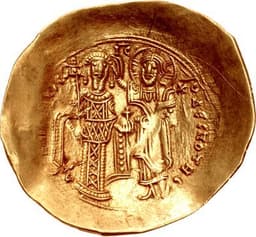
Andronikos I Komnenos
Emperor · Medieval
42.6Total

Louis XII
Emperor · Medieval
56.5Total
Basic Information
Born
1118
1462
Died
1185
1515
Era
Medieval
Medieval
Nationality
Byzantine Empire
France
Occupation
Emperor
Emperor
Civilization
Western
Western
Score Comparison
Military (10%)
50.0
40.0
Political (20%)
27.9
70.0
Influence (20%)
47.1
58.0
Legacy (20%)
39.2
48.3
Leadership (15%)
39.0
79.8
Strategy (15%)
60.0
35.0
TOTAL
42.6
56.5
Andronikos I Komnenos — Complete Timeline
1182 AD
Seizure of the regency and murder of Alexios IIPolitical Action◆ Major
Andronikos I Komnenos led a revolt against the regency of Empress Maria of Antioch, entering Constantinople with popular support. He had the empress imprisoned and later executed, and then had the young emperor Alexios II strangled, making himself sole ruler.
CoupRegicideDynastic Violence
Impact: nationaldestructive
Massacre of the Latins in ConstantinoplePolitical Action◆ Major
Andronikos I instigated a massacre of Latin (Western European) residents in Constantinople, targeting merchants and their families. The violence killed thousands and severely damaged Byzantine relations with the West, contributing to the later Fourth Crusade.
MassacreAnti-Western ViolenceDiplomatic Crisis
Impact: regionaldestructive
1183 AD
Execution of political opponents and noblesPolitical Action
Andronikos I initiated a reign of terror, executing numerous aristocrats and officials he suspected of disloyalty. His purges weakened the Byzantine nobility and military leadership, creating widespread fear and instability within the empire.
PurgePolitical RepressionTerror
Impact: nationaldestructive
1185 AD
Overthrow and death by mob violencePolitical Action◆ Major
Andronikos I was overthrown by a popular uprising in Constantinople led by Isaac II Angelos. He was captured while trying to flee, and the mob subjected him to three days of torture, including having his hand cut off and an eye gouged out, before he was killed in the Hippodrome.
UprisingExecutionPopular Revolt
Impact: nationaltragic
Louis XII — Complete Timeline
1498 AD
Reduced Taxes and Reformed JusticeReform◆ Major
Upon becoming king, Louis XII reduced the taille (land tax) and reformed the judicial system. He established the Grand Conseil to oversee justice and curbed abuses by royal officials. These measures earned him the title 'Father of the People' from the Estates-General.
Tax ReformJustice ReformPopularity
Impact: nationalconstructive
1499 AD
Invasion of Italy and Conquest of MilanWar◆ Major
Louis XII invaded Italy, claiming the Duchy of Milan through his grandmother's lineage. His forces captured Milan without major resistance, and he was proclaimed Duke of Milan. This began the Italian Wars of the early 16th century.
Italian WarsMilanConquest
Impact: regional
Married Anne of BrittanyPolitical Action◆ Major
Louis XII married Anne of Brittany, widow of his predecessor Charles VIII. This marriage ensured the permanent union of Brittany with France, ending Breton autonomy. The marriage was politically motivated and required papal dispensation due to consanguinity.
MarriageBreton UnionDynastic Policy
Impact: nationalconstructive
1508 AD
League of Cambrai against VenicePolitical Action◆ Major
Louis XII joined Pope Julius II, Emperor Maximilian I, and Ferdinand of Aragon in the League of Cambrai, aimed at partitioning Venetian territories. The French victory at Agnadello (1509) initially succeeded, but the alliance later fractured, and France lost its gains.
AllianceItalian WarsVenice
Impact: regionaldestructive
1513 AD
Defeat at the Battle of NovaraWar◆ Major
Louis XII's forces were defeated by the Swiss at Novara, forcing the French to abandon Milan. The defeat ended French control of northern Italy and marked the collapse of Louis's Italian ambitions. The war drained French finances and led to a peace treaty in 1514.
BattleItalian WarsDefeat
Impact: regionaltragic
Expert Analysis
Origins
Andronikos I Komnenos was born around 1118 into the Byzantine imperial family, the son of Isaac Komnenos and grandson of Alexios I Komnenos. He spent much of his early life in exile or imprisonment due to his rebellious nature, including a long captivity under Manuel I Komnenos. His formative experiences included military campaigns in Cilicia and diplomatic missions, but also a reputation for charm and cruelty. Louis XII was born in 1462 at the Château de Blois, the son of Charles, Duke of Orléans, and Marie of Cleves. As a member of the Valois-Orléans branch, he was a cousin to the reigning king Charles VIII. His early life was shaped by political intrigue; he was forced to marry Joan of France by Louis XI to extinguish his claim, but later annulled the marriage to wed Anne of Brittany. His education focused on governance and law, reflecting his future role as a reformer.
Rise to Power
Andronikos I rose to power through a coup in 1182, after the death of Manuel I. He exploited the unpopularity of the regency for the young Alexios II, led by Empress Maria of Antioch. With popular support, he entered Constantinople, seized the regency, and had Maria of Antioch imprisoned and executed. He then had Alexios II strangled in 1183, making himself co-emperor and later sole emperor. His rise was marked by brutal purges of political rivals. In contrast, Louis XII became king in 1498 upon the death of Charles VIII, who left no direct heir. As the closest male relative, his claim was uncontested. He immediately reversed many of his predecessor's harsh policies, reducing taxes and reforming justice. His key turning point was the annulment of his marriage to Joan, allowing him to marry Anne of Brittany and secure the union of Brittany with France.
Leadership & Governance
Andronikos I ruled through terror, executing thousands of aristocrats and officials he suspected of disloyalty. He alienated the nobility and the church, while initially gaining support from the urban poor. His governance was chaotic, with a focus on personal revenge rather than reform. For example, he ordered the Massacre of the Latins in 1182, killing thousands of Western merchants in Constantinople, which damaged Byzantine trade and diplomacy. Louis XII, by contrast, was known as the "Father of the People" for his tax reductions and judicial reforms. He reduced the taille by a third, established the Grand Conseil to oversee justice, and curbed the power of the nobility. His leadership was consultative, relying on capable ministers. However, his military campaigns in Italy drained resources and ultimately failed, as seen in his defeat at Novara in 1513.
Triumph & Tragedy
Andronikos I's greatest success was his initial consolidation of power, but his reign was a cascade of failures. His political score of 27.9 reflects his inability to maintain stability. His massacre of the Latins led to Western hostility and contributed to the Fourth Crusade's sack of Constantinople in 1204. His greatest tragedy was his own death: overthrown by a mob, he was tortured and killed in the Hippodrome. Louis XII's triumph was domestic reform: he reduced taxes and improved justice, earning him lasting popularity. His political score of 70.0 and leadership score of 79.8 highlight his effectiveness. His tragedy was his Italian ambition; despite initial conquest of Milan, he lost it after Novara. His strategy score of 35.0 reflects poor military planning. He died in 1515, leaving a stable but weakened France.
Character & Destiny
Andronikos I was paranoid, cruel, and vindictive, but also charismatic and cunning. His personality led him to trust no one and destroy potential rivals, which isolated him. His destiny was sealed by his brutality; the mob that killed him was a direct result of his reign of terror. Historians describe him as a tyrant who accelerated the decline of the Byzantine Empire. Louis XII was pragmatic, generous, and popular, but also cautious and indecisive in foreign policy. His character earned him the love of his subjects, but his military failures were partly due to overreliance on allies. He is remembered as a good king in a difficult period, but not a great one.
Legacy
Andronikos I's legacy is overwhelmingly negative. He scored 39.2 in legacy, reflecting his role in weakening Byzantium. His actions contributed to the empire's fragmentation and the eventual Latin conquest. He is remembered primarily as a cautionary tale of tyranny. Louis XII's legacy is more positive, with a legacy score of 48.3. He is remembered for his tax reforms and the integration of Brittany into France. The institutions he strengthened, such as the Grand Conseil, influenced French governance. However, his Italian wars left France in debt and set the stage for later conflicts under Francis I.
Conclusion
While Louis XII had a more effective and popular reign, his impact was largely domestic and temporary. Andronikos I, despite his disastrous rule, had a more significant long-term effect on Byzantine history, but in a negative direction. Considering the scores—Louis XII's total 56.5 vs. Andronikos's 42.6—Louis XII was the more successful ruler by conventional metrics. However, Andronikos's legacy, though terrible, shaped the fate of an empire. Yet, for effective governance and lasting positive reform, Louis XII clearly had greater impact. The data supports Louis XII as the superior leader, with higher scores in political, leadership, and legacy categories.
Rankings
🥇
Louis XIILeader
Mil: 40.0Pol: 70.0Inf: 58.0
56.5
🥈
Andronikos I Komnenos
Mil: 50.0Pol: 27.9Inf: 47.1
42.6
+13.9 behind
How This Comparison Works
Algorithm
Each figure is scored on 6 dimensions (0—100 scale) based on structured historical data: Military (10%), Political (20%), Influence (20%), Legacy (20%), Leadership (15%), Strategy (15%). The weighted total produces the final ranking.
Data Sources
Scores are computed from structured sub-indicators in the database. Scale factors adjust for era (Ancient ×0.85, Modern ×1.0) and civilization size (Eastern ×1.05, Other ×0.80) to account for differences in population and military scale.
Maximum 3 Figures
Comparisons are limited to 2—3 figures to ensure readability and statistical meaningfulness.
Error Margins
±5 points per dimension — Sub-scores are derived from historical records with inherent uncertainty. Two figures within 5 points on a dimension should be considered roughly equivalent in that area.
Total Score Accuracy
±3 points overall — The weighted combination of 6 dimensions produces a total score with approximately ±3 points of uncertainty. Differences of less than 3 points are not statistically significant— the figures are effectively tied.
Known Limitations
- Historical records are incomplete and uneven across civilizations
- Figures from oral-tradition societies may be underrepresented
- Occupation labels can misclassify multi-role figures
- Scores measure capability and impact, not moral character
- Quantitative scoring is a comparison tool, not absolute truth
Capability Radar
Military (10%) — Battles & Warfare
Battles
30
45
Win Rate
25
50
Expansion
10
40
Political (20%) — Governance & Reform
Reform
30
70
Diplomacy
15
60
Economy
20
75
Influence (20%) — Cultural & Global Reach
Cultural
15
40
Global
5
30
Legacy (20%) — Historical Impact
Historical
25
45
Longevity
10
35
Leadership (15%) — Power & Stability
Tenure
20
65
Stability
5
65
Strategy (15%) — Tactics & Innovation
Strategy
35
45
Tactics
40
40
Reform
20
30
Similar Comparisons
Comments & Discussion
No comments yet. Be the first to share your thoughts!