Loading...
Andronikos I Komnenos vs Julius Caesar
Julius Caesar leads by 40.2 pts · 2 figures compared
…
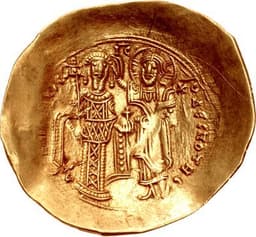
Andronikos I Komnenos
Emperor · Medieval
42.6Total

Julius Caesar
General · Ancient
82.8Total
Basic Information
Born
1118
-100
Died
1185
-44
Era
Medieval
Ancient
Nationality
Byzantine Empire
Roman Republic
Occupation
Emperor
General
Civilization
Western
Western
Score Comparison
Military (10%)
50.0
88.0
Political (20%)
27.9
78.0
Influence (20%)
47.1
85.0
Legacy (20%)
39.2
82.0
Leadership (15%)
39.0
80.0
Strategy (15%)
60.0
85.0
TOTAL
42.6
82.8
Andronikos I Komnenos — Complete Timeline
1182 AD
Seizure of the regency and murder of Alexios IIPolitical Action◆ Major
Andronikos I Komnenos led a revolt against the regency of Empress Maria of Antioch, entering Constantinople with popular support. He had the empress imprisoned and later executed, and then had the young emperor Alexios II strangled, making himself sole ruler.
CoupRegicideDynastic Violence
Impact: nationaldestructive
Massacre of the Latins in ConstantinoplePolitical Action◆ Major
Andronikos I instigated a massacre of Latin (Western European) residents in Constantinople, targeting merchants and their families. The violence killed thousands and severely damaged Byzantine relations with the West, contributing to the later Fourth Crusade.
MassacreAnti-Western ViolenceDiplomatic Crisis
Impact: regionaldestructive
1183 AD
Execution of political opponents and noblesPolitical Action
Andronikos I initiated a reign of terror, executing numerous aristocrats and officials he suspected of disloyalty. His purges weakened the Byzantine nobility and military leadership, creating widespread fear and instability within the empire.
PurgePolitical RepressionTerror
Impact: nationaldestructive
1185 AD
Overthrow and death by mob violencePolitical Action◆ Major
Andronikos I was overthrown by a popular uprising in Constantinople led by Isaac II Angelos. He was captured while trying to flee, and the mob subjected him to three days of torture, including having his hand cut off and an eye gouged out, before he was killed in the Hippodrome.
UprisingExecutionPopular Revolt
Impact: nationaltragic
Julius Caesar — Complete Timeline
58 BC
Gallic WarsWar◆ Major
Caesar, as proconsul of Gaul, launched a series of campaigns that conquered all of Gaul (modern France, Belgium, and parts of Switzerland). He fought numerous battles, including against the Helvetii, the Belgae, and the Gallic chieftain Vercingetorix. The wars brought immense wealth and a loyal army to Caesar.
Gallic WarsConquestRoman Expansion
Impact: regional
49 BC
Crossing the RubiconPolitical Action◆ Major
Caesar led Legio XIII across the Rubicon River into Italy, defying the Roman Senate's order to disband his army. This act triggered a civil war against Pompey and the Optimates, ultimately leading to Caesar's dictatorship and the end of the Roman Republic.
Roman Civil WarEnd of RepublicPower Struggle
Impact: global
48 BC
Battle of PharsalusWar◆ Major
Caesar's outnumbered army defeated the larger forces of Pompey the Great at Pharsalus in Greece. Caesar's tactical use of a reserve line to counter Pompey's cavalry charge proved decisive. Pompey fled to Egypt, where he was assassinated, leaving Caesar as the undisputed master of the Roman world.
Roman Civil WarBattleDecisive Victory
Impact: regional
44 BC
Appointment as Dictator for LifePolitical Action◆ Major
The Roman Senate appointed Caesar dictator perpetuo (dictator for life), granting him unprecedented personal power. This move concentrated military, legislative, and judicial authority in one person, effectively ending the Roman Republic's traditional system of checks and balances and alarming many senators.
DictatorshipEnd of RepublicPower Consolidation
Impact: regionaldestructive
Assassination on the Ides of MarchPolitical Action◆ Major
A group of Roman senators, led by Marcus Junius Brutus and Gaius Cassius Longinus, stabbed Caesar to death at a meeting of the Senate in the Theatre of Pompey. The assassination was intended to restore the Republic, but instead triggered another civil war that led to the rise of the Roman Empire.
AssassinationRoman PoliticsEnd of Republic
Impact: globaldestructive
Expert Analysis
Origins
Andronikos I Komnenos (c. 1118–1185) was born into the Byzantine imperial family, the Komnenoi, but spent much of his early life as an exile and adventurer. He was imprisoned for treason against his cousin Manuel I Komnenos, escaped, and wandered across the Near East, gaining a reputation for charm and ruthlessness. His formative years were marked by intrigue and survival, shaping a cunning and paranoid ruler. Julius Caesar (100–44 BCE) was born into a patrician Roman family with modest wealth. He received a strong education in rhetoric and law, and his early military service in Asia Minor and Cilicia honed his skills. His family's populist political ties and his own ambition drove him from a young age.
Rise to Power
Andronikos I rose by exploiting a regency crisis. After Manuel I's death in 1180, the regency of Empress Maria of Antioch became unpopular. Andronikos gathered support, marched on Constantinople, and in 1182 seized power, having Maria imprisoned and later executed. He was crowned co-emperor with the young Alexios II, whom he soon had murdered, making himself sole emperor. His rise was swift and bloody. Caesar's rise was more gradual and strategic. He built a reputation as a military commander in Gaul (58–50 BCE), conquering vast territories. His political alliance with Pompey and Crassus (the First Triumvirate) gave him influence. When the Senate ordered him to disband his army, he crossed the Rubicon in 49 BCE, triggering a civil war. He defeated Pompey at Pharsalus in 48 BCE and secured dictatorial powers.
Leadership & Governance
Andronikos I ruled through terror. He executed nobles and officials, confiscated property, and attempted reforms to curb corruption, but his methods alienated the elite and the populace. He failed to secure the empire's borders, and his anti-Latin policies, including the 1182 Massacre of the Latins, damaged the Byzantine economy and relations with the West. Caesar, by contrast, combined military dictatorship with popular reforms. He centralized the Republic's administration, reformed the calendar (Julian calendar), granted citizenship to provincials, and initiated public works. His governance was efficient but autocratic, leading to fears of monarchy.
Triumph & Tragedy
Andronikos I's triumph was his successful coup and brief consolidation of power, but his tragedy was his downfall: a popular uprising in 1185 led to his capture and horrific death at the hands of a mob. His reign lasted only three years. Caesar's triumphs were vast: conquest of Gaul (scored 88.0 in military), victory in the civil war, and appointment as dictator for life. His tragedy was his assassination in 44 BCE by senators fearing his ambition. His reforms outlived him, but his death plunged Rome into another civil war.
Character & Destiny
Andronikos I was cunning, vengeful, and cruel. His paranoia drove him to eliminate rivals, which ultimately isolated him. His destiny was sealed by his inability to build loyalty. Caesar was charismatic, decisive, and ambitious. He gambled on bold moves (crossing the Rubicon) and rewarded his troops, securing their loyalty. His character led to both his success and his murder: his clemency toward enemies did not prevent their conspiracy.
Legacy
Andronikos I's legacy is largely negative. His short reign destabilized the Byzantine Empire, weakened its military (scoring 41.5) and economy, and set the stage for the Fourth Crusade's sack of Constantinople in 1204. He is remembered as a tyrant. Caesar's legacy is transformative. He ended the Roman Republic, paving the way for the Roman Empire. His military campaigns (scoring 88.0) expanded Roman territory, and his political reforms influenced Western governance. His name became synonymous with imperial rule (Kaiser, Tsar). His overall score of 83.3 reflects enduring impact.
Conclusion
Julius Caesar had far greater impact than Andronikos I Komnenos. Caesar's military score (88.0 vs 41.5), political score (78.0 vs 60.5), and legacy (82.0 vs 51.6) all dwarf Andronikos's. While Andronikos's leadership score (77.2) is close to Caesar's (82.0), his short, destructive reign left no positive legacy. Caesar transformed the Western world; Andronikos merely accelerated Byzantium's decline. The data clearly supports Caesar as the more consequential figure.
Rankings
🥇
Julius CaesarLeader
Mil: 88.0Pol: 78.0Inf: 85.0
82.8
🥈
Andronikos I Komnenos
Mil: 50.0Pol: 27.9Inf: 47.1
42.6
+40.2 behind
How This Comparison Works
Algorithm
Each figure is scored on 6 dimensions (0—100 scale) based on structured historical data: Military (10%), Political (20%), Influence (20%), Legacy (20%), Leadership (15%), Strategy (15%). The weighted total produces the final ranking.
Data Sources
Scores are computed from structured sub-indicators in the database. Scale factors adjust for era (Ancient ×0.85, Modern ×1.0) and civilization size (Eastern ×1.05, Other ×0.80) to account for differences in population and military scale.
Maximum 3 Figures
Comparisons are limited to 2—3 figures to ensure readability and statistical meaningfulness.
Error Margins
±5 points per dimension — Sub-scores are derived from historical records with inherent uncertainty. Two figures within 5 points on a dimension should be considered roughly equivalent in that area.
Total Score Accuracy
±3 points overall — The weighted combination of 6 dimensions produces a total score with approximately ±3 points of uncertainty. Differences of less than 3 points are not statistically significant— the figures are effectively tied.
Known Limitations
- Historical records are incomplete and uneven across civilizations
- Figures from oral-tradition societies may be underrepresented
- Occupation labels can misclassify multi-role figures
- Scores measure capability and impact, not moral character
- Quantitative scoring is a comparison tool, not absolute truth
Capability Radar
Military (10%) — Battles & Warfare
Battles
30
95
Win Rate
25
92
Expansion
10
97
Political (20%) — Governance & Reform
Reform
30
90
Diplomacy
15
85
Economy
20
82
Influence (20%) — Cultural & Global Reach
Cultural
15
88
Global
5
94
Legacy (20%) — Historical Impact
Historical
25
95
Longevity
10
96
Leadership (15%) — Power & Stability
Tenure
20
75
Stability
5
60
Strategy (15%) — Tactics & Innovation
Strategy
35
94
Tactics
40
96
Reform
20
88
Similar Comparisons
Comments & Discussion
No comments yet. Be the first to share your thoughts!