Loading...
This comparison has not been analyzed yet.
One-time AI generation (~1 minute). Scores and timeline are already available below.
Andriy Yermak vs Brian Mulroney
Brian Mulroney leads by 11.0 pts · 2 figures compared
…

Andriy Yermak
Politician · Modern
49.8Total
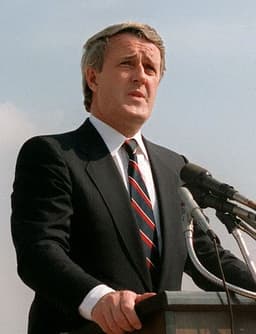
Brian Mulroney
Politician · Modern
60.8Total
Basic Information
Born
1971
1939
Died
—
—
Era
Modern
Modern
Nationality
Ukraine
Canada
Occupation
Politician
Politician
Civilization
Western
Western
Score Comparison
Military (10%)
39.9
48.4
Political (20%)
68.0
78.0
Influence (20%)
54.9
61.0
Legacy (20%)
40.8
56.0
Leadership (15%)
53.2
72.0
Strategy (15%)
36.8
42.5
TOTAL
49.8
60.8
Andriy Yermak — Complete Timeline
2019 AD
Appointed Chief of Staff to President ZelenskyyPolitical Action◆ Major
Yermak was appointed head of the Office of the President of Ukraine under Volodymyr Zelenskyy. This positioned him as a central figure in Ukraine's wartime governance and diplomatic negotiations.
AppointmentZelenskyy AdministrationGovernment
Impact: national
2022 AD
Implemented wartime governance reformsReform
Yermak oversaw the restructuring of Ukraine's wartime administration, including the creation of military-civilian administrations in occupied territories and streamlining decision-making processes for defense and logistics.
Governance ReformWar AdministrationUkraine
Impact: nationalconstructive
Led negotiations for prisoner exchanges with RussiaPolitical Action◆ Major
Yermak oversaw multiple prisoner-of-war exchanges between Ukraine and Russia following the 2022 invasion. These exchanges secured the release of hundreds of Ukrainian soldiers and civilians, becoming a key humanitarian effort.
Prisoner ExchangeHumanitarianRusso-Ukrainian War
Impact: nationalconstructive
Coordinated international military aid for UkrainePolitical Action◆ Major
Yermak played a central role in securing and coordinating Western military aid, including artillery, tanks, and air defense systems, from the United States and European allies during the full-scale Russian invasion.
Military AidDiplomacyRusso-Ukrainian War
Impact: globalconstructive
Brian Mulroney — Complete Timeline
1988 AD
Negotiation of the Canada-US Free Trade AgreementPolitical Action◆ Major
Mulroney's government negotiated the Canada-US Free Trade Agreement (CUSFTA), which eliminated tariffs and trade barriers between the two countries. The deal was controversial in Canada but passed after a federal election fought largely on the issue.
Free TradeUS-Canada RelationsEconomic Policy
Impact: regionalconstructive
1991 AD
Introduction of the Goods and Services TaxReform◆ Major
Mulroney's government implemented a 7% federal Goods and Services Tax (GST) to replace the hidden Manufacturers' Sales Tax. The GST was deeply unpopular and contributed to the Progressive Conservative Party's electoral collapse in 1993.
Tax ReformGSTFiscal Policy
Impact: nationaldestructive
1992 AD
Signing of the North American Free Trade AgreementPolitical Action◆ Major
Mulroney signed NAFTA alongside US President George H.W. Bush and Mexican President Carlos Salinas de Gortari. The agreement expanded CUSFTA to include Mexico, creating a trilateral trade bloc that reshaped North American commerce.
NAFTATrade BlocNorth America
Impact: regionalconstructive
This comparison has not been analyzed yet.
One-time AI generation (~1 minute). Scores and timeline are already available below.
Rankings
🥇
Brian MulroneyLeader
Mil: 48.4Pol: 78.0Inf: 61.0
60.8
🥈
Andriy Yermak
Mil: 39.9Pol: 68.0Inf: 54.9
49.8
+11.0 behind
How This Comparison Works
Algorithm
Each figure is scored on 6 dimensions (0—100 scale) based on structured historical data: Military (10%), Political (20%), Influence (20%), Legacy (20%), Leadership (15%), Strategy (15%). The weighted total produces the final ranking.
Data Sources
Scores are computed from structured sub-indicators in the database. Scale factors adjust for era (Ancient ×0.85, Modern ×1.0) and civilization size (Eastern ×1.05, Other ×0.80) to account for differences in population and military scale.
Maximum 3 Figures
Comparisons are limited to 2—3 figures to ensure readability and statistical meaningfulness.
Error Margins
±5 points per dimension — Sub-scores are derived from historical records with inherent uncertainty. Two figures within 5 points on a dimension should be considered roughly equivalent in that area.
Total Score Accuracy
±3 points overall — The weighted combination of 6 dimensions produces a total score with approximately ±3 points of uncertainty. Differences of less than 3 points are not statistically significant— the figures are effectively tied.
Known Limitations
- Historical records are incomplete and uneven across civilizations
- Figures from oral-tradition societies may be underrepresented
- Occupation labels can misclassify multi-role figures
- Scores measure capability and impact, not moral character
- Quantitative scoring is a comparison tool, not absolute truth
Capability Radar
Military (10%) — Battles & Warfare
Battles
10
31
Win Rate
10
32
Expansion
5
36
Political (20%) — Governance & Reform
Reform
50
75
Diplomacy
60
80
Economy
40
75
Influence (20%) — Cultural & Global Reach
Cultural
20
40
Global
40
65
Legacy (20%) — Historical Impact
Historical
30
65
Longevity
15
55
Leadership (15%) — Power & Stability
Tenure
55
65
Stability
45
60
Strategy (15%) — Tactics & Innovation
Strategy
20
38
Tactics
15
39
Reform
25
46
Similar Comparisons
Comments & Discussion
No comments yet. Be the first to share your thoughts!