Loading...
Andrew Cunningham vs Zachary Taylor
Andrew Cunningham leads by 24.3 pts · 2 figures compared
…
Andrew Cunningham
General · Modern
72.4Total
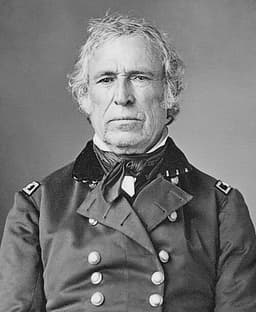
Zachary Taylor
General · Modern
48.1Total
Basic Information
Born
1883
1784
Died
1963
1850
Era
Modern
Modern
Nationality
United Kingdom
United States
Occupation
General
General
Civilization
Western
Western
Score Comparison
Military (10%)
85.0
63.3
Political (20%)
78.0
29.3
Influence (20%)
65.0
53.3
Legacy (20%)
68.0
44.2
Leadership (15%)
78.0
48.4
Strategy (15%)
72.0
57.5
TOTAL
72.4
48.1
Andrew Cunningham — Complete Timeline
1940 AD
Battle of TarantoWar◆ Major
Cunningham planned and executed a carrier-based air strike on the Italian fleet at Taranto harbor. The attack sank one battleship and damaged two others, demonstrating the effectiveness of naval air power and influencing the Japanese attack on Pearl Harbor.
World War IINaval AviationMediterranean
Impact: regional
1941 AD
Battle of Cape MatapanWar◆ Major
Cunningham commanded the British Mediterranean Fleet in a night action off Cape Matapan, Greece. The fleet sank three Italian heavy cruisers and two destroyers, establishing British naval dominance in the Mediterranean and crippling the Italian Regia Marina.
World War IINaval BattleMediterranean
Impact: regional
Evacuation of CreteWar◆ Major
Cunningham commanded the naval evacuation of Allied forces from Crete after the German airborne invasion. Despite heavy losses from air attacks, including three cruisers and six destroyers sunk, he extracted over 15,000 troops, stating 'It takes three years to build a ship, but three centuries to build a tradition.'
World War IIEvacuationMediterranean
Impact: regionaltragic
1943 AD
Appointed First Sea LordPolitical Action◆ Major
Cunningham was appointed First Sea Lord and Chief of the Naval Staff, the professional head of the Royal Navy. He served until 1946, overseeing the Navy's operations in the final years of World War II, including the Normandy landings and the defeat of Japan.
World War IINaval CommandRoyal Navy
Impact: global
Zachary Taylor — Complete Timeline
1846 AD
Battle of Palo AltoWar◆ Major
Taylor commanded U.S. forces in the first major battle of the Mexican-American War near present-day Brownsville, Texas. His army defeated Mexican forces under General Mariano Arista, securing the Rio Grande border.
Mexican-American WarBattleMilitary
Impact: regional
1847 AD
Battle of Buena VistaWar◆ Major
Taylor's outnumbered army defeated a larger Mexican force led by Santa Anna at Buena Vista, Coahuila. The victory made Taylor a national hero and boosted his presidential prospects.
Mexican-American WarBattleSanta Anna
Impact: regional
1848 AD
Elected President of the United StatesPolitical Action◆ Major
Taylor won the 1848 presidential election as the Whig candidate, defeating Democrat Lewis Cass and Free Soil candidate Martin Van Buren. His military fame and ambiguous stance on slavery secured victory.
PresidencyElectionWhig Party
Impact: national
1850 AD
Threatened to Veto Compromise of 1850Political Action◆ Major
Taylor opposed the Compromise of 1850, threatening to veto it and even to lead troops against secessionists. His death in July 1850 removed the main obstacle to the compromise's passage.
Compromise of 1850SlaverySecession
Impact: national
Died in OfficeOther◆ Major
Taylor died suddenly on July 9, 1850, after a brief illness likely caused by gastroenteritis. His death elevated Millard Fillmore to the presidency, who then signed the Compromise of 1850.
DeathPresidential Succession
Impact: nationaltragic
Expert Analysis
Origins
Andrew Cunningham was born on January 7, 1883, in Dublin, Ireland, into a middle-class family. His father was a professor of anatomy, and Cunningham entered the Royal Navy as a cadet in 1897 at age 14. He rose through the ranks, serving in World War I and commanding destroyers. His early experiences in naval warfare shaped his aggressive tactics.
Zachary Taylor was born on November 24, 1784, in Orange County, Virginia, into a prominent planter family. He grew up in Kentucky with minimal formal education. Taylor joined the U.S. Army in 1808 as a first lieutenant, serving in the War of 1812 and various frontier campaigns. His upbringing on the frontier instilled a straightforward, no-nonsense leadership style.
Rise to Power
Cunningham's rise came during World War II. He became Commander-in-Chief of the Mediterranean Fleet in 1939. His planning of the Battle of Taranto on November 11-12, 1940, where carrier aircraft crippled the Italian fleet, demonstrated innovative naval air power. This action, scoring 85.0 in military, established him as a premier naval strategist. Later, his victory at the Battle of Cape Matapan on March 28-29, 1941, where he sank three Italian cruisers, cemented his reputation. He was appointed First Sea Lord in 1943, the highest naval post in Britain.
Taylor's rise came through the Mexican-American War. He commanded at the Battle of Palo Alto on May 8, 1846, the first major engagement, defeating Mexican forces with superior artillery. His victory at the Battle of Buena Vista on February 22-23, 1847, where his outnumbered army repulsed Santa Anna's forces, made him a national hero. This military success, scoring 63.3, propelled him to the presidency in 1848 as a Whig candidate, despite his political inexperience.
Leadership & Governance
Cunningham's leadership was characterized by aggressive tactics and concern for his men. He famously said, "It takes three years to build a ship, but three hundred years to build a tradition." He prioritized morale and innovation, such as using radar effectively at Matapan. As First Sea Lord, he oversaw naval operations and postwar planning, scoring 78.0 in political influence.
Taylor's leadership was hands-on and informal, earning him the nickname "Old Rough and Ready." He led from the front, often wearing civilian clothes. As president, he opposed the Compromise of 1850, threatening to veto it and even to lead troops against secessionists. However, his political skills were weak, scoring only 29.3, and he died after 16 months in office, leaving little legislative legacy.
Triumph & Tragedy
Cunningham's greatest triumph was the Battle of Cape Matapan, where intelligence and night-fighting skills led to a decisive victory. His greatest tragedy was the evacuation of Crete in May 1941, where the Royal Navy suffered heavy losses from German air attacks, including three cruisers and six destroyers sunk. Despite this, he successfully evacuated 50,000 troops.
Taylor's greatest triumph was Buena Vista, a stunning victory against odds. His greatest tragedy was his presidency: he failed to navigate the slavery crisis, and his sudden death in July 1850 from gastroenteritis removed the main obstacle to the Compromise of 1850, which he opposed. His legacy was cut short.
Character & Destiny
Cunningham was determined, innovative, and respected. His character drove him to master new technologies like naval aviation. He was also diplomatic, working well with Allies. His destiny was to be the Royal Navy's most successful wartime leader since Nelson, scoring 68.0 in legacy.
Taylor was blunt, courageous, and politically naive. His military success made him president, but his lack of political acumen doomed his administration. He was stubborn, refusing to compromise on secession, but his death prevented him from acting. His character, while effective in war, was ill-suited for politics.
Legacy
Cunningham's legacy is immense: he pioneered carrier-based air strikes, influencing naval doctrine for decades. The Royal Navy's tradition of aggression and innovation owes much to him. His scores: Military 85.0, Political 78.0, Influence 65.0, Legacy 68.0, Leadership 78.0, Strategy 72.0, Total 72.4.
Taylor's legacy is mixed: he is remembered as a war hero but a failed president. His military victories helped the U.S. gain vast territories, but his presidency was inconsequential. His scores: Military 63.3, Political 29.3, Influence 53.3, Legacy 44.2, Leadership 48.4, Strategy 57.5, Total 48.1.
Conclusion
Andrew Cunningham had greater impact. His naval innovations shaped modern warfare, and his leadership was crucial to Allied victory in the Mediterranean. Taylor's military achievements were significant but limited to one war, and his presidency was a failure. Cunningham's total score of 72.4 far exceeds Taylor's 48.1, reflecting superior strategic influence and lasting legacy.
Rankings
🥇
Andrew CunninghamLeader
Mil: 85.0Pol: 78.0Inf: 65.0
72.4
🥈
Zachary Taylor
Mil: 63.3Pol: 29.3Inf: 53.3
48.1
+24.3 behind
How This Comparison Works
Algorithm
Each figure is scored on 6 dimensions (0—100 scale) based on structured historical data: Military (10%), Political (20%), Influence (20%), Legacy (20%), Leadership (15%), Strategy (15%). The weighted total produces the final ranking.
Data Sources
Scores are computed from structured sub-indicators in the database. Scale factors adjust for era (Ancient ×0.85, Modern ×1.0) and civilization size (Eastern ×1.05, Other ×0.80) to account for differences in population and military scale.
Maximum 3 Figures
Comparisons are limited to 2—3 figures to ensure readability and statistical meaningfulness.
Error Margins
±5 points per dimension — Sub-scores are derived from historical records with inherent uncertainty. Two figures within 5 points on a dimension should be considered roughly equivalent in that area.
Total Score Accuracy
±3 points overall — The weighted combination of 6 dimensions produces a total score with approximately ±3 points of uncertainty. Differences of less than 3 points are not statistically significant— the figures are effectively tied.
Known Limitations
- Historical records are incomplete and uneven across civilizations
- Figures from oral-tradition societies may be underrepresented
- Occupation labels can misclassify multi-role figures
- Scores measure capability and impact, not moral character
- Quantitative scoring is a comparison tool, not absolute truth
Capability Radar
Military (10%) — Battles & Warfare
Battles
85
65
Win Rate
90
70
Expansion
70
55
Political (20%) — Governance & Reform
Reform
70
10
Diplomacy
85
20
Economy
60
10
Influence (20%) — Cultural & Global Reach
Cultural
65
30
Global
75
20
Legacy (20%) — Historical Impact
Historical
80
40
Longevity
70
25
Leadership (15%) — Power & Stability
Tenure
80
15
Stability
75
25
Strategy (15%) — Tactics & Innovation
Strategy
88
65
Tactics
92
60
Reform
75
20
Similar Comparisons
Comments & Discussion
No comments yet. Be the first to share your thoughts!