Loading...
Andreas Papandreou vs Ismail Haniyeh
Andreas Papandreou leads by 16.9 pts · 2 figures compared
…
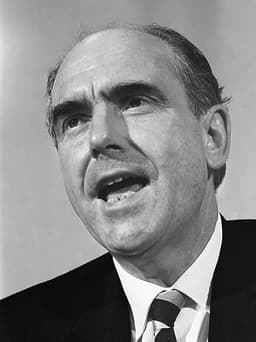
Andreas Papandreou
Politician · Modern
63.9Total

Ismail Haniyeh
Politician · Modern
47.0Total
Basic Information
Born
1919
1962
Died
1996
—
Era
Modern
Modern
Nationality
Greece
Palestine
Occupation
Politician
Politician
Civilization
Western
Middle Eastern
Score Comparison
Military (10%)
50.0
25.4
Political (20%)
65.0
39.4
Influence (20%)
82.0
55.7
Legacy (20%)
56.0
44.2
Leadership (15%)
68.0
62.2
Strategy (15%)
44.0
42.7
TOTAL
63.9
47.0
Andreas Papandreou — Complete Timeline
1974 AD
Founded the Panhellenic Socialist Movement (PASOK)Political Action◆ Major
Andreas Papandreou founded PASOK, a socialist political party that advocated for national independence, social justice, and democratic reforms. The party quickly became a major force in Greek politics, challenging the conservative establishment.
Political PartySocialismThird Way
Impact: nationalconstructive
1981 AD
Elected Prime Minister of GreecePolitical Action◆ Major
Papandreou led PASOK to a landslide victory in the 1981 elections, becoming the first socialist Prime Minister of Greece. His government implemented sweeping reforms, including the establishment of the National Health System and the legalization of civil marriage.
ElectionSocial ReformWelfare State
Impact: nationalconstructive
1982 AD
Legalized Civil MarriageReform◆ Major
Papandreou's government passed Law 1250/1982, which legalized civil marriage in Greece, ending the monopoly of the Orthodox Church over marriage. The reform was part of a broader secularization agenda that also included divorce reform.
SecularizationSocial ReformChurch-State Relations
Impact: nationalconstructive
1983 AD
Introduced the National Health System (ESY)Reform◆ Major
Papandreou's government established the National Health System (ESY), providing universal healthcare to all Greek citizens. The reform was a cornerstone of PASOK's social policy, significantly improving access to medical services.
HealthcareSocial PolicyReform
Impact: nationalconstructive
1985 AD
Economic Crisis and Austerity MeasuresPolitical Action◆ Major
Facing economic crisis, Papandreou's government implemented austerity measures, including wage freezes and currency devaluation. The policies caused internal party dissent and led to a decline in PASOK's popularity, though they stabilized the economy temporarily.
Economic PolicyAusterityCrisis
Impact: nationaldestructive
1989 AD
Imprisonment and Acquittal in Koskotas ScandalPolitical Action◆ Major
Papandreou was implicated in the Koskotas financial scandal, involving embezzlement and bribery. He was tried and acquitted in 1992, but the scandal damaged his reputation and contributed to PASOK's electoral defeat in 1989.
ScandalCorruptionTrial
Impact: nationaldestructive
Ismail Haniyeh — Complete Timeline
2006 AD
Election as Hamas Political LeaderPolitical Action◆ Major
Ismail Haniyeh became Prime Minister of the Palestinian Authority after Hamas won the 2006 legislative elections. This led to a political crisis and international isolation of the Hamas-led government.
ElectionHamasPalestine
Impact: regional
2007 AD
Hamas Takeover of GazaWar
After clashes with Fatah, Haniyeh's Hamas forces seized control of the Gaza Strip in June 2007. This split the Palestinian territories into two rival governments: Hamas in Gaza and Fatah in the West Bank.
Civil ConflictGazaPalestinian Division
Impact: regionaldestructive
2008 AD
Leadership During Gaza WarsWar◆ Major
Haniyeh led Hamas during multiple Israeli military operations in Gaza, including Operation Cast Lead (2008-2009) and Operation Protective Edge (2014). These wars resulted in heavy Palestinian casualties and destruction.
Gaza WarConflictCasualties
Impact: regionaltragic
2024 AD
Assassination in TehranPolitical Action◆ Major
Haniyeh was assassinated in Tehran on July 31, 2024, by an explosion at his residence. He was in Iran for the inauguration of President Masoud Pezeshkian. Iran and Hamas blamed Israel for the attack.
AssassinationIranIsrael
Impact: globaltragic
Expert Analysis
Origins
Andreas Papandreou was born on February 5, 1919, on the island of Chios, Greece. His father, Georgios Papandreou, was a prominent liberal politician and three-time Prime Minister of Greece. Andreas studied at the University of Athens and later earned a PhD in economics from Harvard University. He taught at several US universities, including the University of Minnesota and the University of California, Berkeley, becoming a US citizen in 1944. In 1959, he returned to Greece as an economic advisor and entered politics, serving as a minister in his father's government.
Ismail Haniyeh was born on January 29, 1962, in the al-Shati refugee camp in Gaza. His family was displaced from their home in al-Jura during the 1948 Arab-Israeli war. He studied Arabic literature at the Islamic University of Gaza, graduating in 1987. During his student years, he became involved with the Muslim Brotherhood and later joined Hamas after its founding in 1987. He was arrested and deported by Israel in 1992 but returned to Gaza in 1993.
Rise to Power
Papandreou's rise began with his opposition to the Greek junta (1967-1974). Exiled during the dictatorship, he founded the Panhellenic Liberation Movement (PAK) in 1968. After the fall of the junta, he returned to Greece in 1974 and founded the Panhellenic Socialist Movement (PASOK) in September 1974. PASOK's platform combined nationalism, socialism, and anti-imperialism. In the 1981 elections, PASOK won 48% of the vote, and Papandreou became Greece's first socialist Prime Minister on October 21, 1981.
Haniyeh rose through Hamas's ranks. He was a close aide to Hamas founder Ahmed Yassin. After Yassin's assassination in 2004, Haniyeh became a key leader. In the 2006 Palestinian legislative elections, Hamas won a surprise majority, and Haniyeh was nominated as Prime Minister of the Palestinian Authority on February 16, 2006. However, international sanctions and internal conflict with Fatah led to a political crisis. In June 2007, after Hamas seized control of Gaza, President Mahmoud Abbas dismissed Haniyeh, but Haniyeh continued to lead Hamas in Gaza.
Leadership & Governance
Papandreou's leadership style was charismatic and populist. He implemented extensive social reforms: the National Health System (ESY) in 1983, providing free healthcare; Law 1250/1982 legalizing civil marriage; and Law 1268/1982 abolishing the dowry system. He also expanded the public sector and increased wages. However, his economic policies led to high inflation and debt. By the late 1980s, he imposed austerity measures, including wage freezes and currency devaluation, which caused internal party dissent. He scored 68.0 in leadership and 44.0 in strategy.
Haniyeh's leadership was more pragmatic within a militant context. He governed Gaza under a blockade and repeated Israeli military operations. He maintained Hamas's control through a mix of social services and security forces. During the Gaza wars (2008-2009, 2014, 2021), he advocated for armed resistance while also engaging in ceasefire negotiations. He scored 62.2 in leadership and 42.7 in strategy. His political score (39.4) reflects the limitations of governing a besieged territory.
Triumph & Tragedy
Papandreou's greatest triumph was the democratization and modernization of Greek society. The establishment of the ESY and civil marriage were landmark achievements. He also successfully navigated Greece's entry into the European Economic Community (EEC) in 1981. However, his economic mismanagement led to a debt crisis by 1985, requiring IMF-style austerity. His personal life also became a scandal: his divorce and marriage to a younger flight attendant, Dimitra Liani, caused public backlash. He was acquitted of corruption charges in 1992.
Haniyeh's triumph was leading Hamas to electoral victory in 2006 and maintaining control of Gaza despite isolation and war. He survived multiple assassination attempts until 2024. However, his tenure saw the destruction of Gaza's infrastructure, a humanitarian crisis, and the political split with Fatah. His assassination in Tehran on July 31, 2024, by an explosion at his residence, marked a tragic end. He scored 55.7 in influence and 44.2 in legacy.
Character & Destiny
Papandreou was a charismatic orator and a skilled politician, but also autocratic and prone to cronyism. His decision to call early elections in 1985 and impose austerity alienated his base. His character shaped his destiny: he remained a dominant figure in Greek politics until his death in 1996, but his economic legacy is mixed. Historians rate him as a transformative but flawed leader.
Haniyeh was seen as a moderate within Hamas, willing to negotiate truces. However, his association with armed resistance defined his fate. His assassination in Iran highlights the risks of leadership in conflict zones. His character was marked by resilience and pragmatism, but ultimately, he could not escape the cycle of violence.
Legacy
Papandreou's legacy is enduring in Greece. PASOK remained a major party into the 2010s. The ESY and other social reforms are still in place. However, his economic policies contributed to the conditions for the Greek debt crisis of 2009. He scored 56.0 in legacy.
Haniyeh's legacy is more contested. He symbolizes Palestinian resistance for supporters, but also the failure of the Oslo Accords and the fragmentation of Palestinian leadership. His assassination may galvanize militants. He scored 44.2 in legacy.
Conclusion
Andreas Papandreou had a greater impact than Ismail Haniyeh. Papandreou's total score (63.9) exceeds Haniyeh's (47.0) by 16.9 points. Papandreou transformed a nation's institutions, while Haniyeh led a faction under siege. Papandreou's reforms in healthcare, civil rights, and democracy have lasting effects on 10 million Greeks. Haniyeh's influence is confined to a conflict zone with uncertain outcomes. The data supports Papandreou as the more consequential figure.
Rankings
🥇
Andreas PapandreouLeader
Mil: 50.0Pol: 65.0Inf: 82.0
63.9
🥈
Ismail Haniyeh
Mil: 25.4Pol: 39.4Inf: 55.7
47.0
+16.9 behind
How This Comparison Works
Algorithm
Each figure is scored on 6 dimensions (0—100 scale) based on structured historical data: Military (10%), Political (20%), Influence (20%), Legacy (20%), Leadership (15%), Strategy (15%). The weighted total produces the final ranking.
Data Sources
Scores are computed from structured sub-indicators in the database. Scale factors adjust for era (Ancient ×0.85, Modern ×1.0) and civilization size (Eastern ×1.05, Other ×0.80) to account for differences in population and military scale.
Maximum 3 Figures
Comparisons are limited to 2—3 figures to ensure readability and statistical meaningfulness.
Error Margins
±5 points per dimension — Sub-scores are derived from historical records with inherent uncertainty. Two figures within 5 points on a dimension should be considered roughly equivalent in that area.
Total Score Accuracy
±3 points overall — The weighted combination of 6 dimensions produces a total score with approximately ±3 points of uncertainty. Differences of less than 3 points are not statistically significant— the figures are effectively tied.
Known Limitations
- Historical records are incomplete and uneven across civilizations
- Figures from oral-tradition societies may be underrepresented
- Occupation labels can misclassify multi-role figures
- Scores measure capability and impact, not moral character
- Quantitative scoring is a comparison tool, not absolute truth
Capability Radar
Military (10%) — Battles & Warfare
Battles
26
22
Win Rate
32
23
Expansion
32
25
Political (20%) — Governance & Reform
Reform
75
30
Diplomacy
70
40
Economy
60
20
Influence (20%) — Cultural & Global Reach
Cultural
55
35
Global
55
40
Legacy (20%) — Historical Impact
Historical
60
40
Longevity
50
25
Leadership (15%) — Power & Stability
Tenure
65
45
Stability
40
15
Strategy (15%) — Tactics & Innovation
Strategy
41
29
Tactics
40
36
Reform
47
36
Similar Comparisons
Comments & Discussion
No comments yet. Be the first to share your thoughts!