Loading...
Anawrahta vs Emperor Jito
Anawrahta leads by 16.4 pts · 2 figures compared
…
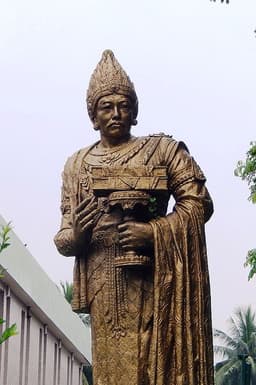
Anawrahta
Emperor · Medieval
65.2Total
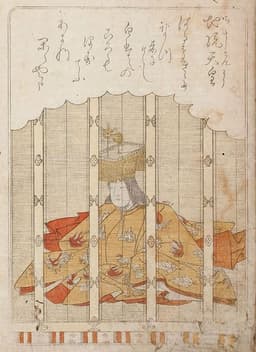
Emperor Jito
Emperor · Medieval
48.8Total
Basic Information
Born
1014
645
Died
1077
703
Era
Medieval
Medieval
Nationality
Myanmar
Japan
Occupation
Emperor
Emperor
Civilization
Eastern
Eastern
Score Comparison
Military (10%)
70.0
54.3
Political (20%)
68.0
46.6
Influence (20%)
72.0
51.8
Legacy (20%)
55.0
48.3
Leadership (15%)
72.0
42.2
Strategy (15%)
55.0
50.0
TOTAL
65.2
48.8
Anawrahta — Complete Timeline
1044 AD
Founding of the Pagan EmpirePolitical Action
Anawrahta ascended the throne and unified the Irrawaddy River valley, founding the Pagan Empire. He conquered the Mon kingdom of Thaton and other neighboring states, creating the first unified Burmese kingdom and establishing Bagan as its capital.
UnificationEmpireBagan
Impact: regionalconstructive
1056 AD
Introduction of Theravada Buddhism to PaganCultural
Anawrahta adopted Theravada Buddhism after being converted by the Mon monk Shin Arahan. He made Theravada the state religion, replacing the existing Mahayana and animist practices. This religious shift had a lasting impact on Burmese culture and politics.
BuddhismReligionConversion
Impact: regionalconstructive
1057 AD
Conquest of the Thaton KingdomWar◆ Major
Anawrahta led a military campaign against the Mon kingdom of Thaton, capturing the city and bringing back Buddhist scriptures, monks, and artisans to Bagan. This conquest enriched Pagan's culture and solidified its dominance in the region.
ConquestMonCultural Exchange
Impact: regional
Emperor Jito — Complete Timeline
694 AD
Establishment of the Fujiwara CapitalPolitical Action◆ Major
Empress Jito moved the imperial capital to Fujiwara-kyo in Yamato Province. This was Japan's first capital built on a Chinese grid pattern. The move symbolized the centralization of power and the adoption of Chinese-style governance.
CapitalFujiwara-kyoUrban Planning
Impact: nationalconstructive
697 AD
Abdication in Favor of Emperor MonmuPolitical Action
Empress Jito abdicated the throne in favor of her grandson, Emperor Monmu. She continued to wield influence as a retired emperor (daijo tenno). This set a precedent for retired emperors to maintain power behind the scenes.
AbdicationSuccessionMonmu
Impact: national
701 AD
Completion of the Taiho CodeReform◆ Major
Empress Jito oversaw the completion and promulgation of the Taiho Code, a comprehensive legal code that systematized the ritsuryo system. It defined administrative structure, penal laws, and court ranks. The code remained the basis of Japanese law for centuries.
Taiho CodeLegal SystemRitsuryo
Impact: nationalconstructive
Expert Analysis
Origins
Anawrahta was born in 1014 CE as the son of King Kunhsaw Kyaunghpyu of Pagan. His early life was marked by political instability; his father was deposed by a rival. Anawrahta was raised in obscurity but later reclaimed the throne. He was deeply influenced by the Mon monk Shin Arahan, who introduced him to Theravada Buddhism. Emperor Jito was born in 645 CE as the daughter of Emperor Tenji. She was educated in Chinese classics and court politics. She married her nephew, Emperor Tenmu, and after his death, she ascended the throne in 690 CE. Her background was steeped in the Yamato court's efforts to centralize power using Chinese models.
Rise to Power
Anawrahta ascended the Pagan throne around 1044 CE after defeating his rival Sokkate. He immediately began consolidating control over the Irrawaddy River valley. His key turning point was the conquest of the Mon kingdom of Thaton in 1057 CE. This brought Buddhist scriptures and artisans to Pagan, catalyzing his religious and cultural revolution. Jito became empress regnant after her husband Emperor Tenmu's death in 686 CE, but she formally ascended in 690 CE. She completed the Taiho Code, which was promulgated in 701 CE. Her rise was facilitated by her political acumen and the support of the Fujiwara clan.
Leadership & Governance
Anawrahta's leadership was characterized by military expansion and religious transformation. He unified the Irrawaddy valley through conquest, then used Buddhism as a tool for cultural unification. He built irrigation systems to support agriculture and constructed pagodas like the Shwezigon. His governance was personal and direct. Jito, by contrast, governed through codified law. The Taiho Code systematized the ritsuryo system, defining ranks, taxes, and administrative divisions. She moved the capital to Fujiwara-kyo, a planned city on a Chinese grid. Her leadership was institutional and bureaucratic, relying on legal frameworks.
Triumph & Tragedy
Anawrahta's greatest triumph was founding the Pagan Empire and establishing Theravada Buddhism as the state religion, which shaped Burmese identity for centuries. However, his failure was that his empire was built on conquest; after his death, rebellions and external threats weakened it. Jito's triumph was completing the Taiho Code, which provided a stable legal foundation for Japan's imperial system. Her failure was that the code was gradually undermined by aristocratic power, and her influence waned after abdication. She scored 54.3 in military, reflecting her lack of martial accomplishments, while Anawrahta scored 70.0.
Character & Destiny
Anawrahta was decisive and ambitious, driven by religious zeal and territorial expansion. His character led him to conquer and convert, but also to overextend. Jito was cautious and methodical, preferring legal and administrative reforms. Her destiny was to be a transitional figure, bridging the Tenmu reforms and the Nara period. Historians note that Anawrahta's personality was suited for founding, while Jito's was suited for consolidation.
Legacy
Anawrahta's legacy is profound in Myanmar: he is revered as the father of the nation and the introducer of Theravada Buddhism. The Pagan Empire's cultural achievements, including thousands of temples, endure. Jito's legacy is the Taiho Code, which influenced Japanese law for centuries. However, her individual impact is often overshadowed by later emperors and the Fujiwara regents. In terms of overall scores, Anawrahta totals 65.2 compared to Jito's 48.8, a gap of 16.4 points.
Conclusion
Anawrahta had a greater impact on history. His military and political achievements (70.0 and 68.0) directly created a unified Burmese state and a religious tradition that persists today. Jito's political score of 46.6 reflects her limited independent power; her legacy is more institutional than personal. While both were significant in their regions, Anawrahta's influence on the scale of civilization change is more substantial. Therefore, Anawrahta is the more impactful figure.
Rankings
🥇
AnawrahtaLeader
Mil: 70.0Pol: 68.0Inf: 72.0
65.2
🥈
Emperor Jito
Mil: 54.3Pol: 46.6Inf: 51.8
48.8
+16.4 behind
How This Comparison Works
Algorithm
Each figure is scored on 6 dimensions (0—100 scale) based on structured historical data: Military (10%), Political (20%), Influence (20%), Legacy (20%), Leadership (15%), Strategy (15%). The weighted total produces the final ranking.
Data Sources
Scores are computed from structured sub-indicators in the database. Scale factors adjust for era (Ancient ×0.85, Modern ×1.0) and civilization size (Eastern ×1.05, Other ×0.80) to account for differences in population and military scale.
Maximum 3 Figures
Comparisons are limited to 2—3 figures to ensure readability and statistical meaningfulness.
Error Margins
±5 points per dimension — Sub-scores are derived from historical records with inherent uncertainty. Two figures within 5 points on a dimension should be considered roughly equivalent in that area.
Total Score Accuracy
±3 points overall — The weighted combination of 6 dimensions produces a total score with approximately ±3 points of uncertainty. Differences of less than 3 points are not statistically significant— the figures are effectively tied.
Known Limitations
- Historical records are incomplete and uneven across civilizations
- Figures from oral-tradition societies may be underrepresented
- Occupation labels can misclassify multi-role figures
- Scores measure capability and impact, not moral character
- Quantitative scoring is a comparison tool, not absolute truth
Capability Radar
Military (10%) — Battles & Warfare
Battles
55
45
Win Rate
60
50
Expansion
60
50
Political (20%) — Governance & Reform
Reform
65
70
Diplomacy
60
30
Economy
55
30
Influence (20%) — Cultural & Global Reach
Cultural
70
30
Global
55
20
Legacy (20%) — Historical Impact
Historical
75
50
Longevity
70
40
Leadership (15%) — Power & Stability
Tenure
70
11
Stability
60
40
Strategy (15%) — Tactics & Innovation
Strategy
55
52
Tactics
50
57
Reform
45
60
Similar Comparisons
Comments & Discussion
No comments yet. Be the first to share your thoughts!