Loading...
Anawrahta vs Charles IV of Bohemia
Anawrahta leads by 3.6 pts · 2 figures compared
…
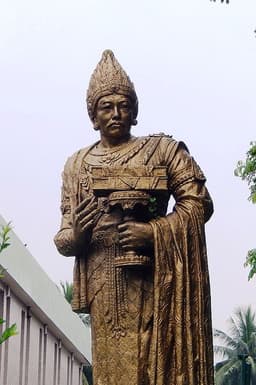
Anawrahta
Emperor · Medieval
65.2Total
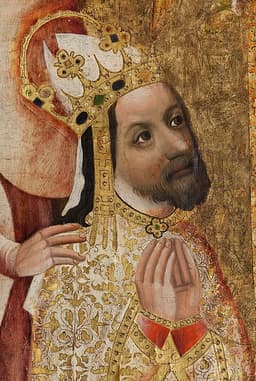
Charles IV of Bohemia
Emperor · Medieval
61.6Total
Basic Information
Born
1014
1316
Died
1077
1378
Era
Medieval
Medieval
Nationality
Myanmar
Bohemia
Occupation
Emperor
Emperor
Civilization
Eastern
Western
Score Comparison
Military (10%)
70.0
46.7
Political (20%)
68.0
78.0
Influence (20%)
72.0
65.0
Legacy (20%)
55.0
55.0
Leadership (15%)
72.0
78.0
Strategy (15%)
55.0
35.0
TOTAL
65.2
61.6
Anawrahta — Complete Timeline
1044 AD
Founding of the Pagan EmpirePolitical Action
Anawrahta ascended the throne and unified the Irrawaddy River valley, founding the Pagan Empire. He conquered the Mon kingdom of Thaton and other neighboring states, creating the first unified Burmese kingdom and establishing Bagan as its capital.
UnificationEmpireBagan
Impact: regionalconstructive
1056 AD
Introduction of Theravada Buddhism to PaganCultural
Anawrahta adopted Theravada Buddhism after being converted by the Mon monk Shin Arahan. He made Theravada the state religion, replacing the existing Mahayana and animist practices. This religious shift had a lasting impact on Burmese culture and politics.
BuddhismReligionConversion
Impact: regionalconstructive
1057 AD
Conquest of the Thaton KingdomWar◆ Major
Anawrahta led a military campaign against the Mon kingdom of Thaton, capturing the city and bringing back Buddhist scriptures, monks, and artisans to Bagan. This conquest enriched Pagan's culture and solidified its dominance in the region.
ConquestMonCultural Exchange
Impact: regional
Charles IV of Bohemia — Complete Timeline
1348 AD
Foundation of Charles UniversityCultural◆ Major
Charles IV founded Charles University in Prague, the first university in Central Europe. The institution became a center of learning and culture, attracting scholars from across Europe and fostering the development of Czech intellectual life.
EducationUniversityCultural Center
Impact: regionalconstructive
1355 AD
Coronation as Holy Roman EmperorPolitical Action◆ Major
Charles IV was crowned Holy Roman Emperor in Rome by Pope Innocent VI. This coronation solidified his authority over the empire and allowed him to implement reforms that strengthened imperial governance.
CoronationImperial AuthorityPapal Relations
Impact: global
1356 AD
Golden Bull of 1356Reform
Charles IV issued the Golden Bull, a constitutional document that regulated the election of the Holy Roman Emperor. It established the seven prince-electors and defined their privileges, stabilizing the empire's political structure for centuries.
ConstitutionHoly Roman EmpireElectoral System
Impact: globalconstructive
1357 AD
Construction of Charles BridgeCultural◆ Major
Charles IV commissioned the construction of the Charles Bridge in Prague, a stone bridge connecting the Old Town with the Lesser Quarter. The bridge became a vital trade route and a symbol of Prague's architectural heritage.
ArchitectureInfrastructurePrague
constructive
Expert Analysis
Origins
Anawrahta was born in 1014 in Bagan, the son of King Kunhsaw Kyaunghpyu. He was raised in the shadow of his father's abdication and the usurpation of his step-brother. Anawrahta received a military education and was deeply influenced by the Mon culture of the south. Charles IV was born in 1316 in Prague to John of Bohemia and Elizabeth of Bohemia. He was educated at the French court, where he learned diplomacy and governance. His formative years were shaped by the political instability of the Holy Roman Empire and his father's frequent wars.
Rise to Power
Anawrahta ascended the throne of Bagan in 1044 after defeating his step-brother Sokkate in single combat. He quickly consolidated power by subduing rival principalities in the Irrawaddy valley. In 1057, he conquered the Mon kingdom of Thaton, capturing its king and bringing back Buddhist scriptures. This victory established Pagan as the dominant power in the region. Charles IV became King of Bohemia in 1346 after his father's death at the Battle of Crécy. He was elected King of the Romans in the same year, but faced opposition from rival claimants. His coronation as Holy Roman Emperor in 1355 by Pope Innocent VI solidified his authority. Charles used diplomacy and marriage alliances to expand his influence, notably through the Golden Bull of 1356 which regulated imperial elections.
Leadership & Governance
Anawrahta ruled as a warrior-king, personally leading military campaigns. He centralized administration by appointing loyal governors and using Buddhist monasteries as administrative centers. His introduction of Theravada Buddhism as the state religion unified the diverse ethnic groups under a common faith. Charles IV governed through bureaucratic institutions and legal reforms. The Golden Bull established a clear electoral process for the emperor, reducing papal interference. He fostered economic growth by promoting trade and founding Charles University in 1348, which attracted scholars from across Europe. Charles also commissioned architectural projects like Charles Bridge and St. Vitus Cathedral, which boosted Prague's status.
Triumph & Tragedy
Anawrahta's greatest triumph was the creation of the Pagan Empire, which controlled the Irrawaddy valley and parts of Thailand. He successfully introduced Theravada Buddhism, which became the foundation of Burmese culture. However, his conquests overextended his resources, and after his death, the empire faced rebellions. He was killed by a wild buffalo in 1077, leaving a succession crisis. Charles IV's triumphs include the Golden Bull, which stabilized the empire, and the cultural flourishing of Prague. He also expanded Bohemian territories through marriage and purchase. However, his military campaigns were modest; he scored only 46.7 in military compared to Anawrahta's 70.0. His reliance on diplomacy sometimes led to concessions that weakened imperial authority.
Character & Destiny
Anawrahta was a decisive and charismatic leader, known for his personal bravery. He was deeply religious, but also ruthless in eliminating rivals. His death in a hunting accident reflects the unpredictable nature of his rule. Charles IV was pragmatic and intellectual, prioritizing stability over conquest. His careful planning is evident in the Golden Bull and his university foundation. He died in 1378 from natural causes, having secured a peaceful succession. Historians note Charles's ability to balance imperial and Bohemian interests, while Anawrahta's legacy is more singularly focused on religious and political unification.
Legacy
Anawrahta's legacy is the Pagan Empire and the establishment of Theravada Buddhism in Myanmar. The empire lasted until 1297, and Buddhism remains dominant today. His political score of 68.0 reflects his effective state-building. Charles IV's legacy includes the Golden Bull, which shaped the Holy Roman Empire until its dissolution in 1806. Charles University continues to operate, and Prague's architectural heritage attracts millions. His influence score of 65.0 is slightly lower than Anawrahta's 72.0, but his political score of 78.0 is higher.
Conclusion
Anawrahta had a greater overall impact due to his foundational role in Burmese history and religion. His military and strategic scores (70.0 and 55.0) surpass Charles's (46.7 and 35.0). While Charles excelled in political and leadership aspects (78.0 each vs. Anawrahta's 68.0 and 72.0), Anawrahta's total score of 65.2 edges out Charles's 61.6. Anawrahta's introduction of Buddhism shaped a nation for centuries, whereas Charles's reforms, though significant, were more institutional. Therefore, Anawrahta is the more consequential figure.
Rankings
🥇
AnawrahtaLeader
Mil: 70.0Pol: 68.0Inf: 72.0
65.2
🥈
Charles IV of Bohemia
Mil: 46.7Pol: 78.0Inf: 65.0
61.6
+3.6 behind
How This Comparison Works
Algorithm
Each figure is scored on 6 dimensions (0—100 scale) based on structured historical data: Military (10%), Political (20%), Influence (20%), Legacy (20%), Leadership (15%), Strategy (15%). The weighted total produces the final ranking.
Data Sources
Scores are computed from structured sub-indicators in the database. Scale factors adjust for era (Ancient ×0.85, Modern ×1.0) and civilization size (Eastern ×1.05, Other ×0.80) to account for differences in population and military scale.
Maximum 3 Figures
Comparisons are limited to 2—3 figures to ensure readability and statistical meaningfulness.
Error Margins
±5 points per dimension — Sub-scores are derived from historical records with inherent uncertainty. Two figures within 5 points on a dimension should be considered roughly equivalent in that area.
Total Score Accuracy
±3 points overall — The weighted combination of 6 dimensions produces a total score with approximately ±3 points of uncertainty. Differences of less than 3 points are not statistically significant— the figures are effectively tied.
Known Limitations
- Historical records are incomplete and uneven across civilizations
- Figures from oral-tradition societies may be underrepresented
- Occupation labels can misclassify multi-role figures
- Scores measure capability and impact, not moral character
- Quantitative scoring is a comparison tool, not absolute truth
Capability Radar
Military (10%) — Battles & Warfare
Battles
55
30
Win Rate
60
40
Expansion
60
25
Political (20%) — Governance & Reform
Reform
65
80
Diplomacy
60
85
Economy
55
80
Influence (20%) — Cultural & Global Reach
Cultural
70
80
Global
55
60
Legacy (20%) — Historical Impact
Historical
75
75
Longevity
70
70
Leadership (15%) — Power & Stability
Tenure
70
85
Stability
60
75
Strategy (15%) — Tactics & Innovation
Strategy
55
45
Tactics
50
35
Reform
45
20
Similar Comparisons
Comments & Discussion
No comments yet. Be the first to share your thoughts!