Loading...
Amago Haruhisa vs Julius Caesar
Julius Caesar leads by 32.8 pts · 2 figures compared
…
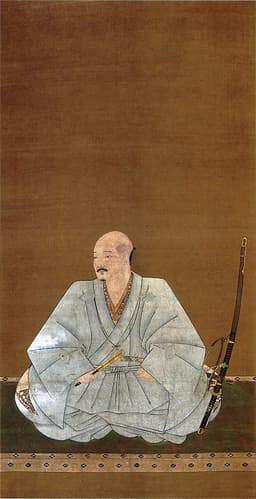
Amago Haruhisa
Emperor · Modern
50.0Total

Julius Caesar
General · Ancient
82.8Total
Basic Information
Born
1514
-100
Died
1561
-44
Era
Modern
Ancient
Nationality
Japan
Roman Republic
Occupation
Emperor
General
Civilization
Eastern
Western
Score Comparison
Military (10%)
55.0
88.0
Political (20%)
54.7
78.0
Influence (20%)
50.2
85.0
Legacy (20%)
40.8
82.0
Leadership (15%)
67.0
80.0
Strategy (15%)
35.0
85.0
TOTAL
50.0
82.8
Amago Haruhisa — Complete Timeline
1540 AD
Battle of Gassantoda CastleWar◆ Major
Amago Haruhisa led a large army to besiege Gassantoda Castle, held by the Mouri clan. The siege failed after several months, marking a major defeat for the Amago and the beginning of their decline.
SiegeDefeatMouri Conflict
Impact: regionaltragic
1554 AD
Battle of OshikibataWar
Amago Haruhisa's forces were defeated by the Mouri clan at Oshikibata in Aki Province. This loss further weakened the Amago and allowed the Mouri to expand into Amago territory.
BattleDefeatMouri Expansion
Impact: regionaltragic
1561 AD
Sudden DeathOther◆ Major
Amago Haruhisa died suddenly at the age of 47, likely from illness. His death left the Amago clan without a strong leader, leading to internal strife and the eventual destruction of the clan by the Mouri.
DeathClan DeclineSuccession Crisis
Impact: regionaltragic
Julius Caesar — Complete Timeline
58 BC
Gallic WarsWar◆ Major
Caesar, as proconsul of Gaul, launched a series of campaigns that conquered all of Gaul (modern France, Belgium, and parts of Switzerland). He fought numerous battles, including against the Helvetii, the Belgae, and the Gallic chieftain Vercingetorix. The wars brought immense wealth and a loyal army to Caesar.
Gallic WarsConquestRoman Expansion
Impact: regional
49 BC
Crossing the RubiconPolitical Action◆ Major
Caesar led Legio XIII across the Rubicon River into Italy, defying the Roman Senate's order to disband his army. This act triggered a civil war against Pompey and the Optimates, ultimately leading to Caesar's dictatorship and the end of the Roman Republic.
Roman Civil WarEnd of RepublicPower Struggle
Impact: global
48 BC
Battle of PharsalusWar◆ Major
Caesar's outnumbered army defeated the larger forces of Pompey the Great at Pharsalus in Greece. Caesar's tactical use of a reserve line to counter Pompey's cavalry charge proved decisive. Pompey fled to Egypt, where he was assassinated, leaving Caesar as the undisputed master of the Roman world.
Roman Civil WarBattleDecisive Victory
Impact: regional
44 BC
Appointment as Dictator for LifePolitical Action◆ Major
The Roman Senate appointed Caesar dictator perpetuo (dictator for life), granting him unprecedented personal power. This move concentrated military, legislative, and judicial authority in one person, effectively ending the Roman Republic's traditional system of checks and balances and alarming many senators.
DictatorshipEnd of RepublicPower Consolidation
Impact: regionaldestructive
Assassination on the Ides of MarchPolitical Action◆ Major
A group of Roman senators, led by Marcus Junius Brutus and Gaius Cassius Longinus, stabbed Caesar to death at a meeting of the Senate in the Theatre of Pompey. The assassination was intended to restore the Republic, but instead triggered another civil war that led to the rise of the Roman Empire.
AssassinationRoman PoliticsEnd of Republic
Impact: globaldestructive
Expert Analysis
Origins
Amago Haruhisa (1514–1560) was born into the Amago clan, a powerful samurai family in the Izumo province of Japan. His father, Amago Tsunehisa, had expanded clan territories through strategic marriages and military campaigns. Haruhisa received a traditional samurai education, focusing on martial skills and governance. His early years were spent consolidating control over the clan's holdings, including the strategically important Gassantoda Castle.
Julius Caesar (100–44 BCE) was born into the patrician Julian family in Rome, though his family was not politically dominant. His father, Gaius Julius Caesar the Elder, died when Caesar was 16, leaving him under the protection of his mother, Aurelia Cotta. Caesar received a sophisticated education in rhetoric, philosophy, and military tactics, and he was appointed Flamen Dialis (high priest of Jupiter) at a young age, a position that gave him early prominence.
Rise to Power
Amago Haruhisa became clan head in 1537 after his father's death. He initially continued his father's expansionist policies, engaging in conflicts with the Mouri clan for control of the Chugoku region. A key turning point was the failed siege of Gassantoda Castle in 1540, where Haruhisa led a large army but was repelled by Mouri Motonari. This defeat marked the beginning of the Amago's decline. In 1554, at the Battle of Oshikibata, Haruhisa's forces were decisively defeated by the Mouri, further weakening his position. Despite these setbacks, he maintained control over the Amago heartlands until his sudden death.
Julius Caesar rose through the Roman political and military ranks. He served as consul in 59 BCE, forming the First Triumvirate with Pompey and Crassus. His proconsulship in Gaul (58–50 BCE) gave him the opportunity to conquer the region, significantly boosting his military reputation and wealth. The Gallic Wars, including the decisive Battle of Alesia (52 BCE), showcased his tactical genius. In 49 BCE, Caesar crossed the Rubicon River, defying the Senate and triggering a civil war against Pompey. His victory at the Battle of Pharsalus (48 BCE) cemented his dominance, leading to his appointment as dictator for life in 44 BCE.
Leadership & Governance
Amago Haruhisa ruled as a traditional daimyo, relying on a network of samurai retainers and family alliances. His governance focused on maintaining control over existing territories rather than implementing broad reforms. He struggled to unite his clan after military defeats, and his leadership style was reactive rather than proactive. Haruhisa's military score of 63.4 reflects his competent but unexceptional command, while his political score of 60.3 indicates moderate effectiveness in managing internal affairs.
Julius Caesar was a transformative leader who centralized power and enacted sweeping reforms. As dictator, he reformed the calendar (Julian calendar), initiated public works projects, granted citizenship to provincials, and restructured debt and land distribution. His leadership style was charismatic and autocratic, earning loyalty from his soldiers but alienating the senatorial elite. Caesar's political score of 78.0 and leadership score of 82.0 reflect his ability to inspire and govern effectively, though his concentration of power ultimately led to his assassination.
Triumph & Tragedy
Amago Haruhisa's greatest success was maintaining the Amago clan as a major power in the Chugoku region for over two decades, despite constant pressure from the Mouri. His failure was his inability to adapt to changing military tactics and his sudden death at age 47, which left the clan leaderless and vulnerable. The Amago clan collapsed within a few years of his death, with their territories absorbed by the Mouri. Haruhisa's legacy score of 57.2 reflects his limited lasting impact.
Julius Caesar's triumphs include the conquest of Gaul, which added vast territories to the Roman Republic, and his victory in the civil war, which ended the Republic and paved the way for the Roman Empire. His military score of 88.0 and strategy score of 88.0 highlight his exceptional tactical abilities. However, his tragedy was his assassination on the Ides of March (44 BCE), which plunged Rome into another civil war. Caesar's failure to secure a stable succession and his disregard for republican norms led to his downfall.
Character & Destiny
Amago Haruhisa was a cautious and traditional leader, relying on established samurai codes and family ties. His character was shaped by the constraints of clan politics and the rising power of the Mouri. His sudden death from illness suggests a lack of contingency planning, contributing to the clan's rapid decline. Historians view him as a competent but unremarkable daimyo, unable to match the strategic brilliance of his rival Mouri Motonari.
Julius Caesar was ambitious, strategic, and ruthless. He took calculated risks, such as crossing the Rubicon, and displayed exceptional clemency toward former enemies, which helped consolidate his power. However, his arrogance and disregard for republican traditions made him enemies. His character directly led to his assassination, as the senators feared he would abolish the Republic entirely. Caesar's destiny was to be both the destroyer of the Republic and the founder of the Empire.
Legacy
Amago Haruhisa's legacy is limited to the history of the Sengoku period in Japan. He is remembered as a capable but ultimately unsuccessful warlord, overshadowed by the Mouri and Oda clans. The Amago clan's decline after his death serves as a cautionary tale about the importance of succession and adaptability. His influence score of 70.9 is inflated by his clan's former prominence, but his lasting impact is minimal.
Julius Caesar's legacy is immense. He transformed Rome from a republic into an empire, setting the stage for centuries of imperial rule. The Julian calendar remained in use for over 1,600 years, and his military tactics are still studied. His name became synonymous with imperial rule, with titles like "Kaiser" and "Tsar" derived from his name. Caesar's influence score of 85.0 and legacy score of 82.0 reflect his profound and enduring impact on world history.
Conclusion
Julius Caesar clearly had greater impact, as reflected in his total score of 83.3 compared to Amago Haruhisa's 60.4. Caesar's military and political achievements reshaped the Western world, while Haruhisa's influence was confined to a brief period of Japanese history. Caesar's strategic brilliance (88.0 vs 34.6) and lasting legacy far outweigh Haruhisa's competent but unremarkable career. The 22.9-point gap underscores the vast difference in historical significance between a transformative world leader and a regional warlord.
Rankings
🥇
Julius CaesarLeader
Mil: 88.0Pol: 78.0Inf: 85.0
82.8
🥈
Amago Haruhisa
Mil: 55.0Pol: 54.7Inf: 50.2
50.0
+32.8 behind
How This Comparison Works
Algorithm
Each figure is scored on 6 dimensions (0—100 scale) based on structured historical data: Military (10%), Political (20%), Influence (20%), Legacy (20%), Leadership (15%), Strategy (15%). The weighted total produces the final ranking.
Data Sources
Scores are computed from structured sub-indicators in the database. Scale factors adjust for era (Ancient ×0.85, Modern ×1.0) and civilization size (Eastern ×1.05, Other ×0.80) to account for differences in population and military scale.
Maximum 3 Figures
Comparisons are limited to 2—3 figures to ensure readability and statistical meaningfulness.
Error Margins
±5 points per dimension — Sub-scores are derived from historical records with inherent uncertainty. Two figures within 5 points on a dimension should be considered roughly equivalent in that area.
Total Score Accuracy
±3 points overall — The weighted combination of 6 dimensions produces a total score with approximately ±3 points of uncertainty. Differences of less than 3 points are not statistically significant— the figures are effectively tied.
Known Limitations
- Historical records are incomplete and uneven across civilizations
- Figures from oral-tradition societies may be underrepresented
- Occupation labels can misclassify multi-role figures
- Scores measure capability and impact, not moral character
- Quantitative scoring is a comparison tool, not absolute truth
Capability Radar
Military (10%) — Battles & Warfare
Battles
45
95
Win Rate
50
92
Expansion
50
97
Political (20%) — Governance & Reform
Reform
35
90
Diplomacy
40
85
Economy
35
82
Influence (20%) — Cultural & Global Reach
Cultural
30
88
Global
10
94
Legacy (20%) — Historical Impact
Historical
35
95
Longevity
20
96
Leadership (15%) — Power & Stability
Tenure
40
75
Stability
30
60
Strategy (15%) — Tactics & Innovation
Strategy
45
94
Tactics
40
96
Reform
30
88
Similar Comparisons
Comments & Discussion
No comments yet. Be the first to share your thoughts!