Loading...
Alp Tigin vs Yelu Abaoji
Yelu Abaoji leads by 12.2 pts · 2 figures compared
…
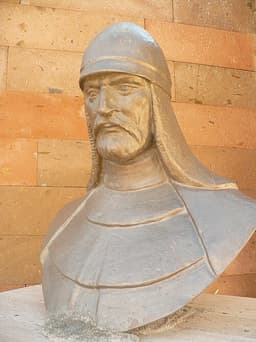
Alp Tigin
Emperor · Medieval
50.5Total
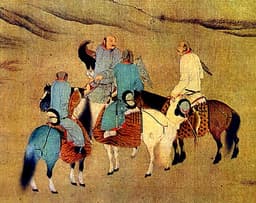
Yelu Abaoji
Emperor · Medieval
62.7Total
Basic Information
Born
911
872
Died
963
926
Era
Medieval
Medieval
Nationality
Ghaznavid Empire
China
Occupation
Emperor
Emperor
Civilization
Middle Eastern
Eastern
Score Comparison
Military (10%)
55.0
77.2
Political (20%)
33.6
59.6
Influence (20%)
56.4
68.0
Legacy (20%)
49.2
40.0
Leadership (15%)
50.7
80.3
Strategy (15%)
60.0
69.6
TOTAL
50.5
62.7
Alp Tigin — Complete Timeline
961 AD
Rebellion against the SamanidsPolitical Action◆ Major
Alp Tigin rebelled against the Samanid ruler Mansur I after being passed over for a governorship. He marched from Nishapur to Ghazni, defeating Samanid forces along the way, and established his own rule in eastern Afghanistan.
Impact: regional
963 AD
Consolidation of GhazniPolitical Action
Alp Tigin fortified Ghazni and organized a military state based on slave soldiers (ghilman). He established a stable administration that attracted scholars and merchants, turning Ghazni into a major regional power center.
Impact: regionalconstructive
Yelu Abaoji — Complete Timeline
907 AD
Unified Khitan tribesPolitical Action◆ Major
Yelu Abaoji was elected khagan of the Khitan tribes, unifying them under his leadership. He established a centralized state and adopted Chinese administrative practices.
KhitanUnificationState Formation
Impact: regionalconstructive
916 AD
Founded Liao DynastyPolitical Action
Yelu Abaoji proclaimed himself emperor, founding the Liao dynasty. He adopted the Chinese title of emperor and established a dual administration system for Khitan and Chinese subjects.
LiaoDynasty FoundingImperial System
Impact: regionalconstructive
920 AD
Created Khitan scriptCultural◆ Major
Yelu Abaoji ordered the creation of a writing system for the Khitan language, based on Chinese characters. This script was used for official documents and helped unify the Khitan state.
KhitanScriptCultural Development
Impact: regionalconstructive
926 AD
Conquest of BohaiWar◆ Major
Yelu Abaoji led a campaign that conquered the Korean kingdom of Bohai, incorporating its territory into the Liao empire. This expanded Liao's influence into Manchuria and Korea.
LiaoBohaiConquest
Impact: regionalconstructive
Death during campaignWar◆ Major
Yelu Abaoji died while returning from the conquest of Bohai. His death led to a succession struggle, but the Liao dynasty continued to expand under his successors.
LiaoDeathSuccession
Impact: regionaltragic
Expert Analysis
Yelu Abaoji vs Alp Tigin
# The Slave Who Became a Sultan and the Nomad Who Became an Emperor
On a dusty road in Nishapur in the year 961, a Turkic slave commander named Alp Tigin watched his hopes of governorship vanish. The Samanid ruler Mansur I had passed him over, and the slight burned like desert sun. Alp Tigin turned his horse eastward, away from the court that had rejected him, toward the fortress city of Ghazni. Half a continent away and half a century earlier, in 907, a Khitan chieftain named Yelu Abaoji stood before the assembled tribes of the Mongolian steppe, accepting their election as khagan. Where Alp Tigin acted from wounded pride, Abaoji moved from calculated ambition. Both men would found dynasties. But the paths they walked, and the empires they built, could not have been more different.
Origins
Alp Tigin was born into a world of chains. A Turkic slave in the Samanid Empire, he belonged to the *ghilman* system that trained captive warriors for military service. In the medieval Islamic world, such men could rise astonishingly high—but they remained outsiders, dependent on the favor of their masters. Alp Tigin’s world was one of patronage, where loyalty was bought and sold, and where a commander’s authority rested not on birth but on the swords of his fellow slaves.
Yelu Abaoji, by contrast, was born into the Khitan aristocracy around 872, when the Tang dynasty in China was collapsing into chaos. The Khitan were a nomadic confederation of the northeastern steppe, herders and horsemen who had long raided Chinese borders. Abaoji’s father was a tribal chief, and the young Khitan grew up in a world of clan politics, where power flowed from kinship, marriage alliances, and the ability to lead warriors in battle. He was no slave; he was a prince of the steppe.
Rise to Power
Alp Tigin’s rise was the story of a man climbing a ladder made of other men’s shoulders. He distinguished himself as a military commander under the Samanids, earning the governorship of Khorasan. But when Mansur I became ruler in 961 and denied him the prized post, Alp Tigin rebelled. He marched his loyal slave soldiers from Nishapur eastward, seized the fortress of Ghazni in what is now eastern Afghanistan, and declared himself independent. His power was personal, not dynastic—a warlord’s dominion built on the loyalty of freed slaves who owed him everything.
Yelu Abaoji’s ascent was more deliberate and more political. In 907, the Khitan tribes elected him khagan, but this was no simple coronation. Abaoji spent years consolidating power, crushing rival clans, and centralizing authority. In 916, he proclaimed himself emperor, founding the Liao dynasty. He did not merely conquer; he built institutions. He ordered the creation of a Khitan script in 920, based on Chinese characters, to give his people a written language. He established a dual administration—one system for the nomadic tribes, another for the settled Chinese populations he conquered. Abaoji was not just a warrior; he was a state-builder.
Leadership & Governance
Alp Tigin governed Ghazni as a military stronghold. His state was a war machine: a core of Turkic slave soldiers, the *ghilman*, who were trained from childhood to fight and die for their master. He fortified the city, organized his army, and raided neighboring territories for plunder. His rule was efficient but brittle—it depended entirely on his personal authority and the loyalty of his commanders. There was no bureaucracy, no legal code, no vision beyond survival and expansion.
Abaoji’s Liao dynasty was a different creature entirely. He ruled as a Chinese-style emperor while maintaining Khitan traditions. He adopted the title "Emperor of the Great Liao," built a capital city, and issued decrees in both Khitan and Chinese. He conquered the Korean kingdom of Bohai in 926, incorporating its territory and administration into his empire. Where Alp Tigin ruled through personal bonds, Abaoji ruled through institutions. His leadership score of 89.2 reflects this: he was a strategist who understood that empires outlive their founders only when they are built on laws, scripts, and systems.
Triumph & Tragedy
Alp Tigin’s greatest triumph was survival. In 963, after two years of consolidating Ghazni, he died of natural causes—a quiet end for a man who had lived by the sword. His tragedy was that his achievement was fragile. His son succeeded him, but the Ghaznavid dynasty would only truly flourish under his slave-turned-son-in-law, Sebuktigin, and then under the great Mahmud of Ghazni. Alp Tigin was the spark, not the flame.
Abaoji’s triumph was the conquest of Bohai in 926, a campaign that doubled his territory and gave the Liao a window on the Korean peninsula. But his tragedy came immediately after: he died while returning from that very campaign, at the height of his power. His death triggered a succession crisis, though the Liao dynasty survived and would rule northern China for two centuries. Abaoji died without seeing his empire’s full flowering, but he had planted seeds that would outlast him.
Character & Destiny
Alp Tigin’s character was shaped by his origins. He was a man who clawed his way up from slavery, and he governed with the insecurity of one who knew how easily power could be lost. He trusted only his slave soldiers, men bound to him by debt and gratitude. His political score of 50.7 suggests a man who could seize power but not institutionalize it. He was a creature of his era—the fractured, warring world of the 10th-century Islamic east, where a clever slave could become a sultan, but where dynasties rose and fell with the lifespan of their founders.
Abaoji was a visionary. He saw that the Khitan could not survive as mere raiders; they needed to become a state. He borrowed from Chinese civilization without abandoning his nomadic roots, creating a hybrid empire that would dominate East Asia for centuries. His political score of 90.0 reflects a master of statecraft. He understood that true power lies not in the sword but in the script, not in the army but in the administration.
Legacy
Alp Tigin is remembered as the founder of the Ghaznavid dynasty, but his personal legacy is overshadowed by his successors. The Ghaznavids would become a major power under Mahmud, who invaded India seventeen times and made Ghazni a center of Persian culture. Alp Tigin’s rebellion was the seed, but Mahmud reaped the harvest. Today, Alp Tigin is a footnote in the history of Islamic empires—a slave who dared to rebel, but whose name is known mainly to specialists.
Yelu Abaoji, by contrast, is a giant. The Liao dynasty he founded ruled northern China for over two centuries, and his dual-administration system became a model for later conquest dynasties like the Yuan and Qing. The Khitan script he ordered created survives in inscriptions, a testament to his vision. In China’s historical memory, he is a barbarian who became a civilizer, a nomad who built an empire that rivaled the Song.
Conclusion
Standing at the crossroads of the 10th century, these two men faced the same challenge: how to transform personal power into lasting rule. Alp Tigin answered with the sword, Abaoji with the pen. One built a fortress, the other a civilization. The difference lay not in their ambitions—both wanted dynasties—but in their understanding of what makes a state endure. Alp Tigin saw power as something to be held; Abaoji saw it as something to be woven into the fabric of society. The slave commander’s empire flickered and faded; the nomad emperor’s dynasty cast a long shadow across centuries. In the end, the man who could write his people’s name outlasted the man who could only fight for it.
Rankings
🥇
Yelu AbaojiLeader
Mil: 77.2Pol: 59.6Inf: 68.0
62.7
🥈
Alp Tigin
Mil: 55.0Pol: 33.6Inf: 56.4
50.5
+12.2 behind
How This Comparison Works
Algorithm
Each figure is scored on 6 dimensions (0—100 scale) based on structured historical data: Military (10%), Political (20%), Influence (20%), Legacy (20%), Leadership (15%), Strategy (15%). The weighted total produces the final ranking.
Data Sources
Scores are computed from structured sub-indicators in the database. Scale factors adjust for era (Ancient ×0.85, Modern ×1.0) and civilization size (Eastern ×1.05, Other ×0.80) to account for differences in population and military scale.
Maximum 3 Figures
Comparisons are limited to 2—3 figures to ensure readability and statistical meaningfulness.
Error Margins
±5 points per dimension — Sub-scores are derived from historical records with inherent uncertainty. Two figures within 5 points on a dimension should be considered roughly equivalent in that area.
Total Score Accuracy
±3 points overall — The weighted combination of 6 dimensions produces a total score with approximately ±3 points of uncertainty. Differences of less than 3 points are not statistically significant— the figures are effectively tied.
Known Limitations
- Historical records are incomplete and uneven across civilizations
- Figures from oral-tradition societies may be underrepresented
- Occupation labels can misclassify multi-role figures
- Scores measure capability and impact, not moral character
- Quantitative scoring is a comparison tool, not absolute truth
Capability Radar
Military (10%) — Battles & Warfare
Battles
45
75
Win Rate
50
80
Expansion
50
82
Political (20%) — Governance & Reform
Reform
20
88
Diplomacy
30
75
Economy
20
70
Influence (20%) — Cultural & Global Reach
Cultural
30
60
Global
30
55
Legacy (20%) — Historical Impact
Historical
45
70
Longevity
40
65
Leadership (15%) — Power & Stability
Tenure
25
72
Stability
25
65
Strategy (15%) — Tactics & Innovation
Strategy
45
78
Tactics
40
70
Reform
30
85
Similar Comparisons
Comments & Discussion
IronTengri6/16/2026
Alp Tigin was just a disgruntled employee who quit and started his own company - classic middle-management revolt. Abaoji was a strategic visionary who spent decades building a tribal coalition, inventing a writing system, and constructing multiple capitals. The slave-turned-sultan was reactive; the nomad-turned-emperor was proactive. One conquered a city, the other forged a nation. This isn't even close.
马背史官6/16/2026
你拿一个逃跑的突厥奴隶将军跟耶律阿保机比?阿保机统一契丹八部,创契丹大字,建上京临潢府——这些是把抢来的城池当据点的阿尔普特勤能比的吗?加兹尼王朝三代就崩了,辽朝可是二百多年江山。奴隶翻身的故事虽然爽,但帝业不是靠赌气就能建立的。