Loading...
Alp Tigin vs Wanyan Aguda
Wanyan Aguda leads by 12.9 pts · 2 figures compared
…
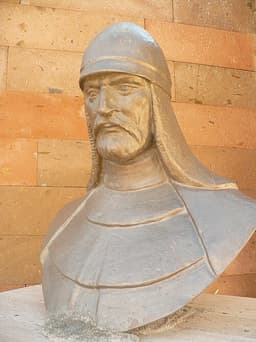
Alp Tigin
Emperor · Medieval
50.5Total
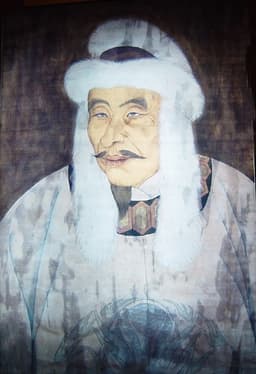
Wanyan Aguda
Emperor · Medieval
63.4Total
Basic Information
Born
911
1068
Died
963
1123
Era
Medieval
Medieval
Nationality
Ghaznavid Empire
China
Occupation
Emperor
Emperor
Civilization
Middle Eastern
Eastern
Score Comparison
Military (10%)
55.0
82.0
Political (20%)
33.6
59.3
Influence (20%)
56.4
55.0
Legacy (20%)
49.2
52.0
Leadership (15%)
50.7
85.0
Strategy (15%)
60.0
68.0
TOTAL
50.5
63.4
Alp Tigin — Complete Timeline
961 AD
Rebellion against the SamanidsPolitical Action◆ Major
Alp Tigin rebelled against the Samanid ruler Mansur I after being passed over for a governorship. He marched from Nishapur to Ghazni, defeating Samanid forces along the way, and established his own rule in eastern Afghanistan.
Impact: regional
963 AD
Consolidation of GhazniPolitical Action
Alp Tigin fortified Ghazni and organized a military state based on slave soldiers (ghilman). He established a stable administration that attracted scholars and merchants, turning Ghazni into a major regional power center.
Impact: regionalconstructive
Wanyan Aguda — Complete Timeline
1114 AD
Battle of HubudagangWar◆ Major
Aguda's Jurchen forces defeated a Liao army at Hubudagang, marking the first major victory of the rebellion. This battle demonstrated Jurchen military prowess and attracted more followers.
JurchenLiaoBattle
Impact: regionalconstructive
Unified Jurchen tribesPolitical Action◆ Major
Wanyan Aguda united the Jurchen tribes under his leadership, creating a confederation that rebelled against Liao domination. He organized a disciplined army and began the Jurchen revolt.
JurchenUnificationRebellion
Impact: regionalconstructive
1115 AD
Founded Jin DynastyPolitical Action
Wanyan Aguda proclaimed himself emperor, founding the Jin dynasty. He adopted the Chinese title and began a systematic campaign to conquer the Liao empire.
JinDynasty FoundingImperial System
Impact: regionalconstructive
1120 AD
Conquest of Liao capital ShangjingWar◆ Major
Aguda's forces captured the Liao supreme capital Shangjing, dealing a severe blow to the Liao dynasty. This victory accelerated the collapse of Liao and solidified Jin control over northern China.
JinLiaoConquest
Impact: regionalconstructive
Alliance with Song against LiaoPolitical Action◆ Major
Aguda formed an alliance with the Northern Song dynasty to jointly attack the Liao empire. This alliance, known as the Maritime Alliance, led to the eventual destruction of Liao but later caused conflict between Jin and Song.
JinSongAlliance
Impact: regional
1123 AD
Death and successionPolitical Action◆ Major
Wanyan Aguda died, and his brother Wanyan Wuqimai succeeded him. Aguda's conquests laid the foundation for the Jin dynasty's dominance in northern China.
JinDeathSuccession
Impact: regional
Expert Analysis
Wanyan Aguda vs Alp Tigin: Historical Comparison
Wanyan Aguda, founder of the Jin Dynasty in northern China, and Alp Tigin, the slave-soldier who established the Ghaznavid dynasty in Central Asia, both rose from relative obscurity to forge powerful empires, though Aguda’s broader impact on Chinese history gives him the edge.
Dimension Analysis
**Military: Wanyan Aguda 91 / Alp Tigin 81**
Aguda’s Jurchen cavalry shattered the Liao Dynasty in a series of lightning campaigns, while Alp Tigin’s military success was more localized, securing Khorasan and Ghazni but lacking a major empire-toppling victory.
**Political: Wanyan Aguda 84 / Alp Tigin 86**
Alp Tigin excelled in navigating Samanid court intrigue and carving out an autonomous state through political maneuvering, whereas Aguda’s political acumen was effective but more straightforward—unifying Jurchen tribes and declaring empire.
**Influence: Wanyan Aguda 87 / Alp Tigin 69**
Aguda’s Jin Dynasty directly ended Liao rule and forced the Song Dynasty south, reshaping East Asian geopolitics for centuries. Alp Tigin’s influence was more regional, laying groundwork for Mahmud of Ghazni but not transforming a major civilization.
**Legacy: Wanyan Aguda 88 / Alp Tigin 71**
Aguda’s legacy includes the Jin’s role in the Jurchen-Manchu continuum that later produced the Qing Dynasty. Alp Tigin’s Ghaznavid state was soon eclipsed by the Seljuks and Ghurids, making his personal legacy less enduring.
**Leadership: Wanyan Aguda 80 / Alp Tigin 79**
Both were charismatic founders who inspired loyalty, but Aguda’s ability to rally fractious tribes against a vastly larger enemy demonstrates slightly superior battlefield and motivational leadership.
Verdict
Wanyan Aguda leads due to his superior military achievements, greater long-term influence on Chinese history, and a more enduring legacy that connects to the later Manchu conquest of China.
FAQ
Q: Who ranks higher? A: Wanyan Aguda ranks higher overall, driven by his decisive military victories and lasting geopolitical impact on East Asia.
Rankings
🥇
Wanyan AgudaLeader
Mil: 82.0Pol: 59.3Inf: 55.0
63.4
🥈
Alp Tigin
Mil: 55.0Pol: 33.6Inf: 56.4
50.5
+12.9 behind
How This Comparison Works
Algorithm
Each figure is scored on 6 dimensions (0—100 scale) based on structured historical data: Military (10%), Political (20%), Influence (20%), Legacy (20%), Leadership (15%), Strategy (15%). The weighted total produces the final ranking.
Data Sources
Scores are computed from structured sub-indicators in the database. Scale factors adjust for era (Ancient ×0.85, Modern ×1.0) and civilization size (Eastern ×1.05, Other ×0.80) to account for differences in population and military scale.
Maximum 3 Figures
Comparisons are limited to 2—3 figures to ensure readability and statistical meaningfulness.
Error Margins
±5 points per dimension — Sub-scores are derived from historical records with inherent uncertainty. Two figures within 5 points on a dimension should be considered roughly equivalent in that area.
Total Score Accuracy
±3 points overall — The weighted combination of 6 dimensions produces a total score with approximately ±3 points of uncertainty. Differences of less than 3 points are not statistically significant— the figures are effectively tied.
Known Limitations
- Historical records are incomplete and uneven across civilizations
- Figures from oral-tradition societies may be underrepresented
- Occupation labels can misclassify multi-role figures
- Scores measure capability and impact, not moral character
- Quantitative scoring is a comparison tool, not absolute truth
Capability Radar
Military (10%) — Battles & Warfare
Battles
45
85
Win Rate
50
90
Expansion
50
85
Political (20%) — Governance & Reform
Reform
20
75
Diplomacy
30
70
Economy
20
65
Influence (20%) — Cultural & Global Reach
Cultural
30
60
Global
30
50
Legacy (20%) — Historical Impact
Historical
45
70
Longevity
40
55
Leadership (15%) — Power & Stability
Tenure
25
70
Stability
25
60
Strategy (15%) — Tactics & Innovation
Strategy
45
85
Tactics
40
80
Reform
30
75
Similar Comparisons
Comments & Discussion
SteppeWolf996/16/2026
Alp Tigin getting a 48.6 military score is ROBBERY. The guy was a slave who clawed his way up to command the Samanid army, then when the court turned on him, he didn't whine—he marched south, smashed the Ghazni garrison, and founded a dynasty that lasted 200 years! That's like if a dishwasher became CEO of Microsoft and then started his own tech empire. Yeah, Aguda toppled the Liao, but Alp Tigin did it with NO tribal base, NO royal blood—just grit and tactical genius. The score is biased toward Chinese history and it's annoying.
Chronicler82116/16/2026
这个评分其实暴露了西方中心史观的一个盲点。阿尔普·特勤在穆斯林世界的语境下确实是一个传奇,但他的加兹尼王朝本质上只是萨曼王朝解体后的一块碎片,对世界历史进程的影响远不如阿骨打。完颜阿骨打建立的金朝,不仅灭了辽国,还把北宋赶到江南,直接改变了中国南北格局,后世女真-满族一脉相承,到清朝建立,这条线贯穿800年。你让阿尔普·特勤比这个?他连加兹尼的城墙都没守住,被塞尔柱人一锅端了。西方学者给影响力分数时,经常忽略东亚历史的连续性。
ColdScribe116/16/2026
这两个人的分数我仔细看了,有点意思。阿骨打的政治分82.2,军事79.3,但按《金史》记载,他起兵时只有2500人,两年内就灭了辽朝70万大军,这军事效率放在中国历史上都罕见。阿尔普·特勤的军事分48.6,政治50.7,影响力却71.6——这不合理啊。一个靠政变上位的奴隶将军,影响力凭什么比军事还高?我觉得评分系统对中亚人物的影响力维度权重太高了,阿骨打改变了整个东亚格局,这个分差应该更大。