Loading...
Alp Tigin vs Pachacuti
Pachacuti leads by 18.9 pts · 2 figures compared
…
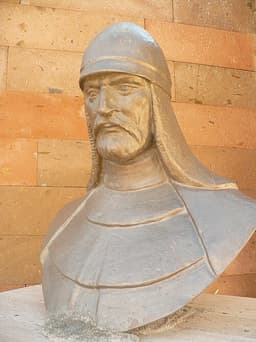
Alp Tigin
Emperor · Medieval
50.5Total
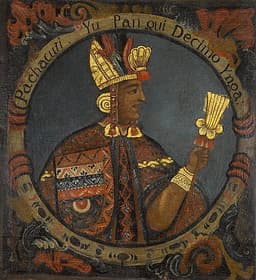
Pachacuti
Emperor · Medieval
69.4Total
Basic Information
Born
911
1418
Died
963
1472
Era
Medieval
Medieval
Nationality
Ghaznavid Empire
Inca Empire
Occupation
Emperor
Emperor
Civilization
Middle Eastern
Other
Score Comparison
Military (10%)
55.0
78.5
Political (20%)
33.6
58.1
Influence (20%)
56.4
65.0
Legacy (20%)
49.2
72.0
Leadership (15%)
50.7
78.0
Strategy (15%)
60.0
69.2
TOTAL
50.5
69.4
Alp Tigin — Complete Timeline
961 AD
Rebellion against the SamanidsPolitical Action◆ Major
Alp Tigin rebelled against the Samanid ruler Mansur I after being passed over for a governorship. He marched from Nishapur to Ghazni, defeating Samanid forces along the way, and established his own rule in eastern Afghanistan.
Impact: regional
963 AD
Consolidation of GhazniPolitical Action
Alp Tigin fortified Ghazni and organized a military state based on slave soldiers (ghilman). He established a stable administration that attracted scholars and merchants, turning Ghazni into a major regional power center.
Impact: regionalconstructive
Pachacuti — Complete Timeline
1438 AD
Conquest of the Chanka KingdomWar
Pachacuti led the Inca army to defeat the Chanka, a powerful rival, in a decisive battle near Cusco. This victory secured his position as Sapa Inca and initiated a period of rapid expansion, transforming the Inca from a small kingdom into a vast empire.
ConquestInca ExpansionChanka
Impact: regional
1440 AD
Reconstruction of CuscoCultural◆ Major
Pachacuti rebuilt Cusco as the imperial capital, designing it in the shape of a puma and constructing massive stone structures like Sacsayhuam
Urban PlanningArchitectureInca Empire
Impact: regionalconstructive
1450 AD
Initiation of Machu Picchu's ConstructionCultural◆ Major
Pachacuti ordered the construction of Machu Picchu, a royal estate and ceremonial site high in the Andes. The complex featured sophisticated dry-stone masonry and terraced agriculture, serving as a symbol of Inca engineering and a retreat for the emperor.
ArchitectureRoyal EstateInca Engineering
Impact: regionalconstructive
Expert Analysis
Pachacuti vs Alp Tigin
The Mountain and the Steppe
In the high Andes, a prince rallies his father’s fleeing army and turns to face a charging horde; on the Iranian plateau, a slave commander watches his master’s court pass him over for promotion and decides to march east. Both moments—separated by five centuries and half a world—sparked dynasties. But only one forged an empire that still echoes in stone. Why did Pachacuti, the ninth Sapa Inca, become a civilization-builder, while Alp Tigin, the founder of the Ghaznavids, remains a footnote? The answer lies not in their ambition, which was equal, but in the worlds they inherited and the choices they made within them.
Origins
Pachacuti was born in 1418 into a kingdom, not an empire. The Inca were one of many small states in the Cusco Valley, surrounded by powerful rivals like the Chanka. His father, Viracocha Inca, was a cautious ruler who had already lost territory. Pachacuti grew up knowing that survival required conquest. The Andes themselves—steep, isolating, demanding—shaped his vision: to rule such a landscape, you must bind it with roads, storehouses, and a single sun god.
Alp Tigin, born in 911, entered the world as a commodity. A Turkic slave from the Central Asian steppes, he was purchased by the Samanid dynasty, a Persianate kingdom that relied on Turkic slave-soldiers (ghulams) for its military. In Samanid society, a clever slave could rise to become a general or governor—but he remained a slave in law, always dependent on the master’s whim. Alp Tigin’s world was one of personal loyalty, not sacred kingship. He had no royal blood, no divine mandate, only his sword and his wits.
Rise to Power
Pachacuti’s rise came through a single, desperate gamble. In 1438, the Chanka Kingdom attacked Cusco. Viracocha and his chosen heir fled. Pachacuti, then a minor prince, refused to run. He rallied the remaining Inca warriors and met the Chanka in battle. According to Inca tradition, the very stones of the battlefield turned into warriors to aid him. He won. His father abdicated, and Pachacuti became Sapa Inca—the “Only Emperor.” The victory was not just military; it was spiritual. Pachacuti had proven that the gods favored him, and he used that belief to remake his kingdom.
Alp Tigin’s path was more bureaucratic. For decades, he served the Samanids as a general and governor in the eastern province of Ghazni (modern-day Afghanistan). In 961, the Samanid ruler Mansur I ascended the throne. Alp Tigin, expecting promotion to a higher post, was instead sidelined. He rebelled—not by declaring himself king, but by marching his army east, seizing Ghazni, and fortifying it against the Samanids. By 963, he had consolidated a small, independent military state. He never claimed the title of emperor; he remained a governor in all but name.
Leadership & Governance
Pachacuti governed like a man building a mountain. He reorganized the entire Inca state into a system of provinces linked by a vast road network, with storehouses every few miles to supply armies in any season. He rebuilt Cusco in the shape of a puma, the Inca symbol of earthly power, and began construction of Machu Picchu around 1450 as a royal retreat that doubled as a sacred observatory. He imposed a single language, Quechua, and a single religion, the sun cult, while allowing local lords to keep their titles if they submitted. His military genius lay in logistics and psychology: he conquered not just with armies but with gifts, negotiations, and the threat of total annihilation.
Alp Tigin ruled like a man building a fortress. He relied on a core of loyal ghulams—slave-soldiers who owed everything to him—and maintained Ghazni as a garrison city. He minted coins in his own name but never fully broke with Samanid traditions; his administration remained Persianate, his court spoke Dari, and his legitimacy depended on military success. He had no vision of cultural unification, no imperial ideology. His state was a machine for war and plunder, not for transformation.
Triumph & Tragedy
Pachacuti’s greatest triumph was the conquest of the Chanka in 1438, which turned a kingdom into an empire. His greatest tragedy came later: he executed his own son and chosen heir, Amaru, for incompetence, then named a younger son, Tupac Inca Yupanqui, as successor. The dynasty survived, but the fracture never fully healed. In the end, Pachacuti died in 1472, having expanded Inca territory from a single valley to a realm stretching from modern Ecuador to Chile.
Alp Tigin’s triumph was the seizure of Ghazni itself—a city that would become the base for a future empire. His tragedy was that he never lived to build it. He died in 963, just two years after consolidating power. His slave-soldiers kept his state alive, and his son-in-law, Sebuktigin, would later expand it into a true empire. But Alp Tigin himself remains a founder without a foundation, remembered more for what he enabled than for what he achieved.
Character & Destiny
Pachacuti was a visionary who believed he was chosen by the sun. This conviction gave him the audacity to rebuild a civilization. Alp Tigin was a pragmatist who knew he was a slave who had seized a chance. This realism made him cautious, even limited. Pachacuti’s personality drove him to create a system that outlasted him; Alp Tigin’s personality drove him to secure a position that could be inherited. One built for eternity, the other for survival.
Legacy
Pachacuti’s legacy is etched into the Andes. Machu Picchu, the Inca road system, the terracing and irrigation that still feed millions—all bear his imprint. He is remembered as the “Earth-Shaker,” the man who transformed the Inca from a local power into the largest empire in pre-Columbian America. His influence score of 77.6 reflects a figure who reshaped a continent.
Alp Tigin’s legacy is the Ghaznavid dynasty, which his successors turned into a major Islamic empire. But his personal influence is muted; his military score of 48.6 and leadership score of 47.0 suggest a competent commander, not a great one. He is remembered primarily as a stepping stone—a slave who became a king-maker, but never a king.
Conclusion
Pachacuti and Alp Tigin illustrate two paths to power: one through sacred transformation, the other through opportunistic seizure. The Inca emperor built an empire that still speaks from stone; the Turkic slave built a dynasty that dissolved into dust. Their differences were not merely personal but structural. Pachacuti inherited a world where kings were gods; Alp Tigin inherited a world where slaves could become generals but never gods. One remade his world; the other adapted to his. In the end, the most profound difference is this: Pachacuti believed he was destined to change history, and he did. Alp Tigin believed he was lucky to have any history at all.
Rankings
🥇
PachacutiLeader
Mil: 78.5Pol: 58.1Inf: 65.0
69.4
🥈
Alp Tigin
Mil: 55.0Pol: 33.6Inf: 56.4
50.5
+18.9 behind
How This Comparison Works
Algorithm
Each figure is scored on 6 dimensions (0—100 scale) based on structured historical data: Military (10%), Political (20%), Influence (20%), Legacy (20%), Leadership (15%), Strategy (15%). The weighted total produces the final ranking.
Data Sources
Scores are computed from structured sub-indicators in the database. Scale factors adjust for era (Ancient ×0.85, Modern ×1.0) and civilization size (Eastern ×1.05, Other ×0.80) to account for differences in population and military scale.
Maximum 3 Figures
Comparisons are limited to 2—3 figures to ensure readability and statistical meaningfulness.
Error Margins
±5 points per dimension — Sub-scores are derived from historical records with inherent uncertainty. Two figures within 5 points on a dimension should be considered roughly equivalent in that area.
Total Score Accuracy
±3 points overall — The weighted combination of 6 dimensions produces a total score with approximately ±3 points of uncertainty. Differences of less than 3 points are not statistically significant— the figures are effectively tied.
Known Limitations
- Historical records are incomplete and uneven across civilizations
- Figures from oral-tradition societies may be underrepresented
- Occupation labels can misclassify multi-role figures
- Scores measure capability and impact, not moral character
- Quantitative scoring is a comparison tool, not absolute truth
Capability Radar
Military (10%) — Battles & Warfare
Battles
45
85
Win Rate
50
90
Expansion
50
90
Political (20%) — Governance & Reform
Reform
20
92
Diplomacy
30
75
Economy
20
80
Influence (20%) — Cultural & Global Reach
Cultural
30
85
Global
30
65
Legacy (20%) — Historical Impact
Historical
45
80
Longevity
40
70
Leadership (15%) — Power & Stability
Tenure
25
85
Stability
25
82
Strategy (15%) — Tactics & Innovation
Strategy
45
88
Tactics
40
80
Reform
30
85
Similar Comparisons
Comments & Discussion
“Stone Shaper”6/16/2026
Pachacuti didn’t just win battles—he literally rebuilt the Andes. Machu Picchu, Sacsayhuamán, the road network: this guy thought in geological terms. Alp Tigin conquered Ghazni and… built a few madrasas? Sorry, but 5,000 miles of imperial highways beat a dusty Afghan fort any day. You can’t legacy-scape with just slave-soldiers and Persian poetry.
“沙盘屠夫”6/16/2026
Pachacuti 打的仗才是真·地质改造:把安第斯山切出梯田和驿道,连石头墙都砌得严丝合缝,气死现代测绘仪。Alp Tigin 不就是搞了个军阀割据吗?他要是活在印加,连 Chanka 人都打不过。别拿奴隶兵和黄金矿比,文明标杆在库斯科,不在加兹尼。
“Steppe Spinner”6/16/2026
Look, everyone romanticizes Pachacuti, but let’s be real: he had gold, silver, and a vertical empire where everyone lived on the same mountain. Alp Tigin had nothing but a stolen army and a desert. Yet he founded a dynasty that lasted 200 years and spread Persian culture into India. Pachacuti’s empire imploded in a generation after the Spanish showed up. Who’s the footnote now?
“数字拆解员”6/16/2026
数据不会骗人:Pachacuti 在位33年,把印加从16万平方公里扩张到200万,库斯科到基多1400公里距离用8000公里驿道连通。Alp Tigin 呢?打下加兹尼时实际控制面积不到5万平方公里,统治时间12年,死后马上被儿子篡权。别跟我扯文化传播,面积翻12倍才是硬实力。历史不是喝鸡汤,数据说了算。
“Lost Syllable”6/16/2026
Everyone forgets that Alp Tigin wasn’t even a ‘founder’—he was a mutineer who grabbed a province. Pachacuti rewrote cosmology: he turned a village sun god into an imperial deity and made Quechua the administrative language of half a continent. One guy changed how people worshipped; the other just changed who collected taxes. That’s the difference between a footnote and a civilization.