Loading...
Alp Tigin vs King Taejo of Goryeo
King Taejo of Goryeo leads by 19.6 pts · 2 figures compared
…
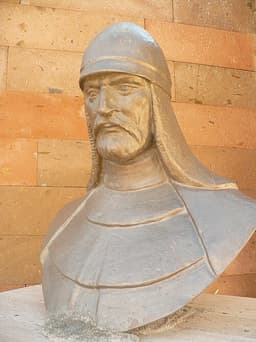
Alp Tigin
Emperor · Medieval
50.5Total
King Taejo of Goryeo
Emperor · Medieval
70.1Total
Basic Information
Born
911
877
Died
963
943
Era
Medieval
Medieval
Nationality
Ghaznavid Empire
Korea
Occupation
Emperor
Emperor
Civilization
Middle Eastern
Eastern
Score Comparison
Military (10%)
55.0
78.0
Political (20%)
33.6
72.0
Influence (20%)
56.4
65.0
Legacy (20%)
49.2
65.0
Leadership (15%)
50.7
82.0
Strategy (15%)
60.0
67.2
TOTAL
50.5
70.1
Alp Tigin — Complete Timeline
961 AD
Rebellion against the SamanidsPolitical Action◆ Major
Alp Tigin rebelled against the Samanid ruler Mansur I after being passed over for a governorship. He marched from Nishapur to Ghazni, defeating Samanid forces along the way, and established his own rule in eastern Afghanistan.
Impact: regional
963 AD
Consolidation of GhazniPolitical Action
Alp Tigin fortified Ghazni and organized a military state based on slave soldiers (ghilman). He established a stable administration that attracted scholars and merchants, turning Ghazni into a major regional power center.
Impact: regionalconstructive
King Taejo of Goryeo — Complete Timeline
918 AD
Founded the Goryeo DynastyPolitical Action
Wang Geon (Taejo) overthrew the Later Goguryeo state and established the Goryeo dynasty, with its capital at Songak (Kaesong). This marked the beginning of a new era in Korean history.
Dynasty FoundingGoryeoKorea
Impact: regionalconstructive
920 AD
Adopted a Policy of Marrying Local ElitesPolitical Action◆ Major
Taejo married women from powerful local clans to secure their loyalty and integrate regional powers into the Goryeo state. This policy helped stabilize the new dynasty.
Marriage PolicyGoryeoUnification
Impact: regionalconstructive
936 AD
Unified the Later Three KingdomsWar
Taejo completed the unification of the Later Three Kingdoms (Later Goguryeo, Later Baekje, and Silla) under Goryeo rule. This ended the period of division and established a unified Korean state.
UnificationLater Three KingdomsGoryeo
Impact: regionalconstructive
943 AD
Implemented Ten InjunctionsPolitical Action◆ Major
Taejo issued the Ten Injunctions, a set of political guidelines for his successors. These stressed the importance of Buddhism, diplomacy with China, and avoiding internal conflict.
GovernanceGoryeoPolicy
Impact: regionalconstructive
Expert Analysis
Alp Tigin vs King Taejo of Goryeo
# The Slave King and the Unifier: Two Founders, Two Fates
In the year 963, on the dusty frontier of what is now eastern Afghanistan, a Turkic slave commander named Alp Tigin lay dying in the fortress city of Ghazni. He had seized this city through rebellion, fortified it with an army of fellow slave soldiers, and died just as his fragile state began to breathe. Half a world away, twenty years earlier, King Taejo of Goryeo had passed peacefully in his capital of Songak, surrounded by the sons and ministers who would carry forward a dynasty that would last nearly five centuries. Both men founded kingdoms. One founded a flickering candle; the other, a beacon that would light a peninsula for centuries. What made the difference?
Origins
Alp Tigin began life in the steppes of Central Asia, a region where power flowed not through bloodlines but through the sword—and the market. Captured or sold into slavery as a youth, he entered the Samanid Empire’s military system, where Turkic slaves (ghilman) were prized as soldiers precisely because they had no local loyalties. In this world, a man could rise from chains to command armies, but his authority was always borrowed, never truly his own.
Taejo, born Wang Geon in 877, came from a different world entirely. His family were maritime merchants and local gentry on the Korean peninsula, a land fractured into the Later Three Kingdoms—Later Goguryeo, Later Baekje, and the ancient kingdom of Silla. He grew up not in barracks but in the halls of regional power, learning the delicate art of alliance, marriage, and negotiation. Where Alp Tigin’s world was one of raw force, Taejo’s was one of relationships.
Rise to Power
Alp Tigin’s ascent came through a single, dramatic act of defiance. In 961, when the Samanid ruler Mansur I refused to grant him the governorship of Khorasan, Alp Tigin did not bow. He marched his army from Nishapur eastward, across the mountains, into the unruly frontier of Ghazni. It was a gamble born of desperation—a commander with no homeland, no clan, only his soldiers and their loyalty to gold and glory.
Taejo’s rise was slower, more deliberate. In 918, he overthrew the ruler of Later Goguryeo and founded the Goryeo dynasty, but he did not declare himself emperor overnight. He spent the next eighteen years weaving a web of marriages, treaties, and careful campaigns. In 920, he adopted a policy of marrying women from powerful local clans, turning potential rivals into in-laws. By 936, when he finally crushed Later Baekje and unified the peninsula, his victory was not a conquest but a culmination.
Leadership & Governance
Alp Tigin governed Ghazni as a military camp. He consolidated his power by fortifying the city and organizing a state built entirely around slave soldiers—men like himself, rootless and ruthless. His administration was efficient but brittle. There was no civil service, no legal code, no vision beyond survival. His rule was a perpetual siege: against the Samanids, against rival warlords, against the desert.
Taejo built a state that could outlive him. His Ten Injunctions, issued in 943, were a masterclass in political wisdom. He stressed Buddhism as a unifying spiritual force, warned against excessive centralization, and urged his successors to respect local customs. He did not marry to pacify; he married to integrate. His realm was not a fortress but a garden, planted with deep roots.
Triumph & Tragedy
Alp Tigin’s greatest triumph was also his tragedy: he died with his work unfinished. Ghazni would later become the capital of a vast empire under Mahmud of Ghazni, but that glory belonged to others. Alp Tigin’s personal achievement was survival itself—a former slave who carved out a kingdom and died in power. Yet his state was a machine that required constant fuel: conquest, plunder, more slaves.
Taejo’s triumph was completion. When he died in 943, Korea was unified, his dynasty secure, his policies enshrined. His tragedy was a subtler one: the Ten Injunctions, for all their wisdom, could not prevent later dynastic struggles. But that was a problem for future generations. Taejo had done his work.
Character & Destiny
Alp Tigin was a man of fire and steel. His rebellion was a gamble, his rule a constant struggle. He trusted only his soldiers, and only as long as he paid them. His personality—proud, impatient, suspicious—shaped a state that mirrored him: powerful but paranoid, brilliant but brittle.
Taejo was a man of water and stone. He bent, he flowed, he endured. He married his enemies’ daughters, accepted their sons into his court, and built a nation not on conquest but on consent. His personality—patient, strategic, inclusive—created a dynasty that could survive mediocrity, because its foundations were broad.
Legacy
Alp Tigin is remembered today, if at all, as a footnote—the founder of a dynasty that would later produce Mahmud of Ghazni and the Ghaznavid Empire. His name is known to historians, not to the world. His legacy is the ghilman system, which would influence Islamic military states for centuries, but his personal story remains a cautionary tale of power without roots.
Taejo is remembered as the father of Korea. The Goryeo dynasty he founded gave its name to the modern English word “Korea.” His Ten Injunctions are studied as foundational political documents. Statues of him stand in Seoul. He is not a footnote; he is a chapter.
Conclusion
Two founders, two fates. Alp Tigin built a machine; Taejo built a family. One ruled by fear; the other by marriage. One died with his work undone; the other with his work enshrined. The difference was not in their ambition—both wanted power—but in their understanding of what power required. Alp Tigin thought it required force. Taejo knew it required trust. And trust, unlike a slave army, does not die with its master.
Rankings
🥇
King Taejo of GoryeoLeader
Mil: 78.0Pol: 72.0Inf: 65.0
70.1
🥈
Alp Tigin
Mil: 55.0Pol: 33.6Inf: 56.4
50.5
+19.6 behind
How This Comparison Works
Algorithm
Each figure is scored on 6 dimensions (0—100 scale) based on structured historical data: Military (10%), Political (20%), Influence (20%), Legacy (20%), Leadership (15%), Strategy (15%). The weighted total produces the final ranking.
Data Sources
Scores are computed from structured sub-indicators in the database. Scale factors adjust for era (Ancient ×0.85, Modern ×1.0) and civilization size (Eastern ×1.05, Other ×0.80) to account for differences in population and military scale.
Maximum 3 Figures
Comparisons are limited to 2—3 figures to ensure readability and statistical meaningfulness.
Error Margins
±5 points per dimension — Sub-scores are derived from historical records with inherent uncertainty. Two figures within 5 points on a dimension should be considered roughly equivalent in that area.
Total Score Accuracy
±3 points overall — The weighted combination of 6 dimensions produces a total score with approximately ±3 points of uncertainty. Differences of less than 3 points are not statistically significant— the figures are effectively tied.
Known Limitations
- Historical records are incomplete and uneven across civilizations
- Figures from oral-tradition societies may be underrepresented
- Occupation labels can misclassify multi-role figures
- Scores measure capability and impact, not moral character
- Quantitative scoring is a comparison tool, not absolute truth
Capability Radar
Military (10%) — Battles & Warfare
Battles
45
75
Win Rate
50
80
Expansion
50
80
Political (20%) — Governance & Reform
Reform
20
80
Diplomacy
30
75
Economy
20
70
Influence (20%) — Cultural & Global Reach
Cultural
30
70
Global
30
60
Legacy (20%) — Historical Impact
Historical
45
80
Longevity
40
75
Leadership (15%) — Power & Stability
Tenure
25
85
Stability
25
75
Strategy (15%) — Tactics & Innovation
Strategy
45
85
Tactics
40
70
Reform
30
65
Similar Comparisons
Comments & Discussion
TURKICTRUTH6/16/2026
Alp Tigin was a slave general who built his power on sand. When he choked on that dust in Ghazni in 963, his "empire" was a mercenary camp waiting for a stronger master. Mahmud of Ghazni is the real founder—the military brain that Tigin never had. Taejo Wang Geon? That man played the long game. He unified three warring kingdoms by 936, not by brute force alone, but by marrying into local elites, absorbing Silla's bureaucracy, and using Buddhist temples as soft power. Tigin ended a footnote; Taej
REVISIONISTSCOUT6/16/2026
Let's not romanticize Taejo as some enlightened unifier. He was a ruthless warlord who crushed his rivals like King Gyeon Hwon of Later Baekje, who surrendered in 936 — Taejo had him poisoned within the year. And Alp Tigin? The man was a brilliant pragmatist. He carved Ghazni from the decaying Samanid Empire using a ghulam army that swore personal loyalty, not tribal ties. That's not "borrowed power" — that's strategic brilliance in a world where bloodlines meant jack. Tigin died before he could