Loading...
Alp Tigin vs Dinh Tien Hoang
Dinh Tien Hoang leads by 9.9 pts · 2 figures compared
…
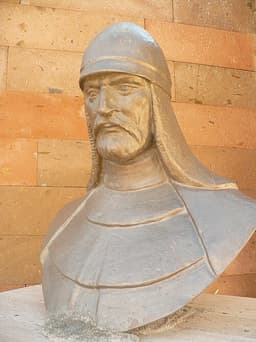
Alp Tigin
Emperor · Medieval
50.5Total
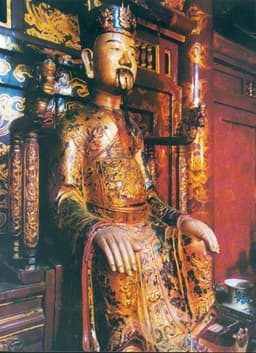
Dinh Tien Hoang
Emperor · Medieval
60.4Total
Basic Information
Born
911
924
Died
963
979
Era
Medieval
Medieval
Nationality
Ghaznavid Empire
Vietnam
Occupation
Emperor
Emperor
Civilization
Middle Eastern
Eastern
Score Comparison
Military (10%)
55.0
60.0
Political (20%)
33.6
72.0
Influence (20%)
56.4
65.0
Legacy (20%)
49.2
40.0
Leadership (15%)
50.7
77.2
Strategy (15%)
60.0
58.0
TOTAL
50.5
60.4
Alp Tigin — Complete Timeline
961 AD
Rebellion against the SamanidsPolitical Action◆ Major
Alp Tigin rebelled against the Samanid ruler Mansur I after being passed over for a governorship. He marched from Nishapur to Ghazni, defeating Samanid forces along the way, and established his own rule in eastern Afghanistan.
Impact: regional
963 AD
Consolidation of GhazniPolitical Action
Alp Tigin fortified Ghazni and organized a military state based on slave soldiers (ghilman). He established a stable administration that attracted scholars and merchants, turning Ghazni into a major regional power center.
Impact: regionalconstructive
Dinh Tien Hoang — Complete Timeline
968 AD
Defeat of the Twelve WarlordsWar
Dinh Bo Linh, later known as Dinh Tien Hoang, unified Vietnam by defeating the Twelve Warlords who had divided the country after the collapse of Chinese rule. He established the Dinh dynasty and became the first emperor of an independent Vietnam.
UnificationDinh DynastyVietnamese Independence
Impact: nationalconstructive
Establishment of the Dinh DynastyPolitical Action◆ Major
Dinh Tien Hoang founded the Dinh dynasty and declared himself Emperor. He moved the capital to Hoa Lu and implemented administrative reforms to consolidate power. This marked the beginning of a new era of Vietnamese independence after centuries of Chinese domination.
Dynasty FoundingCapital MoveAdministrative Reform
Impact: nationalconstructive
979 AD
Assassination of Dinh Tien HoangPolitical Action◆ Major
Dinh Tien Hoang and his crown prince were assassinated by a court official while sleeping. The murder plunged the Dinh dynasty into chaos, leading to a succession crisis and eventual takeover by Le Hoan. The assassination ended the short-lived Dinh dynasty.
AssassinationSuccession CrisisEnd of Dinh Dynasty
Impact: nationaltragic
Expert Analysis
Dinh Tien Hoang vs Alp Tigin
### The Slave King and the Unifier: Two Paths to Empire in a Fractured World
In the year 963, a dying Turkic slave commander named Alp Tigin lay in his fortress at Ghazni, a city he had seized from his masters. A thousand miles to the east, in the rugged mountains of what is now northern Vietnam, a boy named Dinh Bo Linh was learning to fight. One man had clawed his way to power through the treacherous politics of a decaying Persianate empire; the other would forge a nation from the chaos of a hundred petty chieftains. Their stories, set in the same medieval century, ask a timeless question: What does it take to build a kingdom when the world around you is falling apart?
### Origins: The Slave and the Mountain Boy
Alp Tigin was born into a world of rigid hierarchies. The Samanid Empire, a Persian dynasty in Central Asia, relied on a military caste of Turkic slaves—*ghilman*—who were bought, trained, and elevated for their loyalty. Alp Tigin was one of them. He had no bloodline, no homeland, no family name. His identity was a creation of his masters, his future entirely dependent on his ability to fight and serve. This was a world where power flowed downward from a distant emir, and a man could rise only as high as his patron allowed.
Dinh Bo Linh, by contrast, was born in a village in the Red River Delta, a land that had been under Chinese rule for centuries but was now convulsed by rebellion. His father was a local chief, and the boy grew up in a world of fragmented loyalties—the "Twelve Warlords" who had torn Vietnam apart after the fall of the Tang dynasty. There was no empire to serve, no single throne to aspire to. There was only a patchwork of fortresses, each held by a rival, and a people who remembered their own kings. Dinh’s path was not one of climbing a ladder; it was one of clearing a forest.
### Rise to Power: Rebellion and Conquest
Alp Tigin’s rise was a study in calculated risk. In 961, after being passed over for the governorship of Khorasan, he did what no loyal slave was supposed to do: he rebelled. Marching his army from Nishapur, he defied the Samanid ruler Mansur I, a gamble that could have ended in his execution. But Alp Tigin understood the politics of his world. He retreated to the remote fortress of Ghazni, a frontier town on the edge of India, and declared himself independent. He did not seek to overthrow the Samanids; he simply carved out a space where no one else could reach him.
Dinh Bo Linh’s rise was more direct. In 968, after years of brutal campaigning, he defeated the last of the Twelve Warlords and unified Vietnam under his rule. He was not a rebel in the usual sense—he was a conqueror. He did not retreat to a fortress; he built one. Declaring himself Emperor Dinh Tien Hoang, he moved his capital to Hoa Lu, a natural citadel of limestone cliffs and rivers, and set about creating a state from scratch.
### Leadership & Governance: The Slave State and the Imperial Vision
Alp Tigin’s rule at Ghazni was a masterpiece of pragmatism. He had no claim to legitimacy except the loyalty of his army, so he built a state around that army. His *ghilman*—slave soldiers bought from the steppes—were his only reliable subjects. He organized them into a disciplined force, paid them directly, and gave them no ties to the land or the people. Ghazni became a military camp, not a kingdom. Alp Tigin’s genius was in creating a machine that could sustain itself through plunder, but its weakness was that it had no foundation beyond the sword.
Dinh Tien Hoang faced a different challenge. He had to weld a fractious people into a single nation. He did so with a mix of iron discipline and political cunning. He imposed a centralized administration, standardized taxes, and built a network of roads and fortifications. But his most striking innovation was symbolic: he declared himself *Hoang De*—Emperor—a title that had been claimed only by Chinese rulers. He was not just a warlord; he was the founder of a dynasty, the first independent emperor of a nation that would call itself Dai Co Viet. Where Alp Tigin ruled through the loyalty of slaves, Dinh ruled through the loyalty of a people.
### Triumph & Tragedy: The Fortress and the Assassin’s Blade
Alp Tigin’s greatest moment was his survival. He died in 963, having held Ghazni for only two years, but he had done what few slave commanders could: he had founded a dynasty. His son-in-law, Sabuktigin, and his grandson, Mahmud of Ghazni, would turn his fortress into an empire that stretched from the Caspian to the Ganges. Alp Tigin’s tragedy was that he never saw it. He was a builder who died before his building was finished, a man whose legacy was carried forward by others.
Dinh Tien Hoang’s triumph was his unification of Vietnam, a feat that would echo for a thousand years. His tragedy came in 979, when he and his crown prince were assassinated in their sleep by a court official. The murder was a petty act—a personal grudge—but it threw the Dinh dynasty into chaos. Within a year, the Song dynasty of China would invade, and Vietnam’s independence would hang by a thread. Dinh had built a nation, but he had not built a system that could survive his death.
### Character & Destiny: The Pragmatist and the Visionary
Alp Tigin’s character was shaped by his origins. He was cautious, calculating, and deeply aware of his own vulnerability. He did not dream of glory; he dreamed of survival. His decisions were driven by a cold realism: when the Samanids threatened, he retreated; when he needed allies, he married his daughter to a stronger man. He was a survivor, not a visionary.
Dinh Tien Hoang was the opposite. He was bold, ambitious, and willing to risk everything for a vision. He declared himself emperor when Vietnam had no emperor; he built a capital when there was no state. His character was that of a founder—a man who believed that the world could be remade. But that same boldness left him blind to the dangers within his own court. He trusted too much, and it cost him his life.
### Legacy: The Empire and the Nation
Alp Tigin’s legacy is the Ghaznavid Empire, a short-lived but spectacular machine of conquest that would be remembered for its plunder of India and its patronage of Persian culture. But the empire itself died within a century, consumed by the same forces that had created it. Alp Tigin’s true legacy was a model: the slave-soldier state, a system that would be copied by the Mamluks of Egypt and the Delhi Sultanate.
Dinh Tien Hoang’s legacy is Vietnam itself. He was the first to give the nation a name, a capital, and a dynasty. His assassination was a tragedy, but the nation he founded survived. The Ly dynasty that followed would build on his foundations, and Vietnam would remain independent for nearly a thousand years. Dinh is remembered not as a conqueror, but as a father of his country.
### Conclusion: Two Paths, One Question
Alp Tigin and Dinh Tien Hoang were both men who built kingdoms from chaos, but they built them for different reasons. Alp Tigin built a fortress to protect himself; Dinh Tien Hoang built a nation to free his people. One created a machine that devoured itself; the other planted a seed that grew into a tree. Their stories remind us that the greatest question of leadership is not *how* to gain power, but *what* to do with it. For Alp Tigin, power was a shield. For Dinh Tien Hoang, it was a foundation. And the difference between a shield and a foundation is the difference between a memory and a future.
Rankings
🥇
Dinh Tien HoangLeader
Mil: 60.0Pol: 72.0Inf: 65.0
60.4
🥈
Alp Tigin
Mil: 55.0Pol: 33.6Inf: 56.4
50.5
+9.9 behind
How This Comparison Works
Algorithm
Each figure is scored on 6 dimensions (0—100 scale) based on structured historical data: Military (10%), Political (20%), Influence (20%), Legacy (20%), Leadership (15%), Strategy (15%). The weighted total produces the final ranking.
Data Sources
Scores are computed from structured sub-indicators in the database. Scale factors adjust for era (Ancient ×0.85, Modern ×1.0) and civilization size (Eastern ×1.05, Other ×0.80) to account for differences in population and military scale.
Maximum 3 Figures
Comparisons are limited to 2—3 figures to ensure readability and statistical meaningfulness.
Error Margins
±5 points per dimension — Sub-scores are derived from historical records with inherent uncertainty. Two figures within 5 points on a dimension should be considered roughly equivalent in that area.
Total Score Accuracy
±3 points overall — The weighted combination of 6 dimensions produces a total score with approximately ±3 points of uncertainty. Differences of less than 3 points are not statistically significant— the figures are effectively tied.
Known Limitations
- Historical records are incomplete and uneven across civilizations
- Figures from oral-tradition societies may be underrepresented
- Occupation labels can misclassify multi-role figures
- Scores measure capability and impact, not moral character
- Quantitative scoring is a comparison tool, not absolute truth
Capability Radar
Military (10%) — Battles & Warfare
Battles
45
70
Win Rate
50
75
Expansion
50
65
Political (20%) — Governance & Reform
Reform
20
70
Diplomacy
30
65
Economy
20
60
Influence (20%) — Cultural & Global Reach
Cultural
30
65
Global
30
55
Legacy (20%) — Historical Impact
Historical
45
75
Longevity
40
70
Leadership (15%) — Power & Stability
Tenure
25
60
Stability
25
55
Strategy (15%) — Tactics & Innovation
Strategy
45
70
Tactics
40
65
Reform
30
60
Similar Comparisons
Comments & Discussion
GHAZNIS_BEST_SLAVE6/16/2026
Alp Tigin was just another ambitious Turkic strongman playing palace politics—Ghaznavid origin stories always get romanticized but the reality is he was a disgruntled governor who seized Ghazni when Samanid control collapsed. Dinh Tien Hoang actually built something new from scratch, pacifying 12 warlords through military campaigns and establishing lasting institutions. Sorry, but buying power in someone else's declining empire doesn't match forging a kingdom from total chaos.
历史杠精老王6/16/2026
说Alp Tigin是奴隶出身就了不起?纯粹胡扯!他明明是萨曼王朝的军队总督,靠着突厥禁卫军搞政变上位,这叫"奴隶逆袭"?而丁先皇12岁就带兵打仗,30岁扫平十二使君,这才是白手起家的真英雄。你们那些吹奴隶将军的,历史上哪个奴隶王朝不是三代就完蛋?丁朝虽然短命,但人家奠定了大越国两千年的根基。
MILITIA_MINDSET6/16/2026
Let's talk actual numbers. Dinh Tien Hoang unified 12 warring lords with roughly 30,000 troops in under 5 years—that's strategic genius. Alp Tigin? He bought loyalty with Samanid treasury gold, never expanded beyond Ghazni, and left his successor a fragile state that nearly collapsed twice. One man built from dirt; the other inherited an army and stole a province. This comparison exposes how Western historiography romanticizes Muslim slave-soldiers while ignoring real state-builders.
宋朝遗民张三6/16/2026
屁的"两个帝国"!丁先皇961年才称帝,Alp Tigin 963年就死了,两人压根就没打过照面。关键是中国史书《宋史》明确记载丁部领"以铁骑五百灭诸道",而伊斯兰史家说Alp Tigin手下一万两千骑兵被喀喇汗朝打得找不着北。一个靠骑兵横扫平原建立真正帝国,一个躲在堡垒里当山大王,这也能比?差着十个等级呢!
SINICIZED_STRATEGIST6/16/2026
Look at longevity: Dinh Tien Hoang's son Dinh Phe De was overthrown in 980, but his Daoist-influenced administrative system—tax codes, royal guard, territorial divisions—survived under the Early Le Dynasty for 200 years. Alp Tigin's Ghaznavid legacy? His son Sabuktigin had to reconquer everything, and within 50 years they were vassals of the Seljuks. True statecraft isn't just seizing power—it's building structures that outlast you. Dinh understood that; Alp Tigin didn't.