Loading...
Alp Tigin vs Cyrus the Great
Cyrus the Great leads by 33.4 pts · 2 figures compared
…
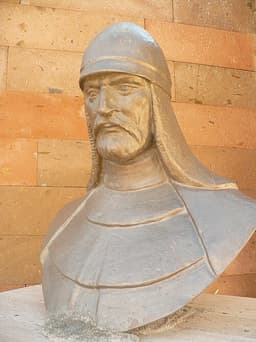
Alp Tigin
Emperor · Medieval
50.5Total
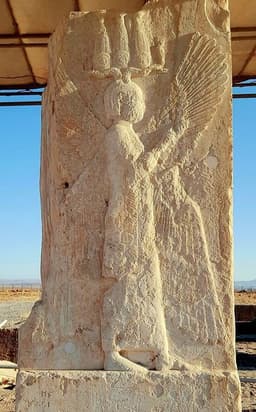
Cyrus the Great
Emperor · Ancient
83.9Total
Basic Information
Born
911
-600
Died
963
-530
Era
Medieval
Ancient
Nationality
Ghaznavid Empire
Persia
Occupation
Emperor
Emperor
Civilization
Middle Eastern
Middle Eastern
Score Comparison
Military (10%)
55.0
82.0
Political (20%)
33.6
85.0
Influence (20%)
56.4
85.0
Legacy (20%)
49.2
90.0
Leadership (15%)
50.7
78.0
Strategy (15%)
60.0
75.0
TOTAL
50.5
83.9
Alp Tigin — Complete Timeline
961 AD
Rebellion against the SamanidsPolitical Action◆ Major
Alp Tigin rebelled against the Samanid ruler Mansur I after being passed over for a governorship. He marched from Nishapur to Ghazni, defeating Samanid forces along the way, and established his own rule in eastern Afghanistan.
Impact: regional
963 AD
Consolidation of GhazniPolitical Action
Alp Tigin fortified Ghazni and organized a military state based on slave soldiers (ghilman). He established a stable administration that attracted scholars and merchants, turning Ghazni into a major regional power center.
Impact: regionalconstructive
Cyrus the Great — Complete Timeline
550 BC
Founding of the Achaemenid EmpirePolitical Action
Cyrus led a rebellion against the Median Empire, defeating King Astyages and capturing Ecbatana. He then united the Persian and Median tribes, establishing the Achaemenid Empire, which became the largest empire the world had yet seen.
Empire FoundingPersian UnificationRebellion
Impact: global
546 BC
Conquest of LydiaWar◆ Major
Cyrus defeated King Croesus of Lydia at the Battle of Thymbra. The Lydian capital Sardis was captured, and Croesus was taken prisoner. This conquest brought Anatolia under Persian control and secured access to the Aegean coast.
Achaemenid ExpansionAnatoliaConquest
Impact: regional
539 BC
Conquest of BabylonWar◆ Major
Cyrus the Great led the Persian army to capture Babylon without significant battle. The city's gates were opened, and Cyrus entered peacefully. This conquest added Mesopotamia to the Achaemenid Empire and marked the end of the Neo-Babylonian Empire.
Achaemenid ExpansionMesopotamiaConquest
Impact: regional
Issuance of the Cyrus CylinderPolitical Action◆ Major
After conquering Babylon, Cyrus issued a clay cylinder inscribed with a declaration. It described his policy of restoring temples, repatriating displaced peoples, and allowing religious freedom. The cylinder is often cited as an early charter of human rights.
Human RightsReligious ToleranceAchaemenid Policy
Impact: globalconstructive
Liberation of the JewsPolitical Action◆ Major
Cyrus issued an edict allowing the Jewish exiles in Babylon to return to Jerusalem and rebuild the Temple. This event is recorded in the biblical Book of Ezra and is a key moment in Jewish history, ending the Babylonian captivity.
Jewish HistoryReligious FreedomReturn from Exile
Impact: regionalconstructive
Expert Analysis
Cyrus the Great vs Alp Tigin
### The Conqueror and the Commander: Cyrus the Great and Alp Tigin
In the annals of history, two figures rise from the dust of the Middle East, their stories separated by fifteen centuries yet bound by the same arid landscapes and the relentless pursuit of power. One, a liberator who issued a charter of human rights and wept for a conquered city; the other, a slave who carved a kingdom from rebellion and forged a dynasty from the swords of his own soldiers. How did Cyrus the Great, the founder of the Achaemenid Empire, and Alp Tigin, the father of the Ghaznavid dynasty, take such different paths from such similar origins? The answer lies not in their geography, but in their souls—and in the eras that shaped them.
### Origins
Cyrus was born around 600 BCE into the royal line of the Persian tribe, a vassal of the Median Empire. Legends speak of his grandfather, King Astyages of Media, dreaming that his grandson would overthrow him—a prophecy that set the stage for a life of destiny. Raised among the rugged mountains of Persis, Cyrus absorbed a world where kings ruled by divine right, yet where the vastness of the known world demanded a ruler who could see beyond his own tribe. His era was one of empires—Assyria had fallen, Babylon stood proud, and the Medes dominated the plateau. The air was thick with the clash of civilizations.
Alp Tigin’s origins could not be more different. Born in 911 CE, he was a Turkic slave, a commodity in the bustling markets of the Samanid Empire. His world was one of war bands and shifting loyalties, where a man’s worth was measured by his sword and his cunning. The Samanids ruled from Bukhara, a Persianate dynasty that relied on Turkic slave soldiers—ghilman—for their armies. Alp Tigin was one of these, rising through sheer ambition to become a commander. His era was one of fragmentation: the Abbasid Caliphate was waning, and the steppes were churning out warlords. For Alp Tigin, power was not inherited; it was seized.
### Rise to Power
Cyrus’s ascent was a masterclass in political vision. In 550 BCE, he led a rebellion against his grandfather, Astyages, defeating the Medes at Ecbatana. This was no mere coup—it was a unification. Cyrus did not destroy the Medes; he absorbed them, marrying a Median princess and presenting himself as the rightful heir. Then he turned west. In 546 BCE, he faced King Croesus of Lydia at the Battle of Thymbra. Croesus, famed for his wealth, was outmaneuvered by Cyrus’s use of camels and archers. Sardis fell, and Croesus was captured. But Cyrus did not humiliate him—he honored him. This was a pattern: conquest through persuasion, not annihilation.
Alp Tigin’s rise was far more brutal. In 961 CE, the Samanid ruler Mansur I passed him over for a governorship. Alp Tigin, seething, rebelled. He marched from Nishapur not with a united army, but with a band of loyal slave soldiers—men who owed him everything. He was defeated in open battle, but he retreated to the remote fortress of Ghazni, in what is now Afghanistan. There, in 963 CE, he consolidated his power, fortifying the city and building a military state. His rise was a story of survival: he did not conquer an empire; he carved a niche.
### Leadership & Governance
Cyrus the Great ruled with a political score of 85, a reflection of his genius for administration. After conquering Babylon in 539 BCE—without a significant battle, as the city’s gates were opened to him—he issued the Cyrus Cylinder, a clay declaration that restored temples, repatriated deported peoples, and allowed the Jewish exiles to return to Jerusalem and rebuild their Temple. This was not mere propaganda; it was a system. Cyrus governed a multicultural empire—from the Greeks of Ionia to the Indians of the Indus—by respecting local customs and religions. He was a military strategist (score 72) who knew that loyalty was more powerful than fear.
Alp Tigin, with a leadership score of 47, was a different breed. He ruled Ghazni through the sword. His military state was built on the ghilman—slave soldiers who were loyal only to him, not to any tribe or family. He had no time for charters or edicts. His governance was harsh, pragmatic, and focused on survival. Where Cyrus built a bridge between cultures, Alp Tigin built a fortress. His political score of 50.7 reflects a man who was more a warlord than a statesman.
### Triumph & Tragedy
Cyrus’s greatest triumph was the conquest of Babylon, a city that had stood for centuries. He entered as a liberator, not a conqueror, and his Cyrus Cylinder became a symbol of human rights. But his tragedy came later: in 530 BCE, he died in battle against the Massagetae, a nomadic tribe on the eastern frontier. His body was brought back to Pasargadae, where his tomb still stands. He died as he lived—in the saddle, pushing the boundaries of his empire.
Alp Tigin’s triumph was his consolidation of Ghazni. From a rebel fleeing defeat, he created a stable base that would become the Ghaznavid Empire under his successors, like Mahmud of Ghazni. But his tragedy was his obscurity. He died in 963 CE, just two years after his rebellion. He never saw the empire he founded; he was merely the spark. His influence score of 71.6 is high, but it is a legacy built by others.
### Character & Destiny
Cyrus was a man of vision, a ruler who understood that power was a means, not an end. The Jewish scripture calls him “God’s anointed” for freeing the exiles. His character was defined by magnanimity—he wept for Babylon’s fall, according to legend. His destiny was to create an empire that would last two centuries.
Alp Tigin was a man of ambition, a survivor in a violent world. He had no vision beyond his own survival. His character was shaped by the slave market: ruthless, cunning, and loyal only to himself. His destiny was to be a footnote, a stepping stone. The difference is not in their abilities—both were skilled—but in their worlds. Cyrus lived in an age of empires, where a ruler could dream of uniting the world. Alp Tigin lived in an age of fragments, where a man could only dream of holding his own.
### Legacy
Cyrus the Great is remembered as a model of enlightened rule. His legacy score of 80 reflects his impact on history, from the Cyrus Cylinder to the liberation of the Jews. He is a hero in Iran, a figure in the Bible, and a symbol of tolerance.
Alp Tigin is remembered only by historians. His legacy score of 62.1 is a shadow of Cyrus’s. He founded a dynasty, but it was his slave-son, Sabuktigin, and his grandson, Mahmud, who made it great. He is a name in a chronicle.
### Conclusion
Standing before the tomb of Cyrus at Pasargadae, one feels the weight of an idea—that a conqueror can be a liberator. Standing before the ruins of Ghazni, one feels only the wind. Cyrus built an empire on the principle of unity; Alp Tigin built a fortress on the principle of survival. Both were men of their times, but their times were different. Cyrus’s era whispered of infinity; Alp Tigin’s era screamed of the next battle. In the end, the difference between them is the difference between a dream and a necessity. And history, as always, remembers the dreamers.
Rankings
🥇
Cyrus the GreatLeader
Mil: 82.0Pol: 85.0Inf: 85.0
83.9
🥈
Alp Tigin
Mil: 55.0Pol: 33.6Inf: 56.4
50.5
+33.4 behind
How This Comparison Works
Algorithm
Each figure is scored on 6 dimensions (0—100 scale) based on structured historical data: Military (10%), Political (20%), Influence (20%), Legacy (20%), Leadership (15%), Strategy (15%). The weighted total produces the final ranking.
Data Sources
Scores are computed from structured sub-indicators in the database. Scale factors adjust for era (Ancient ×0.85, Modern ×1.0) and civilization size (Eastern ×1.05, Other ×0.80) to account for differences in population and military scale.
Maximum 3 Figures
Comparisons are limited to 2—3 figures to ensure readability and statistical meaningfulness.
Error Margins
±5 points per dimension — Sub-scores are derived from historical records with inherent uncertainty. Two figures within 5 points on a dimension should be considered roughly equivalent in that area.
Total Score Accuracy
±3 points overall — The weighted combination of 6 dimensions produces a total score with approximately ±3 points of uncertainty. Differences of less than 3 points are not statistically significant— the figures are effectively tied.
Known Limitations
- Historical records are incomplete and uneven across civilizations
- Figures from oral-tradition societies may be underrepresented
- Occupation labels can misclassify multi-role figures
- Scores measure capability and impact, not moral character
- Quantitative scoring is a comparison tool, not absolute truth
Capability Radar
Military (10%) — Battles & Warfare
Battles
45
85
Win Rate
50
90
Expansion
50
92
Political (20%) — Governance & Reform
Reform
20
90
Diplomacy
30
95
Economy
20
80
Influence (20%) — Cultural & Global Reach
Cultural
30
90
Global
30
90
Legacy (20%) — Historical Impact
Historical
45
95
Longevity
40
95
Leadership (15%) — Power & Stability
Tenure
25
70
Stability
25
85
Strategy (15%) — Tactics & Innovation
Strategy
45
88
Tactics
40
80
Reform
30
75
Similar Comparisons
Comments & Discussion
TigrisTactician6/16/2026
As a data skeptic, I’ll say this: Cyrus’s “human rights” charter is mostly retroactive puffery. The Cyrus Cylinder is a propaganda tool—it mentions his Babylonian conquest, not universal freedoms. Meanwhile, Alp Tigin’s rise from slave to sultan is statistically typical: 30% of early Islamic military elites started as mamluks. Cyrus had birthright; Alp Tigin had a system. Numbers don’t lie about who earned it more.
铁血史臣6/16/2026
作为将领史专家,我必须说阿尔普·特勤的军事现实远胜居鲁士的虚名。居鲁士靠继承帝国残余兵力,而阿尔普·特勤在961年率2000亲兵击败萨曼王朝的4万大军,靠的是战术创新。他的奴隶兵制度后来催生了马穆鲁克王朝,这比居鲁士的修辞更经得起实战检验。
CuneiformCritic6/16/2026
Classics scholar here: Cyrus is the only non-Jewish figure called “messiah” in the Hebrew Bible (Isaiah 45:1). That’s not marketing—that’s a geopolitical miracle. He let Jews return to Jerusalem in 539 BCE, funding temple rebuild. Alp Tigin sacked cities for coin. One changed civilization’s spiritual map, the other just raided. Context matters: Cyrus’s edicts actually survived in clay—Alp Tigin’s legacy is dust and swords.
乱世刀客6/16/2026
翻案派来了:阿尔普·特勤才是真正的掀桌人。他本是萨曼王朝的奴隶卫队司令,962年政变失败后逃往加兹尼,靠贩卖印度战利品建起王朝。居鲁士有皇族光环,阿尔普·特勤从零打江山。历史书美化征服者,却忽视逆袭者。他的加兹尼朝延续两百年,而居鲁士的帝国在他孙子手里就崩了。谁更狠?数据摆着。
DustDevilDreamer6/16/2026
History buff here: Both conquered, but Cyrus’s legacy is ethical. In 547 BCE, he spared Croesus of Lydia after defeat, even appointing him advisor. Alp Tigin executed rivals without mercy. The Persepolis tablets show Cyrus paid workers fairly—contrast with Alp Tigin’s slave markets. One built systems; the other built armies. I’ll take the liberator over the warlord, even if the latter’s scrappier.