Loading...
Allan Kemakeza vs Count Andrassy
Count Andrassy leads by 16.3 pts · 2 figures compared
…

Allan Kemakeza
Politician · Modern
41.8Total
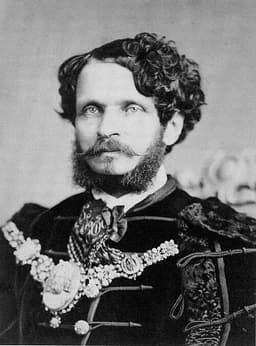
Count Andrassy
Politician · Modern
58.1Total
Basic Information
Born
1950
1823
Died
—
1890
Era
Modern
Modern
Nationality
Solomon Islands
Austria
Occupation
Politician
Politician
Civilization
Other
Western
Score Comparison
Military (10%)
38.9
48.9
Political (20%)
33.6
72.0
Influence (20%)
47.9
60.0
Legacy (20%)
37.5
49.2
Leadership (15%)
48.4
72.0
Strategy (15%)
42.5
43.2
TOTAL
41.8
58.1
Allan Kemakeza — Complete Timeline
2001 AD
Elected Prime Minister of Solomon IslandsPolitical Action◆ Major
Kemakeza was elected Prime Minister of Solomon Islands, succeeding Manasseh Sogavare. His tenure was dominated by the aftermath of the civil war and the need for international intervention.
Prime MinisterSolomon IslandsGovernment
Impact: national
2003 AD
Requested RAMSI interventionPolitical Action
Kemakeza formally requested the Regional Assistance Mission to Solomon Islands (RAMSI), a multinational peacekeeping force led by Australia. RAMSI restored law and order, disarmed militants, and stabilized the country.
RAMSIPeacekeepingSolomon Islands
Impact: regionalconstructive
2008 AD
Convicted of corruptionPolitical Action◆ Major
Kemakeza was convicted of corruption charges related to misappropriation of funds during his time as Prime Minister. He was sentenced to a term of imprisonment, though later released on appeal.
CorruptionConvictionSolomon Islands
Impact: nationaldestructive
Count Andrassy — Complete Timeline
1871 AD
Appointment as Foreign Minister of Austria-HungaryPolitical Action◆ Major
Andrassy was appointed Foreign Minister of Austria-Hungary by Emperor Franz Joseph. He was the first Hungarian to hold this position, reflecting the dual monarchy's structure.
AppointmentForeign PolicyDual Monarchy
Impact: national
1878 AD
Congress of BerlinPolitical Action◆ Major
Andrassy represented Austria-Hungary at the Congress of Berlin, which revised the Treaty of San Stefano. He secured the right to occupy and administer Bosnia and Herzegovina, expanding Habsburg influence in the Balkans.
CongressBalkansTerritorial Expansion
Impact: regionalconstructive
1879 AD
Dual Alliance with GermanyPolitical Action
Andrassy negotiated the Dual Alliance between Austria-Hungary and Germany. This defensive treaty committed both powers to mutual support in case of a Russian attack, forming the core of the Central Powers in World War I.
AllianceGermanyCentral Powers
Impact: regionalconstructive
Resignation as Foreign MinisterPolitical Action◆ Major
Andrassy resigned as Foreign Minister after the Dual Alliance was signed. He cited health reasons and a desire to return to Hungarian politics, but his resignation also reflected tensions within the empire.
ResignationHungaryPolitics
Impact: national
Expert Analysis
Origins
Allan Kemakeza was born in 1950 in the Solomon Islands, a Melanesian archipelago in the Pacific. Little is known about his early family background, but he entered politics through the civil service, serving as a police officer before becoming a member of parliament. His formative years were shaped by the ethnic tensions between Guadalcanal and Malaita islanders, which would later erupt into civil war.
Count Gyula Andrassy was born on March 8, 1823, into an aristocratic Hungarian family. He studied law and traveled abroad, witnessing the 1848 revolutions. His father was a liberal politician, and Andrassy himself participated in the Hungarian Revolution of 1848, after which he was exiled. This experience forged his commitment to Hungarian autonomy within the Habsburg Empire.
Rise to Power
Kemakeza rose to prominence during the Solomon Islands' ethnic conflict (1998-2003). He served as Minister of Police and later became Prime Minister on December 17, 2001, succeeding Manasseh Sogavare. His key turning point was requesting the Regional Assistance Mission to Solomon Islands (RAMSI) in July 2003, a multinational peacekeeping force led by Australia. This decision restored order but also made him dependent on foreign support.
Andrassy returned from exile in 1858 and became a leading figure in Hungarian politics. He was appointed Prime Minister of Hungary in 1867, negotiating the Austro-Hungarian Compromise (Ausgleich) that created the dual monarchy. His political score of 72.0 reflects his skill in navigating imperial politics. In 1871, he became Foreign Minister of Austria-Hungary, the first Hungarian to hold that post. His major turning point was the negotiation of the Dual Alliance with Germany in 1879.
Leadership & Governance
Kemakeza's leadership style was reactive and crisis-driven. He governed with a small cabinet and relied heavily on Australian advisors. His administration was marked by corruption: he was convicted in 2008 for misappropriating funds meant for compensation payments to victims of the conflict. His governance score of 48.4 reflects his inability to build stable institutions. The RAMSI intervention, while effective in disarming militias, undermined local sovereignty.
Andrassy was a skilled diplomat who favored realpolitik. As Foreign Minister, he pursued a policy of containing Russian influence in the Balkans. He secured the occupation of Bosnia and Herzegovina at the Congress of Berlin in 1878, a strategic gain but one that later contributed to tensions. His leadership score of 72.0 indicates his effectiveness in managing the complex Habsburg bureaucracy. He also promoted the Dual Alliance, which shaped European alliances until 1918.
Triumph & Tragedy
Kemakeza's greatest success was requesting RAMSI, which ended the civil war and restored peace. Over 2,000 troops and police were deployed, and the mission successfully disarmed militias. However, his tragedy was his corruption conviction, which tarnished his legacy. He was sentenced to two years in prison in 2008, a rare case of a Pacific leader being held accountable. His total score of 41.8 reflects his mixed record.
Andrassy's triumph was the Dual Alliance, which protected Austria-Hungary from Russian aggression and ensured German support. He also secured the occupation of Bosnia, expanding Habsburg influence. His tragedy was that his policies contributed to the Balkan powder keg. The Dual Alliance did not prevent World War I, and the occupation of Bosnia alienated Serbia. His legacy score of 49.2 shows his impact was significant but not enduringly positive.
Character & Destiny
Kemakeza was described as pragmatic but weak-willed, often deferring to Australian officials. His decision to request RAMSI showed foresight, but his corruption indicated a lack of integrity. His character shaped his destiny: he was a transitional figure who restored order but failed to build a clean government.
Andrassy was aristocratic, ambitious, and cautious. He was a Hungarian nationalist who nonetheless served the Habsburg dynasty. His character allowed him to navigate between Hungarian and Austrian interests, but his caution prevented him from pushing for deeper reforms. His destiny was to be remembered as a key architect of the dual monarchy and the alliance system that led to war.
Legacy
Kemakeza's legacy is mixed. RAMSI is seen as a successful intervention, but his corruption conviction made him a cautionary tale. The Solomon Islands still struggles with governance issues. His influence score of 47.9 reflects his limited impact beyond the region.
Andrassy's legacy is more substantial. The Dual Alliance lasted until 1918 and shaped European history. His role in the Ausgleich cemented Hungarian autonomy within Austria-Hungary. However, his Balkan policies sowed seeds for World War I. Historians rank him as a competent but not visionary statesman, with a total score of 58.1.
Conclusion
Count Andrassy had greater impact than Allan Kemakeza. With a total score of 58.1 versus 41.8, Andrassy's diplomatic achievements influenced European alliances for decades. Kemakeza's role was more localized and marred by corruption. While both faced challenging circumstances, Andrassy's strategic vision in forging the Dual Alliance and navigating great-power politics was historically more consequential. Kemakeza's fate shows that even well-intentioned leadership can be undone by personal failings.
Rankings
🥇
Count AndrassyLeader
Mil: 48.9Pol: 72.0Inf: 60.0
58.1
🥈
Allan Kemakeza
Mil: 38.9Pol: 33.6Inf: 47.9
41.8
+16.3 behind
How This Comparison Works
Algorithm
Each figure is scored on 6 dimensions (0—100 scale) based on structured historical data: Military (10%), Political (20%), Influence (20%), Legacy (20%), Leadership (15%), Strategy (15%). The weighted total produces the final ranking.
Data Sources
Scores are computed from structured sub-indicators in the database. Scale factors adjust for era (Ancient ×0.85, Modern ×1.0) and civilization size (Eastern ×1.05, Other ×0.80) to account for differences in population and military scale.
Maximum 3 Figures
Comparisons are limited to 2—3 figures to ensure readability and statistical meaningfulness.
Error Margins
±5 points per dimension — Sub-scores are derived from historical records with inherent uncertainty. Two figures within 5 points on a dimension should be considered roughly equivalent in that area.
Total Score Accuracy
±3 points overall — The weighted combination of 6 dimensions produces a total score with approximately ±3 points of uncertainty. Differences of less than 3 points are not statistically significant— the figures are effectively tied.
Known Limitations
- Historical records are incomplete and uneven across civilizations
- Figures from oral-tradition societies may be underrepresented
- Occupation labels can misclassify multi-role figures
- Scores measure capability and impact, not moral character
- Quantitative scoring is a comparison tool, not absolute truth
Capability Radar
Military (10%) — Battles & Warfare
Battles
19
26
Win Rate
24
34
Expansion
30
37
Political (20%) — Governance & Reform
Reform
20
60
Diplomacy
35
75
Economy
15
55
Influence (20%) — Cultural & Global Reach
Cultural
5
40
Global
10
50
Legacy (20%) — Historical Impact
Historical
15
55
Longevity
10
40
Leadership (15%) — Power & Stability
Tenure
30
65
Stability
10
60
Strategy (15%) — Tactics & Innovation
Strategy
28
40
Tactics
35
41
Reform
38
43
Similar Comparisons
Comments & Discussion
No comments yet. Be the first to share your thoughts!