Loading...
This comparison has not been analyzed yet.
One-time AI generation (~1 minute). Scores and timeline are already available below.
Alija Izetbegovic vs Okubo Toshimichi
Okubo Toshimichi leads by 6.6 pts · 2 figures compared
…
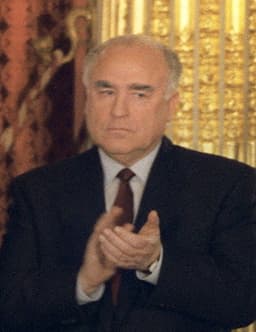
Alija Izetbegovic
Politician · Modern
55.3Total

Okubo Toshimichi
Politician · Modern
61.9Total
Basic Information
Born
1925
1830
Died
—
1878
Era
Modern
Modern
Nationality
Bosnia
Japan
Occupation
Politician
Politician
Civilization
Western
Eastern
Score Comparison
Military (10%)
49.9
14.9
Political (20%)
68.0
82.0
Influence (20%)
58.0
55.0
Legacy (20%)
48.3
72.0
Leadership (15%)
62.2
79.8
Strategy (15%)
42.5
43.7
TOTAL
55.3
61.9
Alija Izetbegovic — Complete Timeline
1984 AD
Publication of 'Islam Between East and West'Cultural
Izetbegović published 'Islam Between East and West', a philosophical work arguing for the compatibility of Islam with modernity. The book, written while he was imprisoned by the Yugoslav regime, influenced Islamic thought in the Balkans and shaped his political ideology.
PublicationIslamic PhilosophyBalkans
Impact: regionalconstructive
1990 AD
Election as First President of Independent BosniaPolitical Action◆ Major
Alija Izetbegovi
ElectionIndependenceBosnia
Impact: nationalconstructive
1992 AD
Siege of SarajevoWar◆ Major
Izetbegović led the Bosnian government during the Siege of Sarajevo by Bosnian Serb forces from April 1992 to February 1996. The siege, the longest of a capital city in modern warfare, resulted in over 11,000 deaths and became a symbol of the war's brutality.
SiegeWarSarajevo
Impact: regionaltragic
Declaration of Bosnian IndependencePolitical Action◆ Major
Izetbegović declared Bosnia and Herzegovina's independence from Yugoslavia on March 3, 1992, following a referendum boycotted by Bosnian Serbs. This triggered the Bosnian War, as Serb forces, backed by the Yugoslav Army, launched a campaign to carve out a Serb republic.
IndependenceWarYugoslav Breakup
Impact: regionalconstructive
1995 AD
Signing of the Dayton AgreementPolitical Action◆ Major
Izetbegović signed the Dayton Peace Agreement on December 14, 1995, ending the Bosnian War. The agreement created a decentralized state with two entities: the Federation of Bosnia and Herzegovina and the Republika Srpska, which Izetbegović accepted as a necessary compromise.
Peace TreatyBosnian WarDiplomacy
Impact: regional
Okubo Toshimichi — Complete Timeline
1873 AD
Implemented the Land Tax ReformReform◆ Major
As Finance Minister, Okubo oversaw the Land Tax Reform of 1873, which replaced the feudal land tax with a modern monetary tax system. This reform stabilized government finances and facilitated the transition to a capitalist economy.
Economic ReformTaxationModernization
Impact: nationalconstructive
Established the Home MinistryReform◆ Major
Okubo created the Home Ministry (Naimusho) to centralize administrative control over local governments. The ministry oversaw police, public works, and local administration, strengthening the central government's authority.
Administrative ReformCentralizationMeiji Government
Impact: nationalconstructive
Led the Seikanron Debate (Conquest of Korea)Political Action
Okubo argued against the proposal to invade Korea (Seikanron), advocating instead for domestic reforms. His opposition prevailed, leading to the resignation of Saigo Takamori and other expansionists, and solidifying the Meiji government's focus on internal modernization.
Meiji GovernmentForeign PolicyDomestic Reform
Impact: nationalconstructive
1877 AD
Suppressed the Satsuma RebellionWar◆ Major
Okubo, as a key leader of the Meiji government, directed the suppression of the Satsuma Rebellion led by Saigo Takamori. The government's victory ended the last major samurai uprising and consolidated imperial rule.
Satsuma RebellionCivil WarMeiji Government
Impact: national
1878 AD
Assassinated at KioizakaPolitical Action◆ Major
Okubo was assassinated by samurai from the Satsuma domain who opposed his policies of centralization and Westernization. His death removed a key figure from the Meiji government, but his reforms continued.
AssassinationPolitical ViolenceMeiji Government
Impact: nationaltragic
This comparison has not been analyzed yet.
One-time AI generation (~1 minute). Scores and timeline are already available below.
Rankings
🥇
Okubo ToshimichiLeader
Mil: 14.9Pol: 82.0Inf: 55.0
61.9
🥈
Alija Izetbegovic
Mil: 49.9Pol: 68.0Inf: 58.0
55.3
+6.6 behind
How This Comparison Works
Algorithm
Each figure is scored on 6 dimensions (0—100 scale) based on structured historical data: Military (10%), Political (20%), Influence (20%), Legacy (20%), Leadership (15%), Strategy (15%). The weighted total produces the final ranking.
Data Sources
Scores are computed from structured sub-indicators in the database. Scale factors adjust for era (Ancient ×0.85, Modern ×1.0) and civilization size (Eastern ×1.05, Other ×0.80) to account for differences in population and military scale.
Maximum 3 Figures
Comparisons are limited to 2—3 figures to ensure readability and statistical meaningfulness.
Error Margins
±5 points per dimension — Sub-scores are derived from historical records with inherent uncertainty. Two figures within 5 points on a dimension should be considered roughly equivalent in that area.
Total Score Accuracy
±3 points overall — The weighted combination of 6 dimensions produces a total score with approximately ±3 points of uncertainty. Differences of less than 3 points are not statistically significant— the figures are effectively tied.
Known Limitations
- Historical records are incomplete and uneven across civilizations
- Figures from oral-tradition societies may be underrepresented
- Occupation labels can misclassify multi-role figures
- Scores measure capability and impact, not moral character
- Quantitative scoring is a comparison tool, not absolute truth
Capability Radar
Military (10%) — Battles & Warfare
Battles
31
10
Win Rate
29
10
Expansion
35
30
Political (20%) — Governance & Reform
Reform
55
90
Diplomacy
60
80
Economy
30
80
Influence (20%) — Cultural & Global Reach
Cultural
45
70
Global
45
60
Legacy (20%) — Historical Impact
Historical
50
80
Longevity
40
70
Leadership (15%) — Power & Stability
Tenure
40
60
Stability
20
70
Strategy (15%) — Tactics & Innovation
Strategy
36
20
Tactics
43
10
Reform
43
70
Similar Comparisons
Comments & Discussion
No comments yet. Be the first to share your thoughts!