Loading...
Alija Izetbegovic vs Leon Blum
Alija Izetbegovic leads by 0.9 pts · 2 figures compared
…
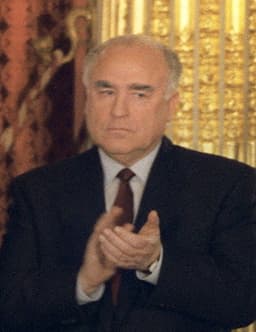
Alija Izetbegovic
Politician · Modern
55.3Total
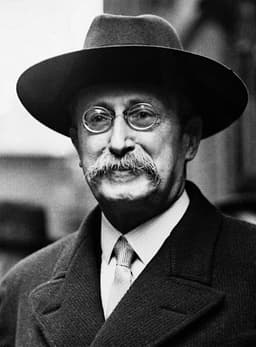
Leon Blum
Politician · Modern
54.4Total
Basic Information
Born
1925
1872
Died
—
1950
Era
Modern
Modern
Nationality
Bosnia
France
Occupation
Politician
Politician
Civilization
Western
Western
Score Comparison
Military (10%)
49.9
50.0
Political (20%)
68.0
70.0
Influence (20%)
58.0
55.0
Legacy (20%)
48.3
52.0
Leadership (15%)
62.2
53.2
Strategy (15%)
42.5
41.8
TOTAL
55.3
54.4
Alija Izetbegovic — Complete Timeline
1984 AD
Publication of 'Islam Between East and West'Cultural
Izetbegović published 'Islam Between East and West', a philosophical work arguing for the compatibility of Islam with modernity. The book, written while he was imprisoned by the Yugoslav regime, influenced Islamic thought in the Balkans and shaped his political ideology.
PublicationIslamic PhilosophyBalkans
Impact: regionalconstructive
1990 AD
Election as First President of Independent BosniaPolitical Action◆ Major
Alija Izetbegovi
ElectionIndependenceBosnia
Impact: nationalconstructive
1992 AD
Siege of SarajevoWar◆ Major
Izetbegović led the Bosnian government during the Siege of Sarajevo by Bosnian Serb forces from April 1992 to February 1996. The siege, the longest of a capital city in modern warfare, resulted in over 11,000 deaths and became a symbol of the war's brutality.
SiegeWarSarajevo
Impact: regionaltragic
Declaration of Bosnian IndependencePolitical Action◆ Major
Izetbegović declared Bosnia and Herzegovina's independence from Yugoslavia on March 3, 1992, following a referendum boycotted by Bosnian Serbs. This triggered the Bosnian War, as Serb forces, backed by the Yugoslav Army, launched a campaign to carve out a Serb republic.
IndependenceWarYugoslav Breakup
Impact: regionalconstructive
1995 AD
Signing of the Dayton AgreementPolitical Action◆ Major
Izetbegović signed the Dayton Peace Agreement on December 14, 1995, ending the Bosnian War. The agreement created a decentralized state with two entities: the Federation of Bosnia and Herzegovina and the Republika Srpska, which Izetbegović accepted as a necessary compromise.
Peace TreatyBosnian WarDiplomacy
Impact: regional
Leon Blum — Complete Timeline
1936 AD
Matignon AgreementsReform◆ Major
Blum's government mediated the Matignon Agreements between employers and unions, ending a wave of strikes. The agreements mandated paid vacations, a 40-hour work week, and wage increases, transforming French labor relations and establishing key welfare state elements.
Labor ReformStrikesSocial Policy
Impact: nationalprogressive
Formation of the Popular Front GovernmentPolitical Action
Blum became Prime Minister of France leading the Popular Front coalition, a left-wing alliance of Socialists, Radicals, and Communists. His government enacted the Matignon Agreements, granting workers paid leave, a 40-hour work week, and collective bargaining rights, significantly advancing labor rights.
Popular FrontLabor RightsSocial Reform
Impact: nationalprogressive
1938 AD
Second Popular Front GovernmentPolitical Action
Blum formed a short-lived second government in March 1938, lasting only one month. He sought to broaden the coalition to address the growing threat of Nazi Germany but failed to secure support for his economic and defense policies, leading to his resignation.
Popular FrontGovernment FormationThird Republic
Impact: national
1942 AD
Arrest and Trial at RiomPolitical Action◆ Major
The Vichy regime arrested Blum and put him on trial at Riom for allegedly causing France's defeat in 1940. Blum used the trial to defend the Third Republic and criticize the Vichy government. The trial was suspended in 1943, and Blum was deported to Buchenwald concentration camp.
Vichy FranceTrialWorld War II
Impact: nationaltragic
1946 AD
Interim Presidency of the Provisional GovernmentPolitical Action
After World War II, Blum served as interim President of the Provisional Government of the French Republic from December 1946 to January 1947. He oversaw the transition to the Fourth Republic and worked to stabilize the post-war economy and political system.
Fourth RepublicPost-WarProvisional Government
Impact: nationalconstructive
Expert Analysis
Origins
Alija Izetbegovic was born on August 8, 1925, in Bosanski Samac, Bosnia, into a Muslim family with a tradition of scholarship. His father was a respected merchant. Izetbegovic studied law at the University of Sarajevo but was expelled for his political activities. He later earned a degree in agronomy. His early life was marked by World War II and the rise of communism in Yugoslavia, which shaped his anti-totalitarian views. Leon Blum was born on April 9, 1872, in Paris, France, into a prosperous Jewish family. His father was a successful merchant. Blum studied law at the Sorbonne and became a noted literary critic and lawyer. His intellectual background influenced his political career, leading him to socialism after the Dreyfus affair.
Rise to Power
Izetbegovic rose to prominence as a dissident under Tito's Yugoslavia. He was imprisoned in 1946 for his involvement with the "Young Muslims" organization. In 1970, he published "Islam Between East and West," which established him as a Muslim intellectual. He founded the Party of Democratic Action (SDA) in 1990, winning the first multi-party elections on November 18, 1990, and becoming president of the Presidency of Bosnia and Herzegovina. Blum entered politics later in life, joining the French Socialist Party in 1902. He became a leader after Jean Jaures' assassination in 1914. Blum's rise culminated in the 1936 elections where the Popular Front coalition won, making him Prime Minister on June 4, 1936.
Leadership & Governance
Izetbegovic's leadership was defined by the Bosnian War (1992-1995). He advocated for a multi-ethnic state but faced secessionist Serb forces. His governance was wartime, relying on diplomacy and military strategy. He signed the Dayton Agreement in 1995, ending the war but creating a weak central state. Blum's governance focused on social reform. His 1936 government passed the Matignon Agreements, introducing paid vacations, a 40-hour workweek, and collective bargaining. However, his economic policies faced inflation and capital flight. Blum scored 53.2 in leadership, while Izetbegovic scored 62.2, reflecting Izetbegovic's longer tenure in a crisis environment.
Triumph & Tragedy
Izetbegovic's greatest triumph was achieving Bosnian independence and preserving the state through the Dayton Agreement. His tragedy was the war's devastation: over 100,000 killed, 2 million displaced, and the Srebrenica genocide. Blum's triumph was implementing landmark labor reforms that shaped French social policy. His tragedy was the failure to address the rise of Nazi Germany; his government's pacifism and the Munich Agreement (1938) weakened France. Blum also failed to stop the Spanish Civil War's non-intervention policy.
Character & Destiny
Izetbegovic was a thoughtful, principled leader, often seen as a philosopher-president. His Islamic background influenced his vision of a multi-religious Bosnia. His calm demeanor contrasted with the war's brutality. Blum was an intellectual, a man of letters with a strong moral compass. He was a pacifist and democratic socialist, which sometimes led to indecision. Both men faced imprisonment: Izetbegovic under Tito, Blum under Vichy. Their characters shaped their fates: Izetbegovic's pragmatism achieved peace; Blum's ideals limited his effectiveness.
Legacy
Izetbegovic's legacy is mixed. He is revered by Bosniaks as the founder of modern Bosnia but criticized by Serbs and Croats for centralization. His political score of 68.0 and influence score of 58.0 reflect his impact on Balkan history. Blum's legacy is more positive in France; he is seen as a father of the welfare state. His political score is 70.0, influence 55.0. Both have enduring legacies: Izetbegovic's Bosnia remains fragile; Blum's social reforms endure.
Conclusion
Alija Izetbegovic had a greater impact on world history than Leon Blum. Despite a lower political score (68.0 vs 70.0), his role in the Bosnian War and the Dayton Agreement shaped post-Cold War Europe. Blum's reforms were significant but limited to France. Izetbegovic's total score of 55.3 edges Blum's 54.4. His leadership during a genocide and survival of a state under siege outweighs Blum's domestic achievements. Izetbegovic's legacy is more consequential, as the Bosnian conflict influenced NATO intervention and international law. Thus, Izetbegovic is the more impactful figure.
Rankings
🥇
Alija IzetbegovicLeader
Mil: 49.9Pol: 68.0Inf: 58.0
55.3
🥈
Leon Blum
Mil: 50.0Pol: 70.0Inf: 55.0
54.4
+0.9 behind
How This Comparison Works
Algorithm
Each figure is scored on 6 dimensions (0—100 scale) based on structured historical data: Military (10%), Political (20%), Influence (20%), Legacy (20%), Leadership (15%), Strategy (15%). The weighted total produces the final ranking.
Data Sources
Scores are computed from structured sub-indicators in the database. Scale factors adjust for era (Ancient ×0.85, Modern ×1.0) and civilization size (Eastern ×1.05, Other ×0.80) to account for differences in population and military scale.
Maximum 3 Figures
Comparisons are limited to 2—3 figures to ensure readability and statistical meaningfulness.
Error Margins
±5 points per dimension — Sub-scores are derived from historical records with inherent uncertainty. Two figures within 5 points on a dimension should be considered roughly equivalent in that area.
Total Score Accuracy
±3 points overall — The weighted combination of 6 dimensions produces a total score with approximately ±3 points of uncertainty. Differences of less than 3 points are not statistically significant— the figures are effectively tied.
Known Limitations
- Historical records are incomplete and uneven across civilizations
- Figures from oral-tradition societies may be underrepresented
- Occupation labels can misclassify multi-role figures
- Scores measure capability and impact, not moral character
- Quantitative scoring is a comparison tool, not absolute truth
Capability Radar
Military (10%) — Battles & Warfare
Battles
31
28
Win Rate
29
29
Expansion
35
37
Political (20%) — Governance & Reform
Reform
55
75
Diplomacy
60
65
Economy
30
60
Influence (20%) — Cultural & Global Reach
Cultural
45
50
Global
45
50
Legacy (20%) — Historical Impact
Historical
50
55
Longevity
40
45
Leadership (15%) — Power & Stability
Tenure
40
60
Stability
20
40
Strategy (15%) — Tactics & Innovation
Strategy
36
37
Tactics
43
39
Reform
43
44
Similar Comparisons
Comments & Discussion
No comments yet. Be the first to share your thoughts!