Loading...
Alija Izetbegovic vs Palmiro Togliatti
Palmiro Togliatti leads by 7.3 pts · 2 figures compared
…
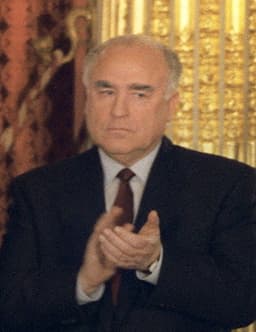
Alija Izetbegovic
Politician · Modern
55.3Total
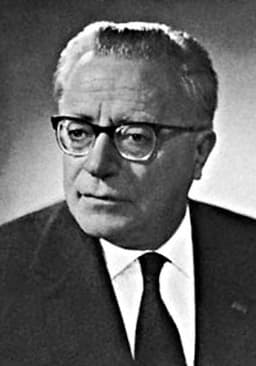
Palmiro Togliatti
Politician · Modern
62.6Total
Basic Information
Born
1925
1893
Died
—
1964
Era
Modern
Modern
Nationality
Bosnia
Italy
Occupation
Politician
Politician
Civilization
Western
Western
Score Comparison
Military (10%)
49.9
50.0
Political (20%)
68.0
70.0
Influence (20%)
58.0
72.0
Legacy (20%)
48.3
52.0
Leadership (15%)
62.2
78.0
Strategy (15%)
42.5
43.5
TOTAL
55.3
62.6
Alija Izetbegovic — Complete Timeline
1984 AD
Publication of 'Islam Between East and West'Cultural
Izetbegović published 'Islam Between East and West', a philosophical work arguing for the compatibility of Islam with modernity. The book, written while he was imprisoned by the Yugoslav regime, influenced Islamic thought in the Balkans and shaped his political ideology.
PublicationIslamic PhilosophyBalkans
Impact: regionalconstructive
1990 AD
Election as First President of Independent BosniaPolitical Action◆ Major
Alija Izetbegovi
ElectionIndependenceBosnia
Impact: nationalconstructive
1992 AD
Siege of SarajevoWar◆ Major
Izetbegović led the Bosnian government during the Siege of Sarajevo by Bosnian Serb forces from April 1992 to February 1996. The siege, the longest of a capital city in modern warfare, resulted in over 11,000 deaths and became a symbol of the war's brutality.
SiegeWarSarajevo
Impact: regionaltragic
Declaration of Bosnian IndependencePolitical Action◆ Major
Izetbegović declared Bosnia and Herzegovina's independence from Yugoslavia on March 3, 1992, following a referendum boycotted by Bosnian Serbs. This triggered the Bosnian War, as Serb forces, backed by the Yugoslav Army, launched a campaign to carve out a Serb republic.
IndependenceWarYugoslav Breakup
Impact: regionalconstructive
1995 AD
Signing of the Dayton AgreementPolitical Action◆ Major
Izetbegović signed the Dayton Peace Agreement on December 14, 1995, ending the Bosnian War. The agreement created a decentralized state with two entities: the Federation of Bosnia and Herzegovina and the Republika Srpska, which Izetbegović accepted as a necessary compromise.
Peace TreatyBosnian WarDiplomacy
Impact: regional
Palmiro Togliatti — Complete Timeline
1921 AD
Founding of the Italian Communist PartyPolitical Action◆ Major
Togliatti was a founding member of the Italian Communist Party (PCI) at its congress in Livorno. The party split from the Socialist Party over adherence to the Comintern. Togliatti became a central leader, guiding the party through the Fascist period and exile.
CommunismPartyComintern
Impact: nationalconstructive
1944 AD
Salerno TurnPolitical Action◆ Major
Togliatti, returning from exile in the Soviet Union, announced the 'Salerno Turn'
CommunismCoalitionWorld War II
Impact: nationalconstructive
1948 AD
Assassination Attempt on TogliattiPolitical Action◆ Major
Togliatti was shot and seriously wounded by a right-wing student outside the Italian Parliament. The attack triggered a general strike and widespread protests, but the PCI leadership called for calm to avoid civil war. Togliatti survived and returned to lead the party.
Assassination AttemptCold WarStrike
Impact: nationaltragic
1956 AD
Togliatti's Doctrine of PolycentrismPolitical Action◆ Major
After Khrushchev's secret speech denouncing Stalin, Togliatti developed the theory of 'polycentrism' in the communist movement. He argued for national paths to socialism independent of Moscow. This doctrine influenced the Eurocommunist movement and distanced the PCI from Soviet control.
CommunismEurocommunismSoviet Union
Impact: globalconstructive
Expert Analysis
Origins
Alija Izetbegović was born on August 8, 1925, in Bosanski Šamac, Bosnia, into a Muslim Bosniak family. His father was a merchant, and the family moved to Sarajevo in 1928. Izetbegović studied law at the University of Sarajevo, but his education was interrupted by World War II. He was imprisoned by the Yugoslav communist regime in 1946 for his involvement with the "Young Muslims" organization, serving three years. After release, he completed his law degree and worked as a lawyer and legal advisor. His philosophical work, "Islam Between East and West" (1983), argued for the compatibility of Islam with modernity, leading to another prison term in 1983 for "hostile propaganda." This experience solidified his role as a dissident.
Palmiro Togliatti was born on March 26, 1893, in Genoa, Italy, into a middle-class family. His father was a clerk. Togliatti studied law at the University of Turin, where he met Antonio Gramsci and became involved in socialist politics. He joined the Italian Socialist Party in 1914 and was a founding member of the Italian Communist Party (PCI) in 1921 at the Livorno Congress. Forced into exile by Mussolini's fascist regime in 1926, Togliatti spent years in the Soviet Union, France, and Spain, working as a Comintern official. His time in exile shaped his political strategy, emphasizing party discipline and alliance-building.
Rise to Power
Izetbegović's rise began with the collapse of communism in Yugoslavia. In 1990, he founded the Party of Democratic Action (SDA), representing Bosniaks. In the first multi-party elections on November 18, 1990, the SDA won the largest share of seats, and Izetbegović was elected president of the seven-member Presidency of Bosnia and Herzegovina. His leadership was immediately challenged by rising ethnic tensions. On March 3, 1992, he declared Bosnia's independence from Yugoslavia after a referendum boycotted by Bosnian Serbs. This triggered the Bosnian War, and Izetbegović became the wartime leader of the Bosnian government.
Togliatti's rise was through the communist apparatus. After Mussolini's fall in 1943, Togliatti returned to Italy in 1944 and announced the "Salerno Turn," a policy of cooperation with other anti-fascist parties, including monarchists and Christian Democrats. This decision secured communist participation in the post-war government. He served as Minister of Justice and later as Deputy Prime Minister. After the 1948 elections, the PCI became the largest opposition party, and Togliatti led it as a mass movement, avoiding armed insurrection and focusing on parliamentary and organizational strength.
Leadership & Governance
Izetbegović's leadership was tested by war. He governed from a besieged Sarajevo, maintaining the authority of the Bosnian government despite limited military resources. His political score of 68.0 reflects his ability to navigate international diplomacy, securing recognition and support from the West and Muslim countries. However, his leadership was criticized for a lack of military strategy (score 42.5) and occasional indecisiveness. He prioritized the survival of a multi-ethnic Bosnia, but the war forced compromises, including the Dayton Agreement, which created a decentralized state with two entities, effectively legitimizing ethnic divisions.
Togliatti's governance was through party leadership rather than national office. He transformed the PCI into a disciplined, mass party with 2 million members by the 1950s. His political score of 70.0 reflects his skill in maneuvering within the communist movement. He developed the doctrine of "polycentrism" after Stalin's death, arguing that communist parties should adapt to national conditions, not follow Moscow blindly. This allowed the PCI to become the largest communist party in the West while maintaining a degree of independence. His leadership score of 78.0 is higher than Izetbegović's 62.2, reflecting his long-term organizational success.
Triumph & Tragedy
Izetbegović's greatest triumph was achieving Bosnian independence and ending the war through the Dayton Agreement in 1995. He preserved a Bosnian state, despite ethnic cleansing and genocide. His tragedy was the human cost: over 100,000 dead, the Siege of Sarajevo lasting 1,425 days, and the creation of a dysfunctional state. The Srebrenica genocide occurred under his watch, though his military control was limited. His legacy score of 48.3 reflects the contested nature of his leadership.
Togliatti's triumph was building the PCI into a powerful political force, influencing Italian politics for decades. He survived Stalin's purges and adapted communism to Western Europe. His tragedy was the party's failure to achieve power; the PCI never governed nationally. Additionally, his loyalty to Stalin, even after the Soviet leader's crimes were exposed, tarnished his reputation. His military score of 50.0 is negligible, but his influence score of 72.0 is high.
Character & Destiny
Izetbegović was a philosopher-politician, idealistic but pragmatic in crisis. His book "Islam Between East and West" shows his attempt to reconcile faith with modernity. He was often isolated, with few trusted advisors. His destiny was shaped by the collapse of Yugoslavia and the outbreak of war, forcing him to lead a desperate defense. His strategy score of 42.5 indicates a weakness in military planning, but his political resilience kept the Bosnian state alive.
Togliatti was a shrewd, disciplined apparatchik. He survived exile and Stalin's purges by never challenging the Soviet line openly, yet he quietly promoted polycentrism. His character was cautious and calculating, avoiding armed struggle in Italy. His destiny was to lead a party that was always in opposition, never the tragic hero but the durable organizer. His total score of 62.6 is higher than Izetbegović's 55.3.
Legacy
Izetbegović's legacy is the independent Bosnian state and the Dayton framework. He is remembered as the father of Bosnia by Bosniaks, but criticized by Serbs and Croats for centralization. His Islamic philosophy influences Bosniak political thought. The country remains divided, with weak institutions and ethnic tensions.
Togliatti's legacy is the Italian Communist Party's unique path, which eventually evolved into the Democratic Party. His polycentrism influenced Eurocommunism. He is remembered as a master strategist who kept communism alive in Italy, but also as a Stalinist loyalist. His impact on Italian politics is enduring; the PCI's organizational model influenced later parties.
Conclusion
Palmiro Togliatti had greater impact in terms of political organization and long-term influence on European communism. His total score of 62.6 exceeds Izetbegović's 55.3, reflecting higher scores in political (70.0 vs 68.0), influence (72.0 vs 58.0), and leadership (78.0 vs 62.2). While Izetbegović led a nation through war and secured independence, his legacy is more localized and contested. Togliatti's strategies shaped an entire political movement that outlasted him. Therefore, Togliatti's historical significance is greater.
Rankings
🥇
Palmiro TogliattiLeader
Mil: 50.0Pol: 70.0Inf: 72.0
62.6
🥈
Alija Izetbegovic
Mil: 49.9Pol: 68.0Inf: 58.0
55.3
+7.3 behind
How This Comparison Works
Algorithm
Each figure is scored on 6 dimensions (0—100 scale) based on structured historical data: Military (10%), Political (20%), Influence (20%), Legacy (20%), Leadership (15%), Strategy (15%). The weighted total produces the final ranking.
Data Sources
Scores are computed from structured sub-indicators in the database. Scale factors adjust for era (Ancient ×0.85, Modern ×1.0) and civilization size (Eastern ×1.05, Other ×0.80) to account for differences in population and military scale.
Maximum 3 Figures
Comparisons are limited to 2—3 figures to ensure readability and statistical meaningfulness.
Error Margins
±5 points per dimension — Sub-scores are derived from historical records with inherent uncertainty. Two figures within 5 points on a dimension should be considered roughly equivalent in that area.
Total Score Accuracy
±3 points overall — The weighted combination of 6 dimensions produces a total score with approximately ±3 points of uncertainty. Differences of less than 3 points are not statistically significant— the figures are effectively tied.
Known Limitations
- Historical records are incomplete and uneven across civilizations
- Figures from oral-tradition societies may be underrepresented
- Occupation labels can misclassify multi-role figures
- Scores measure capability and impact, not moral character
- Quantitative scoring is a comparison tool, not absolute truth
Capability Radar
Military (10%) — Battles & Warfare
Battles
31
26
Win Rate
29
29
Expansion
35
36
Political (20%) — Governance & Reform
Reform
55
75
Diplomacy
60
80
Economy
30
60
Influence (20%) — Cultural & Global Reach
Cultural
45
65
Global
45
60
Legacy (20%) — Historical Impact
Historical
50
70
Longevity
40
65
Leadership (15%) — Power & Stability
Tenure
40
85
Stability
20
55
Strategy (15%) — Tactics & Innovation
Strategy
36
38
Tactics
43
42
Reform
43
45
Similar Comparisons
Comments & Discussion
No comments yet. Be the first to share your thoughts!