Loading...
Alija Izetbegovic vs Borges de Medeiros
Alija Izetbegovic leads by 0.2 pts · 2 figures compared
…
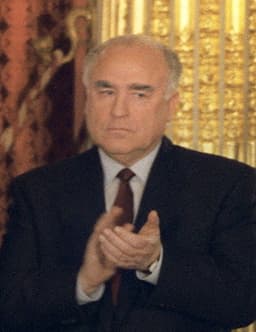
Alija Izetbegovic
Politician · Modern
55.3Total
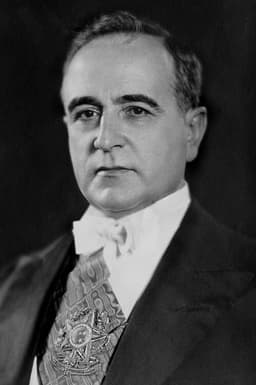
Borges de Medeiros
Politician · Modern
55.1Total
Basic Information
Born
1925
1863
Died
—
1961
Era
Modern
Modern
Nationality
Bosnia
Brazil
Occupation
Politician
Politician
Civilization
Western
Western
Score Comparison
Military (10%)
49.9
47.1
Political (20%)
68.0
68.0
Influence (20%)
58.0
51.8
Legacy (20%)
48.3
45.8
Leadership (15%)
62.2
78.0
Strategy (15%)
42.5
40.5
TOTAL
55.3
55.1
Alija Izetbegovic — Complete Timeline
1984 AD
Publication of 'Islam Between East and West'Cultural
Izetbegović published 'Islam Between East and West', a philosophical work arguing for the compatibility of Islam with modernity. The book, written while he was imprisoned by the Yugoslav regime, influenced Islamic thought in the Balkans and shaped his political ideology.
PublicationIslamic PhilosophyBalkans
Impact: regionalconstructive
1990 AD
Election as First President of Independent BosniaPolitical Action◆ Major
Alija Izetbegovi
ElectionIndependenceBosnia
Impact: nationalconstructive
1992 AD
Siege of SarajevoWar◆ Major
Izetbegović led the Bosnian government during the Siege of Sarajevo by Bosnian Serb forces from April 1992 to February 1996. The siege, the longest of a capital city in modern warfare, resulted in over 11,000 deaths and became a symbol of the war's brutality.
SiegeWarSarajevo
Impact: regionaltragic
Declaration of Bosnian IndependencePolitical Action◆ Major
Izetbegović declared Bosnia and Herzegovina's independence from Yugoslavia on March 3, 1992, following a referendum boycotted by Bosnian Serbs. This triggered the Bosnian War, as Serb forces, backed by the Yugoslav Army, launched a campaign to carve out a Serb republic.
IndependenceWarYugoslav Breakup
Impact: regionalconstructive
1995 AD
Signing of the Dayton AgreementPolitical Action◆ Major
Izetbegović signed the Dayton Peace Agreement on December 14, 1995, ending the Bosnian War. The agreement created a decentralized state with two entities: the Federation of Bosnia and Herzegovina and the Republika Srpska, which Izetbegović accepted as a necessary compromise.
Peace TreatyBosnian WarDiplomacy
Impact: regional
Borges de Medeiros — Complete Timeline
1893 AD
Led the Federalist RevolutionWar◆ Major
Borges de Medeiros was a leader of the Federalist Revolution in Rio Grande do Sul, a rebellion against the central government. The revolt was eventually suppressed, but it established his reputation as a political and military leader.
RebellionFederalismCivil War
Impact: regional
1898 AD
Elected President of Rio Grande do SulPolitical Action◆ Major
Borges de Medeiros was elected President of the state of Rio Grande do Sul. He would hold this position for 25 years, becoming one of the longest-serving state leaders in Brazilian history. His rule was marked by stability and modernization.
State GovernmentRio Grande do SulLong Tenure
Impact: regional
1900 AD
Implemented the 'Borgismo' Political MachinePolitical Action◆ Major
Borges de Medeiros established a powerful political machine known as 'Borgismo' in Rio Grande do Sul. This system used patronage, electoral manipulation, and control of state institutions to maintain his power for decades.
Political MachinePatronagePower
Impact: regional
1930 AD
Supported the 1930 RevolutionPolitical Action◆ Major
Borges de Medeiros initially supported the Liberal Alliance and Get
RevolutionPolitical SupportVargas
Impact: national
Expert Analysis
Origins
Alija Izetbegović was born on August 8, 1925, in Bosanski Šamac, Bosnia, into a Muslim family with a tradition of civic engagement. His father was a merchant, and the family moved to Sarajevo in 1928. Izetbegović studied law at the University of Sarajevo, but his education was interrupted by World War II. He was influenced by Islamic thought and Western philosophy, later authoring 'Islam Between East and West.' In contrast, Antônio Augusto Borges de Medeiros was born on April 19, 1863, in Caçapava do Sul, Rio Grande do Sul, Brazil, into a landowning family. He studied law at the Faculty of Law of São Paulo, graduating in 1886. His early career was as a lawyer and journalist, and he entered politics as a member of the Partido Republicano Rio-grandense (PRR). Both men were shaped by their regions' struggles: Izetbegović by multi-ethnic Bosnia under communist Yugoslavia, Borges by the federalist conflicts of southern Brazil.
Rise to Power
Izetbegović's political rise began in the 1980s when he was imprisoned for his Islamic activism. In 1990, as the Yugoslav federation crumbled, he founded the Party of Democratic Action (SDA) and won the presidency of Bosnia's collective presidency in elections on November 18, 1990. His leadership was defined by the push for independence, culminating in the declaration of independence on March 3, 1992, after a referendum boycotted by Bosnian Serbs. This triggered the Bosnian War. Borges de Medeiros rose through the PRR, becoming president of Rio Grande do Sul in 1898. He consolidated power through the 'Borgismo' political machine, which used patronage and electoral manipulation. He led the Federalist Revolution of 1923-1924 against the central government, but negotiated a settlement that allowed him to remain in power. His longevity was unmatched: he served as state president for 25 years, from 1898 to 1923, with a brief interruption.
Leadership & Governance
Izetbegović led Bosnia during the Siege of Sarajevo (1992-1996), the longest siege of a capital in modern warfare. He maintained a multi-ethnic government under extreme duress, but his reliance on Islamic rhetoric alienated some non-Muslims. He negotiated the Dayton Agreement in 1995, which ended the war but created a complex, decentralized state. His governance style was consensus-seeking but often indecisive. Borges de Medeiros was a master of political control. His 'Borgismo' system involved appointing local allies, manipulating elections, and suppressing dissent. He implemented some infrastructure projects but maintained an oligarchic order. His leadership score of 78.0 reflects his effectiveness in maintaining power, while Izetbegović's 62.2 indicates his struggles in chaotic conditions. In contrast, Izetbegović's political score of 68.0 equals Borges's 68.0, but Izetbegović operated in a more volatile environment.
Triumph & Tragedy
Izetbegović's greatest triumph was securing Bosnian independence and ending the war through the Dayton Agreement. However, the tragedy was the war's toll: over 100,000 dead, the genocide at Srebrenica, and a fragile state. His failure to prevent ethnic cleansing and his later support for a unitary state undermined Dayton's power-sharing. Borges de Medeiros's triumph was his 25-year rule and the stability he brought to Rio Grande do Sul. His tragedy was the Federalist Revolution's suppression and his eventual ouster after supporting the 1930 Revolution. He was forced into exile after Vargas centralized power. Both men faced the tragedy of their systems' fragility: Izetbegović's Bosnia remains divided; Borges's political machine collapsed after his departure.
Character & Destiny
Izetbegović was a philosopher-politician, idealistic and principled but sometimes rigid. His Islamic identity shaped his worldview, but he sought a multi-ethnic state. His character is reflected in his score of 58.0 for influence, showing his limited global impact. Borges de Medeiros was a pragmatic caudilho, flexible in methods but fixed on power. His leadership score of 78.0 indicates his skill in manipulation, but his strategy score of 40.5 shows his short-term focus. Izetbegović's strategy score of 42.5 is similar, indicating both were tacticians rather than grand strategists. Their destinies were shaped by larger forces: Izetbegović by the collapse of Yugoslavia, Borges by Brazilian centralization.
Legacy
Izetbegović is remembered as the father of independent Bosnia, but his legacy is contested. The Bosniak community honors him, while Serbs and Croats view him as a nationalist. His ideas on Islam and modernity continue to influence debates. Borges de Medeiros is a regional icon in Rio Grande do Sul, but nationally obscure. His 'Borgismo' is studied as a case of state-level authoritarianism. In terms of overall impact, Izetbegović scored 55.3 total versus Borges's 55.1, a narrow margin. However, Izetbegović's influence score of 58.0 exceeds Borges's 51.8, reflecting his role in European history.
Conclusion
While Borges de Medeiros was a more effective leader in the narrow sense of political survival, Alija Izetbegović had greater historical impact. Izetbegović shaped a nation's birth amid war and genocide, and his decisions at Dayton still affect millions. Borges de Medeiros, despite 25 years of rule, left a system that died with him. Izetbegović's legacy, though flawed, is of continental significance. Therefore, Alija Izetbegović had greater impact.
Rankings
🥇
Alija IzetbegovicLeader
Mil: 49.9Pol: 68.0Inf: 58.0
55.3
🥈
Borges de Medeiros
Mil: 47.1Pol: 68.0Inf: 51.8
55.1
+0.2 behind
How This Comparison Works
Algorithm
Each figure is scored on 6 dimensions (0—100 scale) based on structured historical data: Military (10%), Political (20%), Influence (20%), Legacy (20%), Leadership (15%), Strategy (15%). The weighted total produces the final ranking.
Data Sources
Scores are computed from structured sub-indicators in the database. Scale factors adjust for era (Ancient ×0.85, Modern ×1.0) and civilization size (Eastern ×1.05, Other ×0.80) to account for differences in population and military scale.
Maximum 3 Figures
Comparisons are limited to 2—3 figures to ensure readability and statistical meaningfulness.
Error Margins
±5 points per dimension — Sub-scores are derived from historical records with inherent uncertainty. Two figures within 5 points on a dimension should be considered roughly equivalent in that area.
Total Score Accuracy
±3 points overall — The weighted combination of 6 dimensions produces a total score with approximately ±3 points of uncertainty. Differences of less than 3 points are not statistically significant— the figures are effectively tied.
Known Limitations
- Historical records are incomplete and uneven across civilizations
- Figures from oral-tradition societies may be underrepresented
- Occupation labels can misclassify multi-role figures
- Scores measure capability and impact, not moral character
- Quantitative scoring is a comparison tool, not absolute truth
Capability Radar
Military (10%) — Battles & Warfare
Battles
31
31
Win Rate
29
33
Expansion
35
38
Political (20%) — Governance & Reform
Reform
55
60
Diplomacy
60
55
Economy
30
50
Influence (20%) — Cultural & Global Reach
Cultural
45
30
Global
45
20
Legacy (20%) — Historical Impact
Historical
50
40
Longevity
40
35
Leadership (15%) — Power & Stability
Tenure
40
75
Stability
20
65
Strategy (15%) — Tactics & Innovation
Strategy
36
37
Tactics
43
38
Reform
43
42
Similar Comparisons
Comments & Discussion
No comments yet. Be the first to share your thoughts!