Loading...
Alfonso XIII vs Tukoji Rao Holkar II
Alfonso XIII leads by 1.7 pts · 2 figures compared
…
Alfonso XIII
Emperor · Modern
47.1Total
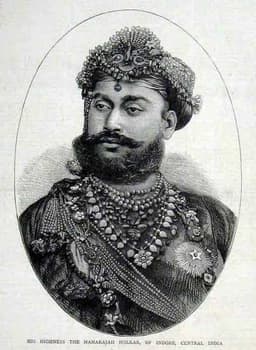
Tukoji Rao Holkar II
Emperor · Modern
45.4Total
Basic Information
Born
1886
1835
Died
1941
1886
Era
Modern
Modern
Nationality
Spain
India
Occupation
Emperor
Emperor
Civilization
Western
Indian
Score Comparison
Military (10%)
10.2
20.0
Political (20%)
61.3
43.7
Influence (20%)
54.9
48.6
Legacy (20%)
45.0
37.5
Leadership (15%)
53.2
74.0
Strategy (15%)
39.6
42.3
TOTAL
47.1
45.4
Alfonso XIII — Complete Timeline
1886 AD
Accession to the thronePolitical Action◆ Major
Alfonso XIII became King of Spain at birth, as his father Alfonso XII had died. His mother Maria Cristina served as regent until he came of age in 1902.
SuccessionRegencyMonarchy
Impact: national
1898 AD
Spanish-American WarWar
During Alfonso XIII's minority, Spain lost the Spanish-American War, ceding Cuba, Puerto Rico, and the Philippines to the United States. This disaster led to the Generation of '98 and a crisis of national identity.
WarColonial LossCrisis
Impact: globaltragic
1921 AD
Rif War and the Disaster of AnnualWar◆ Major
Spanish forces suffered a catastrophic defeat at Annual in Morocco, with thousands killed by Rifian rebels. The disaster severely damaged the monarchy's prestige and led to political crisis.
Colonial WarDefeatMorocco
Impact: regionaltragic
1923 AD
Dictatorship of Primo de RiveraPolitical Action◆ Major
Alfonso XIII supported General Miguel Primo de Rivera's coup, which established a military dictatorship. The king's association with the dictatorship further eroded support for the monarchy.
DictatorshipCoupMonarchy
Impact: nationaldestructive
1931 AD
Exile after the Second RepublicPolitical Action
After the Republican victory in municipal elections, Alfonso XIII left Spain without abdicating. The Second Spanish Republic was proclaimed, and he lived in exile until his death in 1941.
ExileRepublicEnd of Monarchy
Impact: nationaltragic
Tukoji Rao Holkar II — Complete Timeline
1835 AD
Accession to Indore ThronePolitical Action
Tukoji Rao Holkar II became Maharaja of Indore at age 0 after the death of his father, Malhar Rao Holkar III. His reign was initially under a regency, and he later assumed full powers, ruling until his death in 1886.
IndoreSuccession
1857 AD
Support for British During Indian Rebellion of 1857War◆ Major
Tukoji Rao Holkar II provided military support to the British East India Company during the Indian Rebellion of 1857. He sent troops to assist in suppressing the uprising in Central India, maintaining Indore's loyalty to the British.
Indian Rebellion of 1857British Raj
Impact: regional
1886 AD
Construction of Lal Bagh PalaceCultural
Tukoji Rao Holkar II began the construction of the Lal Bagh Palace in Indore, a grand neoclassical residence. The palace was completed after his death and became a symbol of Holkar wealth and architectural patronage.
IndoreArchitecture
constructive
Expert Analysis
Origins
Alfonso XIII was born in 1886, posthumous son of Alfonso XII, making him king from birth. His mother, Maria Christina of Austria, served as regent until he came of age in 1902. The young king inherited a Spain reeling from the loss of its colonies and a fractured political system. His upbringing was steeped in military tradition and conservative values, shaping his later reliance on the army.
Tukoji Rao Holkar II was born in 1835, becoming Maharaja of Indore at age 9 after the death of his father, Malhar Rao Holkar III. His early reign was under a regency. The Holkar dynasty, Maratha rulers, had been subordinated to the British East India Company after the Anglo-Maratha Wars. Tukoji Rao received a traditional princely education, emphasizing loyalty to the British and management of a princely state.
Rise to Power
Alfonso XIII assumed full powers in 1902 at 16. His early reign was marked by political instability, with alternating conservative and liberal governments. He actively intervened in politics, using his constitutional powers to appoint and dismiss governments. His involvement deepened during the crisis over the Moroccan protectorate, where he pushed for military expansion.
Tukoji Rao Holkar II ascended the throne in 1844 under a regency, but his real rise came during the Indian Rebellion of 1857. He provided crucial military support to the British, sending troops to help suppress the uprising. This earned him British favor, securing his position and allowing him to rule with minimal interference. His score of 43.7 in political acumen reflects his ability to navigate colonial power structures.
Leadership & Governance
Alfonso XIII's leadership style was interventionist and erratic. He supported the dictatorship of Primo de Rivera in 1923, believing it would restore order. This undermined constitutional governance and alienated democratic forces. He scored 53.2 in leadership, but his reliance on military solutions backfired. His governance lacked reform, and Spain's social tensions festered.
Tukoji Rao Holkar II, with a leadership score of 74.0, was a capable administrator. He focused on infrastructure, building roads, schools, and the Lal Bagh Palace. He maintained stability in Indore through cooperation with the British, but his rule was autocratic within the princely state. He did not pursue significant social or political reforms, keeping the traditional feudal structure intact.
Triumph & Tragedy
Alfonso XIII's greatest triumph was surviving the World War I period as a neutral power, which brought economic benefits. However, his tragedy was the Disaster of Annual in 1921, where Spanish forces suffered catastrophic losses in Morocco. The ensuing scandal damaged the monarchy, and his support for Primo de Rivera's dictatorship sealed his fate. In 1931, after Republican victories in municipal elections, he went into exile without abdicating, leading to the Second Spanish Republic.
Tukoji Rao Holkar II's triumph was his successful management of the 1857 Rebellion, securing his throne and British patronage. He also began construction of the grand Lal Bagh Palace, a symbol of his wealth. His tragedy lies in his legacy as a collaborator with colonial rule, which tarnishes his reputation in post-independence India. He scored 37.5 in legacy, reflecting limited long-term impact.
Character & Destiny
Alfonso XIII was impulsive and indecisive, often swayed by military advisors. His character—a mix of personal charm and political stubbornness—led him to trust the army over democratic institutions. This ultimately cost him his throne. Historians assess him as a well-meaning but ineffective monarch who failed to adapt to modern politics.
Tukoji Rao Holkar II was pragmatic and loyal to the British, a survival strategy for a prince under colonial rule. He was cautious and conservative, avoiding risks. His destiny was to be a relatively minor figure in Indian history, overshadowed by larger independence movements. His character ensured stability but not greatness.
Legacy
Alfonso XIII's legacy is complex: he presided over Spain's decline and the end of the monarchy. His actions paved the way for the Second Republic and, indirectly, the Spanish Civil War. His influence score of 54.9 reflects his role in shaping 20th-century Spain, even if negatively.
Tukoji Rao Holkar II's legacy is mostly architectural and administrative. The Lal Bagh Palace is a tourist attraction, and his support for the British is a footnote in colonial history. His overall score of 45.4 places him below Alfonso XIII's 47.1, but the gap is narrow.
Conclusion
Alfonso XIII had a greater impact on history due to his role in a major European nation during a critical period. His decisions—supporting a dictatorship, mishandling the Moroccan war—had far-reaching consequences for Spain. Tukoji Rao Holkar II, while a competent ruler, operated within the constraints of British colonialism and left a smaller footprint. The score difference of 1.7 points reflects this, but Alfonso XIII's influence on the trajectory of Spain is more significant. Therefore, Alfonso XIII is the more historically important figure.
Rankings
🥇
Alfonso XIIILeader
Mil: 10.2Pol: 61.3Inf: 54.9
47.1
🥈
Tukoji Rao Holkar II
Mil: 20.0Pol: 43.7Inf: 48.6
45.4
+1.7 behind
How This Comparison Works
Algorithm
Each figure is scored on 6 dimensions (0—100 scale) based on structured historical data: Military (10%), Political (20%), Influence (20%), Legacy (20%), Leadership (15%), Strategy (15%). The weighted total produces the final ranking.
Data Sources
Scores are computed from structured sub-indicators in the database. Scale factors adjust for era (Ancient ×0.85, Modern ×1.0) and civilization size (Eastern ×1.05, Other ×0.80) to account for differences in population and military scale.
Maximum 3 Figures
Comparisons are limited to 2—3 figures to ensure readability and statistical meaningfulness.
Error Margins
±5 points per dimension — Sub-scores are derived from historical records with inherent uncertainty. Two figures within 5 points on a dimension should be considered roughly equivalent in that area.
Total Score Accuracy
±3 points overall — The weighted combination of 6 dimensions produces a total score with approximately ±3 points of uncertainty. Differences of less than 3 points are not statistically significant— the figures are effectively tied.
Known Limitations
- Historical records are incomplete and uneven across civilizations
- Figures from oral-tradition societies may be underrepresented
- Occupation labels can misclassify multi-role figures
- Scores measure capability and impact, not moral character
- Quantitative scoring is a comparison tool, not absolute truth
Capability Radar
Military (10%) — Battles & Warfare
Battles
10
10
Win Rate
10
10
Expansion
5
5
Political (20%) — Governance & Reform
Reform
30
30
Diplomacy
40
40
Economy
30
35
Influence (20%) — Cultural & Global Reach
Cultural
30
20
Global
30
10
Legacy (20%) — Historical Impact
Historical
40
20
Longevity
30
15
Leadership (15%) — Power & Stability
Tenure
60
60
Stability
20
25
Strategy (15%) — Tactics & Innovation
Strategy
10
10
Tactics
10
10
Reform
20
15
Similar Comparisons
Comments & Discussion
No comments yet. Be the first to share your thoughts!