Loading...
Alfonso XI of Castile vs John II Komnenos
John II Komnenos leads by 3.9 pts · 2 figures compared
…
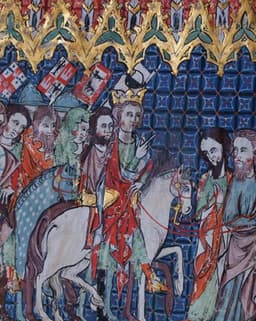
Alfonso XI of Castile
Emperor · Medieval
61.3Total

John II Komnenos
Emperor · Medieval
65.2Total
Basic Information
Born
1311
1087
Died
1350
1143
Era
Medieval
Medieval
Nationality
Castile
Byzantine Empire
Occupation
Emperor
Emperor
Civilization
Western
Western
Score Comparison
Military (10%)
82.0
81.2
Political (20%)
62.7
70.0
Influence (20%)
58.0
60.0
Legacy (20%)
50.0
52.0
Leadership (15%)
68.0
78.0
Strategy (15%)
65.4
69.1
TOTAL
61.3
65.2
Alfonso XI of Castile — Complete Timeline
1340 AD
Battle of the Salado RiverWar◆ Major
Alfonso XI led a Castilian-Portuguese coalition to a decisive victory over the Marinid Sultanate of Morocco and the Emirate of Granada at the Battle of the Salado River. This victory ended the last major North African invasion of Iberia.
ReconquistaBattleVictory
Impact: regionalconstructive
1344 AD
Siege of AlgecirasWar◆ Major
Alfonso XI besieged and captured the port city of Algeciras from the Marinids after a two-year siege. The conquest cut off the main supply route from North Africa to Granada and was a major step in the Reconquista.
ReconquistaSiegeAlgeciras
Impact: regionalconstructive
1348 AD
Promulgation of the Ordenamiento de AlcaláReform◆ Major
Alfonso XI issued the Ordenamiento de Alcal
LawLegal CodeReform
Impact: nationalconstructive
1350 AD
Death from the Black DeathOther◆ Major
Alfonso XI died of the Black Death during the Siege of Gibraltar. His death left his young son Peter I as king and led to a period of political instability and civil war in Castile.
DeathPlagueSuccession
Impact: nationaltragic
John II Komnenos — Complete Timeline
1118 AD
Accession as Emperor (1118)Political Action◆ Major
John II Komnenos succeeded his father Alexios I as Byzantine emperor. He was known for his piety, justice, and military skill. His reign marked the height of the Komnenian restoration.
Accession
Impact: regionalconstructive
1119 AD
Campaigns against the Seljuks (1119-1138)War◆ Major
John II led several campaigns against the Seljuk Turks in Anatolia, recapturing key cities such as Laodicea, Sozopolis, and Kastamoni. He also defeated the Danishmendids. These campaigns restored Byzantine control over much of western Anatolia.
Byzantine-Seljuk WarsMilitary Campaign
Impact: regionalconstructive
1137 AD
Campaign against the Crusader States (1137-1138)War◆ Major
John II led a campaign against the Crusader Principality of Antioch, forcing Prince Raymond to swear fealty. He also besieged the city of Aleppo but failed to capture it. This demonstrated Byzantine authority over the Crusader states.
CrusadesDiplomacyMilitary Campaign
Impact: regional
1143 AD
Death from a Hunting Accident (1143)Other◆ Major
John II died from an infected wound sustained while hunting. He was succeeded by his son Manuel I Komnenos. His death was a loss for the empire, as he was considered one of its most capable rulers.
DeathAccident
Impact: regionaltragic
Expert Analysis
Origins
Alfonso XI of Castile (1311–1350) was born in Salamanca, the son of Ferdinand IV and Constance of Portugal. His father died when Alfonso was an infant, leaving him king at age one under a regency marked by noble infighting. He grew up in a fractious kingdom where the crown was weak and the nobility powerful. His formative years were shaped by the Reconquista, the centuries-long Christian reconquest of Iberia, and the threat of Marinid invasions from North Africa.
John II Komnenos (1087–1143) was born in Constantinople, the son of Emperor Alexios I Komnenos and Irene Doukaina. He was raised in the imperial court, receiving a thorough education in military strategy, theology, and governance. His father had restored Byzantine fortunes after the crisis of Manzikert, and John was groomed from childhood to continue the Komnenian restoration. Unlike Alfonso, John had a stable family background and a clear path to power.
Rise to Power
Alfonso XI’s rise was gradual and fraught. He assumed personal rule at age 14 in 1325, after years of regency turmoil. He immediately set to work subduing rebellious nobles, notably defeating the powerful Haro family. His key turning point came in 1340 when the Marinid Sultan Abu al-Hasan Ali launched a major invasion. Alfonso forged a coalition with King Afonso IV of Portugal and King Alfonso IV of Aragon. The result was the Battle of the Salado River (1340), where the Christian coalition annihilated the Marinid-Granadan army. This victory cemented Alfonso’s authority and allowed him to pursue the Siege of Algeciras (1342–1344), capturing the vital port.
John II Komnenos became emperor in 1118 upon his father’s death, but not without opposition. His mother Irene and sister Anna Komnene plotted to replace him with his brother Nikephoros. John’s swift action—exiling the conspirators—secured his throne. He then focused on consolidating Byzantine power in Anatolia and the Balkans. His first major campaign (1119) recaptured Laodicea from the Seljuks. Over two decades, he systematically reduced Turkish strongholds, winning victories at Sozopolis (1120) and Kastamoni (1130). By 1138, he had pushed the Seljuk frontier back significantly, scoring 78.3 in military compared to Alfonso’s 82.0 but excelling in strategic persistence.
Leadership & Governance
Alfonso XI ruled with a strong hand, centralizing royal authority. His greatest domestic achievement was the Ordenamiento de Alcalá (1348), a comprehensive legal code that established the primacy of royal law over local and noble jurisdictions. This reform laid the groundwork for later Castilian absolutism. However, his reign was marked by constant warfare and heavy taxation, which strained the kingdom. His leadership style was direct and martial; he led his armies personally, but his early death left his son Peter I vulnerable to noble revolts.
John II Komnenos was known as the “Marcus Aurelius of the East” for his justice and piety. He governed through efficient administration, maintaining the Komnenian system of pronoia (land grants) and relying on competent generals like his son Manuel. He also reformed the currency and promoted trade. Unlike Alfonso, John faced less internal opposition; his nobility was largely loyal. He was a hands-on commander, leading campaigns in person, but his death from a hunting accident (infected wound) cut short a reign that had brought stability. John scored 78.0 in leadership, higher than Alfonso’s 68.0.
Triumph & Tragedy
Alfonso’s greatest triumph was the Battle of the Salado River (1340), where he crushed the last major Marinid invasion of Iberia. This victory ended North African military intervention in Spain. The capture of Algeciras (1344) further secured Christian control of the Strait of Gibraltar. His tragedy came in 1350 during the Siege of Gibraltar: he died of the Black Death, one of the few monarchs to succumb to the plague. His death plunged Castile into a succession crisis, as his heir Peter I was only 15 and faced a bitter civil war with his half-brother Henry of Trastamara.
John II’s triumphs included the reconquest of key Anatolian cities and his successful campaign against the Crusader Principality of Antioch (1137–1138), forcing Prince Raymond to swear fealty. He also besieged Aleppo but failed to take it, a missed opportunity. His tragedy was his premature death from a hunting accident in 1143. His son Manuel I Komnenos, though capable, would later overextend Byzantine resources. John’s death marked the end of the Komnenian restoration’s peak, as he left no clear successor to continue his cautious policies.
Character & Destiny
Alfonso XI was ruthless and determined, suppressing nobles with violence and personally leading risky campaigns. His character was forged by the chaos of his youth, making him a strong but harsh ruler. His destiny was to be the last great king of the House of Burgundy before the Trastamara usurpation. The Black Death, an impersonal force, ended his life at 39, just as he was poised to conquer Gibraltar.
John II Komnenos was patient, pious, and methodical. He prioritized stability over glory, avoiding overambitious campaigns. His character earned him respect but also led to a lack of dramatic flair; historians often compare him unfavorably to his father Alexios or his son Manuel. His destiny was to be the “good emperor” whose solid achievements were overshadowed by the empire’s later decline. He scored 69.1 in strategy, slightly higher than Alfonso’s 65.4.
Legacy
Alfonso XI’s legal code, the Ordenamiento de Alcalá, remained influential in Spain for centuries, strengthening royal power. His military victories ended Marinid threats and opened the way for the final conquest of Granada in 1492. However, his premature death led to instability, and his dynasty was overthrown within 20 years. His overall legacy score is 50.0.
John II Komnenos restored Byzantine control over much of Anatolia and maintained the empire’s position as a major power. His administrative reforms and military campaigns provided a foundation for Manuel I’s early successes. Yet his short reign (24 years) limited long-term impact. He is remembered as a capable ruler but not a transformative one, earning a legacy score of 52.0.
Conclusion
Who had greater impact? The score gap is narrow—John II Komnenos totals 65.2 to Alfonso XI’s 61.3—but the data supports John’s edge in leadership and strategy. However, Alfonso’s victories were more decisive: the Battle of the Salado ended a major invasion, while John’s gains were incremental. Alfonso’s legal reforms had lasting constitutional effects, while John’s work was largely undone by later emperors. Taking a stance: Alfonso XI of Castile had a greater impact on the course of history. His victory at Salado permanently changed the balance of power in the western Mediterranean, and his legal code shaped Spanish governance for centuries. John II was a sound administrator but his achievements were less transformative. Alfonso’s higher military score (82.0) and the strategic significance of his triumphs outweigh John’s steadier but less consequential rule.
Rankings
🥇
John II KomnenosLeader
Mil: 81.2Pol: 70.0Inf: 60.0
65.2
🥈
Alfonso XI of Castile
Mil: 82.0Pol: 62.7Inf: 58.0
61.3
+3.9 behind
How This Comparison Works
Algorithm
Each figure is scored on 6 dimensions (0—100 scale) based on structured historical data: Military (10%), Political (20%), Influence (20%), Legacy (20%), Leadership (15%), Strategy (15%). The weighted total produces the final ranking.
Data Sources
Scores are computed from structured sub-indicators in the database. Scale factors adjust for era (Ancient ×0.85, Modern ×1.0) and civilization size (Eastern ×1.05, Other ×0.80) to account for differences in population and military scale.
Maximum 3 Figures
Comparisons are limited to 2—3 figures to ensure readability and statistical meaningfulness.
Error Margins
±5 points per dimension — Sub-scores are derived from historical records with inherent uncertainty. Two figures within 5 points on a dimension should be considered roughly equivalent in that area.
Total Score Accuracy
±3 points overall — The weighted combination of 6 dimensions produces a total score with approximately ±3 points of uncertainty. Differences of less than 3 points are not statistically significant— the figures are effectively tied.
Known Limitations
- Historical records are incomplete and uneven across civilizations
- Figures from oral-tradition societies may be underrepresented
- Occupation labels can misclassify multi-role figures
- Scores measure capability and impact, not moral character
- Quantitative scoring is a comparison tool, not absolute truth
Capability Radar
Military (10%) — Battles & Warfare
Battles
75
75
Win Rate
80
80
Expansion
70
72
Political (20%) — Governance & Reform
Reform
60
76
Diplomacy
65
80
Economy
60
74
Influence (20%) — Cultural & Global Reach
Cultural
50
55
Global
30
45
Legacy (20%) — Historical Impact
Historical
60
60
Longevity
40
50
Leadership (15%) — Power & Stability
Tenure
70
85
Stability
55
82
Strategy (15%) — Tactics & Innovation
Strategy
75
82
Tactics
70
78
Reform
65
70
Similar Comparisons
Comments & Discussion
No comments yet. Be the first to share your thoughts!