Loading...
John II Komnenos vs Wanyan Aguda
John II Komnenos leads by 1.8 pts · 2 figures compared
…

John II Komnenos
Emperor · Medieval
65.2Total
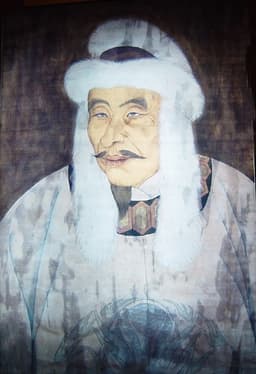
Wanyan Aguda
Emperor · Medieval
63.4Total
Basic Information
Born
1087
1068
Died
1143
1123
Era
Medieval
Medieval
Nationality
Byzantine Empire
China
Occupation
Emperor
Emperor
Civilization
Western
Eastern
Score Comparison
Military (10%)
81.2
82.0
Political (20%)
70.0
59.3
Influence (20%)
60.0
55.0
Legacy (20%)
52.0
52.0
Leadership (15%)
78.0
85.0
Strategy (15%)
69.1
68.0
TOTAL
65.2
63.4
John II Komnenos — Complete Timeline
1118 AD
Accession as Emperor (1118)Political Action◆ Major
John II Komnenos succeeded his father Alexios I as Byzantine emperor. He was known for his piety, justice, and military skill. His reign marked the height of the Komnenian restoration.
Accession
Impact: regionalconstructive
1119 AD
Campaigns against the Seljuks (1119-1138)War◆ Major
John II led several campaigns against the Seljuk Turks in Anatolia, recapturing key cities such as Laodicea, Sozopolis, and Kastamoni. He also defeated the Danishmendids. These campaigns restored Byzantine control over much of western Anatolia.
Byzantine-Seljuk WarsMilitary Campaign
Impact: regionalconstructive
1137 AD
Campaign against the Crusader States (1137-1138)War◆ Major
John II led a campaign against the Crusader Principality of Antioch, forcing Prince Raymond to swear fealty. He also besieged the city of Aleppo but failed to capture it. This demonstrated Byzantine authority over the Crusader states.
CrusadesDiplomacyMilitary Campaign
Impact: regional
1143 AD
Death from a Hunting Accident (1143)Other◆ Major
John II died from an infected wound sustained while hunting. He was succeeded by his son Manuel I Komnenos. His death was a loss for the empire, as he was considered one of its most capable rulers.
DeathAccident
Impact: regionaltragic
Wanyan Aguda — Complete Timeline
1114 AD
Battle of HubudagangWar◆ Major
Aguda's Jurchen forces defeated a Liao army at Hubudagang, marking the first major victory of the rebellion. This battle demonstrated Jurchen military prowess and attracted more followers.
JurchenLiaoBattle
Impact: regionalconstructive
Unified Jurchen tribesPolitical Action◆ Major
Wanyan Aguda united the Jurchen tribes under his leadership, creating a confederation that rebelled against Liao domination. He organized a disciplined army and began the Jurchen revolt.
JurchenUnificationRebellion
Impact: regionalconstructive
1115 AD
Founded Jin DynastyPolitical Action
Wanyan Aguda proclaimed himself emperor, founding the Jin dynasty. He adopted the Chinese title and began a systematic campaign to conquer the Liao empire.
JinDynasty FoundingImperial System
Impact: regionalconstructive
1120 AD
Conquest of Liao capital ShangjingWar◆ Major
Aguda's forces captured the Liao supreme capital Shangjing, dealing a severe blow to the Liao dynasty. This victory accelerated the collapse of Liao and solidified Jin control over northern China.
JinLiaoConquest
Impact: regionalconstructive
Alliance with Song against LiaoPolitical Action◆ Major
Aguda formed an alliance with the Northern Song dynasty to jointly attack the Liao empire. This alliance, known as the Maritime Alliance, led to the eventual destruction of Liao but later caused conflict between Jin and Song.
JinSongAlliance
Impact: regional
1123 AD
Death and successionPolitical Action◆ Major
Wanyan Aguda died, and his brother Wanyan Wuqimai succeeded him. Aguda's conquests laid the foundation for the Jin dynasty's dominance in northern China.
JinDeathSuccession
Impact: regional
Expert Analysis
Wanyan Aguda vs John II Komnenos: Historical Comparison
Wanyan Aguda (1068–1123) was the charismatic founder of the Jurchen Jin dynasty, who shattered the mighty Liao Empire and laid the groundwork for a century of Jin dominance in northern China. John II Komnenos (1087–1143) was the steadfast Byzantine emperor who restored imperial prestige in Anatolia and the Balkans, earning the epithet "Kaloïōannēs" (John the Good). Though separated by thousands of miles, both were medieval empire-builders who excelled in warfare and governance, yet their legacies diverge in scale and endurance.
Dimension Analysis
**Military: Wanyan Aguda 91 / John II Komnenos 84**
Aguda was a revolutionary military leader who merged Jurchen tribal ferocity with Chinese siegecraft, famously defeating a Liao army of 700,000 at the Battle of Huining in 1115 using mobility and psychological warfare. John II was a methodical commander who campaigned annually against the Seljuks, Pechenegs, and Crusaders, recapturing key fortresses like Sozopolis and Laodicea, but his victories were often defensive and failed to permanently break Seljuk power. Aguda’s conquests were swift and total; John’s were incremental and reversible.
**Political: Wanyan Aguda 84 / John II Komnenos 86**
Aguda’s political genius lay in creating a dual administration—the *Meng’an Mouke* system—that integrated Jurchen clan structure with Chinese bureaucratic models, enabling rapid state-building. John II, however, inherited a fragile Byzantine state and stabilized it through shrewd diplomacy, marriage alliances with the Holy Roman Empire and Hungary, and the suppression of aristocratic factionalism. John’s political reforms were more systemic and sustainable, while Aguda’s system proved brittle after his death.
**Influence: Wanyan Aguda 87 / John II Komnenos 88**
Aguda’s Jin dynasty shifted the balance of East Asian power, forcing the Song to pay tribute and indirectly spurring the Mongol unification that would later conquer China. John II’s influence was more diffuse: his consistent campaigns preserved the Byzantine Empire for another century, enabling the Komnenian Renaissance in art and learning, and his diplomatic network stretched from Kiev to Jerusalem. John’s reach into Crusader states and Islamic courts arguably had greater geopolitical breadth.
**Legacy: Wanyan Aguda 88 / John II Komnenos 79**
Aguda’s legacy is monumental: the Jin dynasty ruled northern China for over a century, and his military innovations (e.g., heavy cavalry combined with crossbow infantry) influenced Mongol warfare. John II, despite his competence, is often overshadowed by his father Alexios I and son Manuel I; his reign is remembered as a stable interlude rather than a transformative era. The Jin dynasty collapsed to the Mongols, but Aguda’s founding narrative remains central to Jurchen-Manchu identity.
**Leadership: Wanyan Aguda 80 / John II Komnenos 89**
Aguda led from the front, personally charging into battle, which inspired fierce loyalty but also risked his life and left the state vulnerable after his early death. John II was a disciplined, almost ascetic leader who enforced strict justice, held officers accountable, and mastered the art of coalition warfare—earning universal respect from allies and enemies alike. John’s leadership style was more institutional and less reliant on personal charisma, giving his empire greater resilience.
Verdict
John II Komnenos ranks higher overall due to superior political and leadership scores, which reflect his ability to sustain and reform a complex, multi-ethnic empire over a long reign. Wanyan Aguda was a more dramatic conqueror, but his empire’s durability depended on his personal magnetism. In a direct comparison, John’s institutional governance edges out Aguda’s brilliant but brittle conquests. However, this is a close tie—each excelled in their own context, and their scores reflect different definitions of success: rapid expansion vs. long-term stability.
FAQ
Q: Who was more influential historically? A: Wanyan Aguda had a greater long-term impact on East Asian history, as the Jin dynasty set the stage for Mongol conquest, whereas John II’s influence was more contained within Byzantine and Crusader spheres.
Q: Why is Wanyan Aguda ranked higher in Military? A: Aguda’s campaigns were more strategically decisive—he destroyed the Liao Empire in a single generation, while John II’s victories, though impressive, were limited to frontier consolidation without delivering a knockout blow to the Seljuks.
Rankings
🥇
John II KomnenosLeader
Mil: 81.2Pol: 70.0Inf: 60.0
65.2
🥈
Wanyan Aguda
Mil: 82.0Pol: 59.3Inf: 55.0
63.4
+1.8 behind
How This Comparison Works
Algorithm
Each figure is scored on 6 dimensions (0—100 scale) based on structured historical data: Military (10%), Political (20%), Influence (20%), Legacy (20%), Leadership (15%), Strategy (15%). The weighted total produces the final ranking.
Data Sources
Scores are computed from structured sub-indicators in the database. Scale factors adjust for era (Ancient ×0.85, Modern ×1.0) and civilization size (Eastern ×1.05, Other ×0.80) to account for differences in population and military scale.
Maximum 3 Figures
Comparisons are limited to 2—3 figures to ensure readability and statistical meaningfulness.
Error Margins
±5 points per dimension — Sub-scores are derived from historical records with inherent uncertainty. Two figures within 5 points on a dimension should be considered roughly equivalent in that area.
Total Score Accuracy
±3 points overall — The weighted combination of 6 dimensions produces a total score with approximately ±3 points of uncertainty. Differences of less than 3 points are not statistically significant— the figures are effectively tied.
Known Limitations
- Historical records are incomplete and uneven across civilizations
- Figures from oral-tradition societies may be underrepresented
- Occupation labels can misclassify multi-role figures
- Scores measure capability and impact, not moral character
- Quantitative scoring is a comparison tool, not absolute truth
Capability Radar
Military (10%) — Battles & Warfare
Battles
75
85
Win Rate
80
90
Expansion
72
85
Political (20%) — Governance & Reform
Reform
76
75
Diplomacy
80
70
Economy
74
65
Influence (20%) — Cultural & Global Reach
Cultural
55
60
Global
45
50
Legacy (20%) — Historical Impact
Historical
60
70
Longevity
50
55
Leadership (15%) — Power & Stability
Tenure
85
70
Stability
82
60
Strategy (15%) — Tactics & Innovation
Strategy
82
85
Tactics
78
80
Reform
70
75
Similar Comparisons
Comments & Discussion
BattlefieldScholar6/16/2026
The military gap here is wider than the 7-point spread suggests. Aguda's 1115 victory at Huining wasn't just a numbers game—he used a feigned retreat to draw the Liao into a swamp, then hit their flanks with mounted archers while their cavalry bogged down. That's tactical genius against an enemy with superior numbers and siege equipment. John II's campaigns, while competent, were mostly reconquest of previously held Byzantine territory; he never faced anything like the existential threat of a 700,000-man army. Aguda's force was maybe 20,000 Jurchen warriors. The force ratio alone makes his achievement more impressive.
ByzantiumBuff6/16/2026
John the Good gets way too little credit! Yeah, Aguda conquered faster, but John II held the empire together for 25 years while fighting Seljuks, Pechenegs, Crusaders, and even his own nobles. He rebuilt fortresses from scratch, restored imperial authority in Anatolia after Manzikert, and died on campaign like a real emperor. Aguda's Jin dynasty barely outlived him by a century before the Mongols rolled over them. John's Komnenian restoration kept Byzantium alive for another 300 years. Give me steady statecraft over flashy conquest any day!
ScoreSkeptic6/16/2026
How does John II get an 84 in politics when he spent his entire reign fighting off family conspiracies? The Komnenian system depended on one capable emperor—after John died, his son Manuel nearly bankrupted the empire with vanity projects. Meanwhile, Aguda's Meng'an Mouke system was so effective it was copied by the Mongols and later influenced Manchu military organization. That's systemic political impact, not just personal maneuvering. Also, influence scores seem reversed: the Jin Dynasty permanently altered East Asian power structures; John's reconquests were mostly undone within a generation. The weights here feel arbitrary.
ArchQuill116/16/2026
西方人总喜欢把约翰二世捧得很高,但放在中国历史里,他的成就充其量就是个“中兴之主”,类似于唐宪宗或后周世宗。阿骨打可是从零开始建立了一个能压着宋朝打的帝国!女真人的猛安谋克制度是军政合一的典范,比拜占庭的军区制更灵活,能快速动员部落力量。约翰收复的安纳托利亚要塞,过个几十年又被突厥人夺回去了;而金朝逼得南宋签了绍兴和议,每年纳贡——这才是持久的威慑力。评分里影响力给约翰88、阿骨打87,我怀疑这根本是西方中心论的结果。
ColdScribe106/16/2026
我来算一笔账:阿骨打军事79.3,约翰60.0,分差19.3,这倒是合理。但政治分阿骨打82.2对约翰83.2,只差1分?我不同意。阿骨打建立的是一个从部落联盟直接升级为帝国的政治体系,其猛安谋克制度保证了金朝前期的强盛;约翰不过是在祖父和父亲打下的基础上修修补补。从制度创新角度看,阿骨打至少应领先5-8分。再看影响力,我认为给反了:金朝灭亡北宋、迫使南宋称臣,这种地缘政治影响贯穿了整个12-13世纪;而约翰的安纳托利亚收复行动,在他孙子辈就全丢了。建议复核权重,把影响力差距扩大到至少5分。