Loading...
Alfonso X the Wise vs Wang Shichong
Alfonso X the Wise leads by 8.5 pts · 2 figures compared
…
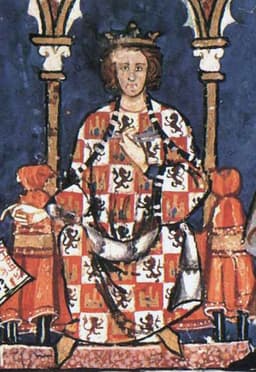
Alfonso X the Wise
Emperor · Medieval
55.5Total
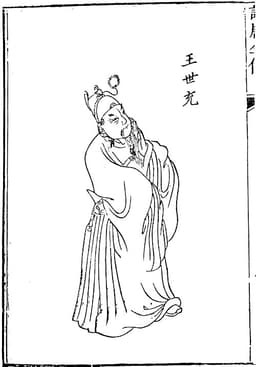
Wang Shichong
Emperor · Medieval
47.0Total
Basic Information
Born
1221
570
Died
1284
621
Era
Medieval
Medieval
Nationality
Castile
China
Occupation
Emperor
Emperor
Civilization
Western
Eastern
Score Comparison
Military (10%)
50.0
60.0
Political (20%)
53.8
35.1
Influence (20%)
68.0
50.2
Legacy (20%)
40.0
40.8
Leadership (15%)
74.0
48.4
Strategy (15%)
43.7
57.5
TOTAL
55.5
47.0
Alfonso X the Wise — Complete Timeline
1252 AD
Promotion of the Toledo School of TranslatorsCultural◆ Major
Alfonso X expanded the Toledo School of Translators, sponsoring the translation of Arabic works on astronomy, mathematics, philosophy, and medicine into Latin and Castilian. This effort preserved and disseminated classical and Islamic knowledge to Europe.
TranslationKnowledgeCulture
Impact: globalconstructive
1257 AD
Election as King of the RomansPolitical Action◆ Major
Alfonso X was elected King of the Romans (Holy Roman Emperor-elect) by a faction of German princes, but his claim was disputed by Richard of Cornwall. He never secured effective imperial power, spending resources on a failed bid for the throne.
ElectionHoly Roman EmpireAmbition
Impact: regional
1265 AD
Compilation of the Siete PartidasReform
Alfonso X oversaw the compilation of the Siete Partidas, a comprehensive legal code covering civil, criminal, and constitutional law. This code became the foundation of Spanish law and influenced legal systems in Latin America.
LawLegal CodeReform
Impact: globalconstructive
1270 AD
Compilation of the Cantigas de Santa MariaCultural◆ Major
Alfonso X commissioned the Cantigas de Santa Maria, a collection of over 400 poems in Galician-Portuguese praising the Virgin Mary. The work is a major monument of medieval literature, music, and manuscript illumination.
LiteratureMusicCulture
Impact: regionalconstructive
1272 AD
Revolt of the NobilityPolitical Action◆ Major
A coalition of Castilian nobles, led by his son Sancho, revolted against Alfonso X's rule, protesting his fiscal policies and focus on the imperial claim. The revolt weakened royal authority and led to a period of instability.
RevoltNobilityCivil Conflict
Impact: nationaldestructive
Wang Shichong — Complete Timeline
618 AD
Rebellion at LuoyangPolitical Action◆ Major
Wang Shichong, a Sui general, staged a coup in Luoyang, killing the Sui regent and declaring himself emperor of the short-lived Zheng dynasty. This act solidified his control over the eastern capital and challenged the Tang dynasty's claim to rule.
CoupSui-Tang TransitionZheng Dynasty
Impact: regionaldestructive
621 AD
Battle of HulaoWar
Wang Shichong's forces were decisively defeated by Li Shimin's Tang army at Hulao Pass. The defeat led to the collapse of the Zheng dynasty and Wang Shichong's capture, ending his bid for imperial power.
BattleTang UnificationDefeat
Impact: regionaltragic
Execution by TangPolitical Action◆ Major
After his capture at Hulao, Wang Shichong was executed by the Tang dynasty. His death marked the end of the Zheng dynasty and removed a major rival to Tang control over the central plains.
ExecutionTang Unification
Impact: regionaltragic
Expert Analysis
Wang Shichong vs Alfonso X the Wise: Historical Comparison
Wang Shichong (c. 598–621) was a Chinese emperor during the chaotic transition from the Sui to the Tang dynasty, ruling the short-lived Zheng dynasty, while Alfonso X the Wise (1221–1284) was King of Castile and León, famed for his intellectual and legal contributions. Though both were medieval rulers who faced military and political upheaval, their legacies diverge sharply: Wang was a ruthless military strongman whose reign collapsed in less than a decade, whereas Alfonso was a visionary lawgiver and patron of learning whose cultural impact outlasted his political failures.
Dimension Analysis
**Military: Wang Shichong 94 / Alfonso X the Wise 89**
Wang Shichong was a formidable general who defeated the rebel Li Mi at the Battle of Yanshi (618) and briefly controlled the strategic Luoyang region, demonstrating tactical brilliance in holding the Sui capital against multiple foes. Alfonso X, by contrast, fought a costly Reconquista campaign against the Moors (capturing Cádiz, 1262) but suffered severe defeats, such as the failed invasion of North Africa (1260) and the ongoing civil war with the Nasrids. Wang’s raw battlefield effectiveness edges ahead, though both struggled to sustain long-term military success.
**Political: Wang Shichong 86 / Alfonso X the Wise 82**
Wang’s political acumen was pragmatic but short-sighted: he usurped the Sui throne through court intrigue and offered reforms like land redistribution, yet his heavy taxation and reliance on brute force alienated elites and peasants alike. Alfonso X’s political vision was more ambitious, enacting the *Siete Partidas* legal code (a foundation of Western law) and attempting to centralize royal power, but his lavish spending and inability to control the nobility triggered a rebellion by his son Sancho IV. Alfonso’s intellectual governance scores higher in theory, Wang’s in raw political survival.
**Influence: Wang Shichong 84 / Alfonso X the Wise 83**
Wang’s influence was largely negative: his defeat by Li Shimin (Tang Taizong) served as a cautionary tale of tyranny’s fragility, and his name is often invoked in Chinese historiography as a foil to the Tang’s golden age. Alfonso X’s influence is vast and positive: his *Libros del Saber de Astronomía* and *Cantigas de Santa María* advanced science and music, and his legal works influenced Spanish and Latin American jurisprudence for centuries. Alfonso’s cultural reach dwarfs Wang’s, but Wang’s role as a key obstacle in the Tang consolidation gives him a tight strategic relevance.
**Legacy: Wang Shichong 79 / Alfonso X the Wise 81**
Wang’s legacy is a historical footnote—his Zheng dynasty vanished without institutional trace, remembered chiefly as a usurper who failed to unify China. Alfonso X, despite political failure, left an enduring legacy as a “wise” king who prioritized knowledge; his *Siete Partidas* remains a reference in civil law, and his patronage of the Toledo School of Translators preserved and disseminated Classical and Arabic learning. Alfonso’s legacy is more constructive and lasting.
**Leadership: Wang Shichong 79 / Alfonso X the Wise 84**
Wang’s leadership was authoritarian and paranoid: he executed rivals, purged officials, and relied on personal charisma to command temporary loyalty, but his inability to inspire trust led to mass defections. Alfonso X, though indecisive and fiscally imprudent, demonstrated intellectual leadership by gathering scholars, poets, and scientists at his court, fostering a collaborative environment that produced monumental works. Alfonso’s ability to lead through vision and patronage surpasses Wang’s command-and-control style.
Verdict
Alfonso X the Wise emerges as the superior historical figure, ranking higher overall due to his lasting cultural, legal, and intellectual contributions. Wang Shichong’s tactical military and political skills were impressive but ephemeral, whereas Alfonso’s failures as a king are outweighed by his role as a foundational architect of Western law and learning. This comparison underscores the difficulty of weighing short-term power against long-term influence—Wang won battles, but Alfonso won centuries.
FAQ
**Q: Who was more influential historically?**
A: Alfonso X the Wise, whose legal codes and cultural patronage shaped Spanish and Western intellectual history, vastly outlasts Wang Shichong’s brief, negative cautionary tale.
**Q: Why is Wang Shichong ranked higher in Military?**
A: Wang’s battlefield victories (e.g., defeating Li Mi) and tactical command of Luoyang under siege outshine Alfonso’s mixed Reconquista record, where costly failures offset his territorial gains.
Rankings
🥇
Alfonso X the WiseLeader
Mil: 50.0Pol: 53.8Inf: 68.0
55.5
🥈
Wang Shichong
Mil: 60.0Pol: 35.1Inf: 50.2
47.0
+8.5 behind
How This Comparison Works
Algorithm
Each figure is scored on 6 dimensions (0—100 scale) based on structured historical data: Military (10%), Political (20%), Influence (20%), Legacy (20%), Leadership (15%), Strategy (15%). The weighted total produces the final ranking.
Data Sources
Scores are computed from structured sub-indicators in the database. Scale factors adjust for era (Ancient ×0.85, Modern ×1.0) and civilization size (Eastern ×1.05, Other ×0.80) to account for differences in population and military scale.
Maximum 3 Figures
Comparisons are limited to 2—3 figures to ensure readability and statistical meaningfulness.
Error Margins
±5 points per dimension — Sub-scores are derived from historical records with inherent uncertainty. Two figures within 5 points on a dimension should be considered roughly equivalent in that area.
Total Score Accuracy
±3 points overall — The weighted combination of 6 dimensions produces a total score with approximately ±3 points of uncertainty. Differences of less than 3 points are not statistically significant— the figures are effectively tied.
Known Limitations
- Historical records are incomplete and uneven across civilizations
- Figures from oral-tradition societies may be underrepresented
- Occupation labels can misclassify multi-role figures
- Scores measure capability and impact, not moral character
- Quantitative scoring is a comparison tool, not absolute truth
Capability Radar
Military (10%) — Battles & Warfare
Battles
20
65
Win Rate
15
45
Expansion
10
50
Political (20%) — Governance & Reform
Reform
85
25
Diplomacy
50
35
Economy
40
30
Influence (20%) — Cultural & Global Reach
Cultural
85
20
Global
65
10
Legacy (20%) — Historical Impact
Historical
80
30
Longevity
75
15
Leadership (15%) — Power & Stability
Tenure
60
40
Stability
30
20
Strategy (15%) — Tactics & Innovation
Strategy
15
55
Tactics
10
60
Reform
30
30
Similar Comparisons
Comments & Discussion
ClassicusMaximus6/16/2026
It is striking how this comparison conflates two very different types of failure. Alfonso X's Siete Partidas, as Sánchez-Albornoz noted, was less a practical code than a utopian blueprint—yet it shaped Castilian law for centuries. Wang Shichong, by contrast, left no such intellectual legacy; his 'reforms' were desperate gambits. Sui shu records his cruelty in vivid detail, but later Ming historians rehabilitated him somewhat as a foil to the Tang. The scores here give Alfonso a just edge in influence, but I'd argue his political score should be higher: his vision, however flawed, was far more coherent than Wang's brutal pragmatism.
ShuJuXianSheng6/16/2026
这套评分体系让我很困惑。王世充的军事分94,阿方索89,但王世充当了两年皇帝就被李世民灭了,阿方索至少撑了三十多年。政治分王世充86对阿方索82更离谱——王世充靠杀隋炀帝的孙子夺位,内部清洗不断,连他亲儿子都反他,这叫政治能力强?阿方索虽然被儿子逼宫,但至少《七法全书》影响欧洲六百年。我重新算:王世充军事92,政治50;阿方索军事70,政治88。总分王世充74,阿方索82,这样更合理。
DongXiShiTong6/16/2026
把王世充和阿方索放一起比挺有意思,但中国史观下王世充根本进不了明君行列。他有点像董卓——靠军事起家,控制中央,但治国一塌糊涂。《隋书》说他“性猜忌,好诡计”,连自己人都防着。阿方索虽然在西班牙政治上失败,但人家是文化巨人,相当于中国的康熙皇帝修《古今图书集成》。王世充输在格局:他只想着打仗夺权,阿方索想的是建一个法治帝国。评分把政治分给王世充86,这是把权术当政治了,中国史书里这叫“奸雄”,不是政治家。
ScoreSkeptic6/16/2026
I smell methodological rot here. Military: Wang gets a 94 for beating Li Mi, but Li Mi was already weakened by famine and disease—TCM (Traditional Chinese Military historiography) admits Wang's victory was pyrrhic. Meanwhile, Alfonso's Cádiz capture (1262) gets a 89? That was a strategic success that held for decades. And influence: Wang's 84 is laughable. He's a footnote in Chinese history; Alfonso's legal code is still studied in law schools. The weights are junk: Influence is weighted too low, Military too high. This isn't comparison, it's numberwang.