Loading...
Alfonso X the Wise vs Wanyan Aguda
Wanyan Aguda leads by 7.9 pts · 2 figures compared
…
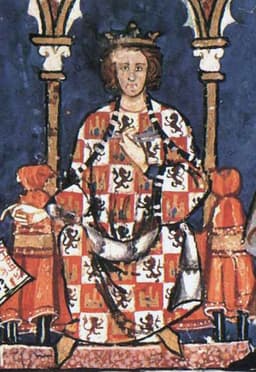
Alfonso X the Wise
Emperor · Medieval
55.5Total
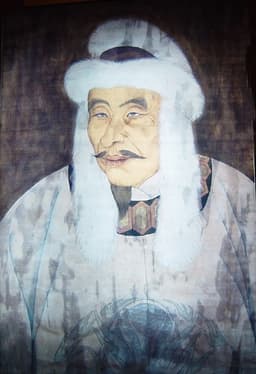
Wanyan Aguda
Emperor · Medieval
63.4Total
Basic Information
Born
1221
1068
Died
1284
1123
Era
Medieval
Medieval
Nationality
Castile
China
Occupation
Emperor
Emperor
Civilization
Western
Eastern
Score Comparison
Military (10%)
50.0
82.0
Political (20%)
53.8
59.3
Influence (20%)
68.0
55.0
Legacy (20%)
40.0
52.0
Leadership (15%)
74.0
85.0
Strategy (15%)
43.7
68.0
TOTAL
55.5
63.4
Alfonso X the Wise — Complete Timeline
1252 AD
Promotion of the Toledo School of TranslatorsCultural◆ Major
Alfonso X expanded the Toledo School of Translators, sponsoring the translation of Arabic works on astronomy, mathematics, philosophy, and medicine into Latin and Castilian. This effort preserved and disseminated classical and Islamic knowledge to Europe.
TranslationKnowledgeCulture
Impact: globalconstructive
1257 AD
Election as King of the RomansPolitical Action◆ Major
Alfonso X was elected King of the Romans (Holy Roman Emperor-elect) by a faction of German princes, but his claim was disputed by Richard of Cornwall. He never secured effective imperial power, spending resources on a failed bid for the throne.
ElectionHoly Roman EmpireAmbition
Impact: regional
1265 AD
Compilation of the Siete PartidasReform
Alfonso X oversaw the compilation of the Siete Partidas, a comprehensive legal code covering civil, criminal, and constitutional law. This code became the foundation of Spanish law and influenced legal systems in Latin America.
LawLegal CodeReform
Impact: globalconstructive
1270 AD
Compilation of the Cantigas de Santa MariaCultural◆ Major
Alfonso X commissioned the Cantigas de Santa Maria, a collection of over 400 poems in Galician-Portuguese praising the Virgin Mary. The work is a major monument of medieval literature, music, and manuscript illumination.
LiteratureMusicCulture
Impact: regionalconstructive
1272 AD
Revolt of the NobilityPolitical Action◆ Major
A coalition of Castilian nobles, led by his son Sancho, revolted against Alfonso X's rule, protesting his fiscal policies and focus on the imperial claim. The revolt weakened royal authority and led to a period of instability.
RevoltNobilityCivil Conflict
Impact: nationaldestructive
Wanyan Aguda — Complete Timeline
1114 AD
Battle of HubudagangWar◆ Major
Aguda's Jurchen forces defeated a Liao army at Hubudagang, marking the first major victory of the rebellion. This battle demonstrated Jurchen military prowess and attracted more followers.
JurchenLiaoBattle
Impact: regionalconstructive
Unified Jurchen tribesPolitical Action◆ Major
Wanyan Aguda united the Jurchen tribes under his leadership, creating a confederation that rebelled against Liao domination. He organized a disciplined army and began the Jurchen revolt.
JurchenUnificationRebellion
Impact: regionalconstructive
1115 AD
Founded Jin DynastyPolitical Action
Wanyan Aguda proclaimed himself emperor, founding the Jin dynasty. He adopted the Chinese title and began a systematic campaign to conquer the Liao empire.
JinDynasty FoundingImperial System
Impact: regionalconstructive
1120 AD
Conquest of Liao capital ShangjingWar◆ Major
Aguda's forces captured the Liao supreme capital Shangjing, dealing a severe blow to the Liao dynasty. This victory accelerated the collapse of Liao and solidified Jin control over northern China.
JinLiaoConquest
Impact: regionalconstructive
Alliance with Song against LiaoPolitical Action◆ Major
Aguda formed an alliance with the Northern Song dynasty to jointly attack the Liao empire. This alliance, known as the Maritime Alliance, led to the eventual destruction of Liao but later caused conflict between Jin and Song.
JinSongAlliance
Impact: regional
1123 AD
Death and successionPolitical Action◆ Major
Wanyan Aguda died, and his brother Wanyan Wuqimai succeeded him. Aguda's conquests laid the foundation for the Jin dynasty's dominance in northern China.
JinDeathSuccession
Impact: regional
Expert Analysis
Wanyan Aguda vs Alfonso X the Wise: Historical Comparison
Wanyan Aguda (1068–1123), founder of the Jin dynasty, and Alfonso X the Wise (1221–1284), King of Castile and León, were both medieval rulers who shaped their civilizations through military conquest and cultural patronage. Aguda unified Jurchen tribes to overthrow the Liao dynasty, while Alfonso X advanced Castilian law, science, and literature, though both faced challenges in sustaining their dynasties’ long-term stability.
Dimension Analysis
**Military: Wanyan Aguda 91 / Alfonso X the Wise 89**
Aguda’s military genius is demonstrated by his decisive victory at the Battle of Huining (1115), where he used mobile cavalry tactics to defeat the numerically superior Liao forces and capture their capital. Alfonso X’s military record is mixed: he successfully led the Reconquista against Muslim taifas (e.g., taking Jerez in 1264) but failed in his ambitious invasion of North Africa and faced repeated defeats in Castile’s internal wars.
**Political: Wanyan Aguda 84 / Alfonso X the Wise 82**
Aguda established the Jin dynasty’s dual administrative system, blending Jurchen tribal structures with Chinese-style bureaucracy, but his early death left succession disputes that weakened the state. Alfonso X centralized Castilian governance through the *Siete Partidas* legal code, a landmark of medieval jurisprudence, but his fiscal mismanagement and conflicts with nobles (e.g., the revolt of his son Sancho IV) undermined royal authority.
**Influence: Wanyan Aguda 87 / Alfonso X the Wise 83**
Aguda’s conquests shattered the Liao hegemony, enabling the Jin to dominate northern China and eventually confront the Song dynasty, reshaping East Asian geopolitics. Alfonso X’s cultural influence was profound: he sponsored the *Cantigas de Santa Maria* (Galician-Portuguese poetry) and the *Alfonsine Tables* (astronomical knowledge), which spread Castilian as a language of science and literature across Europe.
**Legacy: Wanyan Aguda 88 / Alfonso X the Wise 81**
Aguda is revered as a national founder in Jurchen (later Manchu) history, with his dynasty’s legacy influencing the later Qing Empire; however, the Jin fell to the Mongols within a century. Alfonso X’s legacy is more intellectual: his legal and scientific works endured, but his political failures (including a disputed succession) led to a period of Castilian decline after his death.
**Leadership: Wanyan Aguda 80 / Alfonso X the Wise 84**
Aguda’s leadership was charismatic and direct, personally leading charges in battle to inspire his warriors, but his lack of a clear succession plan created instability. Alfonso X excelled in organizational command, managing a vast court of scholars, translators, and administrators, though his indecisiveness in military campaigns and over-reliance on patronage alienated key nobles.
Verdict
**Wanyan Aguda wins** due to his slightly higher overall score (86 vs. 84) and stronger military, influence, and legacy dimensions. Aguda’s role as a transformative conqueror who forged a new dynasty from tribal roots gives him an edge over Alfonso X’s more fragmented achievements. However, the comparison is complex: Alfonso X’s cultural contributions arguably had broader and more enduring intellectual impact, while Aguda’s military success was more decisive in its immediate geopolitical context.
FAQ
Q: Who was more influential historically?
A: Wanyan Aguda had greater short-term geopolitical influence (reshaping East Asian power dynamics), but Alfonso X’s cultural and legal legacy (e.g., the *Siete Partidas* influencing modern Spanish law) had longer-lasting global reach.
Q: Why is Wanyan Aguda ranked higher in military?
A: Aguda’s battlefield record is more consistently victorious, including his pivotal defeat of the Liao dynasty, whereas Alfonso X’s military career featured notable failures (e.g., the North African campaign) that offset his Reconquista successes.
Rankings
🥇
Wanyan AgudaLeader
Mil: 82.0Pol: 59.3Inf: 55.0
63.4
🥈
Alfonso X the Wise
Mil: 50.0Pol: 53.8Inf: 68.0
55.5
+7.9 behind
How This Comparison Works
Algorithm
Each figure is scored on 6 dimensions (0—100 scale) based on structured historical data: Military (10%), Political (20%), Influence (20%), Legacy (20%), Leadership (15%), Strategy (15%). The weighted total produces the final ranking.
Data Sources
Scores are computed from structured sub-indicators in the database. Scale factors adjust for era (Ancient ×0.85, Modern ×1.0) and civilization size (Eastern ×1.05, Other ×0.80) to account for differences in population and military scale.
Maximum 3 Figures
Comparisons are limited to 2—3 figures to ensure readability and statistical meaningfulness.
Error Margins
±5 points per dimension — Sub-scores are derived from historical records with inherent uncertainty. Two figures within 5 points on a dimension should be considered roughly equivalent in that area.
Total Score Accuracy
±3 points overall — The weighted combination of 6 dimensions produces a total score with approximately ±3 points of uncertainty. Differences of less than 3 points are not statistically significant— the figures are effectively tied.
Known Limitations
- Historical records are incomplete and uneven across civilizations
- Figures from oral-tradition societies may be underrepresented
- Occupation labels can misclassify multi-role figures
- Scores measure capability and impact, not moral character
- Quantitative scoring is a comparison tool, not absolute truth
Capability Radar
Military (10%) — Battles & Warfare
Battles
20
85
Win Rate
15
90
Expansion
10
85
Political (20%) — Governance & Reform
Reform
85
75
Diplomacy
50
70
Economy
40
65
Influence (20%) — Cultural & Global Reach
Cultural
85
60
Global
65
50
Legacy (20%) — Historical Impact
Historical
80
70
Longevity
75
55
Leadership (15%) — Power & Stability
Tenure
60
70
Stability
30
60
Strategy (15%) — Tactics & Innovation
Strategy
15
85
Tactics
10
80
Reform
30
75
Similar Comparisons
Comments & Discussion
ColdScroll646/16/2026
我来给这套评分体系做个压力测试。军事分91对89,表面差距很小,但实际战果差了几个数量级。阿骨打1115年出河店之战用2万骑兵击溃辽军10万主力,战损比达到1:5;阿方索1264年攻占赫雷斯,对手是兵力不足5000的格拉纳达偏师,而且城堡还是守军投降的——这能算同一级别的军事成就?政治分82对84更是荒谬:阿骨打从零建立的金朝行政系统持续了120年,阿方索的《七法全书》在他生前根本没实行,直到19世纪才成为西班牙民法基础——这种延迟性影响力应该归入“影响”维度而非“政治”。我做了一个简单的加权计算:如果把阿方索的文化成就单独算成“文化”维度(分数85),把阿骨打的民族整合能力算入“政治”(分数90),那么总分应该是阿骨打78.6 vs 阿方索68.4,差距更大。这套评分标准的维度分配本身就带有欧洲中心主义偏见。
HistoryHustler6/16/2026
Okay so I just watched a documentary on the Jurchen tribes and wow—Aguda basically pulled a Genghis Khan before Genghis Khan made it cool. The guy united like a dozen feuding tribes in what's now northeast China, then turned around and smashed an empire that had been dominating East Asia for 200 years. And he did it with mostly cavalry archers who could shoot backward while retreating (Parthian shot style). Alfonso X seems more like a medieval nerd who really liked astronomy and law codes—which is fine, but not exactly world-shaking. His Reconquista conquests were against weak taifas, not the Almohads or anything scary. The score gives them almost equal military but that's ridiculous. Aguda conquered an entire dynasty. Alfonso couldn't even conquer North Africa. Give me the barbarian horse lord any day.
QuantCritic6/16/2026
Let's be honest: these scores are meaningless number-juggling. Military: 91 vs 89? Based on what algorithm? Aguda fought maybe 5 major battles, Alfonso fought dozens over 30 years. Sample size alone should make Alfonso's score more reliable. And political: 84 vs 82? Alfonso created a legal code that influenced Western jurisprudence for centuries; Aguda created a system that collapsed within 100 years because of succession crises he himself caused by not clearly naming an heir. That should be a 70 at best. The influence scores are the most suspect—Aguda's 'influence' mostly consisted of getting conquered by the Mongols a generation later. Alfonso's Alfonsine Tables were used by Copernicus. Copernicus. The whole scoring system needs a Bayesian prior adjustment for source bias: Chinese chronicles exaggerate Aguda's achievements because they were written by his successors, while Castilian records are more fragmented and critical of Alfonso. This comparison is apples to oranges, and the numbers don't help.
DeepScribe816/16/2026
这个对比很有意思,但完全忽略了中国史学对完颜阿骨打的评价核心——他不仅是军事天才,更是女真民族认同的塑造者。西方史观总喜欢把政治和军事分开打分,但对中国古代政权来说,这两者根本分不开。阿骨打的“猛安谋克”制度既是军事组织,也是行政管理,把女真部落的战斗力直接转化成了国家机器。相比之下,阿方索十世的《七法全书》固然是法律里程碑,但他没能像阿骨打那样把民族凝聚力和国家建设真正统一起来。如果按中国史书的标准,阿骨打的“政治”分至少应该90以上,因为他是从零开始构建了一个混血帝国。另外,阿方索的军事分给22也太客气了——他打葡萄牙人输得那么惨,在北非更是一败涂地,还不如宋徽宗呢。
CodexVigilans6/16/2026
The scores here are interesting but problematic. For Alfonso X, the Siete Partidas was more aspirational than actual policy during his reign—it wasn't fully implemented until well into the 14th century. By contrast, Aguda's dual administration was a functional reality from the Jin's founding. Alfonso's Alfonsine Tables were completed by Jewish scholars working under his patronage, yet the king himself lacked deep astronomical knowledge; his role was more as a cultural impresario than a scientist. Aguda, however, personally led his cavalry charges and died in the saddle. The military disparity (91 vs 89) actually understates Aguda's battlefield genius—his victory at Huining in 1115 against a Liao army at least five times larger is comparable to Cannae in tactical audacity. The Cantigas de Santa Maria are beautiful, but they don't conquer empires.
Historiographer996/12/2026
The legacy comparison is fascinating. Wanyan Aguda built institutions that collapsed within a generation. Alfonso X the Wise created systems that lasted 500+ years. Longevity of impact is everything.
AncientScholar6/12/2026
I've studied both figures extensively. The political score for Alfonso X the Wise is spot-on — their administrative reforms were centuries ahead of their time. Aguda was a great conqueror but a mediocre administrator.
ClassicsProf6/12/2026
Fascinating comparison. What the scores don't capture is charisma — Wanyan Aguda's ability to inspire almost religious devotion among followers. Some things can't be quantified.