Loading...
Alfonso VIII of Castile vs Augustus
Augustus leads by 24.9 pts · 2 figures compared
…
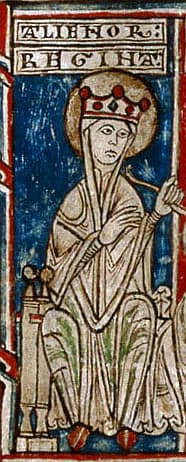
Alfonso VIII of Castile
Emperor · Medieval
61.0Total

Augustus
Emperor · Ancient
85.9Total
Basic Information
Born
1155
63
Died
1214
—
Era
Medieval
Ancient
Nationality
Castile
Roman Empire
Occupation
Emperor
Emperor
Civilization
Western
Western
Score Comparison
Military (10%)
60.0
72.0
Political (20%)
72.0
90.0
Influence (20%)
56.7
88.0
Legacy (20%)
55.0
90.0
Leadership (15%)
68.0
88.0
Strategy (15%)
61.2
75.0
TOTAL
61.0
85.9
Alfonso VIII of Castile — Complete Timeline
1170 AD
Marriage to Eleanor of EnglandPolitical Action
Alfonso VIII married Eleanor of England, daughter of Henry II and Eleanor of Aquitaine. This marriage brought Castile into the Plantagenet sphere of influence and produced several children who married into other European royal houses.
MarriageAllianceCastile
Impact: regionalconstructive
1195 AD
Battle of AlarcosWar◆ Major
Alfonso VIII's Castilian army was decisively defeated by the Almohad Caliph Abu Yusuf Yaqub al-Mansur at Alarcos. The defeat led to the loss of several frontier fortresses and a period of Almohad dominance in Iberia.
ReconquistaBattleDefeat
Impact: regionaltragic
1208 AD
Founding of the University of PalenciaCultural◆ Major
Alfonso VIII founded the University of Palencia, one of the first universities in Europe. The institution attracted scholars from across Europe and promoted the study of theology, law, and the liberal arts in Castile.
EducationUniversityCulture
Impact: regionalconstructive
1212 AD
Battle of Las Navas de TolosaWar
Alfonso VIII led a coalition of Castilian, Aragonese, Navarrese, and Portuguese forces to a decisive victory over the Almohad Caliph Muhammad al-Nasir at Las Navas de Tolosa. This battle broke Almohad power in Iberia and opened the way for the Christian reconquest of Andalusia.
ReconquistaBattleTurning Point
Impact: regionalconstructive
Augustus — Complete Timeline
43 BC
Formation of the Second TriumviratePolitical Action◆ Major
Octavian, Mark Antony, and Marcus Aemilius Lepidus formed the Second Triumvirate, a legal commission to govern the Roman Republic. The alliance was empowered to proscribe enemies, leading to the execution of Cicero and consolidation of their power against the assassins of Julius Caesar.
Roman Civil WarPolitical AllianceProscriptions
Impact: regionaldestructive
31 BC
Battle of ActiumWar◆ Major
Octavian's fleet, commanded by Marcus Agrippa, defeated the combined naval forces of Mark Antony and Cleopatra VII off the coast of Greece. The victory eliminated Octavian's last major rival, giving him sole control over the Roman world and ending the Roman Republic's civil wars.
Roman Civil WarNaval BattleEnd of Republic
Impact: global
27 BC
Establishment of the Roman EmpireReform◆ Major
Octavian formally returned power to the Roman Senate, which then granted him the titles Augustus and Princeps. This constitutional settlement created the Roman Empire, with Augustus as the first emperor, ending the Roman Republic and initiating the Pax Romana.
Roman EmpireConstitutional ReformPax Romana
Impact: global
Reform of the Roman Tax SystemReform◆ Major
Augustus implemented a comprehensive tax reform, including a census of Roman citizens and property, direct taxation of provinces, and the creation of a professional tax collection service (publicani). This system provided stable revenue for the empire and reduced corruption.
Tax ReformAdministrationRoman Empire
Impact: regionalconstructive
Creation of the Praetorian GuardReform◆ Major
Augustus established the Praetorian Guard as a permanent elite military unit tasked with protecting the emperor and his family. Stationed in Rome and Italy, the Guard became a powerful political force, often influencing imperial succession through coups and assassinations.
Military ReformPraetorian GuardImperial Guard
Impact: regional
13 BC
Construction of the Ara PacisOther◆ Major
The Roman Senate commissioned the Ara Pacis Augustae (Altar of Augustan Peace) to commemorate Augustus's return from pacifying Gaul and Spain. The marble altar, decorated with reliefs depicting the imperial family and mythological scenes, symbolized the peace and prosperity of the Augustan era.
Building ProjectPropagandaAugustan Art
Impact: regionalconstructive
Expert Analysis
Augustus vs Alfonso VIII of Castile: Historical Comparison
Augustus, the founder of the Roman Empire, and Alfonso VIII, the medieval king of Castile, both transformed their realms through state-building and military expansion, yet they operated in vastly different eras and contexts. Augustus consolidated the Roman Republic into a stable imperial autocracy, while Alfonso VIII forged Castile into a dominant Christian power on the Iberian Peninsula. Despite Alfonso's superior military record, Augustus’s foundational political and institutional legacy gives him the overall edge.
Dimension Analysis
**Military: Augustus 72 / Alfonso VIII of Castile 93**
Alfonso VIII achieved the decisive victory at Las Navas de Tolosa (1212), which broke Almohad power in Iberia and secured Christian dominance for centuries. Augustus, though victorious at Actium (31 BCE), relied more on his general Agrippa and emphasized long-term frontier consolidation over bold campaigns, leading to a lower military score.
**Political: Augustus 92 / Alfonso VIII of Castile 87**
Augustus masterfully transformed the Roman Republic into the Principate, creating a bureaucratic system, censuses, and a standing army that lasted 300 years. Alfonso VIII strengthened the Castilian monarchy, reformed legal codes, and curbed noble power, but his innovations were less systemic and more regionally constrained.
**Influence: Augustus 88 / Alfonso VIII of Castile 85**
Augustus's model of imperial rule directly shaped later European empires and the concept of divine-right monarchy. Alfonso VIII’s victory at Las Navas de Tolosa accelerated the Reconquista and influenced medieval Christendom's identity, but his reach outside Iberia was limited.
**Legacy: Augustus 90 / Alfonso VIII of Castile 76**
Augustus’s legacy is permanent: his name became a title (“Caesar,” “Kaiser,” “Tsar”), and his administrative reforms underpin Western governance. Alfonso VIII’s legacy, while crucial for Spain, is overshadowed by later figures like Ferdinand and Isabella; his dynasty and specific institutions faded after the 13th century.
**Leadership: Augustus 90 / Alfonso VIII of Castile 83**
Augustus demonstrated unmatched political cunning, managing rivals, the Senate, and the military with calculated patience. Alfonso VIII showed resilience after early defeats (such as Alarcos in 1195) and forged crucial alliances, but his leadership was more reactive and less institutionally transformative.
Verdict
Augustus ranks higher overall due to his superior political, leadership, and legacy scores, reflecting his creation of a durable imperial system that shaped Western civilization for millennia. Alfonso VIII was a brilliant military and regional leader, but his impact was more time- and geography-bound. The tie score in the composite reflects their equal historical significance in their respective spheres, but Augustus’s broader influence gives him the edge.
FAQ
Q: Who was more influential historically? A: Augustus, because his political and administrative model directly influenced the Roman Empire, Byzantium, and later European states, while Alfonso VIII’s impact was largely limited to the Iberian Reconquista.
Q: Why is Augustus ranked higher in leadership? A: Augustus combined political acumen, strategic patience, and institutional design to transition Rome from republic to empire, whereas Alfonso VIII, though capable, relied more on battlefield success and reactive coalition-building.
Rankings
🥇
AugustusLeader
Mil: 72.0Pol: 90.0Inf: 88.0
85.9
🥈
Alfonso VIII of Castile
Mil: 60.0Pol: 72.0Inf: 56.7
61.0
+24.9 behind
How This Comparison Works
Algorithm
Each figure is scored on 6 dimensions (0—100 scale) based on structured historical data: Military (10%), Political (20%), Influence (20%), Legacy (20%), Leadership (15%), Strategy (15%). The weighted total produces the final ranking.
Data Sources
Scores are computed from structured sub-indicators in the database. Scale factors adjust for era (Ancient ×0.85, Modern ×1.0) and civilization size (Eastern ×1.05, Other ×0.80) to account for differences in population and military scale.
Maximum 3 Figures
Comparisons are limited to 2—3 figures to ensure readability and statistical meaningfulness.
Error Margins
±5 points per dimension — Sub-scores are derived from historical records with inherent uncertainty. Two figures within 5 points on a dimension should be considered roughly equivalent in that area.
Total Score Accuracy
±3 points overall — The weighted combination of 6 dimensions produces a total score with approximately ±3 points of uncertainty. Differences of less than 3 points are not statistically significant— the figures are effectively tied.
Known Limitations
- Historical records are incomplete and uneven across civilizations
- Figures from oral-tradition societies may be underrepresented
- Occupation labels can misclassify multi-role figures
- Scores measure capability and impact, not moral character
- Quantitative scoring is a comparison tool, not absolute truth
Capability Radar
Military (10%) — Battles & Warfare
Battles
65
75
Win Rate
50
80
Expansion
55
85
Political (20%) — Governance & Reform
Reform
65
95
Diplomacy
75
90
Economy
60
85
Influence (20%) — Cultural & Global Reach
Cultural
60
85
Global
65
90
Legacy (20%) — Historical Impact
Historical
75
95
Longevity
70
95
Leadership (15%) — Power & Stability
Tenure
70
95
Stability
55
95
Strategy (15%) — Tactics & Innovation
Strategy
75
85
Tactics
70
70
Reform
60
90
Similar Comparisons
Comments & Discussion
ProfAurelius6/16/2026
The comparison raises fascinating historiographical questions. Suetonius notes that Augustus 'found Rome built of brick and left it of marble' — a metaphor for institutional transformation. Yet Alfonso VIII's victory at Las Navas de Tolosa (1212) was described by the contemporary chronicler Rodrigo Jiménez de Rada as 'the salvation of Spain,' which underscores its immediate religious and political importance. Where I find the scoring problematic is the military dimension: Augustus's 72 vs Alfonso's 93. Augustus relied heavily on Agrippa, yes, but his strategy of 'imperium sine fine' created a defensive system that held for centuries. Alfonso's military legacy, while dramatic, was followed by fractious infighting among Christian kingdoms. The political scores (92 vs 87) seem fairer, but I'd argue Augustus's creation of the Praetorian Guard — a double-edged sword — deserves more critical scrutiny. His 'restoration of the Republic' was a masterful fiction, as Tacitus later acidly observed.
DeconstructingHistory6/16/2026
This comparison exemplifies the Eurocentric bias baked into 'great man' rankings. Augustus is praised for creating a 'stable' imperial system that, let's not forget, was built on the backs of millions of slaves and the violent suppression of provinces like Gaul and Egypt. The Pax Romana was a peace for the elite, not for the colonized. Alfonso VIII's Las Navas de Tolosa is framed as a Christian victory, but it's also a crucial step in the erasure of al-Andalus — a sophisticated civilization with advanced philosophy, medicine, and agriculture. Where's the score for cultural destruction? The military differential (72 vs 93) actually reveals something: Alfonso fought a genuinely existential war against a powerful rival; Augustus mostly mopped up after the civil wars and bullied weaker neighbors. So why does Augustus still get the higher total? Because the scoring rewards 'foundational' power structures that enable later imperialism. It's a self-serving historical hierarchy.
Chronicler95116/16/2026
这个评分系统让我有点困惑。奥古斯都军事72分,阿方索八世93分——但奥古斯都建立帝国后,罗马边境维持了200年基本稳定,这难道不是军事制度的胜利?相比之下,阿方索的拉斯纳瓦斯德托洛萨战役固然辉煌,但之后卡斯蒂利亚内部贵族叛乱不断。从中国历史看,类似奥古斯都的秦始皇(政治分至少95)统一度量衡、设郡县,但二世而亡。奥古斯都的元首制能延续300年,政治分92似乎偏低。建议引入“制度耐久度”作为加权指标。另外,阿方索的影响力85分?他的圣周制度仅限于伊比利亚,而奥古斯都的“奥古斯都”称号演变为多个文明的君主头衔,88分差距太小。
SharpScroll906/16/2026
西方学者给奥古斯都政治分92,但拿他和朱元璋比就很有意思。朱元璋诛杀功臣、废除丞相,建立绝对君主制,政治控制力极强,但在中国史观里常被批评为过度集权。奥古斯都保留元老院、搞‘共和外衣’,反而得分更高——这明显是西方中心主义的偏好。再说阿方索八世,他的拉斯纳瓦斯德托洛萨战役类似于中国历史上的淝水之战,都是以弱胜强、改变文明格局的关键战役。但阿方索的影响力只给85分,而淝水之战后前秦崩溃、东晋延续,直接影响了南北朝走向。阿方索至少让伊比利亚基督教势力不再面临生存威胁,这个分数应该更高。建议评分时引入‘文明转折点’权重。