Loading...
Alfonso V of Aragon vs John I Tzimiskes
John I Tzimiskes leads by 4.1 pts · 2 figures compared
…
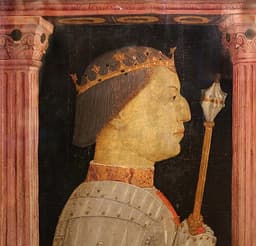
Alfonso V of Aragon
Emperor · Medieval
58.7Total
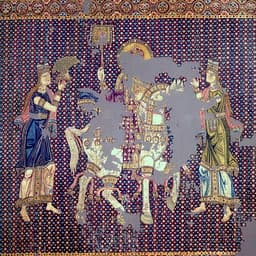
John I Tzimiskes
Emperor · Medieval
62.8Total
Basic Information
Born
1396
925
Died
1458
976
Era
Medieval
Medieval
Nationality
Aragon
Byzantine Empire
Occupation
Emperor
Emperor
Civilization
Western
Western
Score Comparison
Military (10%)
67.5
85.0
Political (20%)
62.7
72.0
Influence (20%)
59.0
60.0
Legacy (20%)
49.2
52.0
Leadership (15%)
68.0
53.2
Strategy (15%)
52.5
75.0
TOTAL
58.7
62.8
Alfonso V of Aragon — Complete Timeline
1442 AD
Conquest of NaplesWar
Alfonso V of Aragon captured the city of Naples after a prolonged siege, defeating the Angevin claimant Ren
Italian conquestMediterranean empire
Impact: regional
1443 AD
Patronage of the arts in NaplesCultural◆ Major
Alfonso V established a humanist court in Naples, patronizing scholars, artists, and writers. He commissioned translations of classical works, supported the construction of the Castel Nuovo, and fostered a cultural renaissance in southern Italy, earning him the epithet 'the Magnanimous'.
Renaissance patronageHumanism
Impact: regionalconstructive
1454 AD
Peace of LodiPolitical Action◆ Major
Alfonso V was a signatory to the Peace of Lodi, a treaty that ended decades of warfare between the Italian states of Milan, Venice, Florence, and Naples. The agreement established a balance of power in Italy that lasted for forty years, with Alfonso's Kingdom of Naples as a key player.
Italian peaceBalance of power
Impact: regionalconstructive
John I Tzimiskes — Complete Timeline
969 AD
Accession as Emperor (969)Political Action◆ Major
John I Tzimiskes became emperor after assassinating his uncle Nikephoros II Phokas. He was a skilled general and continued the military expansion of the Byzantine Empire.
AccessionCoup
Impact: regional
970 AD
Campaign against the Rus (970-971)War◆ Major
John I led a campaign against the Rus under Sviatoslav I, who had invaded Bulgaria. He defeated the Rus at the Battle of Dorostolon in 971, forcing Sviatoslav to withdraw. This secured Byzantine control over the Balkans.
Byzantine-Rus WarsMilitary Campaign
Impact: regionalconstructive
974 AD
Campaigns in Syria (974-975)War◆ Major
John I launched a major campaign into Syria, capturing Damascus, Beirut, and other cities. He advanced as far as Jerusalem, but did not capture it. These campaigns extended Byzantine influence in the Levant.
Byzantine-Arab WarsMilitary Campaign
Impact: regional
976 AD
Death from Poison (976)Other◆ Major
John I Tzimiskes died suddenly, possibly from poison. His death cut short his ambitious campaigns. He was succeeded by Basil II, who would later become known as the 'Bulgar-Slayer'.
DeathPoison
Impact: regionaltragic
Expert Analysis
Origins
Alfonso V of Aragon (born 1396) was the son of King Ferdinand I of Aragon and Eleanor of Alburquerque. He grew up in a court deeply involved in the politics of the Iberian Peninsula and the Mediterranean. His education emphasized chivalry and governance, preparing him for kingship. John I Tzimiskes (born c. 925) was of Armenian descent, born into a noble family within the Byzantine Empire. His early life was marked by military service under his uncle Nikephoros II Phokas, where he gained experience in warfare and court politics.
Rise to Power
Alfonso V inherited the throne of Aragon in 1416 after his father's death. His early reign focused on consolidating power in Aragon and expanding into the Italian peninsula. His key turning point came in 1442 when he conquered Naples after a prolonged siege, defeating the Angevin claimant René of Anjou. This victory made him the de facto ruler of southern Italy and a major player in Mediterranean politics. John I Tzimiskes rose to power through military prowess and political maneuvering. He served under his uncle, Emperor Nikephoros II, leading campaigns against the Arabs. In 969, he orchestrated the assassination of Nikephoros and seized the throne. His accession was controversial but he quickly proved his capability as a military leader.
Leadership & Governance
Alfonso V was a patron of the arts and humanism. In Naples, he established a humanist court, commissioning translations of classical works and supporting scholars. His governance style was relatively tolerant, allowing local elites to retain power. Politically, he scored 62.7, reflecting his ability to navigate alliances, such as the Peace of Lodi (1454), which helped stabilize Italy. John I Tzimiskes was primarily a military emperor. He focused on expanding Byzantine borders, scoring 85.0 in military. His governance was characterized by efficiency and centralization, but he left little legacy in civil administration. His political score of 72.0 indicates his skill in managing the court and military command.
Triumph & Tragedy
Alfonso V's greatest triumph was the conquest of Naples, which established Aragonese dominance in southern Italy. He also fostered a cultural renaissance in his court. However, his failure to secure a lasting dynasty in Naples (his illegitimate son Ferdinand succeeded but faced challenges) and his neglect of Aragon's interests in Iberia were significant drawbacks. His legacy score of 49.2 reflects the limited long-term impact. John I Tzimiskes' triumphs include defeating the Rus at the Battle of Dorostolon (971) and capturing key cities in Syria like Damascus and Beirut. His campaigns extended Byzantine influence. His sudden death in 976, possibly from poison, cut short his ambitions. He failed to capture Jerusalem and his early death left his achievements vulnerable.
Character & Destiny
Alfonso V was known as 'the Magnanimous' for his generosity and patronage. He was a charismatic leader who inspired loyalty, but his focus on Italian affairs weakened Aragon in other areas. His character led to cultural achievements but also strategic overextension. John I Tzimiskes was ruthless in gaining power (assassinating his uncle) but effective as a commander. His military focus defined his reign, but his sudden death prevented him from consolidating gains. His character scores: leadership 53.2, strategy 75.0, showing his tactical brilliance but limited administrative depth.
Legacy
Alfonso V's legacy is tied to the Aragonese influence in Italy and his patronage of the arts. The Neapolitan Renaissance he fostered influenced Italian culture. However, his political and military achievements were ephemeral. John I Tzimiskes is remembered as a successful emperor who expanded Byzantine borders. His military campaigns paved the way for later successes under Basil II. His scores: military 85.0, influence 60.0, legacy 52.0. In contrast, Alfonso scored military 67.5, influence 59.0, legacy 49.2.
Conclusion
John I Tzimiskes had a greater impact on history than Alfonso V. Despite similar total scores (Alfonso 58.7, John 62.8), John's military achievements were more decisive and his campaigns had lasting strategic effects. Alfonso's cultural contributions were notable, but his political gains in Naples were short-lived. John's defeat of the Rus and expansion into Syria altered the balance of power in Eastern Europe and the Middle East. Therefore, John I Tzimiskes stands as the more consequential figure.
Rankings
🥇
John I TzimiskesLeader
Mil: 85.0Pol: 72.0Inf: 60.0
62.8
🥈
Alfonso V of Aragon
Mil: 67.5Pol: 62.7Inf: 59.0
58.7
+4.1 behind
How This Comparison Works
Algorithm
Each figure is scored on 6 dimensions (0—100 scale) based on structured historical data: Military (10%), Political (20%), Influence (20%), Legacy (20%), Leadership (15%), Strategy (15%). The weighted total produces the final ranking.
Data Sources
Scores are computed from structured sub-indicators in the database. Scale factors adjust for era (Ancient ×0.85, Modern ×1.0) and civilization size (Eastern ×1.05, Other ×0.80) to account for differences in population and military scale.
Maximum 3 Figures
Comparisons are limited to 2—3 figures to ensure readability and statistical meaningfulness.
Error Margins
±5 points per dimension — Sub-scores are derived from historical records with inherent uncertainty. Two figures within 5 points on a dimension should be considered roughly equivalent in that area.
Total Score Accuracy
±3 points overall — The weighted combination of 6 dimensions produces a total score with approximately ±3 points of uncertainty. Differences of less than 3 points are not statistically significant— the figures are effectively tied.
Known Limitations
- Historical records are incomplete and uneven across civilizations
- Figures from oral-tradition societies may be underrepresented
- Occupation labels can misclassify multi-role figures
- Scores measure capability and impact, not moral character
- Quantitative scoring is a comparison tool, not absolute truth
Capability Radar
Military (10%) — Battles & Warfare
Battles
65
85
Win Rate
60
90
Expansion
65
80
Political (20%) — Governance & Reform
Reform
55
65
Diplomacy
70
70
Economy
60
65
Influence (20%) — Cultural & Global Reach
Cultural
55
55
Global
40
45
Legacy (20%) — Historical Impact
Historical
50
60
Longevity
45
50
Leadership (15%) — Power & Stability
Tenure
70
60
Stability
55
60
Strategy (15%) — Tactics & Innovation
Strategy
60
85
Tactics
55
88
Reform
40
70
Similar Comparisons
Comments & Discussion
No comments yet. Be the first to share your thoughts!