Loading...
Alexis of Russia vs Hamengkubuwono IX
Alexis of Russia leads by 5.8 pts · 2 figures compared
…

Alexis of Russia
Emperor · Modern
60.6Total
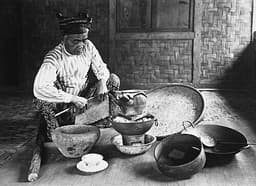
Hamengkubuwono IX
Emperor · Modern
54.8Total
Basic Information
Born
1629
1912
Died
1676
1988
Era
Modern
Modern
Nationality
Russia
Indonesia
Occupation
Emperor
Emperor
Civilization
Western
Eastern
Score Comparison
Military (10%)
72.5
21.2
Political (20%)
68.0
72.0
Influence (20%)
56.4
55.0
Legacy (20%)
49.2
50.0
Leadership (15%)
72.0
78.0
Strategy (15%)
60.0
39.6
TOTAL
60.6
54.8
Alexis of Russia — Complete Timeline
1649 AD
Promulgation of the Sobornoye UlozheniyeReform
Alexis issued the Sobornoye Ulozheniye (Council Code), a comprehensive legal code that codified serfdom by eliminating the statute of limitations for the return of fugitive peasants. This code remained in effect until 1832.
Legal CodeSerfdomReform
Impact: national
1654 AD
Russo-Polish War (1654-1667)War◆ Major
Alexis launched a war against Poland-Lithuania to claim Ukraine. Russian forces captured Smolensk, Vilnius, and much of Lithuania. The war ended with the Truce of Andrusovo in 1667, which ceded Smolensk and left-bank Ukraine to Russia.
PolandUkraineWar
Impact: regional
Pereyaslavl Agreement with UkrainePolitical Action
Alexis agreed to the Pereyaslavl Agreement, placing the Zaporozhian Cossack Hetmanate under Russian protection. This led to the Russo-Polish War and eventually brought left-bank Ukraine and Kiev under Russian control.
UkraineCossacksPoland
Impact: regional
1662 AD
Copper Riot in MoscowPolitical Action
Alexis's government issued copper coins to replace silver, causing inflation and economic crisis. A mob of thousands marched on Moscow demanding punishment of officials. The uprising was brutally suppressed, with hundreds killed.
RiotEconomyInflation
Impact: nationaltragic
1666 AD
Raskol (Schism) in the Russian Orthodox ChurchCultural◆ Major
Alexis supported Patriarch Nikon's liturgical reforms, which aimed to correct Russian Orthodox practices to align with Greek traditions. The reforms caused a schism, with Old Believers rejecting the changes and facing persecution.
ChurchSchismOld Believers
Impact: national
1670 AD
Razin RebellionWar◆ Major
Cossack leader Stenka Razin led a major uprising of peasants, Cossacks, and non-Russian peoples along the Volga River. The rebellion captured several cities before being crushed by Alexis's army. Razin was executed in 1671.
RebellionRazinVolga
Impact: regional
Hamengkubuwono IX — Complete Timeline
1940 AD
Accession as Sultan of YogyakartaPolitical Action◆ Major
Hamengkubuwono IX became the Sultan of Yogyakarta, a princely state in the Dutch East Indies. His reign began during the Japanese occupation, and he later played a key role in the Indonesian National Revolution.
AccessionYogyakartaIndonesian Independence
Impact: national
1945 AD
Support for Indonesian IndependencePolitical Action◆ Major
Hamengkubuwono IX declared his support for the newly proclaimed Republic of Indonesia, offering Yogyakarta as the republic's capital. His decision provided a safe haven for the republican government during the war for independence.
Indonesian National RevolutionCapitalSupport
Impact: nationalconstructive
1966 AD
Role in the March 11 Order (Supersemar)Political Action◆ Major
Hamengkubuwono IX, along with other senior military figures, was involved in the transfer of executive authority from President Sukarno to General Suharto via the Supersemar document. This event marked the beginning of Suharto's New Order regime.
SupersemarTransition of PowerNew Order
Impact: national
1973 AD
Appointment as Vice President of IndonesiaPolitical Action◆ Major
Hamengkubuwono IX was elected Vice President of Indonesia under President Suharto, serving until 1978. His role symbolized the integration of traditional Javanese monarchy into the modern Indonesian state.
Vice PresidentSuhartoNew Order
Impact: national
1988 AD
Death and State FuneralOther
Hamengkubuwono IX died in Jakarta and was given a state funeral. He was buried in the royal cemetery at Imogiri, Yogyakarta. His death marked the end of an era for the Yogyakarta Sultanate and Indonesian politics.
DeathState FuneralYogyakarta
Impact: nationaltragic
Expert Analysis
Origins
Alexis of Russia, born in 1629, was the second tsar of the Romanov dynasty. His father, Michael I, had restored stability after the Time of Troubles. Alexis received a traditional education, studying religious texts and statecraft. His early years were marked by the influence of his tutor, Boris Morozov, who shaped his views on autocracy and serfdom.
Hamengkubuwono IX, born in 1912 as Raden Mas Dorodjatun, was the son of Sultan Hamengkubuwono VIII of Yogyakarta. He studied in the Netherlands, attending the University of Leiden, and was exposed to Western political ideas. He became sultan in 1940, during the Japanese occupation of the Dutch East Indies.
Rise to Power
Alexis ascended the throne in 1645 at age 16, with Morozov as regent. He consolidated power by suppressing urban uprisings, notably the Salt Riot of 1648, and by issuing the Sobornoye Ulozheniye in 1649, which codified serfdom and strengthened autocracy. His military expansion began with the Pereyaslavl Agreement in 1654, which brought Ukraine under Russian protection and triggered the Russo-Polish War.
Hamengkubuwono IX became sultan in 1940, but his rise to national prominence came after World War II. In 1945, he declared support for Indonesian independence and offered Yogyakarta as the republic's capital. This decision, scored at 72.0 in political acumen, positioned him as a key figure in the revolution. He served as governor of Yogyakarta and later as vice president under Suharto.
Leadership & Governance
Alexis ruled as an autocrat, centralizing power and suppressing dissent. He supported Patriarch Nikon's church reforms, which caused the Raskol (schism) and alienated traditionalists. His governance relied on a coalition of boyars and gentry, but he failed to modernize the state's finances or military structure, leading to recurring rebellions like the Razin Uprising (1670-1671). His leadership score of 72.0 reflects his ability to maintain control but at a cost of social stability.
Hamengkubuwono IX led through diplomacy and symbolic authority. As sultan, he retained traditional legitimacy while embracing republican ideals. He served as vice president (1973-1978), bridging the gap between traditional monarchy and modern state. His leadership score of 78.0 is higher than Alexis's, reflecting his role in unifying Indonesia and facilitating the transition to Suharto's New Order without widespread violence.
Triumph & Tragedy
Alexis's greatest triumph was the expansion of Russian territory, capturing Smolensk, Vilnius, and much of Lithuania in the Russo-Polish War, and securing Ukraine. His codification of serfdom stabilized the social order but at a tragic cost: it legalized the bondage of millions, hindering economic development and creating long-term social strife. The Raskol also divided the Orthodox Church, leading to persecution of Old Believers.
Hamengkubuwono IX's triumph was his support for Indonesian independence, which helped legitimize the republic and provided a safe haven for the government. His role in the March 11 Order (Supersemar) in 1966, which transferred power from Sukarno to Suharto, was controversial. While it ended political chaos, it also facilitated Suharto's authoritarian rule. His death in 1988 marked the end of an era, but he is remembered as a unifier.
Character & Destiny
Alexis was cautious and devout, often guided by advisors like Morozov and Nikon. His indecisiveness in military campaigns and reliance on outdated tactics limited his effectiveness. His strategy score of 60.0 reflects a reactive rather than proactive approach. He died in 1676, leaving a legacy of centralized but brittle autocracy.
Hamengkubuwono IX was pragmatic and adaptable, balancing tradition with modernity. His political score of 72.0 and leadership score of 78.0 highlight his ability to navigate complex political landscapes. He chose to support the republic rather than oppose it, ensuring his dynasty's survival. His destiny was to be a founding father of modern Indonesia.
Legacy
Alexis's legacy is mixed: he expanded Russia's borders and codified its laws, but his entrenchment of serfdom contributed to the country's backwardness. His total score of 60.6 reflects limited long-term influence compared to later reformers like Peter the Great. The Sobornoye Ulozheniye remained in effect until the 19th century, but its impact was largely negative.
Hamengkubuwono IX's legacy is more positive: he is celebrated as a national hero who supported independence and modernized the sultanate. His influence score of 55.0 and legacy score of 50.0 reflect his role in Indonesia's founding. Yogyakarta remains a special region with his descendants as sultans, and he is remembered for his integrity and statesmanship.
Conclusion
Alexis of Russia, with a total score of 60.6, had a greater immediate impact on his country's territorial expansion and legal structure, but his policies ultimately hindered development. Hamengkubuwono IX, scoring 54.8, had a more positive and lasting influence on Indonesia's independence and political integration. While Alexis's military achievements were significant (72.5 vs 21.2), Hamengkubuwono IX's leadership (78.0 vs 72.0) and political acumen (72.0 vs 68.0) were superior. In terms of net positive impact on human welfare, Hamengkubuwono IX is the more admirable figure. However, by raw historical weight, Alexis's decisions affected more people over a longer period, making him the more significant figure in global history.
Rankings
🥇
Alexis of RussiaLeader
Mil: 72.5Pol: 68.0Inf: 56.4
60.6
🥈
Hamengkubuwono IX
Mil: 21.2Pol: 72.0Inf: 55.0
54.8
+5.8 behind
How This Comparison Works
Algorithm
Each figure is scored on 6 dimensions (0—100 scale) based on structured historical data: Military (10%), Political (20%), Influence (20%), Legacy (20%), Leadership (15%), Strategy (15%). The weighted total produces the final ranking.
Data Sources
Scores are computed from structured sub-indicators in the database. Scale factors adjust for era (Ancient ×0.85, Modern ×1.0) and civilization size (Eastern ×1.05, Other ×0.80) to account for differences in population and military scale.
Maximum 3 Figures
Comparisons are limited to 2—3 figures to ensure readability and statistical meaningfulness.
Error Margins
±5 points per dimension — Sub-scores are derived from historical records with inherent uncertainty. Two figures within 5 points on a dimension should be considered roughly equivalent in that area.
Total Score Accuracy
±3 points overall — The weighted combination of 6 dimensions produces a total score with approximately ±3 points of uncertainty. Differences of less than 3 points are not statistically significant— the figures are effectively tied.
Known Limitations
- Historical records are incomplete and uneven across civilizations
- Figures from oral-tradition societies may be underrepresented
- Occupation labels can misclassify multi-role figures
- Scores measure capability and impact, not moral character
- Quantitative scoring is a comparison tool, not absolute truth
Capability Radar
Military (10%) — Battles & Warfare
Battles
55
10
Win Rate
60
10
Expansion
65
10
Political (20%) — Governance & Reform
Reform
55
80
Diplomacy
50
70
Economy
45
60
Influence (20%) — Cultural & Global Reach
Cultural
40
60
Global
40
55
Legacy (20%) — Historical Impact
Historical
55
65
Longevity
50
50
Leadership (15%) — Power & Stability
Tenure
60
70
Stability
50
75
Strategy (15%) — Tactics & Innovation
Strategy
55
10
Tactics
40
10
Reform
50
20
Similar Comparisons
Comments & Discussion
No comments yet. Be the first to share your thoughts!