Loading...
Alexios III Angelos vs Otto III
Otto III leads by 5.8 pts · 2 figures compared
…
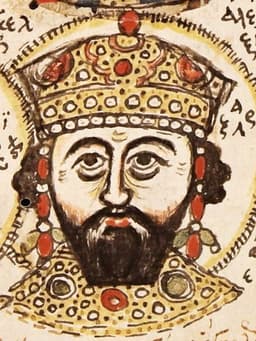
Alexios III Angelos
Emperor · Medieval
37.5Total
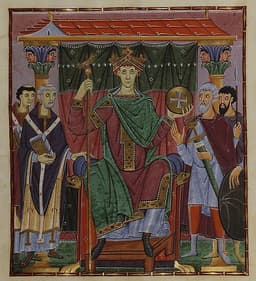
Otto III
Emperor · Medieval
43.3Total
Basic Information
Born
1153
980
Died
1211
1002
Era
Medieval
Medieval
Nationality
Byzantine Empire
Holy Roman Empire
Occupation
Emperor
Emperor
Civilization
Western
Western
Score Comparison
Military (10%)
20.0
50.0
Political (20%)
32.1
35.1
Influence (20%)
45.5
54.9
Legacy (20%)
35.8
44.2
Leadership (15%)
39.0
31.2
Strategy (15%)
45.0
35.7
TOTAL
37.5
43.3
Alexios III Angelos — Complete Timeline
1195 AD
Usurpation of the throne from Isaac IIPolitical Action◆ Major
Alexios III Angelos overthrew his brother Isaac II in a palace coup, blinding and imprisoning him. Alexios III then ruled as emperor, but his reign was marked by corruption, fiscal mismanagement, and the weakening of Byzantine defenses.
CoupDynastic ConflictUsurpation
Impact: nationaldestructive
1203 AD
Flight from Constantinople during the Fourth CrusadePolitical Action◆ Major
When the Fourth Crusade besieged Constantinople in 1203, Alexios III fled the city with the imperial treasury, abandoning his subjects. His cowardly flight left the capital defenseless and allowed the crusaders to restore Isaac II and Alexios IV, but also set the stage for the eventual sack of Constantinople in 1204.
Fourth CrusadeFlightAbandonment
Impact: regionaltragic
1211 AD
Capture and death in Nicaean captivityPolitical Action
Alexios III was captured by Theodore I Laskaris, the Nicaean emperor, after attempting to regain power with Seljuk support. He was imprisoned in a monastery in Nicaea, where he died later that year, ending his attempts to reclaim the Byzantine throne.
CaptivityNicaean EmpireSeljuk Alliance
tragic
Otto III — Complete Timeline
996 AD
Coronation as Holy Roman EmperorPolitical Action◆ Major
Otto III was crowned Holy Roman Emperor by Pope Gregory V in Rome. He was 16 years old at the time. His coronation symbolized the close relationship between the empire and the papacy. Otto aimed to restore the glory of the ancient Roman Empire.
CoronationHoly Roman EmpirePapacy
Impact: regionalconstructive
998 AD
Establishment of the 'Renovatio Imperii Romanorum'Political Action◆ Major
Otto III pursued the 'Renovatio Imperii Romanorum' (Renewal of the Roman Empire), aiming to revive Roman imperial traditions. He moved his court to Rome and adopted Roman titles and ceremonies. This policy alienated German nobles and led to conflicts.
RenovatioRoman EmpireImperial Policy
Impact: regionalconstructive
999 AD
Appointment of Pope Sylvester IIPolitical Action◆ Major
Otto III appointed his former tutor Gerbert of Aurillac as Pope Sylvester II. This appointment strengthened the alliance between the empire and the papacy. Sylvester II was a renowned scholar and supported Otto's imperial ambitions.
PapacyAppointmentScholarship
Impact: regionalconstructive
1001 AD
Revolt of the Roman NobilityPolitical Action◆ Major
Otto III faced a revolt by the Roman nobility, led by the Crescentii family. The revolt forced Otto to flee Rome and seek refuge in Pavia. This event demonstrated the fragility of his power in Italy and undermined his 'Renovatio' plans.
RevoltRomeCrisis
Impact: regionaldestructive
1002 AD
Death at Age 21Other◆ Major
Otto III died suddenly at the age of 21 in Paterno, Italy. His death was likely due to malaria. He left no heir, leading to a succession crisis. His dream of restoring the Roman Empire ended with his premature death.
DeathSuccession CrisisEnd of Reign
Impact: regionaltragic
Expert Analysis
Origins
**Alexios III Angelos** (c. 1153–1211) was born into the Angelos family, a minor Byzantine aristocratic clan. His early life is obscure, but he rose through court intrigue. He was the brother of Isaac II Angelos, whom he would later betray. Alexios received a typical Byzantine education but showed no military aptitude.
**Otto III** (980–1002) was born into the Ottonian dynasty, son of Emperor Otto II and Theophanu, a Byzantine princess. He was crowned King of Germany at age 3, inheriting a vast realm. His upbringing was heavily influenced by his mother and grandmother, who fostered a classical education. He learned Latin, Greek, and was tutored by Gerbert of Aurillac (later Pope Sylvester II).
Rise to Power
Alexios III seized power in 1195 by overthrowing his brother Isaac II in a palace coup. He blinded and imprisoned Isaac, then bribed the army and clergy to secure his coronation. His reign began with illegitimacy and a fragile hold on power. He faced immediate threats from the Bulgarians and the Fourth Crusade.
Otto III was elected King of Germany in 983 at age 3, upon his father's death. His mother Theophanu served as regent until her death in 991, followed by his grandmother Adelaide. Otto assumed personal rule in 994 at age 14. He was crowned Holy Roman Emperor by Pope Gregory V in 996 at age 16, a rare instance of imperial-papal cooperation.
Leadership & Governance
Alexios III proved an inept ruler. He relied on corrupt officials and failed to reform the crumbling Byzantine economy. He alienated the military by neglecting the army and navy. During the Fourth Crusade (1203), when the Crusaders besieged Constantinople, Alexios fled with the treasury, leaving his people defenseless. His leadership score of 39.0 reflects his cowardice and incompetence.
Otto III pursued the 'Renovatio Imperii Romanorum' (Renewal of the Roman Empire), establishing his court in Rome and adopting Byzantine ceremonial. He appointed his former tutor Gerbert as Pope Sylvester II, symbolizing the union of imperial and papal authority. However, his idealistic governance alienated the Roman nobility, leading to a revolt in 1001 that forced him to flee. His political score was 35.1, reflecting his failure to secure lasting support.
Triumph & Tragedy
Alexios III's greatest 'success' was his usurpation, but it led to disaster. He briefly maintained power through bribery, but his flight in 1203 was his defining act. He was captured by the Nicaean emperor Theodore I Laskaris in 1211 and died in a monastery. His legacy is one of betrayal and collapse. He scored 20.0 in military and 32.1 in political.
Otto III's triumph was his coronation and the appointment of Sylvester II, which briefly united Christendom. His vision of a renewed Roman Empire inspired later emperors. His tragedy was his early death at age 21, likely from malaria, leaving no heir. His death triggered a succession crisis and the collapse of his dream. He scored 50.0 in military and 35.1 in political.
Character & Destiny
Alexios III was cowardly and self-serving. His decision to flee Constantinople sealed his fate and that of the Byzantine Empire. He lacked the courage to lead, and his character directly caused the fall of his dynasty. Historians dismiss him as a weak and selfish ruler.
Otto III was idealistic and intellectual, but politically naive. He believed in the universal authority of the emperor, but his vision was impractical. His early death cut short his potential, but his character—ambitious and cultured—shaped his destiny as a tragic figure.
Legacy
Alexios III is remembered as the emperor who fled during the Fourth Crusade, contributing to the sack of Constantinople in 1204. His reign weakened Byzantium irreparably. His legacy score is 35.8, reflecting his negative impact.
Otto III's legacy is mixed. His 'Renovatio' idea influenced later Holy Roman Emperors, but his immediate achievements were undone by his death. He is seen as a visionary who failed to implement his dreams. His legacy score is 44.2.
Conclusion
Otto III had greater impact than Alexios III. Otto scored 43.3 overall, compared to Alexios's 37.5. Otto's vision of imperial renewal, though short-lived, shaped medieval political thought. Alexios's cowardice accelerated Byzantium's decline, but his impact was purely destructive. Otto's attempts to revive Rome, however flawed, were more influential. Therefore, Otto III is the more significant historical figure.
Rankings
🥇
Otto IIILeader
Mil: 50.0Pol: 35.1Inf: 54.9
43.3
🥈
Alexios III Angelos
Mil: 20.0Pol: 32.1Inf: 45.5
37.5
+5.8 behind
How This Comparison Works
Algorithm
Each figure is scored on 6 dimensions (0—100 scale) based on structured historical data: Military (10%), Political (20%), Influence (20%), Legacy (20%), Leadership (15%), Strategy (15%). The weighted total produces the final ranking.
Data Sources
Scores are computed from structured sub-indicators in the database. Scale factors adjust for era (Ancient ×0.85, Modern ×1.0) and civilization size (Eastern ×1.05, Other ×0.80) to account for differences in population and military scale.
Maximum 3 Figures
Comparisons are limited to 2—3 figures to ensure readability and statistical meaningfulness.
Error Margins
±5 points per dimension — Sub-scores are derived from historical records with inherent uncertainty. Two figures within 5 points on a dimension should be considered roughly equivalent in that area.
Total Score Accuracy
±3 points overall — The weighted combination of 6 dimensions produces a total score with approximately ±3 points of uncertainty. Differences of less than 3 points are not statistically significant— the figures are effectively tied.
Known Limitations
- Historical records are incomplete and uneven across civilizations
- Figures from oral-tradition societies may be underrepresented
- Occupation labels can misclassify multi-role figures
- Scores measure capability and impact, not moral character
- Quantitative scoring is a comparison tool, not absolute truth
Capability Radar
Military (10%) — Battles & Warfare
Battles
5
15
Win Rate
5
20
Expansion
5
10
Political (20%) — Governance & Reform
Reform
10
30
Diplomacy
10
40
Economy
10
20
Influence (20%) — Cultural & Global Reach
Cultural
5
30
Global
5
20
Legacy (20%) — Historical Impact
Historical
10
35
Longevity
5
20
Leadership (15%) — Power & Stability
Tenure
20
20
Stability
5
15
Strategy (15%) — Tactics & Innovation
Strategy
5
20
Tactics
5
15
Reform
5
10
Similar Comparisons
Comments & Discussion
No comments yet. Be the first to share your thoughts!