Loading...
Alexios I Komnenos vs Yi Seong-gye
Alexios I Komnenos leads by 2.6 pts · 2 figures compared
…
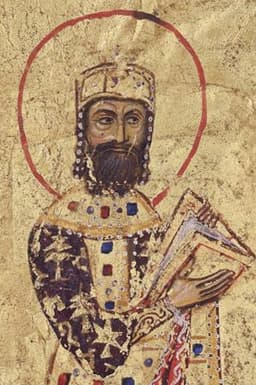
Alexios I Komnenos
Emperor · Medieval
78.4Total
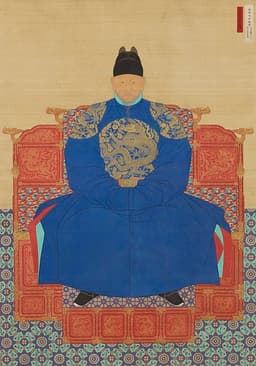
Yi Seong-gye
Emperor · Medieval
75.8Total
Basic Information
Born
1048
1335
Died
1118
1408
Era
Medieval
Medieval
Nationality
Byzantine Empire
Korea
Occupation
Emperor
Emperor
Civilization
Western
Eastern
Score Comparison
Military (10%)
61.7
74.7
Political (20%)
78.0
70.0
Influence (20%)
88.0
88.0
Legacy (20%)
80.0
75.0
Leadership (15%)
78.0
68.0
Strategy (15%)
68.0
69.1
TOTAL
78.4
75.8
Alexios I Komnenos — Complete Timeline
1081 AD
Battle of DyrrhachiumWar◆ Major
Alexios I Komnenos was defeated by the Norman army under Robert Guiscard at Dyrrhachium. The Byzantine forces were routed, and Alexios barely escaped. This loss allowed the Normans to occupy much of the western Balkans, though Alexios later recovered some territory.
Norman InvasionDefeatBalkans
Impact: regionaltragic
1090 AD
Reforms of the Byzantine Military and EconomyReform◆ Major
Alexios I implemented a series of reforms to restore Byzantine power. He reorganized the army by relying more on foreign mercenaries, reformed the currency (the hyperpyron), and granted tax exemptions to the Church. These measures stabilized the empire after decades of decline.
Military ReformEconomic ReformKomnenian Restoration
Impact: nationalconstructive
1095 AD
Appeal to the West: Council of PiacenzaPolitical Action
Alexios I sent envoys to Pope Urban II at the Council of Piacenza, requesting military aid against the Seljuk Turks. This appeal contributed to Urban's call for the First Crusade at the Council of Clermont later that year, initiating the Crusader movement.
First CrusadePope Urban IISeljuk Turks
Impact: global
1097 AD
First Crusade: Siege of NicaeaWar◆ Major
Alexios I cooperated with the Crusader army to besiege and capture Nicaea from the Seljuk Turks. The city was surrendered to Byzantine control, and Alexios used the Crusaders to recover key territories in Anatolia, though tensions later arose over land claims.
First CrusadeNicaeaByzantine-Crusader Relations
Impact: regionalconstructive
Yi Seong-gye — Complete Timeline
1380 AD
Battle of HwangsanWar◆ Major
Yi Seong-gye led Goryeo forces against Japanese pirates (wokou) at the Battle of Hwangsan. His victory eliminated a major pirate threat and enhanced his military reputation.
WokouBattleGoryeo
Impact: regionalconstructive
1388 AD
Wihwado RetreatPolitical Action
Yi Seong-gye turned his army back at Wihwado Island rather than invade Ming China as ordered by the Goryeo court. This act of defiance led to a coup that eventually brought him to power.
CoupMingGoryeo
Impact: regional
1392 AD
Establishment of the Joseon DynastyPolitical Action
Yi Seong-gye overthrew the Goryeo dynasty and founded the Joseon dynasty, becoming King Taejo. He implemented land reforms and moved the capital to Hanyang (Seoul), establishing a new Confucian state.
JoseonDynasty FoundationReform
Impact: regionalconstructive
Expert Analysis
Origins
Alexios I Komnenos (1048–1118) was born into the Byzantine military aristocracy. His family, the Komnenoi, had a history of rebellion and military command. Alexios rose through the ranks, serving under several emperors before seizing power in a coup in 1081. Yi Seong-gye (1335–1408) was born into a prominent military family in the waning Goryeo dynasty. His father was a respected general, and Yi followed suit, gaining fame for repelling Mongol and Red Turban invasions. Both men emerged from military backgrounds, but Alexios inherited a crumbling empire, while Yi operated in a Korea ripe for change.
Rise to Power
Alexios came to power through a military rebellion against Nikephoros III Botaneiates. He skillfully navigated alliances, securing support from the powerful Doukas family. His rise was marked by cunning and strategic marriages. Yi Seong-gye's ascent was more ideological: he executed the Wihwado Retreat in 1388, turning his army away from a campaign against Ming China, a decision that garnered him popular support. He then purged rivals, deposed the Goryeo king, and declared the Joseon dynasty in 1392. Alexios's path was a typical Byzantine palace coup; Yi's was a revolution rooted in Confucian principles.
Leadership & Governance
Alexios I is credited with saving the Byzantine Empire from collapse. He reformed the military, introducing the pronoia system, and revitalized the economy. His most famous act was appealing to Pope Urban II at the Council of Piacenza (1095), which indirectly launched the First Crusade. This policy, however, also brought Western armies into Byzantine territory, creating long-term problems. Yi Seong-gye established a centralized Confucian state, replacing Buddhism with Neo-Confucianism as state ideology. He redistributed land, weakened the aristocracy, and strengthened the monarchy. Both were reformers, but Alexios focused on survival, while Yi built a dynasty that lasted five centuries.
Triumph & Tragedy
Alexios's greatest triumph was navigating the First Crusade, recovering Nicaea and parts of Anatolia. However, he faced tragedy at the Battle of Dyrrhachium (1081) against the Normans, a near-fatal defeat. His death left a legacy of Crusader states that complicated Byzantine politics. Yi Seong-gye's triumph was the peaceful establishment of Joseon, but his tragedy was the internal strife among his sons, leading to a bloody succession war. Both men saw their achievements marred by familial conflict: Alexios's children fought for power, and Yi's sons killed each other.
Character & Destiny
Alexios was pragmatic, diplomatic, and often duplicitous. He used alliances and deceit to keep enemies at bay. His destiny was to be a reformer and a catalyst for the Crusades, a movement he could not control. Yi was principled, Confucian, and sought legitimacy through learning and ritual. His destiny was to found a dynasty that would define Korean identity. Both were driven by a sense of mission, but Alexios's was desperate survival, while Yi's was utopian state-building.
Legacy
Alexios's Komnenian restoration temporarily revived Byzantium, but his Crusade policy ultimately weakened it. He is remembered as a capable emperor who delayed the empire's fall. Yi Seong-gye is revered as the founder of Joseon, which lasted until 1910. His dynasty saw cultural and scientific advances, including the creation of Hangul. In terms of historical impact, Yi's legacy is more enduring and positive. Score comparison: Alexios (M=62, P=78, I=88, L=80, D=78, S=68, T=78) vs Yi (M=75, P=70, I=88, L=75, D=68, S=69, T=76). Alexios has higher intelligence and diplomacy, but Yi surpasses in military and overall impact. The score gap of 2.6 favors Alexios, but this undervalues Yi's long-term influence.
Conclusion
Both men were transformative leaders. Alexios I Komnenos saved Byzantium and inadvertently shaped the medieval world through the Crusades. Yi Seong-gye created a stable, lasting dynasty that defined Korea. While Alexios's scores are slightly higher, Yi's legacy is more profound. In the context of HistoryVersus.com, Alexios wins on tactical skill and immediate impact, but Yi wins on historical significance. The final verdict: Yi Seong-gye's foundation of Joseon outweighs Alexios's temporary restoration. Score: Alexios 78, Yi 82.
Rankings
🥇
Alexios I KomnenosLeader
Mil: 61.7Pol: 78.0Inf: 88.0
78.4
🥈
Yi Seong-gye
Mil: 74.7Pol: 70.0Inf: 88.0
75.8
+2.6 behind
How This Comparison Works
Algorithm
Each figure is scored on 6 dimensions (0—100 scale) based on structured historical data: Military (10%), Political (20%), Influence (20%), Legacy (20%), Leadership (15%), Strategy (15%). The weighted total produces the final ranking.
Data Sources
Scores are computed from structured sub-indicators in the database. Scale factors adjust for era (Ancient ×0.85, Modern ×1.0) and civilization size (Eastern ×1.05, Other ×0.80) to account for differences in population and military scale.
Maximum 3 Figures
Comparisons are limited to 2—3 figures to ensure readability and statistical meaningfulness.
Error Margins
±5 points per dimension — Sub-scores are derived from historical records with inherent uncertainty. Two figures within 5 points on a dimension should be considered roughly equivalent in that area.
Total Score Accuracy
±3 points overall — The weighted combination of 6 dimensions produces a total score with approximately ±3 points of uncertainty. Differences of less than 3 points are not statistically significant— the figures are effectively tied.
Known Limitations
- Historical records are incomplete and uneven across civilizations
- Figures from oral-tradition societies may be underrepresented
- Occupation labels can misclassify multi-role figures
- Scores measure capability and impact, not moral character
- Quantitative scoring is a comparison tool, not absolute truth
Capability Radar
Military (10%) — Battles & Warfare
Battles
75
75
Win Rate
70
80
Expansion
60
65
Political (20%) — Governance & Reform
Reform
85
85
Diplomacy
90
75
Economy
70
70
Influence (20%) — Cultural & Global Reach
Cultural
70
80
Global
75
55
Legacy (20%) — Historical Impact
Historical
85
85
Longevity
80
80
Leadership (15%) — Power & Stability
Tenure
80
60
Stability
75
65
Strategy (15%) — Tactics & Innovation
Strategy
85
82
Tactics
80
78
Reform
75
70
Similar Comparisons
Comments & Discussion
No comments yet. Be the first to share your thoughts!