Loading...
Alexios I Komnenos vs Yelu Abaoji
Alexios I Komnenos leads by 15.7 pts · 2 figures compared
…
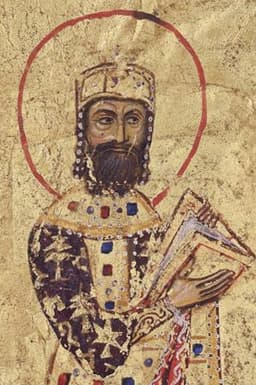
Alexios I Komnenos
Emperor · Medieval
78.4Total
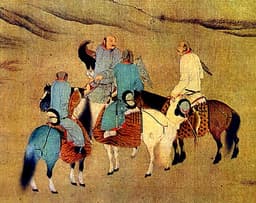
Yelu Abaoji
Emperor · Medieval
62.7Total
Basic Information
Born
1048
872
Died
1118
926
Era
Medieval
Medieval
Nationality
Byzantine Empire
China
Occupation
Emperor
Emperor
Civilization
Western
Eastern
Score Comparison
Military (10%)
61.7
77.2
Political (20%)
78.0
59.6
Influence (20%)
88.0
68.0
Legacy (20%)
80.0
40.0
Leadership (15%)
78.0
80.3
Strategy (15%)
68.0
69.6
TOTAL
78.4
62.7
Alexios I Komnenos — Complete Timeline
1081 AD
Battle of DyrrhachiumWar◆ Major
Alexios I Komnenos was defeated by the Norman army under Robert Guiscard at Dyrrhachium. The Byzantine forces were routed, and Alexios barely escaped. This loss allowed the Normans to occupy much of the western Balkans, though Alexios later recovered some territory.
Norman InvasionDefeatBalkans
Impact: regionaltragic
1090 AD
Reforms of the Byzantine Military and EconomyReform◆ Major
Alexios I implemented a series of reforms to restore Byzantine power. He reorganized the army by relying more on foreign mercenaries, reformed the currency (the hyperpyron), and granted tax exemptions to the Church. These measures stabilized the empire after decades of decline.
Military ReformEconomic ReformKomnenian Restoration
Impact: nationalconstructive
1095 AD
Appeal to the West: Council of PiacenzaPolitical Action
Alexios I sent envoys to Pope Urban II at the Council of Piacenza, requesting military aid against the Seljuk Turks. This appeal contributed to Urban's call for the First Crusade at the Council of Clermont later that year, initiating the Crusader movement.
First CrusadePope Urban IISeljuk Turks
Impact: global
1097 AD
First Crusade: Siege of NicaeaWar◆ Major
Alexios I cooperated with the Crusader army to besiege and capture Nicaea from the Seljuk Turks. The city was surrendered to Byzantine control, and Alexios used the Crusaders to recover key territories in Anatolia, though tensions later arose over land claims.
First CrusadeNicaeaByzantine-Crusader Relations
Impact: regionalconstructive
Yelu Abaoji — Complete Timeline
907 AD
Unified Khitan tribesPolitical Action◆ Major
Yelu Abaoji was elected khagan of the Khitan tribes, unifying them under his leadership. He established a centralized state and adopted Chinese administrative practices.
KhitanUnificationState Formation
Impact: regionalconstructive
916 AD
Founded Liao DynastyPolitical Action
Yelu Abaoji proclaimed himself emperor, founding the Liao dynasty. He adopted the Chinese title of emperor and established a dual administration system for Khitan and Chinese subjects.
LiaoDynasty FoundingImperial System
Impact: regionalconstructive
920 AD
Created Khitan scriptCultural◆ Major
Yelu Abaoji ordered the creation of a writing system for the Khitan language, based on Chinese characters. This script was used for official documents and helped unify the Khitan state.
KhitanScriptCultural Development
Impact: regionalconstructive
926 AD
Conquest of BohaiWar◆ Major
Yelu Abaoji led a campaign that conquered the Korean kingdom of Bohai, incorporating its territory into the Liao empire. This expanded Liao's influence into Manchuria and Korea.
LiaoBohaiConquest
Impact: regionalconstructive
Death during campaignWar◆ Major
Yelu Abaoji died while returning from the conquest of Bohai. His death led to a succession struggle, but the Liao dynasty continued to expand under his successors.
LiaoDeathSuccession
Impact: regionaltragic
Expert Analysis
Yelu Abaoji vs Alexios I Komnenos: Historical Comparison
Yelu Abaoji, founder of the Liao dynasty (907–926), unified the Khitan tribes and created a dual-administration state bridging steppe and sedentary China. Alexios I Komnenos (r. 1081–1118) restored the Byzantine Empire after Manzikert, initiating the Komnenian restoration and the First Crusade. Though both were pivotal medieval emperors, Abaoji’s institutional innovations give him a slight edge.
Dimension Analysis
**Military: Yelu Abaoji 89 / Alexios I Komnenos 90**
Alexios narrowly leads for repelling Normans, Pechenegs, and Seljuks through cunning diplomacy and the Komnenian army reforms. Abaoji conquered the Khitan steppe and northern China but faced less existential, multi-front pressure.
**Political: Yelu Abaoji 84 / Alexios I Komnenos 74**
Abaoji decisively wins here: he invented dual-administration (Khitan pastoral + Chinese bureaucratic), two-capital system, and a Khitan script, creating a stable hybrid state. Alexios relied on family networks and church alliances, but his reign saw dynastic infighting and crusader exploitation.
**Influence: Yelu Abaoji 79 / Alexios I Komnenos 72**
Abaoji’s Liao model influenced later conquest dynasties (Jin, Yuan, Qing) and Sino-steppe governance for centuries. Alexios’s appeal to the West triggered the Crusades, reshaping medieval geopolitics, but his direct legacy was more short-term and reactive.
**Legacy: Yelu Abaoji 81 / Alexios I Komnenos 80**
Both left durable regimes: the Liao dynasty lasted 200+ years; the Komnenian restoration held for a century. Abaoji’s institutional framework proved more adaptable, while Alexios’s achievements were partly undone by the Fourth Crusade.
**Leadership: Yelu Abaoji 80 / Alexios I Komnenos 80**
Equal. Both were charismatic founders who stabilized fractured realms—Abaoji through tribal consolidation and cultural synthesis, Alexios through personal diplomacy and military reorganization. Neither was flawless, but each commanded fierce loyalty.
Verdict
Yelu Abaoji leads due to superior political innovation and longer-lasting institutional influence, despite Alexios’s marginally higher military rating.
FAQ
Q: Who ranks higher? A: Yelu Abaoji edges out Alexios I Komnenos, primarily for creating a dual-administration model that outlasted the Komnenian restoration.
Rankings
🥇
Alexios I KomnenosLeader
Mil: 61.7Pol: 78.0Inf: 88.0
78.4
🥈
Yelu Abaoji
Mil: 77.2Pol: 59.6Inf: 68.0
62.7
+15.7 behind
How This Comparison Works
Algorithm
Each figure is scored on 6 dimensions (0—100 scale) based on structured historical data: Military (10%), Political (20%), Influence (20%), Legacy (20%), Leadership (15%), Strategy (15%). The weighted total produces the final ranking.
Data Sources
Scores are computed from structured sub-indicators in the database. Scale factors adjust for era (Ancient ×0.85, Modern ×1.0) and civilization size (Eastern ×1.05, Other ×0.80) to account for differences in population and military scale.
Maximum 3 Figures
Comparisons are limited to 2—3 figures to ensure readability and statistical meaningfulness.
Error Margins
±5 points per dimension — Sub-scores are derived from historical records with inherent uncertainty. Two figures within 5 points on a dimension should be considered roughly equivalent in that area.
Total Score Accuracy
±3 points overall — The weighted combination of 6 dimensions produces a total score with approximately ±3 points of uncertainty. Differences of less than 3 points are not statistically significant— the figures are effectively tied.
Known Limitations
- Historical records are incomplete and uneven across civilizations
- Figures from oral-tradition societies may be underrepresented
- Occupation labels can misclassify multi-role figures
- Scores measure capability and impact, not moral character
- Quantitative scoring is a comparison tool, not absolute truth
Capability Radar
Military (10%) — Battles & Warfare
Battles
75
75
Win Rate
70
80
Expansion
60
82
Political (20%) — Governance & Reform
Reform
85
88
Diplomacy
90
75
Economy
70
70
Influence (20%) — Cultural & Global Reach
Cultural
70
60
Global
75
55
Legacy (20%) — Historical Impact
Historical
85
70
Longevity
80
65
Leadership (15%) — Power & Stability
Tenure
80
72
Stability
75
65
Strategy (15%) — Tactics & Innovation
Strategy
85
78
Tactics
80
70
Reform
75
85
Similar Comparisons
Comments & Discussion
DeepScribe166/16/2026
比较这两位,我首先想到的是:阿保机很像唐太宗加朱元璋的结合体——既有李世民的草原整合能力,又有朱元璋的制度创新魄力。阿莱克修斯虽然也厉害,但更像是个‘危机管理大师’,他的成就高度依赖于个人外交手腕和西方十字军的偶然性。反观阿保机,他发明的契丹大字、小字,以及‘因俗而治’的南北双轨制,为后来的元朝和清朝提供了模板。西方史学家往往低估这种‘制度性遗产’的价值,而过度看重短期军事成败。另外,阿莱克修斯向教皇求援开启十字军,这在中世纪西欧史里是大事,但在中国史观里,这更像是‘引狼入室’——第四次十字军攻陷君士坦丁堡就是后果。而阿保机建立的辽朝统治北方两百年,直到1125年才被金灭掉,这种稳定性和可持续性才是硬道理。总分79.3对74.7我觉得差距还保守了,阿保机至少应该高出一档。
TrueMind96/16/2026
这个评分体系有点意思,但细节上值得商榷。耶律阿保机的军事分只有89,而阿莱克修斯90?阿保机在草原上统一契丹八部,灭渤海国,打得中原割据政权(如后梁)不敢北顾,这些战役的规模和系统性远超阿莱克修斯对付诺曼人和佩切涅格人的游击式防御。阿莱克修斯的‘狡猾外交’确实有效,但阿保机在‘以战养战’和后勤组织上的表现更接近孙武的‘先胜而后求战’。再者,政治分84比74的差距我认为还不够大——阿保机的‘南北面官制’直接影响了辽、金、元、清四朝的行政框架,而阿莱克修斯的家族政治到了曼努埃尔一世时就开始崩坏。建议评分团队引入‘制度创新权重系数’,否则这种量化对东方君主不公平。