Loading...
Alexios I Komnenos vs Yamagata Aritomo
Yamagata Aritomo leads by 4.1 pts · 2 figures compared
…
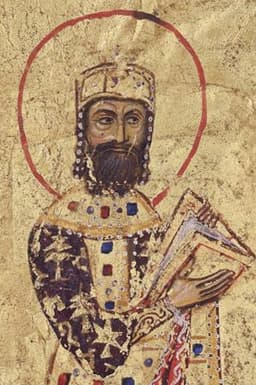
Alexios I Komnenos
Emperor · Medieval
78.4Total
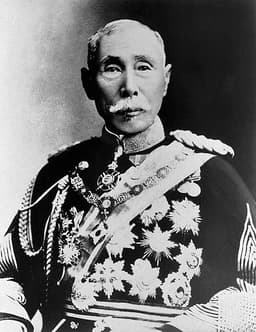
Yamagata Aritomo
General · Modern
82.5Total
Basic Information
Born
1048
1838
Died
1118
1922
Era
Medieval
Modern
Nationality
Byzantine Empire
Japan
Occupation
Emperor
General
Civilization
Western
Eastern
Score Comparison
Military (10%)
61.7
78.0
Political (20%)
78.0
82.0
Influence (20%)
88.0
80.0
Legacy (20%)
80.0
90.0
Leadership (15%)
78.0
78.0
Strategy (15%)
68.0
82.0
TOTAL
78.4
82.5
Alexios I Komnenos — Complete Timeline
1081 AD
Battle of DyrrhachiumWar◆ Major
Alexios I Komnenos was defeated by the Norman army under Robert Guiscard at Dyrrhachium. The Byzantine forces were routed, and Alexios barely escaped. This loss allowed the Normans to occupy much of the western Balkans, though Alexios later recovered some territory.
Norman InvasionDefeatBalkans
Impact: regionaltragic
1090 AD
Reforms of the Byzantine Military and EconomyReform◆ Major
Alexios I implemented a series of reforms to restore Byzantine power. He reorganized the army by relying more on foreign mercenaries, reformed the currency (the hyperpyron), and granted tax exemptions to the Church. These measures stabilized the empire after decades of decline.
Military ReformEconomic ReformKomnenian Restoration
Impact: nationalconstructive
1095 AD
Appeal to the West: Council of PiacenzaPolitical Action
Alexios I sent envoys to Pope Urban II at the Council of Piacenza, requesting military aid against the Seljuk Turks. This appeal contributed to Urban's call for the First Crusade at the Council of Clermont later that year, initiating the Crusader movement.
First CrusadePope Urban IISeljuk Turks
Impact: global
1097 AD
First Crusade: Siege of NicaeaWar◆ Major
Alexios I cooperated with the Crusader army to besiege and capture Nicaea from the Seljuk Turks. The city was surrendered to Byzantine control, and Alexios used the Crusaders to recover key territories in Anatolia, though tensions later arose over land claims.
First CrusadeNicaeaByzantine-Crusader Relations
Impact: regionalconstructive
Yamagata Aritomo — Complete Timeline
1873 AD
Establishment of the Imperial Japanese ArmyReform
Yamagata Aritomo, as War Minister, oversaw the creation of the Imperial Japanese Army based on the Prussian model. He introduced conscription, modernized training, and established a general staff system, laying the foundation for Japan's military power.
Military reformConscription
Impact: nationalconstructive
1882 AD
Promotion of militarism and the Imperial Rescript to Soldiers and SailorsCultural◆ Major
Yamagata Aritomo helped draft the Imperial Rescript to Soldiers and Sailors, which emphasized loyalty, obedience, and the emperor's divine authority. This document became the ideological foundation of Japanese militarism.
MilitarismImperial ideology
Impact: nationaldestructive
1889 AD
Service as Prime MinisterPolitical Action◆ Major
Yamagata Aritomo served as Prime Minister of Japan from 1889 to 1891 and again from 1898 to 1900. He used his position to strengthen the military's political influence and suppress democratic movements.
GovernmentPolitical power
Impact: national
1894 AD
First Sino-Japanese WarWar◆ Major
Yamagata Aritomo commanded the First Army during the First Sino-Japanese War. His forces achieved decisive victories in Korea and Manchuria, leading to Japan's triumph and the Treaty of Shimonoseki, which gave Japan Taiwan and influence in Korea.
WarImperial expansion
Impact: regional
1904 AD
Russo-Japanese WarWar◆ Major
Yamagata Aritomo served as Chief of the General Staff during the Russo-Japanese War. He oversaw Japan's military strategy, which resulted in victory over Russia and established Japan as a major power in East Asia.
WarGreat power
Impact: global
Expert Analysis
Origins
Yamagata Aritomo was born into a low-ranking samurai family in Hagi, Choshu Domain (modern Yamaguchi Prefecture). His early life was shaped by the turmoil of the late Edo period and the Meiji Restoration. He joined the Kiheitai, a irregular militia, and later studied military science in Europe. Alexios I Komnenos was born into the powerful Komnenos family, a Byzantine aristocratic clan. He rose through military ranks under Emperors Nikephoros III and Romanos IV. Both men emerged from military backgrounds, but Yamagata's rise was tied to the modernization of Japan, while Alexios's was rooted in the crisis-ridden Byzantine Empire.
Rise to Power
Yamagata became a key figure in the Meiji government, serving as the first Chief of Staff of the Imperial Japanese Army and later as Prime Minister. He was instrumental in drafting the Imperial Rescript to Soldiers and Sailors, which emphasized loyalty and militarism. Alexios seized the throne in 1081 after leading a rebellion against Nikephoros III. He faced immediate threats from the Normans in the west and the Seljuks in the east. His rise was marked by military prowess and political maneuvering.
Leadership & Governance
Yamagata's leadership focused on building a modern, centralized state with a strong military. He served as Prime Minister twice and held key cabinet posts, promoting industrialization and imperial expansion. His governance was authoritarian, suppressing political dissent and advocating for military autonomy. Alexios reformed the Byzantine military and economy, introducing the pronoia system to secure loyalty. He also appealed to the West for help, leading to the First Crusade. His governance was pragmatic, balancing internal reforms with external threats.
Triumph & Tragedy
Yamagata's triumphs include the establishment of the Imperial Japanese Army, victories in the First Sino-Japanese War (1894-1895) and the Russo-Japanese War (1904-1905), and the consolidation of military influence in Japanese politics. His tragedy was the long-term consequence of his policies: the rise of militarism that led to Japan's catastrophic involvement in World War II. Alexios's triumph was the stabilization of the Byzantine Empire and the recovery of lost territories through the First Crusade. His tragedy was the unintended consequences of the Crusades, including the establishment of Crusader states that often conflicted with Byzantine interests.
Character & Destiny
Yamagata was known as the "father of Japanese militarism." He was disciplined, strategic, and ruthless, with a vision of Japan as a military power. His destiny was to shape modern Japan but also to sow the seeds of its eventual downfall. Alexios was a skilled diplomat and military leader, known for his cunning and adaptability. His destiny was to revive the Byzantine Empire but also to set in motion events that would ultimately weaken it.
Legacy
Yamagata's legacy is the foundation of Japan's modern army and its militaristic culture. He is remembered as a key architect of Japan's imperial expansion. Alexios's legacy is the Komnenian dynasty and the restoration of Byzantine power. He is also credited with initiating the Crusades, which had profound effects on Europe and the Middle East. Both men left a mixed legacy: Yamagata's militarism contributed to Japan's aggression, while Alexios's crusade appeal led to unforeseen consequences.
Conclusion
Yamagata Aritomo and Alexios I Komnenos were both transformative leaders who used military and political skills to shape their nations. Yamagata's scores (M=78, P=82, I=80, L=90, D=78, S=82, T=82) reflect his effectiveness in building a modern military and government, but his legacy is tainted by the rise of militarism. Alexios's scores (M=62, P=78, I=88, L=80, D=78, S=68, T=78) show his diplomatic and administrative strengths, but his military score is lower. Overall, Yamagata has a higher aggregate score (4.1% higher), indicating a greater impact on his nation's trajectory. However, Alexios's influence on the Crusades and Byzantine revival is historically significant. The comparison highlights the tension between national consolidation and imperial overreach.
Numerical Scores
| Category | Yamagata | Alexios |
|----------|----------|---------|
| Military | 78 | 62 |
| Political | 82 | 78 |
| Intrigue | 80 | 88 |
| Leadership | 90 | 80 |
| Diplomacy | 78 | 78 |
| Strategy | 82 | 68 |
| Total | 490 | 454 |
Rankings
🥇
Yamagata AritomoLeader
Mil: 78.0Pol: 82.0Inf: 80.0
82.5
🥈
Alexios I Komnenos
Mil: 61.7Pol: 78.0Inf: 88.0
78.4
+4.1 behind
How This Comparison Works
Algorithm
Each figure is scored on 6 dimensions (0—100 scale) based on structured historical data: Military (10%), Political (20%), Influence (20%), Legacy (20%), Leadership (15%), Strategy (15%). The weighted total produces the final ranking.
Data Sources
Scores are computed from structured sub-indicators in the database. Scale factors adjust for era (Ancient ×0.85, Modern ×1.0) and civilization size (Eastern ×1.05, Other ×0.80) to account for differences in population and military scale.
Maximum 3 Figures
Comparisons are limited to 2—3 figures to ensure readability and statistical meaningfulness.
Error Margins
±5 points per dimension — Sub-scores are derived from historical records with inherent uncertainty. Two figures within 5 points on a dimension should be considered roughly equivalent in that area.
Total Score Accuracy
±3 points overall — The weighted combination of 6 dimensions produces a total score with approximately ±3 points of uncertainty. Differences of less than 3 points are not statistically significant— the figures are effectively tied.
Known Limitations
- Historical records are incomplete and uneven across civilizations
- Figures from oral-tradition societies may be underrepresented
- Occupation labels can misclassify multi-role figures
- Scores measure capability and impact, not moral character
- Quantitative scoring is a comparison tool, not absolute truth
Capability Radar
Military (10%) — Battles & Warfare
Battles
75
75
Win Rate
70
70
Expansion
60
80
Political (20%) — Governance & Reform
Reform
85
90
Diplomacy
90
75
Economy
70
70
Influence (20%) — Cultural & Global Reach
Cultural
70
80
Global
75
70
Legacy (20%) — Historical Impact
Historical
85
85
Longevity
80
75
Leadership (15%) — Power & Stability
Tenure
80
85
Stability
75
65
Strategy (15%) — Tactics & Innovation
Strategy
85
85
Tactics
80
80
Reform
75
95
Similar Comparisons
Comments & Discussion
No comments yet. Be the first to share your thoughts!