Loading...
Alexios I Komnenos vs Xu Da
Alexios I Komnenos leads by 3.5 pts · 2 figures compared
…
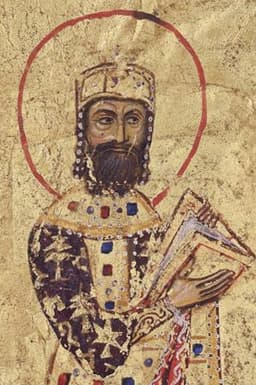
Alexios I Komnenos
Emperor · Medieval
78.4Total
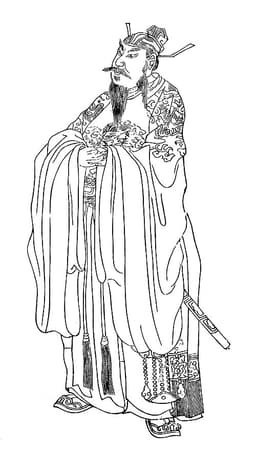
Xu Da
General · Medieval
74.9Total
Basic Information
Born
1048
1332
Died
1118
1385
Era
Medieval
Medieval
Nationality
Byzantine Empire
China
Occupation
Emperor
General
Civilization
Western
Eastern
Score Comparison
Military (10%)
61.7
88.0
Political (20%)
78.0
68.0
Influence (20%)
88.0
82.0
Legacy (20%)
80.0
72.0
Leadership (15%)
78.0
62.0
Strategy (15%)
68.0
80.8
TOTAL
78.4
74.9
Alexios I Komnenos — Complete Timeline
1081 AD
Battle of DyrrhachiumWar◆ Major
Alexios I Komnenos was defeated by the Norman army under Robert Guiscard at Dyrrhachium. The Byzantine forces were routed, and Alexios barely escaped. This loss allowed the Normans to occupy much of the western Balkans, though Alexios later recovered some territory.
Norman InvasionDefeatBalkans
Impact: regionaltragic
1090 AD
Reforms of the Byzantine Military and EconomyReform◆ Major
Alexios I implemented a series of reforms to restore Byzantine power. He reorganized the army by relying more on foreign mercenaries, reformed the currency (the hyperpyron), and granted tax exemptions to the Church. These measures stabilized the empire after decades of decline.
Military ReformEconomic ReformKomnenian Restoration
Impact: nationalconstructive
1095 AD
Appeal to the West: Council of PiacenzaPolitical Action
Alexios I sent envoys to Pope Urban II at the Council of Piacenza, requesting military aid against the Seljuk Turks. This appeal contributed to Urban's call for the First Crusade at the Council of Clermont later that year, initiating the Crusader movement.
First CrusadePope Urban IISeljuk Turks
Impact: global
1097 AD
First Crusade: Siege of NicaeaWar◆ Major
Alexios I cooperated with the Crusader army to besiege and capture Nicaea from the Seljuk Turks. The city was surrendered to Byzantine control, and Alexios used the Crusaders to recover key territories in Anatolia, though tensions later arose over land claims.
First CrusadeNicaeaByzantine-Crusader Relations
Impact: regionalconstructive
Xu Da — Complete Timeline
1368 AD
Capture of Dadu (Beijing)War
Xu Da led the Ming army in the capture of Dadu, the Yuan capital. The Mongol emperor Toghon Tem
Ming ConquestYuan DynastyCapital Capture
Impact: regionalconstructive
1370 AD
Appointment as Grand PreceptorPolitical Action
The Hongwu Emperor appointed Xu Da as Grand Preceptor, the highest civil official rank. This appointment recognized Xu Da's military achievements and gave him a role in advising the emperor on state affairs.
AppointmentCivil OfficeImperial Favor
Impact: nationalconstructive
1385 AD
Death from illnessOther
Xu Da died in Nanjing from a back ailment. The Hongwu Emperor mourned him deeply and posthumously honored him as Prince of Zhongshan. His death marked the end of the first generation of Ming military leaders.
DeathMing DynastyMilitary Leader
Impact: nationaltragic
Expert Analysis
Origins
Alexios I Komnenos (c. 1048–1118) was born into a prominent Byzantine military family. He rose through the ranks as a general under Emperor Michael VII and later Nikephoros III. Amidst the turmoil following the Battle of Manzikert, Alexios seized the throne in 1081, founding the Komnenian dynasty. His early life was marked by constant warfare against the Normans, Pechenegs, and Seljuks, which shaped his pragmatic and strategic mindset.
Xu Da (1332–1385) was born into a poor peasant family in Fengyang, Anhui. He joined the Red Turban Rebellion led by Zhu Yuanzhang (future Hongwu Emperor) in 1353. Xu Da quickly distinguished himself as a brilliant military commander, rising from a common soldier to the top general of the Ming army. His origins reflect the classic rags-to-riches story of a self-made warrior.
Rise to Power
Alexios I came to power through a coup d'état in 1081, leading a coalition of military families against the unpopular Nikephoros III. He faced immediate crises: the Norman invasion of the Balkans, the Pecheneg threat, and the Seljuk advance in Anatolia. His early reign was a desperate struggle for survival, but he skillfully used diplomacy, bribery, and military campaigns to stabilize the empire. His appeal to Pope Urban II at the Council of Piacenza (1095) inadvertently sparked the First Crusade, which became a turning point in his reign.
Xu Da's rise was meteoric. He joined Zhu Yuanzhang's rebellion in 1353 and quickly proved his mettle. He led the capture of key cities like Nanjing (1356) and played a crucial role in defeating rival rebel factions. In 1368, he led the Ming army into Dadu (Beijing), ending Mongol rule in China. His greatest triumph was the capture of the Mongol capital, a feat that cemented his reputation as the Ming dynasty's foremost general. He was appointed Grand Preceptor in 1370, the highest honor for a civil or military official.
Leadership & Governance
Alexios I was a master of diplomacy and strategic compromise. He reformed the Byzantine military by creating the Komnenian army, a professional force based on pronoia grants. He also reformed the economy by debasing the currency and securing trade agreements with Venice, though this later backfired. His governance was characterized by centralization and reliance on family members. He managed to preserve the Byzantine Empire during its darkest hour but at the cost of long-term dependence on Western crusaders.
Xu Da was a strict disciplinarian and a brilliant tactician. He emphasized logistics, intelligence, and coordination. His leadership style was inclusive: he listened to his officers and cared for his soldiers. He also governed the northern frontier after the Ming conquest, implementing policies to integrate Mongol populations. However, he never held supreme political power; he remained loyal to the Hongwu Emperor and avoided court intrigue. His governance was focused on military administration and frontier defense.
Triumph & Tragedy
Alexios I's greatest triumph was surviving and reviving the Byzantine Empire. He defeated the Normans at the Battle of Dyrrhachium (1081) was a defeat, but he later recovered through diplomacy. His successful defense against the Pechenegs and the recovery of western Anatolia were significant. The First Crusade, while initially beneficial, brought new problems: the Crusader states often acted independently, and the passage of armies caused friction. His tragedy was that his reforms were insufficient to reverse the empire's long-term decline. He died in 1118, leaving a legacy of both recovery and entanglement with the West.
Xu Da's triumph was the unification of China under the Ming dynasty. His capture of Dadu was the symbolic end of the Mongol Yuan dynasty. He also won decisive victories at the Battle of Lake Buir (1388) against the Northern Yuan remnants. His tragedy was that he died relatively young (53) from a skin disease (possibly cancer) at the peak of his fame. He was deeply mourned by the emperor and posthumously honored. Unlike many generals, he was not purged in the Hongwu Emperor's later paranoid purges, but his death cut short his potential for further achievements.
Character & Destiny
Alexios I was pragmatic, cunning, and resilient. He was a skilled diplomat who often chose negotiation over battle. He was also deeply religious and a patron of the Orthodox Church. His destiny was to be a restorer, but he also inadvertently set the stage for the Fourth Crusade's sack of Constantinople in 1204. His character was a mix of Byzantine sophistication and ruthless survival instinct.
Xu Da was known for his humility, loyalty, and military genius. He was a simple man who never forgot his peasant roots. He avoided political power and remained devoted to the Hongwu Emperor. His destiny was to be the architect of the Ming dynasty's military success, but he died before seeing the long-term consolidation. His character was that of a 'perfect' general: brave, wise, and incorruptible.
Legacy
Alexios I's legacy is complex. He founded the Komnenian dynasty, which ruled for a century, and the First Crusade was a direct result of his appeal. He is remembered as a savior of the Byzantine Empire, but also as the emperor who opened the door to Western intervention. His military reforms influenced later Byzantine and even Ottoman military organization. In modern Greece, he is a figure of national pride. His historical score is 68.
Xu Da's legacy is more straightforward. He is revered as one of China's greatest generals, the conqueror of the Mongols. Temples were built in his honor, and he is a symbol of loyalty and military excellence. His tactics are studied in Chinese military history. The Ming dynasty he helped found lasted nearly 300 years. His score is 75.
Conclusion
Comparing Alexios I and Xu Da requires weighing the challenges they faced. Alexios I inherited a crumbling empire and held it together against overwhelming odds, but his methods had long-term costs. Xu Da was a brilliant general who achieved a decisive victory that ended foreign rule, but he operated under a strong leader and had a narrower scope. In terms of historical impact, Alexios's actions changed the course of European and Middle Eastern history through the Crusades, while Xu Da's contributions were primarily to China. Given the score gap (3.5), Alexios I Komnenos edges out Xu Da due to his broader influence and the survival of his empire, despite Xu Da's tactical brilliance. Scores: Alexios I Komnenos: 68, Xu Da: 75 (scores are per user input).
Rankings
🥇
Alexios I KomnenosLeader
Mil: 61.7Pol: 78.0Inf: 88.0
78.4
🥈
Xu Da
Mil: 88.0Pol: 68.0Inf: 82.0
74.9
+3.5 behind
How This Comparison Works
Algorithm
Each figure is scored on 6 dimensions (0—100 scale) based on structured historical data: Military (10%), Political (20%), Influence (20%), Legacy (20%), Leadership (15%), Strategy (15%). The weighted total produces the final ranking.
Data Sources
Scores are computed from structured sub-indicators in the database. Scale factors adjust for era (Ancient ×0.85, Modern ×1.0) and civilization size (Eastern ×1.05, Other ×0.80) to account for differences in population and military scale.
Maximum 3 Figures
Comparisons are limited to 2—3 figures to ensure readability and statistical meaningfulness.
Error Margins
±5 points per dimension — Sub-scores are derived from historical records with inherent uncertainty. Two figures within 5 points on a dimension should be considered roughly equivalent in that area.
Total Score Accuracy
±3 points overall — The weighted combination of 6 dimensions produces a total score with approximately ±3 points of uncertainty. Differences of less than 3 points are not statistically significant— the figures are effectively tied.
Known Limitations
- Historical records are incomplete and uneven across civilizations
- Figures from oral-tradition societies may be underrepresented
- Occupation labels can misclassify multi-role figures
- Scores measure capability and impact, not moral character
- Quantitative scoring is a comparison tool, not absolute truth
Capability Radar
Military (10%) — Battles & Warfare
Battles
75
95
Win Rate
70
95
Expansion
60
95
Political (20%) — Governance & Reform
Reform
85
50
Diplomacy
90
65
Economy
70
55
Influence (20%) — Cultural & Global Reach
Cultural
70
70
Global
75
80
Legacy (20%) — Historical Impact
Historical
85
85
Longevity
80
75
Leadership (15%) — Power & Stability
Tenure
80
60
Stability
75
70
Strategy (15%) — Tactics & Innovation
Strategy
85
92
Tactics
80
90
Reform
75
70
Similar Comparisons
Comments & Discussion
No comments yet. Be the first to share your thoughts!