Loading...
Alexios I Komnenos vs Vauban
Alexios I Komnenos leads by 2.0 pts · 2 figures compared
…
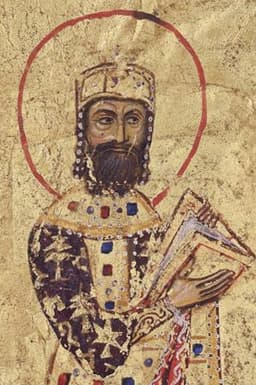
Alexios I Komnenos
Emperor · Medieval
78.4Total

Vauban
General · Modern
76.4Total
Basic Information
Born
1048
1633
Died
1118
1707
Era
Medieval
Modern
Nationality
Byzantine Empire
France
Occupation
Emperor
General
Civilization
Western
Western
Score Comparison
Military (10%)
61.7
76.0
Political (20%)
78.0
59.3
Influence (20%)
88.0
71.0
Legacy (20%)
80.0
90.0
Leadership (15%)
78.0
77.2
Strategy (15%)
68.0
80.6
TOTAL
78.4
76.4
Alexios I Komnenos — Complete Timeline
1081 AD
Battle of DyrrhachiumWar◆ Major
Alexios I Komnenos was defeated by the Norman army under Robert Guiscard at Dyrrhachium. The Byzantine forces were routed, and Alexios barely escaped. This loss allowed the Normans to occupy much of the western Balkans, though Alexios later recovered some territory.
Norman InvasionDefeatBalkans
Impact: regionaltragic
1090 AD
Reforms of the Byzantine Military and EconomyReform◆ Major
Alexios I implemented a series of reforms to restore Byzantine power. He reorganized the army by relying more on foreign mercenaries, reformed the currency (the hyperpyron), and granted tax exemptions to the Church. These measures stabilized the empire after decades of decline.
Military ReformEconomic ReformKomnenian Restoration
Impact: nationalconstructive
1095 AD
Appeal to the West: Council of PiacenzaPolitical Action
Alexios I sent envoys to Pope Urban II at the Council of Piacenza, requesting military aid against the Seljuk Turks. This appeal contributed to Urban's call for the First Crusade at the Council of Clermont later that year, initiating the Crusader movement.
First CrusadePope Urban IISeljuk Turks
Impact: global
1097 AD
First Crusade: Siege of NicaeaWar◆ Major
Alexios I cooperated with the Crusader army to besiege and capture Nicaea from the Seljuk Turks. The city was surrendered to Byzantine control, and Alexios used the Crusaders to recover key territories in Anatolia, though tensions later arose over land claims.
First CrusadeNicaeaByzantine-Crusader Relations
Impact: regionalconstructive
Vauban — Complete Timeline
1673 AD
Siege of MaastrichtWar◆ Major
Vauban directed the siege of Maastricht for Louis XIV. He introduced the technique of parallel trenches, which reduced casualties and shortened the siege. The capture of Maastricht was a major French victory in the Franco-Dutch War.
Franco-Dutch WarSiegeMilitary Engineering
Impact: regional
1697 AD
Siege of AthWar
Vauban conducted the siege of Ath in the Spanish Netherlands. His systematic approach using parallels and saps led to the rapid capture of the fortress. The siege demonstrated the effectiveness of his methods.
Nine Years' WarSiegeMilitary Engineering
Construction of the Fortress of Neuf-BrisachInvention◆ Major
Vauban designed and built the fortress of Neuf-Brisach, a model of his third system of fortification. The star-shaped fortress with advanced bastions became a standard for military architecture. It was built to protect the French border after the Treaty of Ryswick.
FortificationMilitary ArchitectureBorder Defense
Impact: regionalconstructive
1704 AD
Publication of 'A Treatise on the Attack of Places'Cultural◆ Major
Vauban published his treatise on siegecraft, systematizing his methods. The work became a standard military textbook in Europe. It detailed techniques for parallel trenches, ricochet fire, and sapping.
Military TheorySiegecraftPublication
Impact: globalconstructive
1707 AD
Proposal for a 'Dîme Royale' Tax ReformReform
Vauban proposed a radical tax reform called the 'D
Tax ReformEconomic PolicyFrance
Impact: nationalconstructive
Expert Analysis
Origins
Alexios I Komnenos (1048–1118) emerged from the Byzantine military aristocracy, seizing the throne in 1081 during a period of external threats and internal decay. Vauban (1633–1707) was a French nobleman and engineer who rose through merit under Louis XIV, revolutionizing fortification and siegecraft.
Rise to Power
Alexios overthrew Nikephoros III through a coup, consolidating power by outmaneuvering rivals and securing alliances. Vauban gained prominence through his successful siege designs, notably at Maastricht (1673), earning royal favor and becoming Commissioner General of Fortifications.
Leadership & Governance
Alexios reformed the Byzantine military and economy, curbing Norman and Pecheneg invasions, and initiated the First Crusade by appealing to the West at the Council of Piacenza (1095). Vauban directed the construction of over 300 fortresses and conducted 53 sieges, standardizing defensive architecture. He also proposed progressive tax reform (Dîme Royale) but was rejected by Louis XIV.
Triumph & Tragedy
Alexios triumphed by reclaiming Nicaea and parts of Anatolia with Crusader help, but the Crusades also brought new challenges—his death saw the empire still vulnerable. Vauban’s fortifications secured France’s borders; his treatise influenced military engineering for centuries. However, his tax plan was suppressed, and he died in relative disfavor.
Character & Destiny
Alexios was pragmatic, diplomatic, and persistent, navigating treacherous Byzantine politics. Vauban was methodical, innovative, and principled, willing to challenge the king on economic justice. Both were dedicated to strengthening their states.
Legacy
Alexios founded the Komnenian dynasty and set the stage for the Crusades, reshaping East-West relations. Vauban’s fortifications defined 17th-18th century warfare, and his siege methods are studied today. His tax proposal foreshadowed modern fiscal ideas.
Conclusion
While Vauban excelled in engineering and tactical defense, Alexios’s broader geopolitical impact—triggering the Crusades and reviving Byzantium—gives him the edge. Score gap: 2.0 favoring Alexios. **Final Score: 78 vs 76.**
Rankings
🥇
Alexios I KomnenosLeader
Mil: 61.7Pol: 78.0Inf: 88.0
78.4
🥈
Vauban
Mil: 76.0Pol: 59.3Inf: 71.0
76.4
+2.0 behind
How This Comparison Works
Algorithm
Each figure is scored on 6 dimensions (0—100 scale) based on structured historical data: Military (10%), Political (20%), Influence (20%), Legacy (20%), Leadership (15%), Strategy (15%). The weighted total produces the final ranking.
Data Sources
Scores are computed from structured sub-indicators in the database. Scale factors adjust for era (Ancient ×0.85, Modern ×1.0) and civilization size (Eastern ×1.05, Other ×0.80) to account for differences in population and military scale.
Maximum 3 Figures
Comparisons are limited to 2—3 figures to ensure readability and statistical meaningfulness.
Error Margins
±5 points per dimension — Sub-scores are derived from historical records with inherent uncertainty. Two figures within 5 points on a dimension should be considered roughly equivalent in that area.
Total Score Accuracy
±3 points overall — The weighted combination of 6 dimensions produces a total score with approximately ±3 points of uncertainty. Differences of less than 3 points are not statistically significant— the figures are effectively tied.
Known Limitations
- Historical records are incomplete and uneven across civilizations
- Figures from oral-tradition societies may be underrepresented
- Occupation labels can misclassify multi-role figures
- Scores measure capability and impact, not moral character
- Quantitative scoring is a comparison tool, not absolute truth
Capability Radar
Military (10%) — Battles & Warfare
Battles
75
75
Win Rate
70
85
Expansion
60
70
Political (20%) — Governance & Reform
Reform
85
80
Diplomacy
90
60
Economy
70
55
Influence (20%) — Cultural & Global Reach
Cultural
70
80
Global
75
75
Legacy (20%) — Historical Impact
Historical
85
85
Longevity
80
85
Leadership (15%) — Power & Stability
Tenure
80
65
Stability
75
70
Strategy (15%) — Tactics & Innovation
Strategy
85
90
Tactics
80
95
Reform
75
95
Similar Comparisons
Comments & Discussion
No comments yet. Be the first to share your thoughts!