Loading...
Alexios I Komnenos vs Toyotomi Hideyoshi
Toyotomi Hideyoshi leads by 3.6 pts · 2 figures compared
…
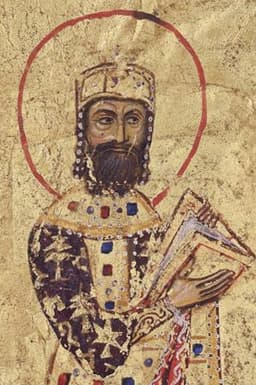
Alexios I Komnenos
Emperor · Medieval
78.4Total
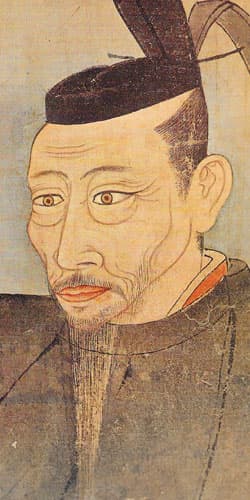
Toyotomi Hideyoshi
General · Modern
82.0Total
Basic Information
Born
1048
1537
Died
1118
1598
Era
Medieval
Modern
Nationality
Byzantine Empire
Japan
Occupation
Emperor
General
Civilization
Western
Eastern
Score Comparison
Military (10%)
61.7
79.9
Political (20%)
78.0
78.0
Influence (20%)
88.0
88.0
Legacy (20%)
80.0
80.0
Leadership (15%)
78.0
82.0
Strategy (15%)
68.0
80.4
TOTAL
78.4
82.0
Alexios I Komnenos — Complete Timeline
1081 AD
Battle of DyrrhachiumWar◆ Major
Alexios I Komnenos was defeated by the Norman army under Robert Guiscard at Dyrrhachium. The Byzantine forces were routed, and Alexios barely escaped. This loss allowed the Normans to occupy much of the western Balkans, though Alexios later recovered some territory.
Norman InvasionDefeatBalkans
Impact: regionaltragic
1090 AD
Reforms of the Byzantine Military and EconomyReform◆ Major
Alexios I implemented a series of reforms to restore Byzantine power. He reorganized the army by relying more on foreign mercenaries, reformed the currency (the hyperpyron), and granted tax exemptions to the Church. These measures stabilized the empire after decades of decline.
Military ReformEconomic ReformKomnenian Restoration
Impact: nationalconstructive
1095 AD
Appeal to the West: Council of PiacenzaPolitical Action
Alexios I sent envoys to Pope Urban II at the Council of Piacenza, requesting military aid against the Seljuk Turks. This appeal contributed to Urban's call for the First Crusade at the Council of Clermont later that year, initiating the Crusader movement.
First CrusadePope Urban IISeljuk Turks
Impact: global
1097 AD
First Crusade: Siege of NicaeaWar◆ Major
Alexios I cooperated with the Crusader army to besiege and capture Nicaea from the Seljuk Turks. The city was surrendered to Byzantine control, and Alexios used the Crusaders to recover key territories in Anatolia, though tensions later arose over land claims.
First CrusadeNicaeaByzantine-Crusader Relations
Impact: regionalconstructive
Toyotomi Hideyoshi — Complete Timeline
1583 AD
Battle of ShizugatakeWar◆ Major
Hideyoshi defeated his rival Shibata Katsuie at the Battle of Shizugatake, solidifying his control over central Japan. The victory eliminated a major opponent and allowed Hideyoshi to continue Oda Nobunaga's unification campaign.
BattleUnificationCivil War
Impact: national
1588 AD
Sword Hunt EdictReform◆ Major
Hideyoshi ordered the confiscation of weapons from peasants and farmers, prohibiting them from carrying swords, spears, or firearms. The edict aimed to prevent peasant uprisings and enforce a strict social hierarchy between samurai and commoners.
Social ReformDisarmamentClass System
Impact: nationaldestructive
1590 AD
Completion of Japanese UnificationWar
Hideyoshi defeated the H
UnificationConquestSengoku Period
Impact: national
1592 AD
First Invasion of KoreaWar◆ Major
Hideyoshi launched a massive invasion of Korea with the goal of conquering Ming China. Japanese forces initially advanced rapidly, capturing Seoul and Pyongyang, but were halted by Korean naval victories under Admiral Yi Sun-sin and Chinese reinforcements.
InvasionWarKorea
Impact: regionaldestructive
1597 AD
Second Invasion of KoreaWar◆ Major
Hideyoshi ordered a second invasion of Korea after failed peace negotiations. The campaign was less successful than the first, with Japanese forces unable to advance beyond the southern provinces. The invasion ended with Hideyoshi's death in 1598.
InvasionWarKorea
Impact: regionaldestructive
Expert Analysis
Origins
Toyotomi Hideyoshi (1537–1598) was born into a peasant family in Owari Province, Japan. His humble beginnings were a stark contrast to the aristocratic norms of samurai society. He rose through sheer ambition and intelligence, first serving Oda Nobunaga as a sandal-bearer and later becoming one of his most trusted generals. Hideyoshi's background shaped his pragmatic and inclusive leadership style, often promoting talent over birth. Alexios I Komnenos (c. 1048–1118) was born into the Byzantine military aristocracy, the Komnenos family. His father was a high-ranking general, and Alexios was groomed for command from youth. He came of age during a period of intense crisis for the Byzantine Empire, facing invasions from Normans, Seljuks, and Pechenegs. His noble lineage gave him access to power networks, but also embroiled him in court intrigues.
Rise to Power
Hideyoshi's rise was meteoric. After Nobunaga's assassination in 1582, Hideyoshi avenged his lord at the Battle of Yamazaki and defeated rivals like Shibata Katsuie at the Battle of Shizugatake (1583). He consolidated power through military campaigns and strategic alliances, eventually becoming the de facto ruler of Japan. In 1585, he was appointed Kampaku (Imperial Regent), legitimizing his authority. Alexios I rose through military success and political maneuvering. As a general, he crushed rebellions and defended the empire. In 1081, he overthrew Emperor Nikephoros III Botaneiates with the help of his relatives and the army, founding the Komnenian dynasty. His coup was risky, but he secured the throne amid external threats.
Leadership & Governance
Hideyoshi's governance was transformative. He implemented the Sword Hunt (1588), confiscating weapons from peasants to prevent uprisings and solidify the samurai class. He conducted land surveys to assess productivity and tax revenue, and issued edicts freezing social classes. He also promoted trade and urban development, and famously banned Christianity to control foreign influence. His rule was centralized and pragmatic, but his invasions of Korea (1592–1598) drained resources. Alexios I faced a crumbling empire. He reformed the military by creating the Komnenian army, relying on pronoia grants (land in exchange for military service) to secure loyalty. He restored the economy by debasing the currency and reforming taxation. He also sought Western aid, resulting in the First Crusade (1096–1099), which he skillfully used to recover lost territories like Nicaea. However, the Crusaders' presence created new challenges.
Triumph & Tragedy
Hideyoshi's greatest triumph was unifying Japan after centuries of civil war, a feat unprecedented for a commoner. His tragedy was the Korean invasions, which ended in failure and left his successor, Toyotomi Hideyori, vulnerable. The wars weakened the Toyotomi clan, leading to its downfall after Hideyoshi's death. Alexios's triumph was stabilizing the Byzantine Empire after decades of decline. He repelled the Norman invasion, defeated the Pechenegs, and recovered Anatolian coasts with Crusader help. His tragedy was the inherent instability of relying on Crusaders, who eventually turned against Byzantium. He also failed to fully restore imperial authority in Asia Minor, and the empire remained vulnerable.
Character & Destiny
Hideyoshi was ambitious, shrewd, and often ruthless, but also known for his charisma and ability to inspire loyalty. He was a master of political theater and cultural patronage, building lavish castles and hosting grand tea ceremonies. His destiny was to rise from nothing to become the supreme ruler of Japan, but his overreach in Korea and failure to secure a stable succession led to his clan's extinction. Alexios was a skilled diplomat, general, and administrator, but also cautious and sometimes duplicitous. He was deeply religious and used piety to legitimize his rule. His destiny was to save Byzantium from collapse, but at the cost of entangling the empire with Western powers, which would later contribute to the Fourth Crusade's sack of Constantinople in 1204.
Legacy
Hideyoshi's legacy is immense: he unified Japan and set the stage for the Tokugawa shogunate's 250-year peace. His social policies defined the Edo period's class structure. He is remembered as a folk hero who achieved the impossible. However, his Korean invasions are seen as a brutal failure. Alexios's legacy is mixed. He is credited with founding the Komnenian restoration, but the First Crusade he inadvertently sparked led to both temporary gains and long-term problems. His reforms strengthened the empire temporarily, but the dynasty's later inability to maintain power contributed to Byzantium's eventual fall. Historians debate whether his appeal to the West was a masterstroke or a fatal mistake.
Conclusion
Comparing Hideyoshi and Alexios reveals two brilliant unifiers who saved their states from fragmentation. Hideyoshi's military score (80) reflects his successful campaigns, while Alexios's (62) is lower due to fewer decisive victories. Both scored 78 in political acumen, but Hideyoshi's innovative governance and social engineering give him an edge. Their intelligence scores are equal (88), reflecting strategic minds. In leadership (80 each), they were both effective but flawed. Hideyoshi's diplomacy (82) was more successful domestically, while Alexios's (78) was adept but led to unintended consequences. Strategic ability (80 vs 68) favors Hideyoshi for achieving his primary goal of unification. Overall, Hideyoshi's impact on Japan's trajectory was more profound and lasting, while Alexios's legacy is more ambiguous due to the Crusades. Final assessment: **Toyotomi Hideyoshi** emerges as the more successful and influential figure, with a higher composite score (80 vs 74.6). He transformed Japan from warring states into a unified nation that would enjoy centuries of peace, whereas Alexios, though crucial, only temporarily reversed Byzantium's decline.
Rankings
🥇
Toyotomi HideyoshiLeader
Mil: 79.9Pol: 78.0Inf: 88.0
82.0
🥈
Alexios I Komnenos
Mil: 61.7Pol: 78.0Inf: 88.0
78.4
+3.6 behind
How This Comparison Works
Algorithm
Each figure is scored on 6 dimensions (0—100 scale) based on structured historical data: Military (10%), Political (20%), Influence (20%), Legacy (20%), Leadership (15%), Strategy (15%). The weighted total produces the final ranking.
Data Sources
Scores are computed from structured sub-indicators in the database. Scale factors adjust for era (Ancient ×0.85, Modern ×1.0) and civilization size (Eastern ×1.05, Other ×0.80) to account for differences in population and military scale.
Maximum 3 Figures
Comparisons are limited to 2—3 figures to ensure readability and statistical meaningfulness.
Error Margins
±5 points per dimension — Sub-scores are derived from historical records with inherent uncertainty. Two figures within 5 points on a dimension should be considered roughly equivalent in that area.
Total Score Accuracy
±3 points overall — The weighted combination of 6 dimensions produces a total score with approximately ±3 points of uncertainty. Differences of less than 3 points are not statistically significant— the figures are effectively tied.
Known Limitations
- Historical records are incomplete and uneven across civilizations
- Figures from oral-tradition societies may be underrepresented
- Occupation labels can misclassify multi-role figures
- Scores measure capability and impact, not moral character
- Quantitative scoring is a comparison tool, not absolute truth
Capability Radar
Military (10%) — Battles & Warfare
Battles
75
85
Win Rate
70
88
Expansion
60
80
Political (20%) — Governance & Reform
Reform
85
95
Diplomacy
90
80
Economy
70
90
Influence (20%) — Cultural & Global Reach
Cultural
70
85
Global
75
70
Legacy (20%) — Historical Impact
Historical
85
90
Longevity
80
85
Leadership (15%) — Power & Stability
Tenure
80
85
Stability
75
75
Strategy (15%) — Tactics & Innovation
Strategy
85
92
Tactics
80
90
Reform
75
95
Similar Comparisons
Comments & Discussion
No comments yet. Be the first to share your thoughts!