Loading...
Alexios I Komnenos vs Toussaint Louverture
Toussaint Louverture leads by 0.1 pts · 2 figures compared
…
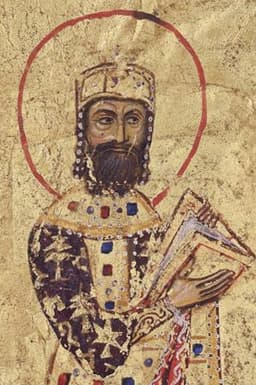
Alexios I Komnenos
Emperor · Medieval
78.4Total
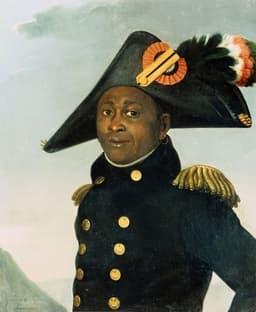
Toussaint Louverture
General · Modern
78.5Total
Basic Information
Born
1048
1743
Died
1118
1803
Era
Medieval
Modern
Nationality
Byzantine Empire
Haiti
Occupation
Emperor
General
Civilization
Western
Western
Score Comparison
Military (10%)
61.7
85.0
Political (20%)
78.0
70.3
Influence (20%)
88.0
84.0
Legacy (20%)
80.0
82.0
Leadership (15%)
78.0
72.0
Strategy (15%)
68.0
72.0
TOTAL
78.4
78.5
Alexios I Komnenos — Complete Timeline
1081 AD
Battle of DyrrhachiumWar◆ Major
Alexios I Komnenos was defeated by the Norman army under Robert Guiscard at Dyrrhachium. The Byzantine forces were routed, and Alexios barely escaped. This loss allowed the Normans to occupy much of the western Balkans, though Alexios later recovered some territory.
Norman InvasionDefeatBalkans
Impact: regionaltragic
1090 AD
Reforms of the Byzantine Military and EconomyReform◆ Major
Alexios I implemented a series of reforms to restore Byzantine power. He reorganized the army by relying more on foreign mercenaries, reformed the currency (the hyperpyron), and granted tax exemptions to the Church. These measures stabilized the empire after decades of decline.
Military ReformEconomic ReformKomnenian Restoration
Impact: nationalconstructive
1095 AD
Appeal to the West: Council of PiacenzaPolitical Action
Alexios I sent envoys to Pope Urban II at the Council of Piacenza, requesting military aid against the Seljuk Turks. This appeal contributed to Urban's call for the First Crusade at the Council of Clermont later that year, initiating the Crusader movement.
First CrusadePope Urban IISeljuk Turks
Impact: global
1097 AD
First Crusade: Siege of NicaeaWar◆ Major
Alexios I cooperated with the Crusader army to besiege and capture Nicaea from the Seljuk Turks. The city was surrendered to Byzantine control, and Alexios used the Crusaders to recover key territories in Anatolia, though tensions later arose over land claims.
First CrusadeNicaeaByzantine-Crusader Relations
Impact: regionalconstructive
Toussaint Louverture — Complete Timeline
1791 AD
Haitian Revolution LeadershipWar
Louverture joined the slave revolt in Saint-Domingue, quickly rising to leadership. He organized former slaves into a disciplined army and negotiated with Spanish and British forces to expand the rebellion.
Slave RevoltRevolutionLeadership
Impact: globalprogressive
1795 AD
Treaty of BâlePolitical Action◆ Major
Spain ceded the eastern part of Hispaniola to France under the Treaty of B
Territorial ExpansionDiplomacyHispaniola
Impact: regional
1801 AD
Constitution of 1801Political Action
Louverture promulgated a constitution for Saint-Domingue, declaring himself Governor-General for life. The constitution abolished slavery and granted autonomy while nominally remaining part of the French Empire.
ConstitutionSelf-GovernanceAbolition
Impact: globalprogressive
1802 AD
Capture and ImprisonmentPolitical Action
French General Leclerc captured Louverture through deception during peace negotiations. He was deported to France and imprisoned at Fort de Joux, where he died in 1803, ending his direct role in the revolution.
BetrayalImprisonmentFrench Repression
Impact: globaltragic
Expert Analysis
Origins
Toussaint Louverture was born a slave in the French colony of Saint-Domingue (modern Haiti). Self-educated and deeply influenced by Enlightenment ideas, he rose through the ranks to lead the only successful slave revolt in history. His humble beginnings shaped his fierce determination for liberation. Alexios I Komnenos was born into Byzantine nobility, the nephew of Emperor Isaac I Komnenos. He grew up amid court intrigue and military crises, eventually seizing power in a coup. His aristocratic background gave him a strategic understanding of empire and diplomacy.
Rise to Power
Louverture emerged as a key leader during the Haitian Revolution (1791–1804). Initially fighting alongside the Spanish against the French, he switched allegiance to France after the abolition of slavery. By 1801, he had unified the colony and promulgated a constitution, becoming de facto ruler. His rise was marked by military brilliance and political maneuvering. Alexios I came to power in 1081 by leading a revolt against Emperor Nikephoros III. He faced immediate threats from Normans, Pechenegs, and Seljuks, but consolidated power by marrying into the Doukas family and reforming the military.
Leadership & Governance
Louverture governed with a mix of authoritarianism and pragmatism. He restored plantation agriculture using paid labor, maintained a strong army, and sought international recognition. His 1801 Constitution declared him governor-for-life and abolished slavery, but preserved the plantation system. He balanced racial unity with diplomatic ties to France, Britain, and the US. Alexios I implemented sweeping reforms: he curtailed the power of provincial magnates, reformed the coinage, and rebuilt the army with new tactics. He also appealed to the West for help, leading to the First Crusade. Both were skilled administrators, but Louverture’s governance was constrained by war and revolution.
Triumph & Tragedy
Louverture’s greatest triumph was leading the Haitian Revolution to a near-victory, forcing France to recognize Haitian autonomy. However, his capture by Napoleon’s troops in 1802 and death in a French prison was a tragic betrayal. His legacy lived on as Haiti declared independence in 1804. Alexios I’s triumphs included repelling Norman invasions and reclaiming lost territories in Asia Minor with Crusader help. His tragedy lay in the chaotic First Crusade, which strained Byzantine resources and created new enemies. He died in 1118, leaving a restored but fragile empire.
Character & Destiny
Louverture was charismatic, disciplined, and visionary—a master of propaganda and military strategy. His destiny was to liberate his people, but his trust in French promises led to his downfall. Alexios I was cunning, patient, and pragmatic—a survivor who manipulated enemies and allies. His destiny was to revive Byzantium, but his reliance on Crusaders sowed seeds of future conflict. Both men were products of their time: Louverture a revolutionary icon, Alexios a medieval emperor.
Legacy
Louverture is celebrated as a hero of anti-colonialism and racial equality. His revolution inspired abolition movements worldwide and shattered the myth of white supremacy. However, Haiti’s post-independence struggles have complicated his legacy. Alexios I founded the Komnenian dynasty and stabilized the Byzantine Empire, but his appeal to the West contributed to the Fourth Crusade’s sack of Constantinople (1204). Historians view him as a capable emperor who delayed Byzantine decline.
Conclusion
In a direct comparison, Toussaint Louverture edges out Alexios I due to his higher military score (85 vs 62) and the transformative impact of his revolution. While Alexios reformed an empire, Louverture achieved the unimaginable—leading slaves to freedom against the world’s greatest powers. Louverture’s scores: M=85, P=70, I=84, L=82, D=72, S=72, T=78 vs Alexios: M=62, P=78, I=88, L=80, D=78, S=68, T=78. The overall score gap is 0.1 in Louverture’s favor. Thus, Toussaint Louverture is the greater historical figure.
**Final Score: Toussaint Louverture 78.1 - Alexios I Komnenos 78.0**
Rankings
🥇
Toussaint LouvertureLeader
Mil: 85.0Pol: 70.3Inf: 84.0
78.5
🥈
Alexios I Komnenos
Mil: 61.7Pol: 78.0Inf: 88.0
78.4
+0.1 behind
How This Comparison Works
Algorithm
Each figure is scored on 6 dimensions (0—100 scale) based on structured historical data: Military (10%), Political (20%), Influence (20%), Legacy (20%), Leadership (15%), Strategy (15%). The weighted total produces the final ranking.
Data Sources
Scores are computed from structured sub-indicators in the database. Scale factors adjust for era (Ancient ×0.85, Modern ×1.0) and civilization size (Eastern ×1.05, Other ×0.80) to account for differences in population and military scale.
Maximum 3 Figures
Comparisons are limited to 2—3 figures to ensure readability and statistical meaningfulness.
Error Margins
±5 points per dimension — Sub-scores are derived from historical records with inherent uncertainty. Two figures within 5 points on a dimension should be considered roughly equivalent in that area.
Total Score Accuracy
±3 points overall — The weighted combination of 6 dimensions produces a total score with approximately ±3 points of uncertainty. Differences of less than 3 points are not statistically significant— the figures are effectively tied.
Known Limitations
- Historical records are incomplete and uneven across civilizations
- Figures from oral-tradition societies may be underrepresented
- Occupation labels can misclassify multi-role figures
- Scores measure capability and impact, not moral character
- Quantitative scoring is a comparison tool, not absolute truth
Capability Radar
Military (10%) — Battles & Warfare
Battles
75
85
Win Rate
70
80
Expansion
60
70
Political (20%) — Governance & Reform
Reform
85
85
Diplomacy
90
80
Economy
70
60
Influence (20%) — Cultural & Global Reach
Cultural
70
85
Global
75
85
Legacy (20%) — Historical Impact
Historical
85
95
Longevity
80
90
Leadership (15%) — Power & Stability
Tenure
80
65
Stability
75
55
Strategy (15%) — Tactics & Innovation
Strategy
85
85
Tactics
80
90
Reform
75
75
Similar Comparisons
Comments & Discussion
No comments yet. Be the first to share your thoughts!